
How to Tell if Your Horse is Happy: Reading Equine Body Language
Hello fellow equestrians. You watch your horse in the field or stall, searching for a sign that they’re content, but a swishing tail or a pinned ear leaves you guessing. That uncertainty can feed anxiety about their well-being, your partnership, and even safety.
Let’s translate those silent signals together. This guide will walk you through the clear, physical signs of a happy horse, covering:
- The relaxed positions of ears, eyes, and muzzle that signal peace.
- How a swinging tail differs from an irritated swish.
- The holistic picture of posture, movement, and breathing at rest.
- Behavioral clues during grooming, feeding, and turnout time.
I’ve honed this skill over years of barn management and training, deciphering the moods of everything from steady Quarter Horses to spirited Thoroughbreds.
The Happy Horse Blueprint: Start with the Basics
Figuring out if your horse is happy isn’t about spotting one magic signal. It’s a practiced skill of seeing the whole picture-a cluster of calm, relaxed signs that tell a story of contentment. Think of it like learning a quiet language; the more time you spend simply observing, the more fluent you’ll become. Start your daily check by looking for the foundational trio: a relaxed posture, calm breathing, and an overall ease in their presence.
The Overall Picture: Relaxed Posture and Balance
A happy horse carries itself without tension. Their head will be at or below wither height, with a neck that looks soft and flexible, not braced. You’ll see even weight distribution on all four feet, perhaps with a hind leg cocked in rest. This is the posture of an animal who feels secure enough to let its guard down, not bracing for the next surprise. I often watch my old gelding, Rusty, in the pasture as the gold standard: his head low, his back level, his whole body a picture of quiet balance as he soaks up the sun.
The Calm Breath: Listening to Their Rhythm
Breath tells you everything. Contentment brings slow, regular, and deep breaths you can see in the gentle expansion of their ribs. Stress, however, shows as a held breath, shallow panting, or sharp snorts. Place a hand lightly on their flank while grooming; the steady, rhythmic rise and fall is one of the most reassuring feelings at the barn. It’s a direct line to their inner state, far more honest than we often are.
Speaking Without Words: The Face of Contentment
The equine face is wonderfully expressive, a map of their emotions if you know how to read it. Forget guessing-their eyes, ears, and muzzle are having a constant conversation. It’s a silent dialogue more revealing than any whinny, showing you a mind at peace or a worry taking hold.
Eyes That Trust: Soft Gaze and Blinking
The eyes are the true window. A happy horse has a “soft eye”-the eyelids are relaxed, the gaze is gentle, and you’ll notice regular, slow blinks. The skin around the eye is smooth. Contrast this with the hard, worried eye: wide open, showing white, with a tense lid and a frozen stare. When my sensitive thoroughbred, Luna, is truly calm after a good ride, her deep brown eyes get that soft, almost drowsy look that tells me we’ve gotten it right.
Ears: The Mood Antennas
Those ears are never just decorative. They’re mood radar dishes.
- Ears forward: Interested, curious, focused on something ahead.
- Ears relaxed and loose to the side or slightly back: This is the happy medium! The horse is chill, aware but not alarmed. They might gently swivel to catch sounds.
- Ears pinned flat back: A clear sign of annoyance, threat, or pain. Heed this warning immediately.
A content horse’s ears will often move independently in a lazy, fluid swivel, tracking a bird’s flight or the sound of your voice without tension.
The Mouth and Muzzle: Licking, Chewing, and Relaxed Lips
Watch the mouth for clear signs of processing and peace. “Licking and chewing” is a classic sign a horse is releasing tension and thinking things over. The muzzle should be soft, with nostrils that are relaxed or flared only out of interest, not stress. The lips will be loose, not tight or puckered, and you might even see the lower lip droop in total relaxation. Sometimes a gentle tongue may peek out or the lips flutter briefly as part of that relaxed state. This tiny motion often accompanies comfort and curiosity, and it hints at why horses stick their tongues out and flap their lips. It’s the equine version of a contented sigh, a sure sign they are comfortable in their own skin and with you.
The Body Language of Ease: From Neck to Tail
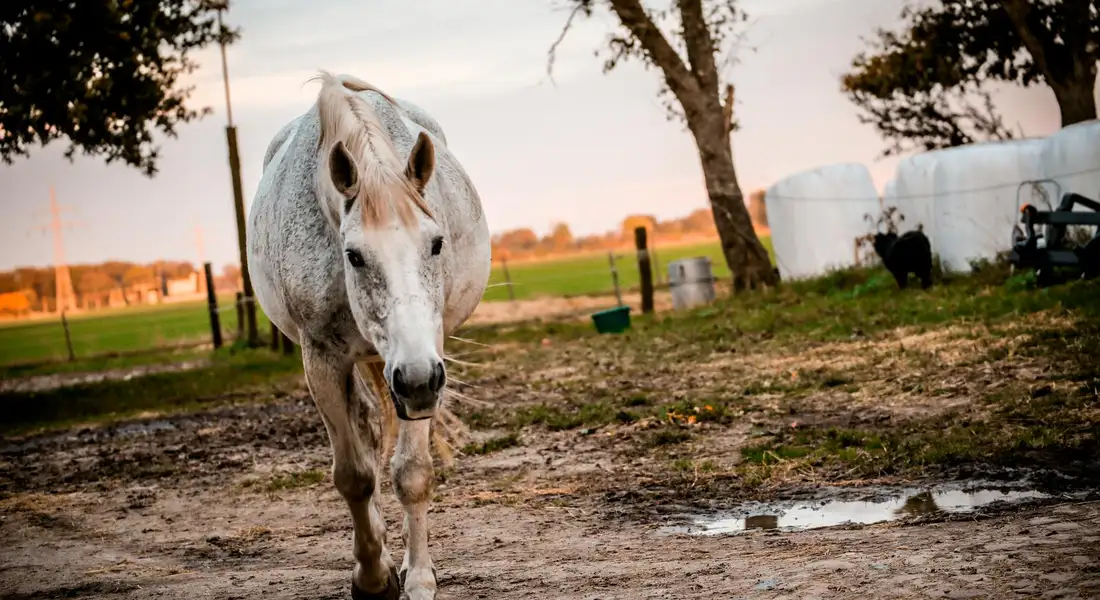
Look beyond the eyes and ears to read your horse’s comfort. A happy horse carries itself with a loose, flowing ease from poll to dock. I’ve spent countless hours leaning on the fence, watching Rusty in the afternoon sun, his neck arched low and his back soft, the only sound the gentle thud of a hoof shifting in the dust.
You’ll see a lack of tension in the topline, with the withers and croup appearing level and calm. This overall posture of relaxation is a direct benefit of ample turnout time, allowing their muscles to unwind from the inside out.
A Relaxed Stance: Weight Distribution and Movement
A content horse stands with weight evenly distributed on all four legs. They might rest a hind leg, but the posture remains balanced and open, not braced.
Watch for the occasional, gentle sway-a sleepy redistribution of weight that shows profound comfort and security in their environment. It’s a world away from the stiff, rooted stance of anxiety.
At true rest, the tail hangs naturally or sways with a slow, pendulum rhythm. Notice the difference between this idle motion and the sharp, irritated swat at a fly on a sweaty shoulder.
The Tail Tale: Swishing vs. Clamping
The tail tells a clear story once you know the dialect. A happy, rhythmic swish is often fly-related and involves the whole tail moving loosely from the base.
A tail clamped tightly against the hindquarters, however, signals distress, discomfort, or deep concentration, like when Luna sees something suspicious on the trail.
Breed variations matter. High-tail carriers like Arabians or Saddlebreds should still show a relaxed flow from the dock. True worry shows in a stiff, elevated tail that looks glued in place, often accompanied by a tight back and raised head.
Herd Happiness: Social Bonds and Play
Watch a group of horses turned out together, and you’ll see happiness in motion. Horses are wired for connection, and their mental well-being flourishes with companionship. I prioritize daily turnout for every horse in my care, because a stalled, isolated horse is often a stressed one. Seeing Luna, the thoroughbred, and Pipin, the shetland, interact is a masterclass in social joy. Luna will gently lower her head to Pipin’s level, and they’ll stand nose-to-nose, breathing each other in. Then, in a burst of energy, Pipin will dart off with a playful buck, and Luna will follow in a graceful, sweeping trot. That thud of hooves on soft earth during a playful chase is the sound of pure, unscripted equine contentment.
Providing ample turnout time is the single best thing you can do for your horse’s mental state. It allows them to graze, move freely, and establish the social hierarchies that are natural to them. A horse that spends most of its day in a stall misses out on these critical behaviors, which can lead to boredom, weaving, or other stable vices. Think of turnout as non-negotiable preventive medicine for your horse’s mind.
Mutual Grooming and Peaceful Coexistence
One of the most heartwarming signs of a happy herd is mutual grooming. You’ll see two horses stand head-to-tail, using their teeth to gently scratch each other’s withers, backs, and necks. This isn’t just about getting an itch; it’s a social ritual that strengthens bonds and releases endorphins. It’s a sign of deep trust and contentment. When you see your horse peacefully sharing space, dozing shoulder-to-shoulder with a buddy, you’re looking at a truly relaxed animal. Healthy herd behavior signs are characterized by balance and context, while signs like persistent competition, avoidance, or crowding can indicate unhealthy dynamics.
Play is the other clear indicator of a joyful spirit. Keep an eye out for these behaviors during turnout:
- Spontaneous running and galloping with a loose, flowing tail.
- Playful bucks and kicks that are clearly exaggerated and not aimed at others.
- Gentle nudging or lipping at a companion’s side.
- The “play face,” where the lips are relaxed and slightly drawn back, almost like a smile.
These actions are how horses express surplus energy and sheer pleasure in being alive.
Vocal Cues: Nickers, Whinnies, and Sighs
A horse’s voice tells a vivid story about their emotional state. Happy vocalizations are typically soft, low, and connected to positive interactions. Do horses communicate understanding through their sounds and vocalizations? Understanding whether horses grasp what these cues mean can guide how you listen. Learn to listen for these specific sounds:
- A warm, deep nicker when they see you coming with their feed bucket. It’s a greeting of anticipation.
- A medium-pitched, friendly neigh or whinny exchanged with a pasture mate, often answered back. It says, “I’m here, and all is well.”
- A long, heavy sigh through the nostrils after a good roll or when settling down for a rest. This is the sound of ultimate relaxation.
Contrast these with the sharp, high-pitched, repetitive whinny of a horse feeling distressed or separated from the herd. That anxious call has a tight, urgent quality to it. Recognizing the difference between a happy nicker and a worried scream is key to understanding your horse’s emotional needs. The quiet, rhythmic munching of hay at dusk, punctuated by an occasional soft snort, is the barn soundtrack I love most-it signals a herd at peace.
Enjoying the Job: Signs of a Willing Partner

Working with a happy horse feels less like directing traffic and more like dancing with a friend who knows the steps. True partnership in the saddle is built on mutual respect, where safety for both of you is the direct result of clear communication and gentle leadership. I learned this early on with Luna; on days she felt understood, her high-energy sensitivity transformed into brilliant focus, not frantic evasion. Your goal isn’t submission, but a willing dialogue.
- Ears that casually flick back to listen to you, not pin flat in annoyance.
- A general attitude of curiosity and engagement with the task, not resignation.
- Minimal need for repetitive correction because the horse is mentally “with” you.
Willing Movement and Forward Energy
This isn’t about speed; it’s about quality of motion. Think of a happy horse’s energy as a steady current, not a crashing wave. You feel a forward desire that you can channel with a soft calf or a whisper of the reins, not a constant push or pull. Under saddle, a content back is springy and relaxed, moving with you not against you. I know Rusty is in a good mood when he offers a steady, ground-covering trot without me begging for it, his jaw soft and yielding on the bit.
Look for these specific signs of eager participation:
- A Soft Acceptance of the Bit: The horse may gently “chew” the bit, creating a moist, quiet connection. You see slack in the chin and feel no hard pulling or rooting against your hands.
- Seeking Contact: They lightly lean into the rein pressure, maintaining a consistent feel. It’s a conversation, not a tug-of-war.
- Relaxed Topline: The muscles along the neck, back, and croup are supple. You won’t see a stiff, hollowed-out spine or a clamped-down tail.
- Fluid Transitions: They move up or down a gait smoothly when asked, without bracing or throwing their head.
The Post-Work Cool Down: Satisfaction Signs
The story of a good workout is told in the minutes after you stop. A satisfied horse will often let out a big sigh, followed by rhythmic licking and chewing-this is their nervous system resetting, a sure sign of mental processing and release. I always watch for this as I lead Luna back to the cross-ties; that first deep sigh tells me we ended on the right note. Their breathing should return to normal relatively quickly, without prolonged heaving.
Observe these behaviors during untacking and hosing:
- Licking and Chewing: This is a major marker of contentment and submission after mental effort.
- Calm, Even Breathing: Nostrils are relaxed and breaths are deep and regular, not shallow or rapid.
- Droopy Lips and Drowsy Eyes: The lower lip hangs loosely, and the eyes have a soft, half-closed look.
- Patient Demeanor: They stand quietly for you to remove tack, spray them with water, or offer a well-earned drink. No fidgeting or impatience.
Remember, a horse that gets regular turnout and gentle handling brings a calmer, more cooperative mind to work every time. Rushing the cool-down is a missed opportunity to cement a positive experience for the next ride. Let them soak in the feeling of a job well done.
Contentment at Rest: In the Stall and Pasture
True happiness isn’t just about the excitement of a ride; it’s found in the quiet moments. Watching a horse at peace in their own space tells you everything about their well-being. A content horse feels secure enough to fully let their guard down, and that’s the ultimate compliment to their care.
The Art of Loafing: Lying Down and Dozing
Seeing a horse flat out in the sun is a beautiful sight. They only lie down for deep, REM sleep when they feel utterly safe, as getting up is a slower process for such a large animal. A short, 20-minute snooze in the shavings means your horse trusts their environment completely.
More commonly, you’ll see the classic “cocked hind leg” stance. They’re not sleeping, but in a light doze, muscles relaxed, lower lip drooping. I watch for this in my own barn. Rusty will often stand like this by his stall door, one hip dropped, eyes half-closed. In horse sleeping and resting behavior, short dozes like this are common, since horses can nod off standing up before deeper sleep. It’s his version of zoning out on the couch. This posture is a hallmark of a horse who is comfortable, pain-free, and mentally at ease.
Be mindful of a horse who lies down excessively or seems reluctant to get up, as this can signal colic. But that occasional, peaceful flat-out nap? That’s a gold star for your management.
Peaceful Grazing and Casual Observation
A happy horse at pasture is a study in quiet purpose. Their head is down, rhythmically tearing and chewing grass, ears flicking softly at flies or distant sounds. There’s no tension in their neck or jaw. They amble slowly, following the good patches of grass in a meandering pattern.
You might see them pause, lift their head, and just… look. They watch a bird, observe a tractor in the far field, or glance at the neighboring herd. Their expression is curious, not alarmed. The ears are mobile and independent, like satellite dishes tuning into different channels, but the body remains soft.
- Rhythmic Grazing: Steady, consistent chewing with a soft crunching sound. No frantic gulping.
- Soft Eyes: The eyelid is relaxed, sometimes slightly closed, with no white showing.
- Loose Herd Dynamics: They graze near others but not on top of them. Occasional mutual grooming or a friendly sniff is common.
- The Sigh: A deep, audible exhalation through the nostrils is a huge sign of release and contentment. I hear it from Luna after a good ride when she’s back in her paddock.
This peaceful grazing is the equine version of mindfulness-they are fully present, safe, and engaged in the simple pleasure of a meal. It’s the opposite of a horse who stands rigidly at the gate, fixated on returning to the barn. That quiet, rhythmic munching to the soundtrack of birds is the baseline of equine happiness we should all aim for.
Cultivating Joy: Horse Care Practices for Happiness

Seeing the signs of a content horse is one thing. Fostering that happiness is where our real work as caretakers begins. True equine joy is cultivated through daily practices that honor their nature, not just through treats or new toys. Horses sense love and trust from their people and form deep bonds in return. Understanding this connection can guide how we care for them every day.
Turnout Time: The Non-Negotiable for Mental Health
If I could give one piece of universal advice, it’s this: maximize turnout. My mare Luna taught me this. As a sensitive Thoroughbred, she would pace her stall, her coat dull with sweat despite the cool weather. Her eyes were tight, her body tense. We moved to a barn with 24/7 herd turnout. The change wasn’t instant, but within weeks, the pacing stopped. Her breathing softened. I saw her doze in the sun, one hind leg cocked, lower lip dangling. Turnout is as critical as food and water; it’s where horses process the world, move freely, and simply be horses.
The benefits are profound and visible in their body language:
- Physical Health: Freedom of movement supports digestion, hoof quality, and respiratory health. You’ll see it in their fluid walk and healthy shine.
- Mental Stimulation: Grazing, exploring, and social dynamics prevent boredom vices like weaving or cribbing.
- Social Fulfillment: Herd life allows for mutual grooming, playing, and quiet companionship. Watching your horse stand head-to-tail with a friend, swishing flies for each other, is a masterclass in peaceful contentment.
Fight for every minute of turnout you can get. A tired horse from a day of roaming is a happy, relaxed horse.
Listening and Responding: Building Trust Through Observation
Happiness flourishes in a partnership where the horse feels heard. This means spending quiet time, not just doing chores. Sit on a bucket and watch your horse in the field. Notice who they gravitate toward, where they scratch themselves, what makes their ears perk up. This unstructured observation is your roadmap to tailoring their care.
Then, translate those observations into action during your hands-on time:
- If your horse seeks you out for contact, like my gelding Rusty who nudges for scratches, spend extra time grooming his favorite spots. Use your eyes: if he turns his head toward you, lips twitching, you’ve found the sweet spot.
- If they are hesitant about a piece of tack, don’t just force it. Check for physical discomfort first. A head shy reaction to the bridle might be a tooth problem, not disobedience.
- Respect the “no.” If a horse is clearly saying they are done for the day-maybe pinning ears during leg wraps or swishing their tail aggressively during groundwork-end on a simple, positive note. Pushing past clear communication breeds resentment and anxiety.
A relaxed horse is a safe partner, and that relaxation is earned through patience and a willingness to let them guide the conversation sometimes. In practice, this means talking with horses and understanding them. That dialogue builds better communication. Their body language is the only language they have; our job is to become fluent.
Frequently Asked Questions: How to Tell if Your Horse is Happy
How can you tell if a horse is enjoying its work or exercise?
A happy, willing partner moves with fluid, forward energy and a relaxed topline, not with resistance. You will notice a soft acceptance of the bit with quiet chewing and ears that flick back to listen to you casually. After work, signs like a deep sigh, rhythmic licking and chewing, and a patient demeanor during untacking indicate satisfaction.
What are the signs of a happy horse during grooming and handling?
A content horse will often seek out contact, leaning into scratches or grooming in their favorite spots with a relaxed posture. They stand quietly without fidgeting, may exhibit a soft, drooping lower lip, and their eyes will remain soft and blink slowly. This calm, patient demeanor shows they trust you and find the interaction pleasurable.
How does a happy horse behave around other horses in the herd?
A socially content horse will engage in peaceful coexistence, often seen grazing near companions or standing dozing shoulder-to-shoulder. They participate in bonding behaviors like mutual grooming, using their teeth to gently scratch a friend’s withers or neck. Playful, non-aggressive actions like spontaneous running, exaggerated bucks, and gentle nudging are also clear signs of herd happiness and how horses play to strengthen their social bonds.
The Daily Dialogue of a Happy Horse
Focus on the whole horse, from the flick of an ear to the swing of the tail, to understand their emotional state. Your most reliable tool is consistent observation over time, learning their unique baseline of calm in the pasture, the stall, and under saddle. For a deeper dive, consult the understanding horse behavior psychology complete guide. It translates daily cues into broader behavior patterns.
Approach this learning with patience, as rushing creates pressure for you and your horse. True horsemanship begins when you quiet down and let their body language guide your actions.
Further Reading & Sources
- Understanding Your Horse’s Body Language – RSPCA – rspca.org.uk
- How to tell if a horse is happy: behaviourist reveals 13 key signs – Your Horse
- How to Tell if Your Horse is Happy [Top 7 Signs] | Mad Barn
- Equine Body Language: 7 Signs to Recognize – The Horse
At Horse and Hay, we are passionate about providing expert guidance on all aspects of horse care, from nutrition to wellness. Our team of equine specialists and veterinarians offer trusted advice on the best foods, supplements, and practices to keep your horse healthy and thriving. Whether you're a seasoned rider or new to equine care, we provide valuable insights into feeding, grooming, and overall well-being to ensure your horse lives its happiest, healthiest life.
Behavior