
Fun and Safe Games to Play with Your Horse: Build Joy and Trust from the Ground Up
Hello fellow barn buddies. Does your horse seem restless between rides, or does the idea of ‘play’ feel risky with a 1,000-pound partner?
That worry is valid-boredom can spiral into wood-chewing or even dangerous outbursts, while poorly planned games might lead to injuries for you both.
In this article, I will share my favorite boredom-busting activities that prioritize safety and connection. You will get clear steps for:
- Confidence-building ground games that require no special equipment.
- Simple obstacle course ideas using everyday items from your barn.
- Mental enrichment puzzles that satisfy clever ponies like my food-obsessed Pipin.
- Foundational liberty exercises that teach your horse to choose partnership.
I have learned what works through years of barn management and training, finding games that delight both my steady trail horse Rusty and my high-strung Thoroughbred Luna.
Why Bother with Horse Games? More Than Just Silly Fun
Games are my secret weapon in the barn. They’re not just about goofing off, though the laughter is a fantastic bonus. They are foundational training disguised as play. I’ve used games to teach a nervous horse to load into a trailer and to show a pushy pony that personal space is a thing.
Think of it this way: a horse standing in cross-ties getting groomed is a passive participant. A horse playing a targeting game with a cone is an active thinker, making choices and getting rewarded for them. This mental engagement is gold dust for building a real partnership.
This shift from passive object to willing partner is the core magic of play, transforming routine care into a conversation your horse wants to have.
For the horse, games break up the monotony. Let’s be honest, stable life can be boring. A novel puzzle provides crucial mental stimulation that can curb stall vices and stable boredom. It’s also low-pressure learning. There’s no “wrong” answer in a game, just opportunities to try again.
For you, it builds a language. You learn to read your horse’s subtle “yes” and “I’m confused” signals faster than in any structured lesson. I learned more about Luna’s thresholds playing “touch the tarp” than in months of ring work. It builds your confidence as a handler in a fun, low-stakes setting.
Setting the Rules: Safety First for Horse and Human
The second you get sloppy with safety, the game is over. Fun requires a solid foundation of mutual respect and clear boundaries. I have a strict rule: if I can’t get my horse’s focus back with a simple cue on the ground, we’re done playing for the day.
Your horse’s mental state is your primary safety equipment; a distracted or anxious horse is an accident waiting to happen, no matter how soft the game. By understanding common horse fears and skittish behavior, you can spot signs of anxiety early and respond calmly. This awareness is essential for effectively managing anxiety and keeping both you and your horse safe.
Always start and end with a familiar, calm ritual. For me, it’s three deep breaths together and a good scratch on the withers. This bookends the play session and tells the horse when it’s time to focus on just being together. Keep sessions short-five to ten minutes of quality engagement beats an hour of frustrated pushing.
Your Pre-Game Safety Check
Never skip this list. It’s as routine as picking feet.
- Environment: Is your area enclosed, flat, and free of debris? No loose equipment, holes, or plastic bags blowing by. A startled horse needs a safe place to move.
- Tack & Gear: If using a halter and lead, ensure it’s fitted and the rope is in good condition. Remove all other tack. I play all my games in just a well-fitting halter.
- Horse’s Physical State: Is your horse sound, cool, and alert? Don’t play physical games on a lame or tired horse. Check for any signs of discomfort or illness.
- Horse’s Mental State: Is your horse with you? Do you have their basic attention, or are they staring at the pasture gate? You need a soft eye and a relaxed jaw before you begin.
- Your Attire: Wear sturdy boots. Always. I’ve had Pipin land a cheeky hoof right on my toe, and I was thankful for the steel cap.
- Treat Protocol: If using treats, keep them in a sealed pouch on your body, not in your pocket. Deliver them flat in your palm to avoid nipping. For the food-obsessed like Pipin, I sometimes use a handful of his regular pellets as the reward instead of “high-value” treats to keep his brain in the game, not in my pocket.
Games to Build Trust and Soften Cues
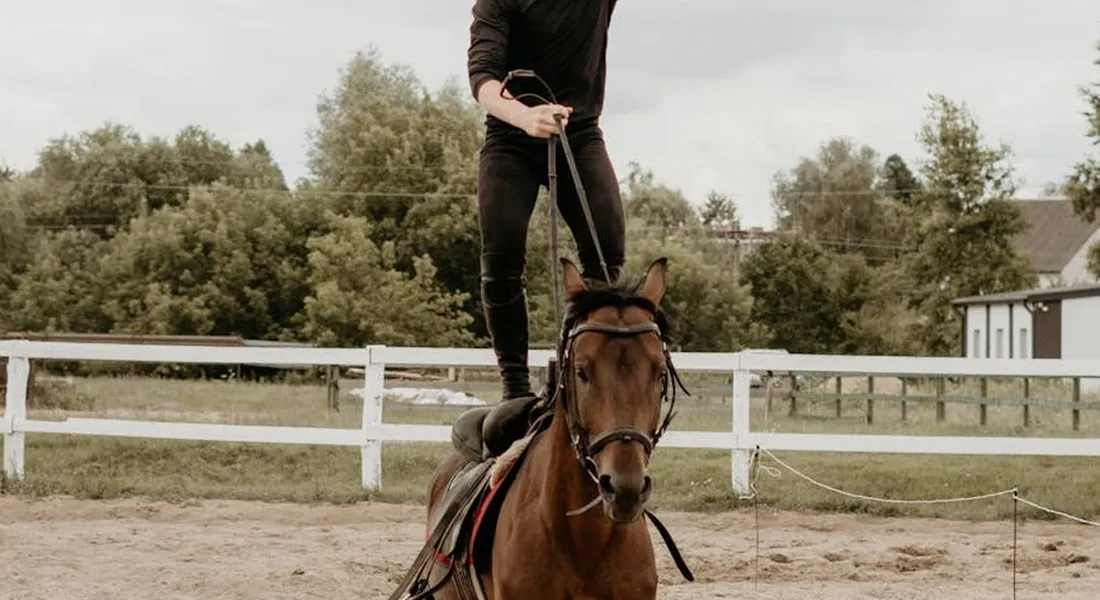
These activities aren’t about commands. They’re conversations. You’re listening as much as you’re asking, and that shift builds a partnership no amount of drilling can match.
Liberty and Follow-Me
Liberty work strips everything away-no halter, no rope, just you and a horse who chooses to be with you. I start in a safe, enclosed space. With Luna, it began simply: I walked a small circle, and if she flicked an ear my way, I stopped and breathed. The goal is to become the most interesting thing in the arena.
For “Follow-Me,” I walk with loose, relaxed energy and let my horse mirror me. If they stop when I stop, I offer a scratch. If they turn when I turn, we take a break. The entire game is built on the principle that attention and connection are the highest rewards.
- Start at a walk, with no pressure for them to be at your shoulder.
- Use your body language-turning your shoulders, softening your gaze-to invite movement.
- End the session the moment they offer a good try, even if it’s just two steps together.
It teaches softness because they learn to watch you for guidance, not feel pressure from a rope.
Target Training with Clicker or Voice
This is my go-to for building confidence and a “yes!” mentality. You can use a traffic cone, a lid, or a brightly colored rubber feed tub. The rule is simple: horse touches target with nose, they get a reward. My pony Pipin is a master at this.
I use a distinct “good” as my marker instead of a clicker. The instant his nose touches the cone, I say “good!” and then give a treat. This precise timing helps the horse understand exactly which action earned the reward, eliminating guesswork and frustration. Even if you’re not using a clicker yet, a beginner’s guide to clicker training horses can walk you through the basics. When you’re ready to try a clicker, you’ll have a clear path to follow.
- Present the target close to their nose. Mark and reward any investigation, even an accidental touch.
- Gradually hold the target in different places: lower, higher, to the left.
- Finally, ask them to take a step or two to touch it. You’ve just created a “follow the target” game.
It’s brilliant for teaching trailer loading, standing for the farrier, or just giving a nervous mind a positive job to do.
Games to Burn Energy and Boost Coordination
When the spring grass hits or a horse has been stalled, you need a physical and mental outlet. These games turn workout into playtime.
Cavaletti and Pole Courses
You don’t need jumps. Ground poles and simple cavaletti are phenomenal for building careful footwork. I set them up for my steady Eddy, Rusty, in the pasture or alleyway. We never jump them; we walk and trot over them. In time, you can branch into building horse jumps for training, creating safe, progressive courses. It’s a natural next step for a well-rounded program.
Arrange poles in a fan shape or spaced for walk strides. Let your horse figure out the puzzle. The rhythmic thud of hooves meeting wood builds muscle memory and encourages a horse to lift their feet and pay attention to where they’re going, helping them understand how to walk and navigate obstacles.
- Always use poles that won’t roll (solid wood or PVC with rail guards).
- Start with one pole on the ground. Add more as their confidence grows.
- Let them look down! It’s a sign they’re thinking, not resisting.
The Mighty Soccer Ball Push
This is a fantastic, safe way for a horse to play. Use a large, sturdy exercise ball or a proper Jolly Ball. Introduce it in a space without tight corners. Some horses will sniff, some will spook, and some, like Luna, will immediately want to herd it.
Encourage them to nudge it with their nose. Once they understand pushing makes it move, you can guide them to push it around cones or down a lane. This game engages their mind, encourages curiosity, and provides a great neck and shoulder workout without any rider weight. Just be prepared for the possibility of them figuring out how to pick it up and throw it-Pipin considers that the best part.
Games to Sharpen Skills and Build Confidence
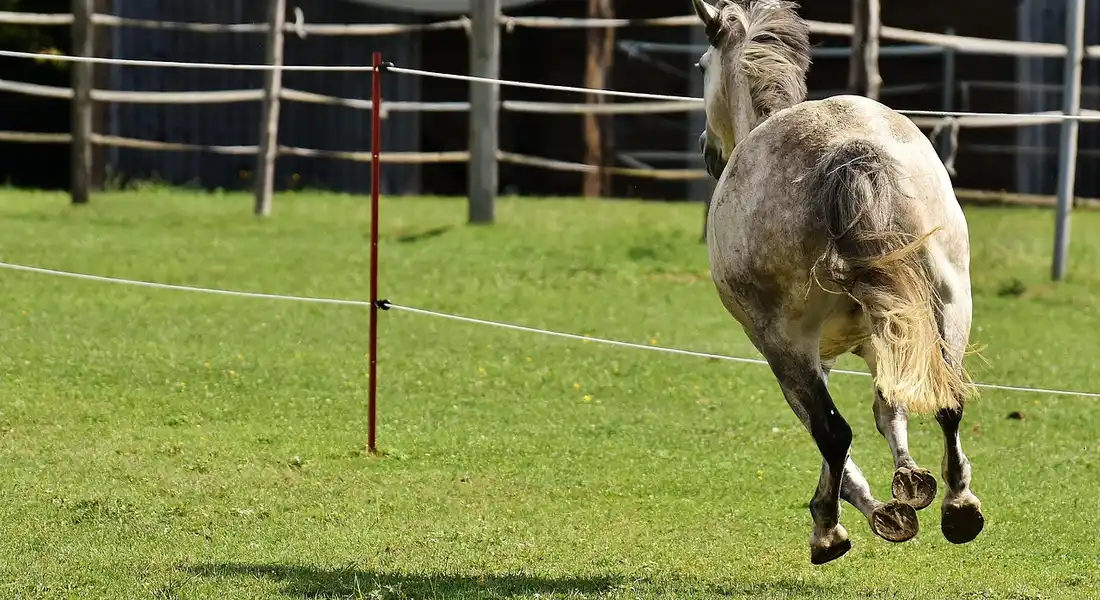
The best games aren’t just fun; they’re training in disguise. They build the muscle memory and trust you’ll rely on during a real trail ride or a vet visit. The goal is to make your horse think and try, not to force or frustrate them.
Backyard Obstacle Adventure
You don’t need fancy equipment. Raid your garage. A tarp becomes a “spooky water” crossing. A pair of pool noodles laid on the ground creates a narrow corridor. I use traffic cones to weave around with Rusty, turning a basic steering lesson into a game of equine slalom. Start by leading your horse over and around these items, rewarding every curious sniff and brave step with your voice and a break.
The key is to let them explore first. Let Luna stare at the blue tarp, let her snort, and just stand with her until her curiosity wins. Ask for one step, then stop and relax. This builds confidence far faster than dragging her over it. Keep sessions short-five brilliant minutes are worth more than twenty of growing frustration.
- The Tarp Trot: Lay it flat, walk over it. Crumple it slightly for noise. Eventually, drape it lightly over their back (if they’re comfortable).
- The Noodle Labyrinth: Create a path with noodles on the ground. Practice walking through without stepping on them, sharpening their body awareness.
- The Bridge Bravo: A wide, low wooden plank makes a fantastic “bridge.” Teach them to walk on and stand squarely.
Trailer Loading Practice as a Game
Turn a common headache into playtime. The game is called “Touch the Target.” I teach this to every horse, and it saved me with a reluctant Luna last spring. Trailer loading stops being about the dark box and starts being about following a cue to find a reward.
- Start away from the trailer. Teach your horse to touch a handheld target (like a rubber feed pan lid) with their nose. Click or say “yes!” and give a treat.
- Ask them to follow the target, taking steps forward. Practice this in a familiar space until it’s a solid game.
- Move the game toward the parked, open trailer. Place the target just inside the doorway. Reward for touching it.
- Gradually move the target further inside, only an inch at a time. Each step toward the target is rewarded.
The moment they put one foot on the ramp, throw a party-then quit for the day. You want the horse to think, “That was easy and profitable,” not, “Now I’m trapped.” This method turns a high-pressure chore into a series of small, solvable puzzles with a tasty paycheck.
Tailoring the Fun: Matching Games to Your Horse’s Personality
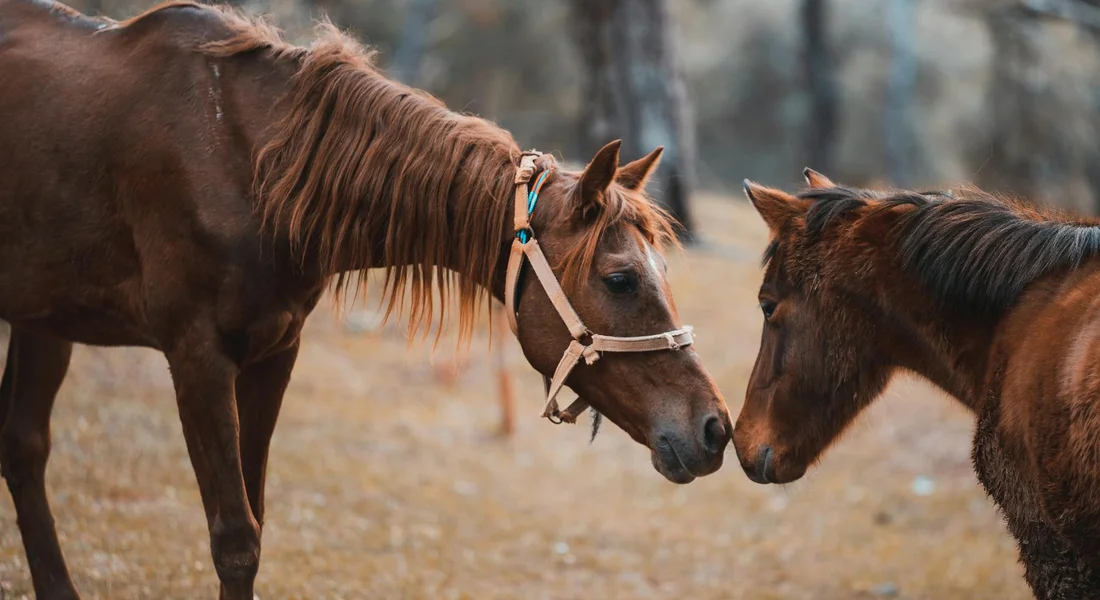
Just like people, horses have different play styles. Forcing a high-strung horse into a fast-paced game or a laid-back guy into a complex puzzle is a recipe for disinterest or worry. Success lies in reading your horse’s mood and choosing an activity that suits their natural inclinations.
| Horse | Personality | Perfect Game Match |
|---|---|---|
| Rusty | Reliable, patient, treat-motivated | Precision Games. He’s your ideal candidate for “parking” on a mat or precise foot placement exercises. Use his love for snacks to teach him to lift a foot onto a block or stand perfectly still inside a hula hoop laid on the ground. |
| Luna | Sensitive, energetic, requires soft hands | Confidence-Building Exploration. Games that let her make choices. Set up a “curiosity course” with novel, safe items (empty plastic bins, flags). Let her investigate at her own pace with zero pressure. Liberty work in a round pen, where she learns to follow your body language, can be incredibly rewarding for her mind. |
| Pipin | Cheeky, intelligent, escape artist | Problem-Solving Puzzles. Direct his cleverness! Hide carrots in a muffin tin covered with tennis balls. Teach him to “play soccer” with a giant ball or to open a simple latch (on a practice prop, not his stall!). This gives his busy brain a job and satisfies that need to figure things out. |
Watch your horse’s reactions. A game that worked yesterday might be too much today if they’re feeling fresh or tired. The most important rule is that the game ends on a good note, leaving both of you feeling successful and connected. I’d rather stop after three minutes of happy cooperation than push Pipin until he devises a new way to untie my shoelaces.
FAQ: Fun and Safe Games to Play with Your Horse
Are there any online games or apps that can help me learn about playing with my horse?
While there are no video games to play *with* your horse, many online resources can teach you new games. You can find tutorial videos on liberty work and positive reinforcement training from certified professionals. These digital tools are best for educating you, the handler, to then apply the concepts safely in real-life play sessions with your equine partner.
Where can I find ideas for free games to play with my horse?
The best free games use items already around your barn or in nature. Look for simple objects like traffic cones, old tarps, fallen logs, or even a sturdy cardboard box to create an obstacle course. Your imagination and a understanding of your horse’s personality are the only essential tools, turning a quiet afternoon into a engaging playground.
Do you have any suggestions for fun or quirky names for a playful horse?
Choosing a fun name can reflect your horse’s playful personality, like “Pippin,” “Mischief,” or “Bingo.” Consider names inspired by their favorite games, such as “Jenga” for a horse who loves stacking blocks or “Whisk” for one who enjoys targeting. Ultimately, the best name often comes from a unique trait or a shared inside joke that celebrates your special bond.
Final Thoughts from the Barn
The best games are simple, build trust, and treat your horse as a willing partner, not a toy. Building a strong bond comes from patience, consistency, and listening to your horse. When you trust your horse, training becomes a collaborative effort. Always prioritize your horse’s mental state over completing the activity, and end every session on a good note, even if it’s just a single successful step.
Progress in horsemanship isn’t measured by tricks mastered, but by the quiet conversations in between. I’ve found that the horse who trusts you in the paddock will try twice as hard for you under saddle. Sometimes it’s the small missteps—a rushed cue or inconsistent signals—that quietly undermine that trust. There are eight ways you’re accidentally undermining your horse’s confidence.
Further Reading & Sources
- 17 Mounted Horse Games You Can Play – Helpful Horse Hints
- 18 Best Horse Games on PC, Nintendo, PS, Xbox, and Mobile
- Horses Games: Play Horses Games on LittleGames for free
- Horse Games – Pony Games – Free Online Horse Games
At Horse and Hay, we are passionate about providing expert guidance on all aspects of horse care, from nutrition to wellness. Our team of equine specialists and veterinarians offer trusted advice on the best foods, supplements, and practices to keep your horse healthy and thriving. Whether you're a seasoned rider or new to equine care, we provide valuable insights into feeding, grooming, and overall well-being to ensure your horse lives its happiest, healthiest life.
Exercise