
The ‘Alpha’ Myth: Building a Safe, Trusting Partnership with Your Horse
Hello fellow equestrians. Are you struggling with a horse that seems resistant or spooky, leaving you worried about your safety and their well-being? I’ve felt that frustration in the barn aisle, too, wondering if I needed to be tougher to earn respect.
This article will guide you toward a kinder, more effective approach. We’ll move past outdated dominance ideas and focus on creating willing cooperation. You’ll learn:
- Why the “alpha” concept fails horse psychology and creates more problems than it solves.
- The clear, observable signs of a horse that feels secure and chooses to follow your lead.
- Gentle, practical steps to build leadership through communication and trust, not force.
My years of barn management and training horses-from sensitive Luna to clever Pipin-have taught me that true leadership is an invitation, not a confrontation.
Unpacking the ‘Alpha’ Label: Where Did This Idea Come From?
From Wolves to Wrong Turns: The Birth of a Barn Myth
In barn lingo, the ‘alpha’ myth is the belief you must physically and psychologically dominate your horse to be its leader. This idea is a hand-me-down from old, flawed research on captive wolf packs, not from observing horses in their natural state. Someone decades ago saw wolves in a zoo jostling for rank and wrongly applied that rigid hierarchy to equine society. These stories are part of broader equine social myths. They feed into the seven false beliefs about herd behavior and dominance that riders often encounter.
Think of it like an old, stubborn bit that pinches and doesn’t fit anyone well, but folks keep using it because “that’s how it’s always been done.” That misconception seeped into riding schools and training manuals, convincing generations that partnership requires a showdown. I’ve heard it echoed in commands like “make him back up until he sweats” or “you must go through every door first.”
Here are a few common dominance-based beliefs I’ve had to unlearn:
- “If your horse moves into your space, you must push them away aggressively.”
- “A horse that looks at you is challenging your authority.”
- “You need to ‘win’ every small interaction to maintain respect.”
- “Food rewards will make a horse spoiled and pushy.”
These approaches treat horses like they’re constantly plotting a coup. From my years in the saddle and mucking stalls, I can tell you that’s simply not how their minds work.
The Herd vs. The Pack: A Fundamental Misunderstanding
Horses are prey animals built for grazing and fleeing, not predators organizing hunting parties. Their herd structure is fluid and based on mutual benefit, not a fixed dominance ladder. Watching my own three, I see friendships shift with the weather, the time of day, and who found the best patch of grass.
Rusty, my steady Quarter Horse, often stands guard while Luna naps, but he’ll gladly follow Pipin the pony to a known apple tree. Their relationships are about safety, comfort, and knowing who is reliable in a scary moment, not who is the ‘boss’. Leadership in a herd is often situational; one horse might lead the move to water, another might initiate play.
This table highlights the core contrasts:
| Aspect | Horse Herd | Wolf Pack |
| Primary Drive | Safety, foraging, social bonding | Hunting, territorial control |
| Leadership Style | Fluid, often based on experience or initiative | Historically viewed as rigid, dominance-based (though this is also outdated for wolves) |
| Group Cohesion | Loose, with changing subgroups | Tight, familial units |
| Conflict Resolution | Subtle body language, yielding space, rarely severe fights | Ritualized displays, hierarchy maintenance |
Seeing horses as pack animals sets you up for a conversation they can’t understand. You’re speaking the wrong social language before you even say “whoa.” By talking to them in their own cues, you begin to understand what they need and why they respond the way they do. This shift is key to talking with horses and building better communication.
Why a Dominance Mindset Fails Horses and Handlers
The Cost of Being the ‘Boss’: Safety and Stress
Trying to force a horse into submission doesn’t build trust; it builds tension. When a horse feels threatened or confused by persistent pressure, their stress signals escalate from subtle to dangerous. I’ve seen horses go from pinned ears and swishing tails to full-blown rearing or bolting because they felt trapped with no clear, peaceful way out. It’s one of the common mistakes that breaks your horse’s trust.
This approach directly harms equine welfare. Chronic stress from confrontational handling can lead to ulcers, a weakened immune system, and a shut-down animal that just “goes through the motions.” It also puts you, the handler, at immense risk. A frightened or defensive horse is a thousand-pound liability.
Specific negative outcomes include:
- Increased anxiety: The horse becomes hyper-vigilant and spooky.
- Shutdown behavior: The horse stops offering any response, a sign of learned helplessness.
- Defensive aggression: Biting, kicking, or crowding as a last resort.
- Broken trust: Repairing a relationship after fear-based training takes far longer than building it kindly from the start.
True safety is forged in mutual understanding, not in you “winning.” The most dangerous horse in the barn is often the one who has lost all hope of being heard.
What Modern Equine Behavioral Science Tells Us
Learning to Listen: The Science of Partnership
Modern science shows horses are brilliant learners who thrive on clear communication and positive reinforcement. Using rewards like a scratch or a treat for desired behavior is like having a clear conversation, not a shouting match. It works because it aligns with how their brains actually process information.
Concepts like pressure-and-release aren’t about dominance; they’re about teaching cause and effect. You apply a light cue, the horse tries something, you release the pressure the instant they move toward the right answer. This makes you a predictable partner, not an unpredictable threat.
This science also highlights why 24/7 stall life is so hard on them. Isolating a herd animal in a box with little mental stimulation contradicts every natural instinct they have for movement and social contact. That’s why I advocate for maximum turnout-a bored, lonely horse is already on edge before you even bring the saddle out.
Leadership today means providing safety, clarity, and patience. It’s less about being an alpha and more about being a reliable guide they choose to follow.
The Pillars of a Cooperative Partnership

Forget the idea of making a horse submit to your will. True partnership is about forming an alliance. It’s you and your horse against the problem, not you against your horse. This requires three non-negotiable pillars: clear communication, earned trust, and genuine mutual respect.
Think of it like a good dance partnership. One leads, the other follows, but both are listening to the same music and moving together. The rider isn’t just shouting directions; they’re offering suggestions the horse understands and feels safe accepting.
Guidance: The Foundational Mindset Shifts
Your actions flow from your mindset. Before you even pick up a lead rope, check your internal narrative. Here are the key shifts to make.
- See requests, not commands. Instead of “You must back up,” think, “I am asking you to yield your space.” The difference is in your energy and your willingness to listen for a ‘yes’.
- Become a student of your horse. Every ear flick, sigh, and muscle twitch is a sentence. Your job is to learn their language, not just force them to learn yours.
- Embrace the release as the reward. The moment your horse tries, the pressure stops. This is the core grammar of horse communication. The comfort you provide teaches them more than any punishment.
- Prioritize the relationship over the task. Getting that hoof picked is the goal, but how you get there either builds or breaks trust. Sometimes, the most productive thing you can do is wait.
This shift turns daily chores into conversations, building a bank account of trust you can draw on during stressful moments.
Building Trust Without Force: A Hands-On Guide
Trust is built in the quiet, boring moments. It starts with the simplest interaction: leading. Watch any herd; the leader moves, the follower yields. We can replicate this with gentle pressure.
The First Conversation: Asking for Yield
Stand at your horse’s shoulder, facing the same direction. Apply gentle, steady pressure to the lead rope-not a yank, just enough to feel the weight of the rope. The millisecond you feel them even think about shifting their weight forward, release all pressure.
Listen for the quiet ‘thud’ of a hoof stepping forward. Watch for a soft chew or a lick, signs they are processing, not just reacting. The release teaches them that your pressure is information, not a threat.
Your timing must be impeccable; rewarding the ‘try’ is what creates a thinking partner, not a fearful robot.
Repeat. Be patient. If they don’t move, increase the pressure slightly, then release even faster when they yield. This isn’t about making them step; it’s about teaching them that responding to your signal is the easiest option.
The Power of ‘Yes’: Integrating Positive Reinforcement
Pressure-and-release teaches a horse how to turn off an unpleasant feeling. Positive reinforcement-like a treat or a scratch-actively tells them what you want them to turn on.
Marking the Moment
The key is a “bridge” signal-a clear sound that marks the exact second the horse does what you want. A click from a clicker or a specific word like “Good!” acts as a promise: a reward is coming.
Here’s a barn-tested example for a horse who fidgets during grooming. Stand by their shoulder with your brush. The *moment* they stand still, even for one full second, click! Then give a treat. You’re not rewarding the horse for standing; you’re rewarding the horse for choosing to stand still.
This method builds a willing dialogue because the horse starts actively offering behaviors to see what earns a ‘yes’, turning work into a game.
The body language difference is profound. For beginners, starting with clicker training provides a clear, positive framework to establish partnership from the ground up. Look for a beginner’s guide to using the clicker with horses in the next steps.
Your Practical Shift: From Alpha to Ally
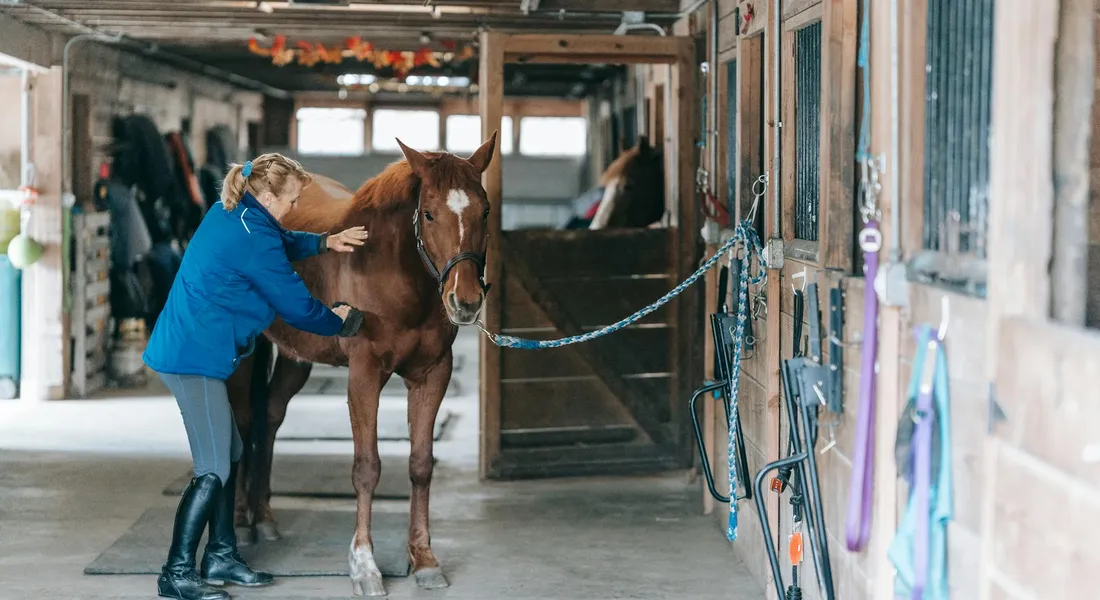
Guidance: Offer a concrete, multi-step plan for owners to transition their approach. Frame it as manageable, daily adjustments rather than an overnight overhaul. Stress patience and self-reflection.
Changing your role begins with a deep breath and a commitment to watch more and push less. This shift is a marathon of small moments, not a sprint to a new title, and your horse will meet you halfway if you listen. I built my approach over countless afternoons with Rusty, Luna, and Pipin, where I traded demands for invitations and saw anxiety melt into curiosity.
Start with these three steps, focusing on one at a time until it feels as natural as the smell of fresh hay.
Step 1: The Barn Audit – Observing Your Current Dynamics
Guidance: Instruct on how to quietly observe their own routines. What happens at feeding time? Who moves whom in the paddock? Suggest keeping a simple journal for a week to spot dominance-based patterns.
Grab a notebook and a cup of coffee, and for one week, become a silent researcher at your own farm. The goal is to see your routine through your horse’s eyes, noting where pressure is applied instead of partnership offered. Stand back at feeding time: does your horse pin ears or push into space, or do you use your body to block and shove? Watch turnout: do you chase him out, or does he walk freely?
I did this with Luna and saw a pattern: my hurried body language at the tie rack made her tense up before grooming even started. Your journal might reveal similar triggers.
- Record three daily interactions: feeding, leading, and handling.
- Note who initiates movement and how-is it a gentle lead or a physical push?
- Watch for subtle signs of stress: head tossing, sighing, or a fixed stare.
This audit isn’t about guilt; it’s about gathering data for a kinder strategy.
Step 2: Redefining Leadership in Daily Chores
Guidance: Give specific ‘hacks’ for common tasks like leading, tying, and hoof picking. Focus on creating choice and cooperation. For example, teaching a horse to ‘self-present’ a hoof for cleaning.
Now, take one chore from your audit and reinvent it. Leadership here means setting up for success so your horse chooses to participate. Forget making him obey; instead, build a clear, rewarding conversation for every request.
Take leading. I stopped dragging Rusty from his stall and instead taught him to follow a target stick or my open hand. If he stopped, I waited instead of pulling, rewarding the slightest step forward with a scratch.
- For Tying: Use a quick-release knot and a barrier loop. Teach standing quietly by untying and rewarding calmness before anxiety builds. Pipin learned to stand tied by getting released the moment he relaxed, not after he fussed.
- For Hoof Picking: Teach a ‘hovery present.’ Gently run your hand down the leg, and if the horse shifts weight, release immediately. Repeat until they offer the hoof. This turns a chore into a game where cooperation earns instant relief.
- For Space Respect: Instead of shoulder-checking your horse out of your space, use a soft rope cue on his chest or teach him to back from a light finger touch. It’s clearer and less confrontational.
The thud of a willingly placed hoof on the stand is a better sound than a struggle any day.
Step 3: Applying Partnership to Common Training Goals
Guidance: Apply the principles to a universal goal, like trailer loading or standing for the farrier. Break it down into tiny, rewardable steps that prioritize the horse’s emotional state over brute-force completion.
Apply your new patience to a bigger goal. Let’s use trailer loading. The old way might be to pressure until the horse leaps in. The partnership way? Make the trailer the best place to be, one inch at a time. Success is measured by calmness, not just completion, and a fearful horse cannot learn.
When I worked with Luna on this, we spent days just walking near the trailer, touching it, and eating hay from the ramp.
- Park the trailer in a familiar space with the ramp down. Let your horse investigate it freely for a session or two.
- Feed meals or place treats progressively closer to the ramp, then just inside, never forcing movement.
- Ask for one foot on the ramp. Mark and reward that try immediately with high-value feed. Back out calmly.
- Build slowly: two feet, then four, always allowing a retreat. The moment of walking in should feel like his idea.
- Practice standing quietly inside with the ramp up for short periods, feeding hay to create positive associations.
The same method works for the farrier. Teach your horse to stand squarely by rewarding weight shifts you like, not by punishing fidgeting. Break the shoeing into micro-sessions: pick, hold, release, reward. This builds trust through predictability, not restraint.
Your role is now that of a guide, not a governor, and the partnership you forge will be stronger for it.
FAQ: The ‘Alpha’ Myth: Understanding Modern Horse Leadership and Partnership
How can a handler build trust and leadership without force?
Trust is built by becoming a predictable and fair communicator, using clear pressure-and-release signals instead of intimidation. You offer safety and clarity, rewarding the horse’s smallest tries with an immediate release of pressure or a positive marker. This consistent dialogue teaches the horse to see you as a reliable guide they can choose to follow. Ultimately, this is how you build a strong bond and trust your horse. A patient, respectful partnership grows from clear signals and reliable responses.
What role does equine psychology play in modern horsemanship?
Modern horsemanship is grounded in understanding the horse’s innate nature as a prey animal built for flight and social bonding. It uses learning science, like positive reinforcement, which aligns with how their brains process information to build confidence. This psychology prioritizes creating a willing, thinking partner over suppressing behaviors through confrontation. Understanding how horses learn is essential for effective training.
What are the practical steps to transitioning from a dominance-based to a partnership-based approach?
Begin by quietly observing your current interactions to identify any unconscious dominance patterns in daily routines. Redefine one common chore, like leading or hoof picking, by breaking it into small steps where the horse’s calm choice is rewarded. In practice, cultivate a calm, assertive leadership with your anxious horse so soft, confident guidance becomes the norm. Apply this patient, reward-based mindset to larger goals, measuring success by the horse’s emotional state and willing participation at each stage.
From Dominance to Dialogue
Shift your focus from enforcing hierarchy to fostering clear, two-way communication built on mutual respect. True leadership is earned by being a predictable and fair partner, not through force or fear.
Progress in partnership hinges on patient, consistent practice that always prioritizes safety. The most important skill in your toolkit is learning to read and honor your horse’s honest responses.
Further Reading & Sources
- A Veterinarian’s Take: There Is No Alpha
- Busting the “lead mare” myth
- Alpha Horse Training Myth’s & Manipulation: Debunking the Popular Propaganda – YouTube
- Alpha Mare Behavior? Starting with the wrong assumptions? | The Horse Forum
At Horse and Hay, we are passionate about providing expert guidance on all aspects of horse care, from nutrition to wellness. Our team of equine specialists and veterinarians offer trusted advice on the best foods, supplements, and practices to keep your horse healthy and thriving. Whether you're a seasoned rider or new to equine care, we provide valuable insights into feeding, grooming, and overall well-being to ensure your horse lives its happiest, healthiest life.
Behavior