
Horse History & Domestication: How the Past Shapes Your Partnership Today
Published on: December 19, 2025 | Last Updated: December 8, 2025
Written By: Henry Wellington
Hello fellow stable hands and pasture pals! Have you ever been baffled by a sudden spook at a flapping tarp or felt stuck trying to explain a herd-bound horse’s anxiety? That frustration is real, and it often stems from a gap in our shared story with these animals.
Knowing how horses became horses-and how we became a team-is your secret weapon for safer rides and calmer barn days. We will trace their journey from wild hoofbeats to halter leads, focusing on the evolutionary pressures that built the prey animal mind, the key turning points where domestication rewrote the rules, and applying these insights to promote natural behavior and trust in your routine.
My years of barn management and training have shown me that the most effective care always honors the history written in every horse’s bones and instincts.
The Deep Roots of Our Modern Horse
The Scientific Name and Our Shared Journey
Think of a horse’s scientific name, Equus ferus caballus, as its full passport stamped with history. The genus ‘Equus’ groups them with zebras and donkeys, ‘ferus’ whispers of their wild ancestors, and ‘caballus’ is the stamp of domestication that changed everything. That wild ancestor, likely the now-extinct Tarpan, was a tougher, more wary creature roaming the steppes. Domestication didn’t just shrink their size or diversify coat colors; it selectively bred for a mind that could work with ours, turning a flight animal into a partner you can saddle up on a crisp morning.
From Protohorse to Partner: A Snapshot of Evolution
Our modern mounts are the product of a long evolutionary trail ride. It’s a story written in bone structure and tooth shape, and knowing it helps you appreciate why your horse is built the way it is. Understanding horse anatomy and biology is key to this appreciation.
- It started with a protohorse, a small, dog-sized forest dweller named Eohippus, who browsed on leaves and had multiple toes.
- As forests gave way to vast grasslands, these animals moved to the plains. Their legs grew longer for speed, and their teeth evolved from browsing molars to grinding surfaces perfect for tough grasses.
- The big leap was the development of a single, hard hoof from those middle toes, a masterpiece of natural engineering for pounding across open ground.
- The final act played out on the Eurasian steppes, where the modern equine form crystallized-a large, swift, herd-oriented grazier, perfectly pre-adapted for partnership with humans.
Every time you pick out a hoof, you’re holding 50 million years of adaptation in your hand, that single toe perfected for carrying weight across miles.
Where and How Domestication Began
The Botai Culture: Archaeology’s Big Clue
The question of ‘who tamed horses first’ felt like a cold case until archaeologists dug into the Botai culture sites in Central Asia. We’re not talking about vague cave paintings; this is hard evidence like pottery scraps with residues of horse milk and skulls showing telltale wear from primitive bits. This wasn’t just hunting. This was keeping herds, milking mares, and probably riding. It paints a picture of a people who didn’t just see horses as meat but as a renewable resource, a living, breathing part of their daily economy. Solving this mystery shows domestication was a slow, practical shift in how humans viewed the world around them. This is part of the historical introduction of horses to human civilizations. Understanding that arc shows how horses became woven into daily life, transport, and trade.
Taming the Spirit: More Than Just Capture
Catching a wild horse is one thing; convincing its great-great-grandchildren to stand quietly for the farrier is another. True domestication required a shift from predation to pastoralism-breeding, protecting, and living alongside herds. This meant fostering a fragile mutual trust, where horses provided labor, milk, and mobility, and humans provided safety from predators and guaranteed forage. That same work helps you build a strong bond and trust your horse as a willing partner. Trust built through consistency makes training safer and more harmonious. It’s the same principle I use with my sensitive Thoroughbred, Luna: pressure and release, patience, and rewarding the try. Building trust with her isn’t about dominance; it’s about proving I’m a predictable partner in a scary world. The creak of my saddle and the smell of the oats in my pocket are modern echoes of that ancient bargain struck on the steppe.
The Jobs That Shaped the Horse
Traction, Travel, and Turf: The First Uses
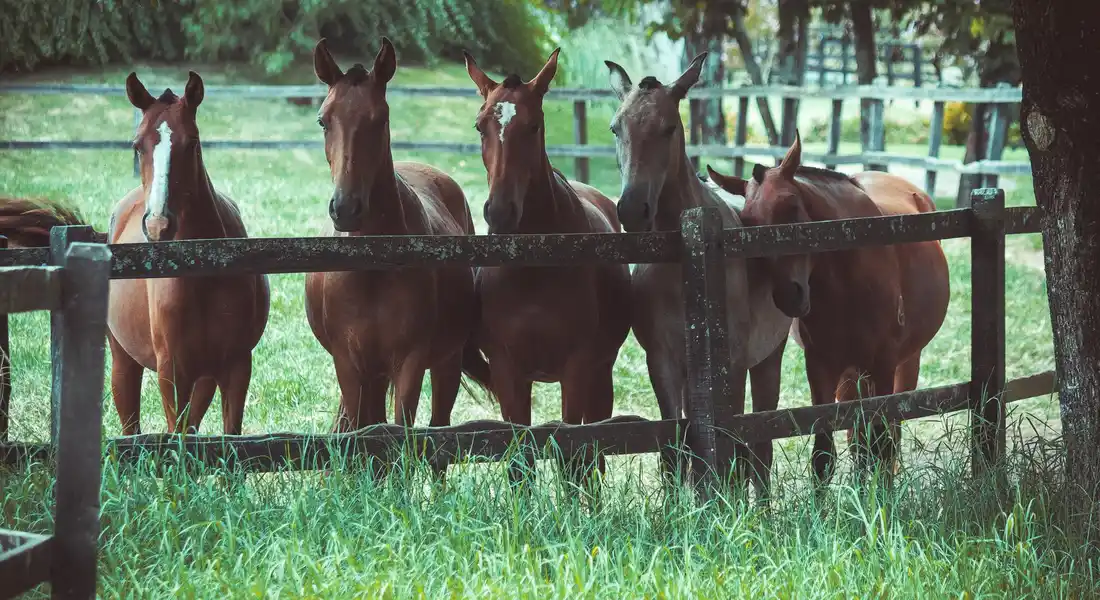
Once humans had horses, we put them to work in three fundamental ways: pulling heavy loads, carrying us on their backs, and serving in battle. Each job demanded different physical and mental traits, shaping which horses were bred and kept. Think of it as the original job interview, where a strong back or a calm mind meant the difference between being a plow horse or a warhorse.
- Traction (Pulling & Chariots): The earliest horses pulled sledges, plows, and later, lightweight chariots. This selected for powerful, stocky builds with immense shoulder strength and short, sturdy backs. I always remember this when checking a saddle’s tree width on a broad-backed gelding like Rusty; that need for spinal support hasn’t changed in millennia.
- Travel (Riding): Mounted travel required endurance, balance, and a tolerable temperament. Horses chosen for this were often smoother-gaited and more mentally resilient, able to handle strange sights and long days. It’s the same quiet patience I look for in a reliable trail partner.
- Turf (Cavalry): The rise of organized cavalry units prized speed, agility, and a burst of courage. This pushed selective breeding for lighter, faster horses with a reactive nature-traits you still see in sensitive thoroughbreds like my Luna. A horse’s role in ancient warfare directly informs why we must approach training with such soft hands today.
That ancient need for a strong topline in draft work is why I’m so fussy about saddle fit now. A chariot horse with a sore back was a liability; a modern pleasure horse with pinched withers is in for a world of hurt. The principle of protecting the backbone is timeless. Knowing how to saddle a horse properly is crucial.
Horses as Engines of Change: Migration and Trade
With a horse, the vast Eurasian steppes went from a barrier to a highway. Domestication turned the horse into the four-wheel drive of the ancient world, granting humans a mobility previously unimaginable. Suddenly, entire cultures could move with their herds, chasing grass and opportunity across continents.
This supercharged mobility didn’t just spread people-it spread ideas, languages, and technologies. The Silk Road wasn’t just walked by camels; it was galloped by horses carrying silk, spices, and innovations between empires. I think about this on cold mornings at the barn, the sound of hooves on hard ground echoing those ancient trade routes. Giving our horses ample turnout time honors this innate need for movement and exploration they’ve carried for thousands of years.
The horse’s power to connect distant places reshaped human history. Every time you enjoy a relaxed trail ride, you’re participating in a tradition of travel and discovery that once changed the world.
How Humans Physically Changed the Horse
Walking down my barn aisle, the variety always strikes me. Rusty’s stocky, dependable build, Luna’s lean and aerodynamic frame, and little Pipin’s shaggy, sturdy form. This didn’t happen by accident. We shaped them, quite literally, to suit our needs, making them one of humanity’s oldest and most impactful DIY projects.
Selective Breeding: The Original Custom Job
In simple terms, selective breeding is choosing which animals get to be parents based on specific traits you want to amplify. It’s nature, but with a human steering the wheel. Natural selection favors traits for survival in the wild, like camouflage and a strong flight instinct. Human selection, however, prioritized traits useful to us, sometimes at the expense of the horse’s natural durability. In horse breeding fundamentals, breeders learn to balance desirable traits with enduring soundness. These basics guide careful selection of parents to sustain healthy, versatile horses.
Imagine needing a living tank for armored knights. Breeders paired the biggest, strongest mares and stallions, and over generations, created the massive draft breeds like the Shire or Percheron. Often the discussion centers on the largest horse breed. These giants are a benchmark for size and strength. Their power came from bulk and bone, a far cry from the lean wild horse.
For speed in light chariots or later on the racetrack, the blueprint changed. The goal was aerodynamic efficiency and a fiery cardiovascular system. I see this in Luna every day: her deep chest, long legs, and that nervous energy are the direct legacy of ancestors bred for explosive speed. This focus on performance can sometimes mean a more sensitive digestive system and finer bones, trade-offs breeders accepted for that burst of pace.
Then consider the Silk Road. Traveling those brutal trade routes demanded incredible stamina, soundness, and a calm mind in strange places. Breeds like the Arabian were forged here, selected for hard feet, immense lung capacity, and a cooperative spirit. Their physical trademark-the dish-faced profile and high tail carriage-is just the visible signature of a body built for endless, economical travel.
Wild vs. Domestic: A Side-by-Side Comparison
To see our impact, let’s line up the original model next to the modern versions. The Przewalski’s horse is our best living snapshot of the true wild ancestor. Comparing them to your pasture pet reveals a story of deliberate change.
| Trait | Wild Horse (e.g., Przewalski’s) | Modern Domestic Horse |
|---|---|---|
| Flight Distance | Extremely high. Humans are predators; they flee first, ask questions never. | Highly variable. We’ve bred for tractability. A pony like Pipin might see you and think “treat dispenser,” while a sensitive Thoroughbred like Luna may still startle at a bag. |
| Coat Color & Markings | Limited to dun, grulla, or bay with primitive markings (like dorsal stripes). Camouflage is key. | A breathtaking rainbow. Paints, palominos, appaloosas, and cremellos exist because we liked the look. Rusty’s bright sorrel and blaze would be a target in the wild. |
| Dependence & Care | Completely self-sufficient. Finds food, water, trims own hooves through movement, and self-medicates with wild herbs. | Relies on human management for diet, hoof care, dental work, and shelter. Their survival is now a partnership, for better or worse. |
I think about this dependence every time I trim a hoof or mix a supplement. We took the horse out of nature, so we assumed responsibility for the care nature once provided. That’s the fundamental contract of domestication. Their incredible diversity is a testament to our influence, and their continued well-being is our absolute duty.
Applying Ancient Wisdom in Your Stable
Honoring the Core Design: Why Turnout is Non-Negotiable
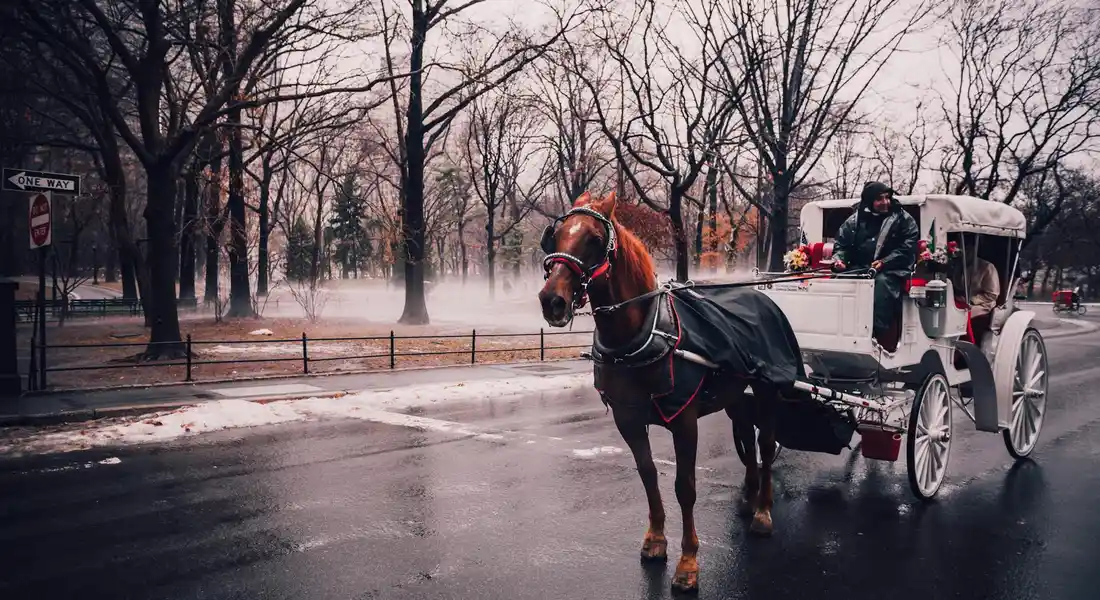
Your horse’s body is a relic of the open steppe, built to walk for miles with their head down, grazing in a herd. Confinement in a stall isn’t just boring; it actively works against every fiber of their evolutionary design. Think of it as forcing a marathon runner to sit in a closet all day. Their joints stiffen, their mind races, and their digestive system grinds to a halt.
I learned this the hard way with Luna. When she came to us, a schedule heavy on stall time had her dancing on needles, her eyes wide at every bird. We switched her to 24/7 pasture life with a herd. The change was physical. The constant, low-grade movement loosened her back, and the sound of steady grazing replaced the thud of anxious circling. Within a week, the mare under saddle was softer, more focused, and the whites of her eyes showed less. The smell of rain on grass and the quiet crunch of jaws at work became her normal, and her entire demeanor settled.
Maximize turnout. Every hour outside is an investment in soundness.
- Movement lubricates joints and prevents stocking up.
- Grazing posture aligns the spine and engages the core.
- Herd contact satisfies social needs, reducing anxiety and weaving.
Reading Behavior Through a Historical Lens
Many “behavioral issues” are simply ancient survival software running in a modern setting. A horse spooking at a tarp isn’t being naughty; they’re following a program that kept their ancestors alive. Seeing anxiety or herd-bound stress as a flaw misses the point-it’s a feature of a prey animal wired for constant vigilance. Understanding common horse fears and skittish behavior helps us respond with strategies to manage anxiety. This is about learning, not judging, and applying calm, consistent responses.
Fight this history, and you’ll lose. Work with it. My pony Pipin, the clever escape artist, taught me this. His mischief stems from a deep-rooted drive to problem-solve for food and security. Instead of just building higher fences, I engage that brain. If he’s nervous about a new trail obstacle, I don’t force him. I let him watch, sniff, and even lick it. Using his natural curiosity as a training tool turns a potential battle into a game he wants to win.
Here are two tips that respect their past:
- For the spooky horse: Don’t punish the look. Let them stop and observe. Breathe with them. Pressure and release work because they mimic herd movement-a leader moves away from pressure, giving relief.
- For the herd-bound horse: Build confidence alone with short, positive sessions. Start by just grazing them a visible distance from the herd, where they can still see and smell their friends. Gradually increase the separation as they learn being alone doesn’t mean danger.
Anatomy is Destiny: Feeding for Their Gut History
A horse’s digestive system is a one-way street engineered for a near-constant flow of low-quality forage. Their stomach secretes acid continuously, meaning it’s designed to be buffered by a trickle of saliva from almost constant chewing. Large, concentrated grain meals are a historical mismatch that can lead to acid splashes, ulcers, and colic. Does a horse’s digestive system really work as designed? Understanding how it functions helps explain feeding choices and health outcomes.
The rule is simple: small, frequent meals beat fewer, bigger ones. Your horse should spend most of its day chewing fibrous roughage, not waiting for a dinner bell. If your horse isn’t a hard keeper, skip the grain altogether and focus on the quality of your hay or pasture.
My go-to stable hack for this is embarrassingly simple: a double-layered slow-feed hay net. I use one for Rusty, who would bolt his hay and then stand bored. Now, pulling strands from the small holes mimics the slow foraging of the plains. It turns a ten-minute meal into several hours of engaged chewing, which is better for his mind and his hindgut. This one cheap tool dramatically reduces waste, stretches your hay supply, and keeps the gut moving as nature intended.
FAQ on Horse History & Domestication
Which ancient civilization is famous for its skilled use of chariots and cavalry?
The Assyrian Empire is renowned for its early and effective use of horse-drawn chariots in warfare. Later, the Mongols excelled with cavalry, leveraging horses for rapid mobility and conquest across vast territories. These civilizations showcase how equine skills were crucial in shaping military history and empire expansion.
What role did horses play in the development of agriculture?
Horses transformed agriculture by supplying reliable draft power to pull plows and harrows, making tilling soil faster and more efficient than with oxen. This boost in productivity allowed farmers to cultivate larger areas, leading to increased food surpluses and stable food supplies. Consequently, horses supported the growth of settled agricultural communities and economic development.
What is the significance of the Przewalski’s horse in equine history?
Przewalski’s horse holds great significance as the last surviving true wild horse species, providing a direct link to pre-domesticated equines. It serves as a vital reference for studying natural equine behavior, physiology, and the genetic impacts of domestication. Conservation programs for Przewalski’s horse help preserve equine biodiversity and inform modern horse management practices.
Honoring the Horse’s Heritage in Modern Care
Our horses’ wild ancestors lived as moving, social grazers, and their basic needs haven’t changed. Protect their physical and mental health by providing maximal turnout time with a compatible herd, fostering healthy herd dynamics.
Progress in horsemanship requires patience and a steadfast commitment to safety. Your most important job is to listen-the horse always has something to say.
Further Reading & Sources
- Domestication of the horse – Wikipedia
- When Did Humans Domesticate Horses? Scientists Find Modern Lineage Has Origins 4,200 Years Ago
- Horse – Domestication, Evolution, Breeds | Britannica
- Rewriting the story of horse domestication | Colorado Arts and Sciences Magazine | University of Colorado Boulder
At Horse and Hay, we are passionate about providing expert guidance on all aspects of horse care, from nutrition to wellness. Our team of equine specialists and veterinarians offer trusted advice on the best foods, supplements, and practices to keep your horse healthy and thriving. Whether you're a seasoned rider or new to equine care, we provide valuable insights into feeding, grooming, and overall well-being to ensure your horse lives its happiest, healthiest life.
Behavior