
Horse Lying Down: How to Spot Trouble and Ensure Safe Rest
Hello from the barn aisle. If you’ve ever frozen at the sight of your horse stretched out in the stall, you’re not alone. That sudden fear of colic, injury, or something worse is a gut punch every responsible owner feels.
I remember the time I found my steady Eddy, Rusty, flat out in his paddock; my mind raced to the worst before I heard his gentle snore. In this article, I’ll cut through the worry with clear, barn-tested guidance. We’ll cover:
- Decoding the signs that mean peaceful sleep versus a veterinary emergency.
- Setting up your stall and turnout for maximum safety during rest.
- The step-by-step protocol to follow if your horse is down and can’t rise.
You can trust this advice comes from a life spent in the stable, managing the care of everything from sensitive thoroughbreds to clever ponies like Pipin.
What’s Normal? Horse Sleep Patterns and Resting Behavior
Typical Duration and Positions for Healthy Rest
Horses need REM sleep just like we do, and they can only get it lying down. They don’t sleep for eight hours straight like humans. Instead, they catch it in short, sweet bursts throughout the day and night. I’ve spent many quiet afternoons watching Pipin, our Shetland, flat out on his side in a sunny patch of paddock, utterly dead to the world for twenty minutes before popping up to graze. It’s a peaceful sight when you know it’s normal and understand how much sleep horses actually need.
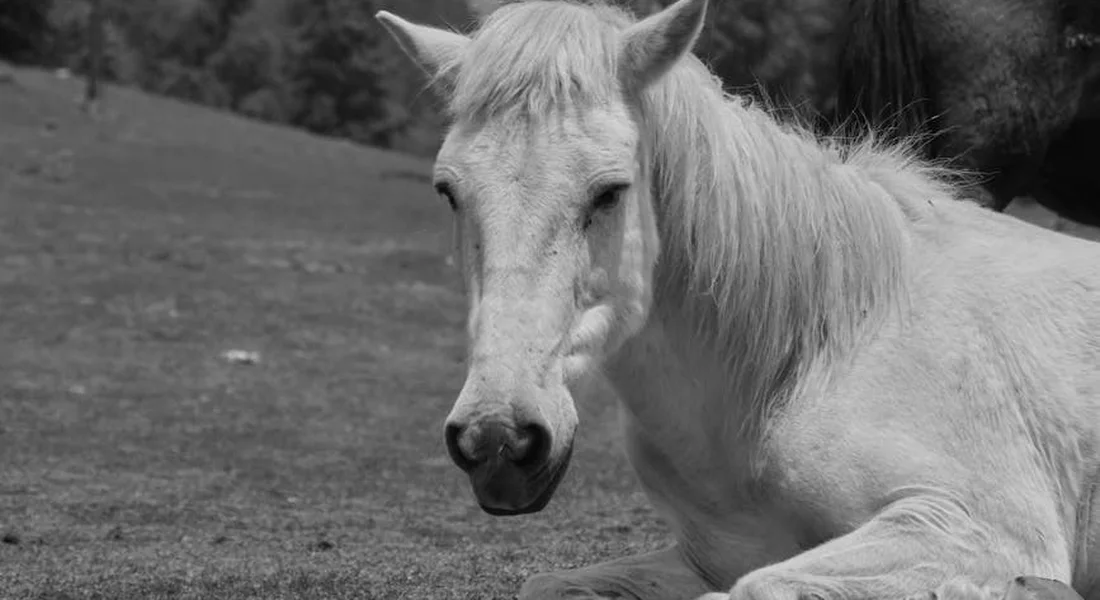
They rest in two main positions. The first is sternal recumbency, chest down with legs tucked. It’s a light rest pose. The second is lateral recumbency, fully stretched out on their side. This is for deep, REM sleep. Seeing your horse completely flat out can be startling, but it’s a sign they feel safe enough to achieve full sleep. These postures are part of typical horse sleeping resting behavior. Recognizing them helps you assess your horse’s comfort and safety while resting.
So, how much is typical? Here’s a quick guide to average daily lying-down time for a healthy horse:
- Total rest time: 30 minutes to 3 hours per day.
- Deep REM sleep: Only about 30-45 minutes of that total, accumulated in 5-15 minute sessions.
- Weather factor: They lie down more often on soft, dry ground and less in wet or muddy conditions.
- Herd dynamics: In a group, they often take turns “standing guard” so others can rest safely.
Decoding the Downward Dog: Why Horses Lie Down
From Simple Fatigue to Serious Illness
A horse hitting the dirt isn’t automatically a red alert. Context is everything. Is it after a long trail ride like Rusty might enjoy, or is it during a time they’d normally be eagerly awaiting dinner? You have to play detective. Your first clue is always the horse’s overall demeanor before, during, and after they lie down.
To help you decode the behavior, here’s a breakdown of common reasons, from benign to concerning.
| Reason | Behavioral or Medical? | What to Look For & Barn Examples |
|---|---|---|
| Deep Sleep & REM Cycle | Behavioral (Normal) | Short duration (under 30 min), peaceful expression, easy rising. Pipin is a master of the midday sun nap. |
| Boredom or Comfort Seeking | Behavioral (Manageable) | Often in the stall on deep bedding, may roll afterwards. A sign they need more turnout or mental stimulation. |
| Muscle Fatigue or Soreness | Medical (Mild) | After intense work. Luna, being a sensitive Thoroughbred, might lie down more quietly after a demanding training session to ease her muscles. |
| Pain or Lameness | Medical (Serious) | Relieving weight from a sore limb. They may lie down more frequently, be reluctant to move, or get up awkwardly. |
| Colic (Abdominal Pain) | Medical (Emergency) | Restlessness, repeated lying down and getting up, rolling, looking at flank. This is a vet call immediately. |
| Respiratory Distress | Medical (Emergency) | Think of it like they’re trying to catch their breath after a sprint; lying down may ease breathing effort but signals major trouble. |
| Systemic Illness or Fever | Medical (Urgent) | Lethargy, lack of interest in food or surroundings. They lie down because they feel too weak to stand. |
Differentiating between a bored horse and one in pain is key. Behavioral boredom is often solved with more turnout and social time. A medical issue like gastric ulcers, however, creates a constant, gnawing pain that might make a horse lie down quietly to cope. When in doubt, always rule out pain first-take their vital signs and call your vet. I’ve seen stoic old Rusty just doze, but with high-strung Luna, any extra time spent down has me checking for a stone bruise or a tweaked muscle.
Red Flags: Recognizing Distress in a Lying Horse

Key Behavioral and Physical Signs
Spotting trouble starts with knowing your horse’s normal nap routine. My old reliable Rusty snoozes flat out like a rug, but high-strung Luna only ever cat-naps, her ears twitching at every barn swallow. A sudden change in their resting habit is your first clue that something may be off.
Specific pain indicators are hard to miss once you know them. Look for violent rolling where the horse seems desperate to find a position, not the gentle stretch-and-flop of sleep. Profuse sweating on the neck and flanks, unrelated to heat or work, is a major red flag. Listen for abnormal vocalizations-deep groans or constant, anxious groaning are not the contented sighs of rest. Some discomfort is subtle, showing as a slight change in stance or avoidance of touch. Being able to recognize subtle signs equine pain helps you catch issues before they escalate.
I always do a quick safety check from the stall door before entering. Here’s my simple visual scan:
- Observe the breathing. Is it calm and slow, or fast and labored?
- Check the eyes. Are they soft and half-closed, or wide, white-rimmed, and frantic?
- Watch the legs. Gentle shifting is normal; frantic pawing that makes a hollow *thud-thud-thud* on the mats is not.
- Note the head position. A resting horse often tucks its head; one in distress may throw it back or stare at its flank.
The line between napping and colic is defined by intention. A sleeping horse is relaxed and will get up calmly if disturbed, while a colicking horse is focused inward on its pain and may not respond to you at all. Remember Pipin, our cheeky pony? His fake “I’m sick” act for extra treats involves dramatic sighs, but his eyes are always watching me. Real pain has a vacant, glassy look.
The Hidden Dangers: Risks of Prolonged Recumbency
Immediate and Long-Term Health Threats
A horse’s heavy body isn’t built for long periods on the ground. Their anatomy creates immediate risks, like the full weight of intestines pressing on lungs, which can hinder breathing. If a horse is cast against a wall or thrashing, the sheer force can lead to devastating limb injuries or nerve damage in a matter of minutes.
Complications from being down too long stack up quickly. I’ve helped horses stand after a scary cast incident, and the muscle trauma is real.
- Pressure sores (decubitus ulcers) develop on bony prominences like hips.
- Muscle damage from compression can lead to permanent weakness.
- Hind limb weakness, called “downer” syndrome, makes it impossible for them to rise.
- Airway obstruction is a silent, urgent threat if the head or neck is pinned awkwardly.
Being cast is often a symptom, not the cause. A horse may become cast because it laid down due to a sudden illness or colic pain and then became too weak or disoriented to stand. This dangerous cycle means a downed horse can rapidly deteriorate from a manageable issue into a life-threatening crisis. Your quick action to assess and call for help is everything.
First Response: Your Action Plan for a Down Horse
Step-by-Step Emergency Procedures
Your first job is to stay safe so you can actually help. Always approach a down horse with a calm demeanor and assess the scene from the gate or doorway before entering. A startled or pained horse can thrash, and you are no good to anyone with a broken foot.
-
Secure the area and yourself. Ensure no other horses are loose and that you have an exit path. Speak in low, soothing tones to let the horse know you’re there. I often hum a silly tune-it keeps my breathing steady and seems to relax them.
-
Perform a quick visual assessment. Look for obvious injuries, labored breathing, or signs of colic like sweating or looking at the flank. Check if the horse is cast (stuck against a wall) or simply resting. Note the footing around them; is it slippery? Spotting early signs of illness or injury in your horse can prompt quicker care. If something seems off, note it and seek veterinary advice promptly.
-
Encourage them to rise on their own. Gently call their name and make a familiar clicking sound. You can often coax a resting horse up by rustling a feed bucket. If they are cast, you may need to carefully pull the tail or top leg toward the open stall to help them roll free. Never put your own body directly behind them or in a position where you could be pinned.
-
Know when to stop and call the vet immediately. If the horse is distressed, cannot lift its head, has been down for more than a few minutes without trying to rise, or you see any injury, reach for the phone first, not a lead rope. Time is muscle and nerve.
I remember finding old Rusty cast in a corner after a deep roll. He was calm, just stuck. By slowly pulling his top hind leg toward me while talking nonsense about carrots, he grunted, rolled over, and stood up with a shake. The key was moving slowly and letting him do the work once he had the space.
Building a Safer Haven: Stall and Turnout Modifications
Practical Tweaks for Equine Safety
Prevention is your best tool. A few thoughtful changes to your horse’s environment can drastically reduce the risk of a dangerous lie-down.
Start with the foundation: deep, supportive bedding. I am a firm advocate for a minimum of 8 to 12 inches of loose, fluffy bedding like pine shavings or peat moss. This cushion provides traction for a horse to push off from and prevents them from getting stuck on a hard floor. The deep bed encourages natural lying behavior for rest, not just desperation.
Safe stall design is about eliminating traps. Consider these features:
- Rounded corner boards or rubber corner guards to prevent a horse from wedging itself.
- Anti-cast strips or mats on walls, which give a hoof something to grip if they need to roll.
- Ample square footage for the size of your horse-a tight space increases casting risk.
- A low-profile door sill to prevent a hoof from catching during a hurried rise.
Turnout time is non-negotiable for mental and physical health, but the pasture must be a safe place to roll. Walk your paddocks weekly to fill in holes, remove large rocks, and clear away fallen branches or old fencing. That blissful afternoon roll shouldn’t end with a wrenching twist or a puncture.
Finally, monitor any horse on sedation or strong medications. After a procedure like casting, I keep Luna in a deeply bedded, oversized stall with the lights on for several hours, checking on her every thirty minutes. A drugged horse deserves a watched, padded cell until the wobbles fully wear off.
Prevention is Key: Reducing Risks Before They Happen

I’ve found the best medicine in the barn isn’t in a syringe; it’s in the daily routine. Watching Rusty stretch out for a full afternoon nap without a worry is my reward for getting the basics right. A proactive approach turns potential nightmares into simple, manageable check-ins.
Proactive Care and Daily Monitoring
Think of your horse’s well-being as a stool with three legs: movement, nutrition, and low-stress handling. Knock one out, and the whole thing gets wobbly. My philosophy is simple: a horse set up for success is less likely to find trouble.
The Foundation: Turnout, Forage, and Feet
Constant movement is non-negotiable. It’s what their bodies are built for. Adequate turnout isn’t a luxury; it’s the primary maintenance system for their digestive tract, circulation, and mental health. A horse that can walk freely is a horse whose system is flushing itself out.
Prioritize slow, consistent intake of forage over large grain meals to support a healthy digestive flow and stable energy levels. I’ve seen horses become a different, more settled version of themselves on a forage-focused diet. And never underestimate the farrier. A balanced hoof ensures a balanced stance and a confident lie-down and get-up.
Frequently Asked Questions: Risks and Safety of Horses Lying Down
What are the risks associated with a horse being unable to stand (e.g., colic, injury)?
An inability to stand, or recumbency, poses immediate physical threats. The horse’s immense weight can compress its lungs and cause respiratory distress, and thrashing can lead to severe musculoskeletal or nerve injuries. Furthermore, a horse that is down is often experiencing a primary issue like colic, which can rapidly become more severe without veterinary intervention.
What are the potential complications of prolonged recumbency in horses (e.g., pressure sores, muscle damage)?
Complications develop quickly as the horse’s body is not designed for prolonged pressure on the ground. This leads to painful pressure sores on bony areas like the hips and shoulders, and muscle compression causes damage and weakness. A critical risk is “downer” syndrome, where muscle trauma and nerve impairment make it impossible for the horse to rise even after the initial cause is resolved.
When should a veterinarian be called regarding a horse lying down?
Call a veterinarian immediately if the horse is distressed, sweating, rolling violently, or unable to rise. You should also call if the horse has been down for an unusually long time, shows signs of labored breathing, or if its overall demeanor is dull and unresponsive. Any deviation from your horse’s normal resting pattern that is accompanied by signs of pain or weakness warrants an urgent professional assessment. Being familiar with these emergency signs helps you decide when to call the vet to support timely decisions.
A Quiet Word at the End of the Day
Learn your horse’s unique rhythms and trust the difference between peaceful rest and a call for help. The most critical safety step is always to check for signs of distress-like labored breathing or an inability to stand-before assuming a downed horse is simply napping.
Good horsemanship is built on patient observation, not panic. Your horse’s behavior is his most honest language; make it a habit to listen.
Further Reading & Sources
- Why Is My Horse Lying Down? – My New Horse
- Lying Down More Than Normal Or Getting Up Amp Down | Horse Side Vet Guide
- Is That Horse Lying Down Sick? | StableStrides
- Why Is My Old Horse Lying Down More Than Usual? Causes and Concerns
At Horse and Hay, we are passionate about providing expert guidance on all aspects of horse care, from nutrition to wellness. Our team of equine specialists and veterinarians offer trusted advice on the best foods, supplements, and practices to keep your horse healthy and thriving. Whether you're a seasoned rider or new to equine care, we provide valuable insights into feeding, grooming, and overall well-being to ensure your horse lives its happiest, healthiest life.
Health