
Equine Color Vision Explained: How Horses See and Why It Matters for Riders
Hello fellow equestrians! Does your horse sometimes spook at a shadowy jump or refuse a seemingly simple trail obstacle? That sudden tension might stem from how they perceive the world, not willful disobedience. Misunderstanding equine vision can turn a routine ride into a safety issue, leaving you frustrated and your horse anxious.
Let’s clear the air. We’ll cover: the exact spectrum of colors your horse likely sees, backed by science, how this vision shapes their reaction to tack, fences, and trails, and practical, gentle handling tips to build confidence and prevent accidents.
Drawing from years of barn management and training horses like the clever Luna and steady Rusty, I’ve learned to translate their unique perspective into safer, happier partnerships.
The Building Blocks of a Horse’s Gaze: Eye Anatomy and Function
To grasp how a horse sees color, you first need to understand the machinery. Their eyes are not just bigger versions of ours. They’re evolutionary masterpieces built for a prey animal’s survival. That sets the stage for understanding horse colors and their vision. In the next steps, we’ll explore which colors horses actually perceive and how that shapes their behavior.
Retina, Rods, and Cones: The Photoreceptor Setup
Inside the eye, the retina is like the camera’s film. It’s lined with photoreceptor cells: rods and cones. Rods handle low-light and motion detection. Cones are for color and detail in bright light.
Horses have a high ratio of rods to cones, giving them superb night vision and making them movement-detection powerhouses. That flicker in the distant bushes? They saw it long before you did. Their cone setup, however, is different from ours, which leads directly to their unique color perception. There’s a common myth that horses see straight ahead as clearly as we do, but mythbusting horse vision reveals that in reality, front-on detail is limited, and their vision leans toward movement and the periphery.
Pupil Size and Placement for a Panoramic View
Look at your horse’s eye from the front. That horizontal, oblong pupil isn’t just for style. It allows a staggering 350-degree field of view. They have small blind spots directly in front of their nose and right behind their tail. Compared to humans, their sensory world operates quite differently.
Beyond Color: Motion Detection, Depth, and Low-Light Sight
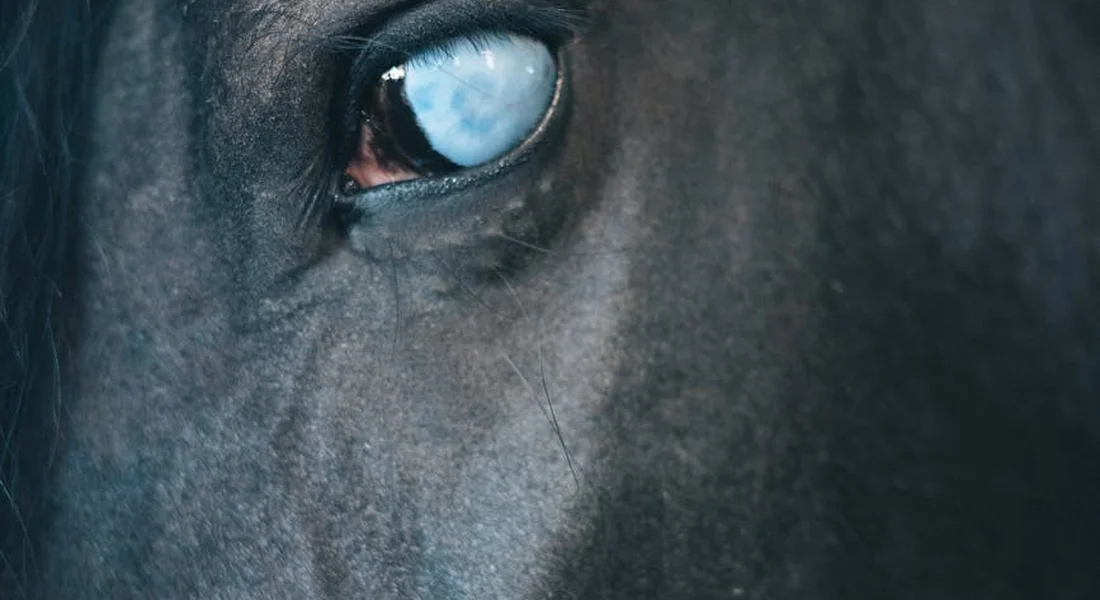
Master Motion Detectors: Why Your Horse Spooks at “Nothing”
Your horse isn’t spooking at nothing. They’re spooking at everything. Their vision is wired first and foremost to detect the slightest twitch, a legacy from life as prey. Think of their eyes as high-definition motion-sensing security cameras, scanning constantly for the flicker of a predator’s ear or the sway of a bush. That plastic bag in the hedge isn’t a scary color; it’s an unpredictable, fluttering motion that triggers an ancient alarm bell.
I’ve seen this with Luna a hundred times. A leaf dropping ten feet away gets the same reaction as a mountain lion in her mind. Their retinas are packed with rod cells for detecting movement and light, even if it costs them some detail on stationary objects. When your horse tenses at a “still” object, they likely saw it move a moment before you did, or they’re struggling to focus on its blurry edges. Patience here isn’t just kindness; it’s acknowledging their superior, but different, visual hardware.
Navigating Space: Depth Perception and Blind Spots
Depth perception is where things get tricky for the equine view. They have a narrow band of binocular vision right in front of their nose, maybe 60-70 degrees, where both eyes work together to judge distance. This is great for picking a precise spot to jump over a log or nip a single blade of grass.
The rest is monocular vision-each eye sees a separate picture on that side. This gives them a nearly 350-degree panoramic view for safety but poor depth judgment on the sides. That’s why they might spook sideways at a fence post they’ve passed daily; the depth suddenly looks “off.”
Now, add the blind spots. They cannot see directly:
- Directly behind their tail.
- Directly between their eyes, for a short distance in front of their forehead.
- Directly under their head and neck.
Always approach and speak to them from the shoulder. Walking quietly into their rear blind spot is the quickest way to get a nervous kick, not because they’re mean, but because you literally just teleported into their space. I make a habit of humming or softly clucking when moving around Pipin in his stall, giving that cheeky pony a sonic heads-up.
Applied Barn Science: Using Color Vision Knowledge in Daily Care
Selecting Safer Gear: Halters, Blankets, and Boots
Knowing they see yellows and greens best, and blues as muted, changes how I choose equipment. I want my horse to see it clearly, especially in low-light emergencies. That same color awareness also helps with identifying different horse coat colors at a glance. It matters for safety and care as lighting changes.
For halters and lead ropes, a bright fluorescent yellow or lime green is a fantastic choice. It stands out against most backgrounds in their vision. A blue halter, while pretty to us, may blend into shadows or a green field for them. For turnout blankets, consider contrast. A grey horse in a navy blue blanket might be harder for other horses to see clearly at dusk, potentially leading to squabbles.
Boots and bandages are another consideration. Using white or bright polos on legs can help a horse be more aware of their own limb placement over colored jumps or in deep footing, providing a clear visual cue. It’s a small hack that aligns your equipment with their perception. Beyond polos, do put boots on your horse for extra leg protection during training or on tricky footing. It’s a natural next step that complements the visual cues you’ve chosen.
Pasture and Stall Setup for Visual Comfort
Minimize spooks by managing contrast and shadow. A single, sun-bleached white board on a dark fence line can look like a glaring hole to a horse. Try to keep fencing a uniform color they can easily process.
In the barn aisle, avoid creating deep, dark pits of shadow next to brightly lit areas. Their eyes adjust slower than ours to light changes. Consistent, gentle lighting is best. I also paint the edges of stall doors and feed tubs a contrasting color. A dark feed tub inside a dark stall corner is practically invisible; a cream-colored tub helps it stand out.
Water sources benefit from this too. A black rubber tub in a shaded corner can be a visual void, making some horses hesitant to drink. A lighter-colored tub or even placing a white stone in the bottom can make the water more discernible. It’s about working with their world view, not against it. Simple changes, grounded in how they actually see, build a calmer, more confident horse.
Training with Their Eyes in Mind: Color Choices for Learning and Safety
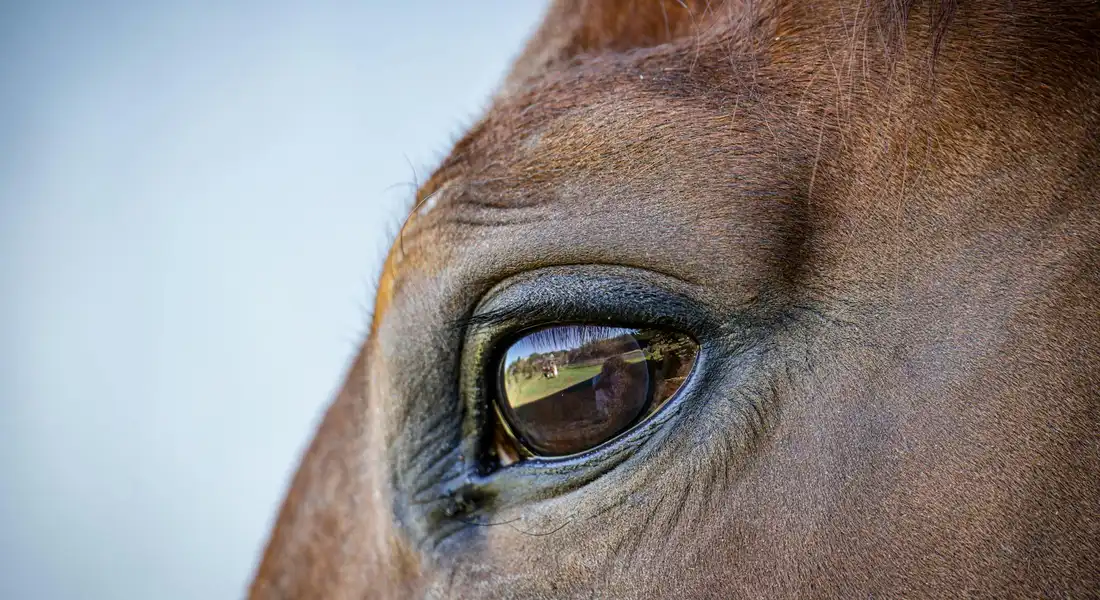
Knowing how your horse sees the world changes everything in the training pen. It turns guesswork into strategy. You start choosing your tools-and your wardrobe-with their perception in mind, building a clearer line of communication. Talk to your horse and really listen to what they show you. Understanding them turns signals into a fluent, two-way conversation.
Choosing Jump Colors and Training Aids Effectively
I learned this lesson painting jumps on a rainy afternoon. A bright blue vertical and a yellow oxer stood in the arena. My sensitive Thoroughbred, Luna, flowed over the blue but chipped in hard before the yellow. She wasn’t being difficult; the color simply blurred into the footing as she approached. For horses, high-contrast colors like blue, white, and bright orange create the clearest visual definition against most arenas and grassy fields.
Use this to your advantage:
- Paint jump rails with alternating bold colors (blue/white stripes are classic for a reason).
- Choose blue or orange cones for ground pole exercises or lane boundaries.
- Opt for training flags and ribbons in these visible shades. A blue flag on the end of a lunge whip is far less likely to be “invisible” and cause a spook.
- Avoid reds, greens, and browns for critical equipment, as they can appear as muddy, shadowy blobs.
This isn’t just for jumping. That red rubber feed tub left in the corner of the paddock? To your horse, it’s a dark, sudden hole that appeared overnight. Using a light blue or cream tub eliminates that unnecessary scare.
Interpreting Behavior Through the Lens of Vision
So much of what we label as “naughty” or “spooky” is just a horse reacting to a confusing visual signal. Their wide-set eyes create a panoramic view, but it’s full of blind spots and monochromatic patches. A horse that shies at the same “nothing” every ride is likely seeing a stark contrast or sudden depth you’ve learned to ignore.
Here’s how to decode it:
- The “Gate Monster”: A shadow across the aisle or a change in flooring texture can look like a bottomless pit. They aren’t refusing; they’re asking for reassurance to cross a visual cliff.
- Head Tossing on a Sunny Trail: Dappled light through trees creates a chaotic strobe effect of light and dark blobs moving rapidly across their vision. It’s visually overwhelming. Allow them to lower their head to see the path more clearly.
- The Refusal to Load: The trailer interior is a pitch-black cave. Contrast this with a well-lit ramp using a light-colored mat and interior lights to gently define the space.
My old trail horse, Rusty, once planted his feet at a new black tarp spread near the trailhead. To me, it was obvious. To his dichromatic vision, it was a vast, bottomless void. I let him look, then approached at an angle so he could see its edges, and he walked right by. Patience isn’t just virtue; it’s seeing the world from three feet lower, with different eyes. When your horse hesitates, pause and ask yourself: “What does this look like to you?” That shift in perspective is the heart of gentle horsemanship.
FAQ: Can Horses See Color? Understanding Equine Color Vision and Perception
How does equine color vision impact trail riding safety?
Horses may perceive red or orange trail markers as dark, shadowy areas, making them less effective warnings. Placing markers in blue or yellow can create a clearer visual signal against natural backgrounds. Understanding this helps riders choose safer paths and anticipate potential spooks at colored obstacles.
Are there specific colors to avoid when selecting equestrian equipment?
It is best to avoid equipment in pure reds, deep greens, or browns, as these colors appear as muted, dark blobs in a horse’s vision. This can make items like certain boots or saddle pads visually unclear against footing or grass. Opting for high-contrast colors like bright yellow, light blue, or white increases the item’s visibility to your horse.
Can this knowledge help with groundwork and building trust?
Yes, using clearly visible tools in blues or yellows can make communication during groundwork less confusing. Placing objects in their binocular field where depth perception is better helps them judge distance accurately. This thoughtful approach reduces anxiety and builds confidence by working with their natural perception.
Seeing the World Through Their Eyes
Choose high-contrast gear in colors they perceive best, like bright yellows and blues, and avoid subtle color differences for jump poles or trail markers. The most important takeaway is to use this knowledge to build their confidence, not to trick them.
Watch your horse’s reactions; their body language will always tell you more than any color chart can. Trust that partnership, and you’ll both navigate the world more safely together.
Further Reading & Sources
- The Equine Color Vision Debate
- How does a horse see color? | Stale Cheerios
- Equine vision – Wikipedia
- Vision in the Equine | Iowa State University Extension and Outreach Equine Science
At Horse and Hay, we are passionate about providing expert guidance on all aspects of horse care, from nutrition to wellness. Our team of equine specialists and veterinarians offer trusted advice on the best foods, supplements, and practices to keep your horse healthy and thriving. Whether you're a seasoned rider or new to equine care, we provide valuable insights into feeding, grooming, and overall well-being to ensure your horse lives its happiest, healthiest life.
Behavior