
How to Trot, Gallop, and Turn Your Horse with Confidence and Control
Hello fellow equestrians! That moment when your horse picks up a trot and you feel like a sack of potatoes, or a gallop leaves you clinging on for dear life, is all too common. I’ve been there, watching riders white-knuckle the reins through a turn, and I know it shakes your confidence and worries you about safety.
Let’s fix that. This guide will break down each gait and maneuver into manageable steps. You’ll learn the specific seat and cue for a balanced trot, how to ask for and sit a safe gallop, and the subtle aids for smooth, precise turns.
I’ve spent years in the saddle and the stable, managing barns and training horses like my sensitive Thoroughbred, Luna, to respond to gentle, clear signals-so you can trust these methods put horse and rider welfare first.
Pre-Ride Essentials: Horse Health and Rider Readiness
The difference between a good ride and a frustrating one often happens before your foot even hits the stirrup. I’ve learned this the hard way, rushing to tack up on a busy afternoon only to miss the subtle signs that my horse just wasn’t in the right headspace for work.
Assessing Your Horse’s Fitness for Work
Your horse is your partner, not a machine. A quick once-over in the crossties isn’t just about checking for obvious lameness; it’s a conversation. Run your hands down all four legs, feeling for any heat or swelling-your touch should be firm and knowing, not a timid tickle. Listen to their breathing as you walk them out; it should be quiet and relaxed, not a loud whistle or cough. This daily hands-on check builds a map of their normal, so you’ll instantly feel the abnormal. Spotting early signs of illness or injury is easier when you know what normal looks and feels like for your horse. This awareness lets you act quickly and get timely care if anything’s off.
Look at their eyes and ears. A bright, curious expression is a green light. A dull, disinterested look or pinned ears might mean they’re sore or mentally checked out. I remember days with my Thoroughbred, Luna, where her high-energy prance was just anxiety, not readiness. On those days, a long, hand-walk in the pasture or some simple grooming did more than any training session ever could.
- Legs & Feet: Check for uniform temperature, digital pulses, and clean, solid hooves without cracks or loose shoes.
- Hydration & Gut Sounds: A pinch test on the neck and listening for gurgles behind the ribcage are your best friends. No gut sounds is a vet call, not a riding day.
- Attitude & Energy: Match the work to the horse. An fresh, fit horse can handle collection, while a tired or older one like Rusty might just need a steady, forward trail trot.
Establishing Your Own Balanced Seat
Balance isn’t about gripping with your knees or holding on for dear life. It’s about creating a stable, independent base so your aids become whispers, not shouts. Think of your seat bones as two heavy anchors dropping straight down into the saddle, with your weight evenly distributed between them.
Let your legs hang long and relaxed from the hip, with a gentle, supple contact on the horse’s side. Your shoulders should stack over your hips, and your chin should stay up. A balanced seat is a secure seat, which is the foundation of all clear communication and, more importantly, safety. I practice this at the halt every single time I mount, taking three deep breaths to settle my weight and soften my joints before asking for movement. That balanced seat is the foundation you’ll carry into jumping a horse properly. In the next steps, we’ll connect these basics to jumping technique with calm, controlled progression.
- Align: Ear, shoulder, hip, heel should form a soft, plumb line.
- Relax: Unclench your jaw, soften your elbows, and let your lower back absorb motion.
- Breathe: Your horse mirrors your tension. Steady breath equals a steadier gait.
Mastering the Trot: Rhythm, Balance, and Aids
The trot is your bread-and-butter gait. It’s where you build muscle, rhythm, and partnership. That distinctive two-beat rhythm-*one-two, one-two*-should feel energetic and springy, not flat and shuffling.
Asking for the Trot: Clear Cues and Transitions
A smooth transition upsets your horse’s balance the least. From a energetic, marching walk, close your legs firmly at the girth and squeeze in a distinct rhythm. This balanced rhythm carries over as you walk and navigate obstacles. It helps keep your horse confident and steady. Your seat should lighten slightly, but don’t hurl your body forward. A clean transition is cued with the legs, supported by the seat, and allowed by softening your reins.
If you get a sluggish response, a sharper squeeze or a light tap with a dressage whip behind your leg is clearer than endless nagging. My pony Pipin taught me this; he’d ignore constant leg pressure but respond instantly to one sharp, correct aid followed by immediate release when he trotted.
Maintaining Balance at the Trot: Sitting vs. Posting
Posting (or rising) to the trot isn’t just for comfort-it helps you stay in balance with a horse that’s still building strength. You rise on one beat and sit on the other, following the momentum of the horse’s outside shoulder. Sitting the trot requires a deeply supple, athletic seat and is best for shorter periods to encourage the horse to carry more weight behind.
- Posting Trot: Use for longer work, to help a green horse balance, or to stay with a bouncy gait. It’s a gentle “rising and falling” with the motion.
- Sitting Trot: Use for collected work, to engage the horse’s hindquarters, or to steady a rushing horse. Imagine your seat bones drawing circles in the saddle.
Your choice should be a tool to help your horse, not just a default for your own comfort.
Common Trot Challenges and Fixes
Every horse and rider pair hits snags. The key is to diagnose the root cause, which is rarely just “the horse is being bad.”
| Challenge | Potential Cause | Practical Fix |
|---|---|---|
| Rushing or Speeding Up | Loss of balance, anxiety, or rider leaning forward. | Sit deep, use half-halts (brief, soft squeezes and releases on the reins), and ride large circles to re-establish rhythm. |
| Slow, Lazy Trot | Lack of energy or engagement from the hind end. | Use clear leg aids, add trot-walk-trot transitions, and ensure your horse gets enough turnout to burn off stagnant energy. |
| Stiffness on One Lead | Physical discomfort or lack of equal muscle development. | More circles and bending lines in the “stiff” direction, and consult a bodyworker or vet to rule out pain. |
| Rider Bouncing | Holding tension in the knees or lower back, gripping with the calves. | Drop your stirrups at the walk and feel your seat. Practice posting rhythmically at the walk before asking for a trot. |
Controlling the Gallop: Transitions and Safety
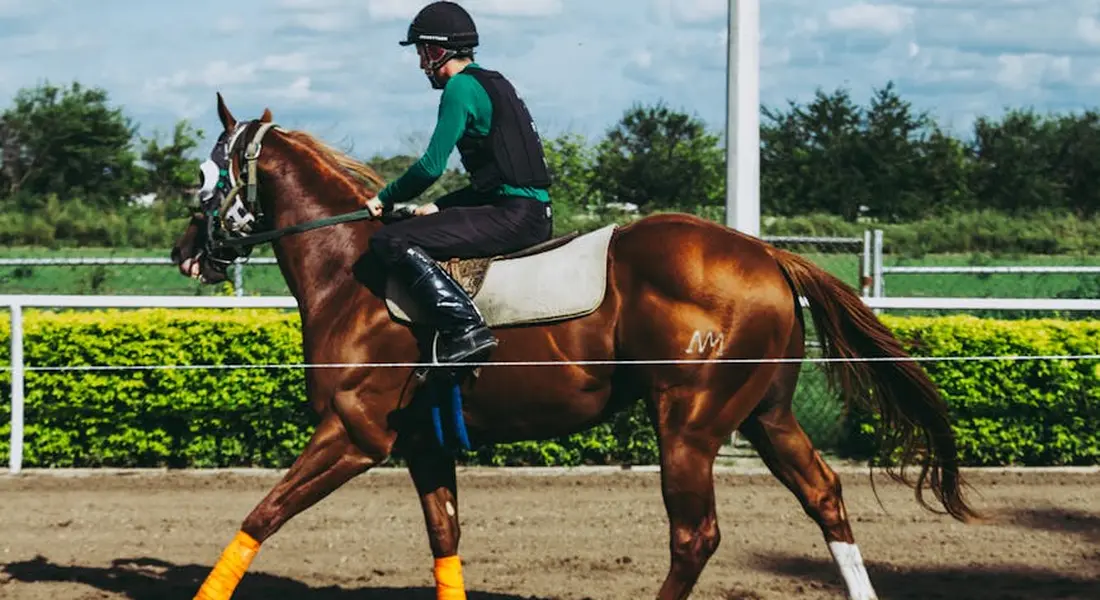
The gallop is the gait of pure joy and raw power. Feeling a horse extend its body, all that energy flowing beneath you, is a thrill unlike any other. It also demands your utmost focus and a solid partnership. This gait magnifies everything-a small imbalance becomes a big wobble, and a vague cue becomes a confused horse. My first gallop on Luna, my sensitive Thoroughbred, taught me that preparation is everything.
Preparing for the Gallop: From Trot to Canter
Never jump from a walk to a gallop. A balanced, rhythmic canter is your launchpad. Your horse must be listening and connected. Ask for a canter and establish a few good circles first. Feel for an even rhythm and a horse that’s carrying itself, not falling on its forehand.
Check your environment. Is the footing even? Is there enough clear, safe space ahead? Are you both mentally present? I learned this lesson with Rusty, who would lock onto the barn and get strong. A quick mental check-in with your horse can prevent a runaway before it starts.
- Establish a steady, balanced canter.
- Ensure your weight is centered over your feet, heels down, shoulders open.
- Take a deep breath to release tension in your body. Your horse feels that clench.
Key Aids for Initiating and Sustaining the Gallop
To ask for the gallop, shift your weight slightly forward, close your legs firmly at the girth, and soften your hands forward to allow the lengthening of stride. It’s a push, not a pull. Think of rolling a ball forward with your seat and legs.
Sustaining the gallop is about rhythm, not restraint. You maintain a light, following contact with the mouth. Your body moves with the horse-avoid pumping with your shoulders or gripping with your knees. A sustained gallop is a conversation, not a command; you are asking the horse to maintain that pace, not forcing it.
- From a working canter, soften your reins an inch.
- Apply a firm, rolling squeeze with both calves.
- Allow with your hands as the stride lengthens. Keep your eyes up!
- Maintain pace with subtle seat movements and steady leg pressure.
Managing Speed and Direction at the Gallop
Control comes from your seat and balance, not your reins. To slow, sit up tall, deepen your seat, and apply steady, even pressure on the reins. Say “eaasy” in a low voice. To turn, look where you want to go and apply the outside leg behind the girth to prevent the haunches from swinging out.
Turning at a gallop requires planning. Start your aids before the turn, not in the middle of it. Always rate your speed before a corner or obstacle; a balanced horse is a steerable horse. If you feel things getting too fast, use a large, gentle circle to rebalance and slow down without a fight.
Executing Precise Turns at Any Gait
A good turn isn’t just about changing direction; it’s about keeping your horse balanced and responsive. Whether you’re navigating a gate or a barrel pattern, the principles are the same. I practice these daily with clever Pipin, who will cut every corner if I let him.
Turning Fundamentals: Leg and Rein Aids
Think of your aids as a team. Your inside rein directs and slightly bends the neck. Your outside rein controls the amount of bend and supports the shoulder. Your inside leg at the girth asks for the bend and maintains impulsion. Your outside leg behind the girth keeps the hindquarters from swinging out. Your eyes lead the turn-look through the turn to where you want to end up, and your body will follow.
Step-by-Step Turns at Walk and Trot
Master this slowly first. At the walk, practice 10-meter circles and square turns. Feel each part of your horse’s body moving. This foundational work is essential before you start trail riding.
- Look in your new direction.
- Apply gentle pressure with your inside rein to guide the nose.
- Press with your inside leg at the girth to ask the ribcage to bend.
- Hold with your outside rein to prevent over-bending.
- Use your outside leg as a guard rail to keep the hind end in line.
At the trot, the process is identical but quicker. The steadier your posting rhythm, the cleaner your turn will be; don’t let the turn break your trot’s momentum.
Navigating Turns at the Gallop
This is advanced work. For beginners who are mounting and riding horses, mastering these basics is essential to staying balanced and confident in the saddle. The key is setting up early. You must balance and slightly collect your horse before the turn. Ask for the bend gradually as you approach, not sharply during the turn where it can make a horse slip or panic.
Widen your turn arc. A galloping horse needs space to turn safely. Use more outside leg and rein support to hold the shoulder. After the turn, re-establish your straight line and rhythm before asking for more speed again. This keeps your horse confident and prevents them from anticipating and rushing.
Building Skills Through Daily Practice and Care
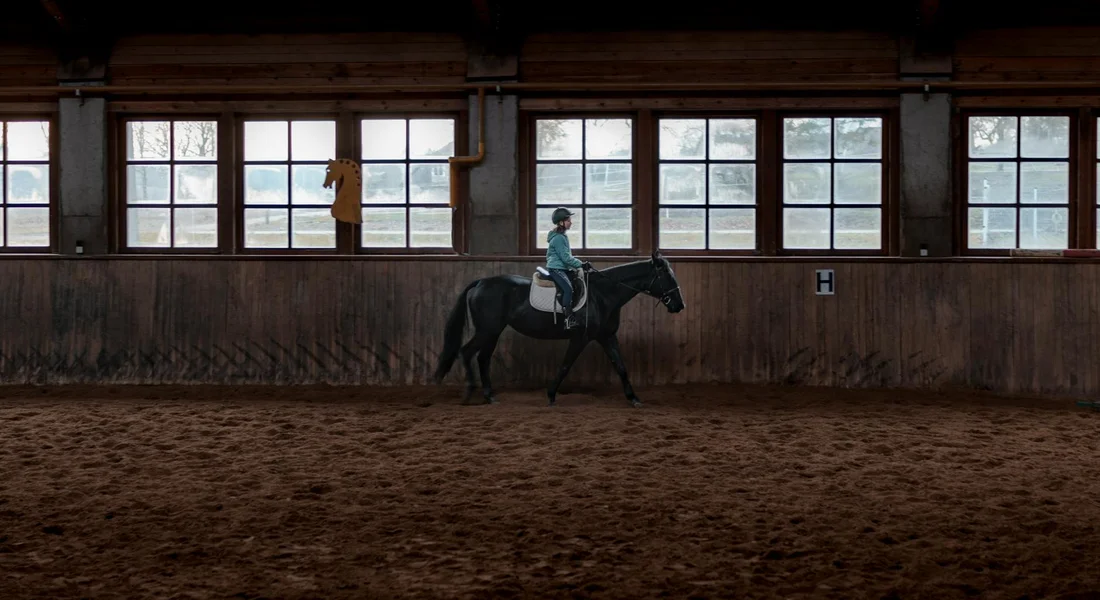
True horsemanship is built in the quiet moments between rides. The bond and physical conditioning that enable a smooth trot or a balanced turn are forged during daily grooming, thoughtful feeding, and simply watching your horse in the field. I’ve learned more about Luna’s mood from how she stands at the gate than from any session in the arena. This holistic approach turns riding from a mechanical task into a true conversation.
Exercises for Smooth Transitions and Turns
Precision under saddle starts with clear, consistent cues. Think of your aids as a quiet language, not a shout. A jagged transition often stems from a confused horse, not a disobedient one.
For cleaner transitions, practice this sequence in a safe, enclosed area:
- Establish a steady, rhythmic walk on a loose rein. Feel the swing of your horse’s back.
- Prepare your body: sit tall, tighten your core, and think “upward.”
- Apply a gentle, squeezing pressure with both calves. Keep your hands soft to allow forward movement.
- The moment you feel the first step of trot, relax your leg pressure. Praise instantly.
- To return to walk, sink your weight into your seat bones, say “waaaalk,” and gently close your fingers on the reins. Reward the downward shift with a soft pat.
For balanced turns, your focus shifts to guiding, not pulling. Your outside rein prevents over-bending, your inside leg asks for engagement, and your eyes lead the way to where you want to go. A stiff turn usually means the rider is stiff. Try this simple drill with ground poles or cones:
- Set up a large square or circle using four markers.
- At a walk, approach the first marker. Look several feet beyond it along your intended path.
- As you reach it, apply light pressure with your outside leg slightly behind the girth to ask the horse’s hindquarters to follow.
- Keep the bend subtle-you should just see your horse’s inside eyelash.
- Straighten for a few steps before preparing for the next corner. This teaches horse and rider to prepare, execute, and release.
Before starting this exercise, it’s crucial to ensure your horse is properly saddled to prevent discomfort and maintain control.
How Riding Skills Enhance Equine Welfare
Your development as a rider is a direct gift to your horse’s well-being. A balanced rider protects a horse’s back from the jarring thud of a heavy seat. Every time you use your core to post the trot instead of gripping with your knees, you spare your horse’s lumbar muscles from strain. I’ve seen horses like Pipin transform from resistant to willing when riders stop hauling on his mouth for a turn and start using their seat and legs with clarity.
Good riding promotes the physical and mental health we advocate for on the ground. A horse that understands soft, consistent aids is a relaxed horse. This reduces anxiety and frustration in the saddle, making work a cooperative effort instead of a conflict. Furthermore, the muscle you help your horse build through correct riding supports their joints and overall soundness, making them more durable and comfortable during their essential turnout time.
Ultimately, the goal is to ride so softly that your horse hardly knows you’re there, carrying themselves in a natural, powerful frame that you merely suggest. This philosophy turns every ride into an act of care, where the creak of leather and the rhythm of hooves become a dialogue of mutual respect. Your hands learn to follow the motion of the head, not restrict it, and your horse thanks you with a soft snort and a willing heart, showing that they enjoy being ridden.
FAQ: How to Trot, Gallop, and Turn a Horse While Riding
How do you prepare a horse for trotting?
Begin with a brisk walk to warm up your horse’s muscles and promote relaxation. Ensure all tack is properly fitted and comfortable to avoid distractions or discomfort. Establish a calm, forward-moving rhythm and clear communication before cueing for the trot. These steps are part of the essential warm-up and cool-down exercises for your horse. Following them helps prepare the body for work and supports safer recovery.
What are the leg and rein aids for turning a horse?
Guide the horse’s nose with light pressure on the inside rein toward the turn direction. Apply your inside leg at the girth to ask for bend and maintain impulsion through the turn. Use your outside rein and leg to support balance, control the shoulder, and prevent the hindquarters from swinging out.
How do you execute a turn at a gallop while maintaining balance?
Approach the turn by looking ahead and using a half-halt to slightly collect and balance your horse. Apply gentle inside rein and leg aids to steer while keeping outside aids firm to support the shoulder and hindquarters. Stay centered in the saddle with a deep seat, allowing the horse to flow through the turn without breaking gait or losing control. Lead with your body and seat to clearly steer your horse, then ride with calm confidence into the next cue.
Ride With Feeling
Build an independent seat for the trot, use clear and gradual aids for the gallop, and direct your turn with your eyes and weight. A balanced, secure position is non-negotiable-it keeps you safe and makes your requests understandable to your horse, especially when you’ve taken the time to put a halter on properly.
Give yourself and your horse time to learn; true horsemanship is built on consistent, gentle practice. The best cue you can ever give is to listen, because the sigh of acceptance or the flick of an ear tells you everything you need to know.
Further Reading & Sources
- Horse gait – Wikipedia
- How To Get Your Gaited Horse Gaiting Faster – Horse Help
- Gait Training 101 – Horse and Rider
- Guide to Horse Gaits: Walk, Trot, Canter, Gallop and More | Mad Barn
At Horse and Hay, we are passionate about providing expert guidance on all aspects of horse care, from nutrition to wellness. Our team of equine specialists and veterinarians offer trusted advice on the best foods, supplements, and practices to keep your horse healthy and thriving. Whether you're a seasoned rider or new to equine care, we provide valuable insights into feeding, grooming, and overall well-being to ensure your horse lives its happiest, healthiest life.
Exercise