
How to Jump a Horse Properly: A Safe, Step-by-Step Framework
Hello fellow equestrians. That mix of excitement and nerves in the air before a jump is familiar, but so is the worry about a bad takeoff leading to a fall, a lame horse, or a sky-high vet bill.
This guide will walk you through a proven, horse-first approach. We will cover:
- Building the non-negotiable flatwork foundation before you ever see a fence
- Cultivating a rider position that is secure, still, and follows your horse’s motion
- Training your horse for fences with patience, not pressure, to protect their mind and body
- Executing essential pre-ride safety checks on tack, footing, and your horse’s soundness
My years managing barns and training everything from reliable quarter horses to spooky thoroughbreds have taught me that the best jumps are built on trust, turnout, and taking the time to get it right.
The Rider’s Jumping Position: Balance and Aids
Your position in the saddle is your primary tool for communication and security over a fence. The two-point position-with a deep seat, heels down, and eyes up-allows you to move with your horse. Engage your core for stability, use steady leg aids for impulsion, and maintain a soft, following rein contact. I learned this viscerally with Rusty, my steady Quarter Horse. One evening, after a week of frustrating practice, I finally softened my back and looked past the jump. I felt his rhythm shift beneath me from a jiggy trot to a confident, rolling canter. The change was immediate, like he’d been waiting for me to get out of his way.
- Heels Down: Push your weight into your heels to anchor yourself and absorb shock.
- Eyes Up: Look where you want to go, typically a point beyond the fence, to guide your horse.
- Deep Seat: Sit lightly but securely, allowing your hips to hinge forward.
- Core Engaged: Activate your abdominal muscles to create a stable, supple torso.
- Soft Hands: Maintain a consistent, gentle contact that allows the horse to stretch over the jump.
A correct position isn’t about rigidity; it’s about creating a balanced, communicative partnership with your horse.
Seat and Core: Your Stable Base
Think of your core as the central hub that connects your upper and lower body. You need to engage it without tightening your lower back, which blocks your motion. A stiff back makes you a passenger. Start building this feel at the walk, where the motion is slow and forgiving.
- Sit tall in the saddle, relaxing your shoulders and letting your arms hang softly.
- Feel your seat bones making even contact with the saddle.
- Take a breath, and as you exhale, gently draw your navel toward your spine.
- Hold that mild tension while allowing your hips to follow the horse’s walking motion.
- Practice until this becomes automatic, then progress to the trot and canter.
This engaged, responsive seat lets you flow with the horse’s movement instead of bouncing against it.
Legs and Hands: Communicating with Confidence
Your legs and hands deliver clear, quiet messages. Steady leg pressure at the girth maintains forward energy and prevents your horse from backing off the fence. Over the jump, your hands should perform a crest release, sliding up the neck to give the horse freedom to use his head and neck. Proper rein contact feels like a steady, elastic connection-not a pull or a dangling loop.
Your legs provide the “go,” and your soft hands provide the “yes,” allowing the jump to happen.
Mastering the Approach: Rhythm, Straightness, and Takeoff
A successful jump is built on the approach. You must establish a steady, rhythmic canter, keep your horse perfectly straight, and judge a good takeoff point. This all hinges on rhythm. Practice first over a single ground pole on a circle. Canter over it repeatedly until your horse doesn’t alter his stride-that’s the rhythm you want. Make sure your training jump is appropriate for your horse’s level to avoid injury.
- Establish your balanced, rhythmic canter at least four to five strides from the fence.
- Look at the top of the jump, then past it, to keep your line straight.
- Keep your legs consistently on your horse’s sides to support the impulsion.
- As you reach the takeoff zone, allow your upper body to fold forward with your crest release.
- Stay straight through your body and with your horse’s shoulders aimed at the center of the fence.
A straight horse with a steady rhythm will naturally find a good takeoff spot more often than not.
Finding the Right Canter
The ideal jumping canter is both forward and collected-it has enough energy to propel you upward but is balanced enough to turn afterward. You develop this on the flat. Work on simple transitions: canter to trot, trot to canter, and canter to walk. Ask for a few strides of a more collected canter, then let your horse stretch forward again. With Luna, my high-energy Thoroughbred, I focus on keeping her relaxed in her jaw and back during these transitions to prevent her from getting quick and flat.
Flatwork is the foundation of jumping; a quality canter solves half your problems before you even get to a fence.
Aiming for the Takeoff Spot
Judging the distance isn’t about frantic mental math. It’s about maintaining your rhythm so the fence fits into your horse’s stride. Imagine you’re riding a steady, consistent wave all the way to the base of the jump. If you keep the wave even, you’ll arrive at the perfect takeoff point. Don’t stare at the ground or make sudden adjustments. On Pipin, the clever pony, I learned to keep my eyes on the horizon and my seat light. He’d always find a way to get over if I just maintained the pace and direction.
Your primary focus should be riding the rhythm you established; let your horse handle the geometry of the jump.
Progressive Jumping Exercises: Poles, Cavaletti, and Grids
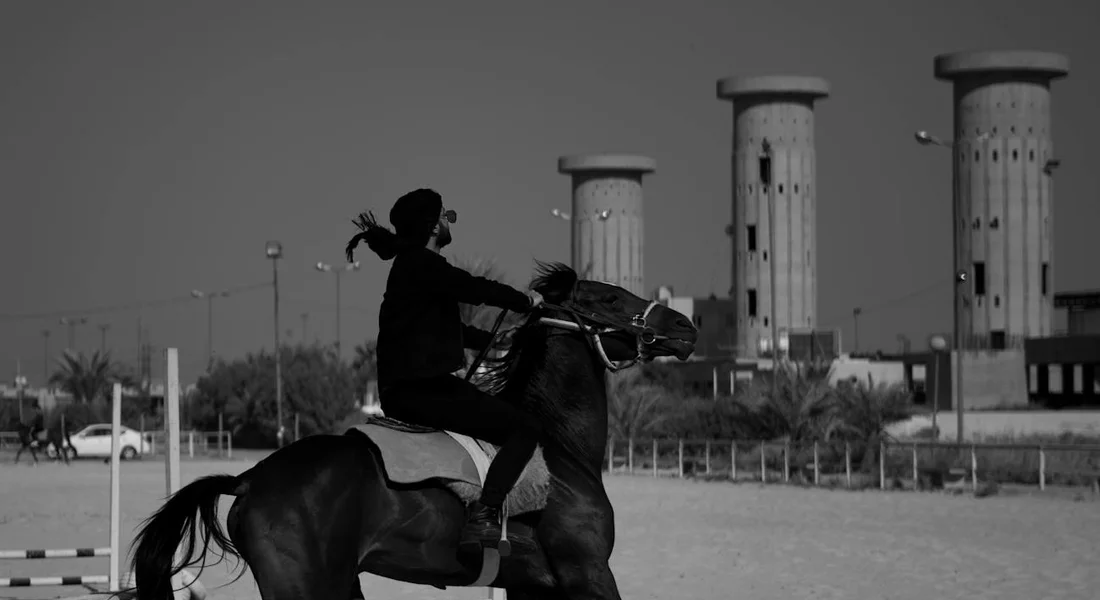
Building a confident jumper happens one stride at a time. Rushing this process creates anxiety and mistakes. A logical training progression builds muscle memory and trust, turning uncertainty into boldness. I saw this firsthand with my Thoroughbred, Luna; her high-energy sensitivity transformed into focus through simple, repetitive grid work.
- Walk and trot over a single pole on the ground until the horse is bored.
- Add two or three trot poles at a consistent distance, focusing on rhythm.
- Raise one end of a pole to cavaletti height (12-18 inches).
- Introduce a single crossrail fence, then a second one on a straight line.
- Build a simple gymnastic grid of two or three low, related distances.
Starting with Ground Poles
Lay a single pole in the arena and ride over it at a walk. Your only job is to stay straight. Add a second pole, spacing them 4.5 to 5 feet apart for a walk, or 4 to 4.5 feet for a trot. The goal is to hear a consistent, two-beat rhythm of hooves tapping the wood, not a rushed scramble. Keep your eyes up and your reins soft, letting the horse figure out his footwork. This foundation of straightness and rhythm is everything.
Introducing Cavaletti and Small Fences
Once trot poles are easy, use cavaletti blocks to raise a pole about 12 inches off the ground. This introduces the concept of lifting the feet. Start with a raised cavaletti on a circle to encourage balance before heading straight for a fence. As confidence builds, you’ll start planning higher, longer lines. That progression naturally leads to the topic of high, far jumps and the technique they demand. Your first jump should be a small crossrail-it naturally guides the horse to the center. Height is irrelevant at this stage; a confident hop over 18 inches is better than a panicked leap at three feet. Progress only when your horse approaches with steady ears and a relaxed back.
Building Gymnastic Grids
Grids are a series of fences set at specific, non-adjustable distances. They teach the horse to snap his legs up and land ready for the next effort. A classic starter grid is a crossrail, followed by 18 feet to a vertical, then 21 feet to another vertical. The fixed striding in a grid does the training for you, promoting athletic form without rider interference. Below are common distances for schooling. Always set fences low and use ground poles for take-off and landing guides.
| Exercise | Distance | Purpose |
|---|---|---|
| Trot Pole to Crossrail | 9 feet from pole to fence | Establifies take-off point |
| One-Stride Bounce | 10-11 feet between fences | Develops quick reflexes and hindleg strength |
| Two-Stride Combination | 24-26 feet between fences | Encourages scope and stride regulation |
Safety Gear and Horse Preparation
Jumping amplifies risk, so preparation is your best defense. This means gear that fits and a body ready for work. Ignoring warm-up routines or skipping gear checks is an invitation for injury, plain and simple. Your horse relies on you to make smart choices for both of you.
- ASTM/SEI-certified helmet: This is non-negotiable. Replace it after any impact or every five years.
- Rider’s body protector (vest): Look for a BETA Level 3 rating for shock absorption.
- Proper footwear: Boots with a defined heel (about 1 inch) and a smooth sole to prevent sticking in the stirrup.
- Horse leg protection: Sport boots or polo wraps on all four legs to guard against strikes.
Mandatory Rider Safety Equipment
Your helmet must be snug, not rocking side-to-side when you shake your head. Before every ride, run your hands over your helmet shell looking for cracks and check that all straps and buckles are secure and functional. Your vest should feel snug but not restrict breathing. This two-minute gear inspection becomes as habitual as brushing your horse.
Warm-Up and Cooldown Protocols
Begin with at least 15 minutes of walk on a loose rein, letting the horse stretch his neck down and forward. A proper warm-up prepares the mind as much as the muscles, reducing spooks and stiffness. These routines form part of the essential warm up and cool down exercises your horse needs. Then, move to a steady trot with large circles and gentle bends. After jumping, you must cool down. Finish with 10-15 minutes of walking to let the heart rate drop and muscles clear lactic acid. Never just hop off and put a hot horse away.
Conditioning Your Horse for Jumping
Jumping is demanding athletics. Build your horse’s strength slowly on the flat before asking for fences. Hill work at the walk and trot is nature’s gym, building the hindquarter and back muscles that power a jump. This approach helps you build and strengthen horse muscles effectively while supporting soundness. Keep progression gradual and monitor his responses to avoid overloading him. Lunge over a single pole once a week to let him move freely. Most injuries come from overfacing-jumping too high, too soon. Always prioritize soundness over ego, and remember that ample turnout keeps a horse mentally fresh and physically loose.
Building Confidence for Horse and Rider
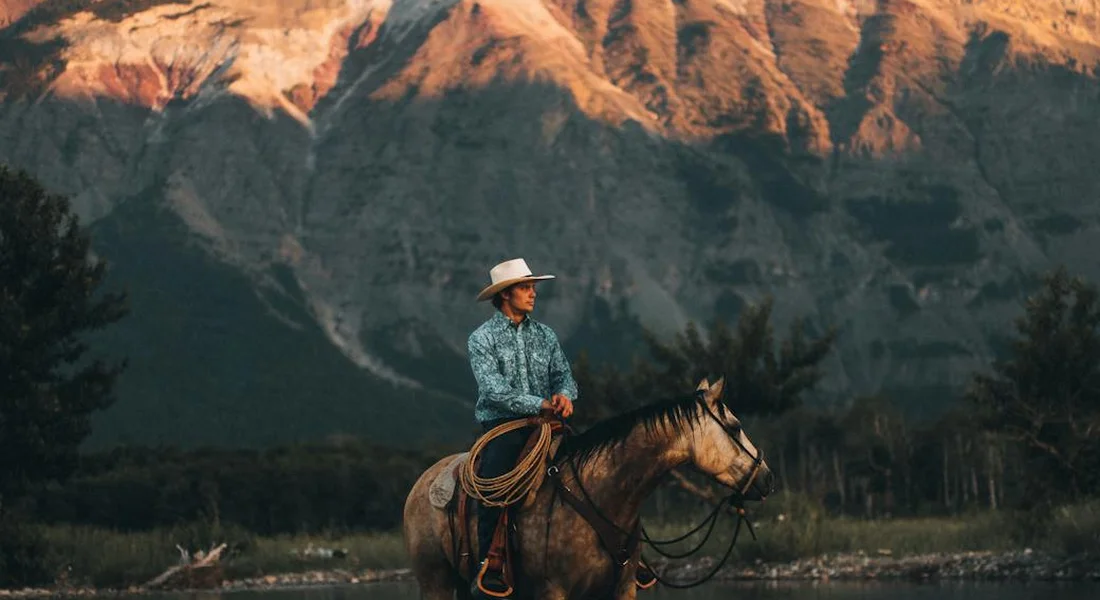
That flutter in your stomach before a fence is normal for both you and your horse. Confidence isn’t about being fearless; it’s about building a reliable partnership through repetition and positive experiences. Start with groundwork, literally. I spend time letting a horse sniff and inspect a pole on the ground before we ever think of lifting it. When a new fence is introduced, use a calm, stepwise approach. Start at ground level and only increase exposure as your horse stays calm. Trust is built in the quiet moments of letting your horse investigate the unknown without pressure. For jumping, this means setting a single cross-rail so low it’s almost a step. The goal isn’t height, but the calm repetition of the process: approach, hop, land, walk, and reward.
I learned the power of patience with our Shetland, Pipin. As a cheeky escape artist, his intelligence meant he learned tricks fast, but also how to evade work he found dubious. Introducing a tiny jump involved his favorite motivator: carrots. We spent a week just walking over a pole on the ground, with a treat after each pass. Then we raised it an inch. The day he calmly hopped over without a second thought, his ears pricked for his reward, was a bigger victory than any high fence. For any horse, but especially clever ones, making the jump itself the gateway to something positive rewires their brain from apprehension to anticipation.
For the Anxious Rider
Your horse feels your tension through the reins and your seat. Managing your nerves is a gift to your partner. First, breathe. In the saddle, practice a deep inhale for four strides, hold for two, and exhale for six. This physically slows your heart rate and gives your mind a job. Before you ride, visualize your perfect jump: see the steady rhythm, feel the push, and picture the smooth landing. Mental rehearsal primes your nervous system for success before you even pick up the reins.
Set laughably small goals. “Today, I will trot over one pole and smile.” Celebrate that. Then maybe two poles. The confidence from achieving these tiny wins compounds. Remember, a confident rider isn’t a perfect rider; it’s a prepared one who knows how to break the big scary thing into manageable, dirt-level steps.
For the Green or Spooky Horse
A green or spooky horse views new jumps with deep suspicion. The key is gradual exposure and never flooding them. Start by incorporating poles into their daily turnout or walking them around the arena with jumps set up. Let them see it all without any demand to perform. Desensitization is about curiosity, not confrontation; let the horse choose to approach the scary object in their own time.
When introducing the jump under saddle, use a lead line or have a calm buddy horse go first. Keep the fence so low it’s inconsequential. The moment they step or hop over, stop, relax, and offer a rub. The release of pressure is the reward. For a sensitive soul like Luna, our Thoroughbred, rushing was her fear response. We spent weeks just trotting in a circle near a jump, only approaching when her breathing softened. The same calm, step-by-step approach helps stop a horse from bucking when nerves rise. With stressed horses, pause, breathe, and reward stillness before moving again. For the high-strung horse, the exercise is in standing still near the challenge, not in jumping over it.
Fixing Common Jumping Mistakes
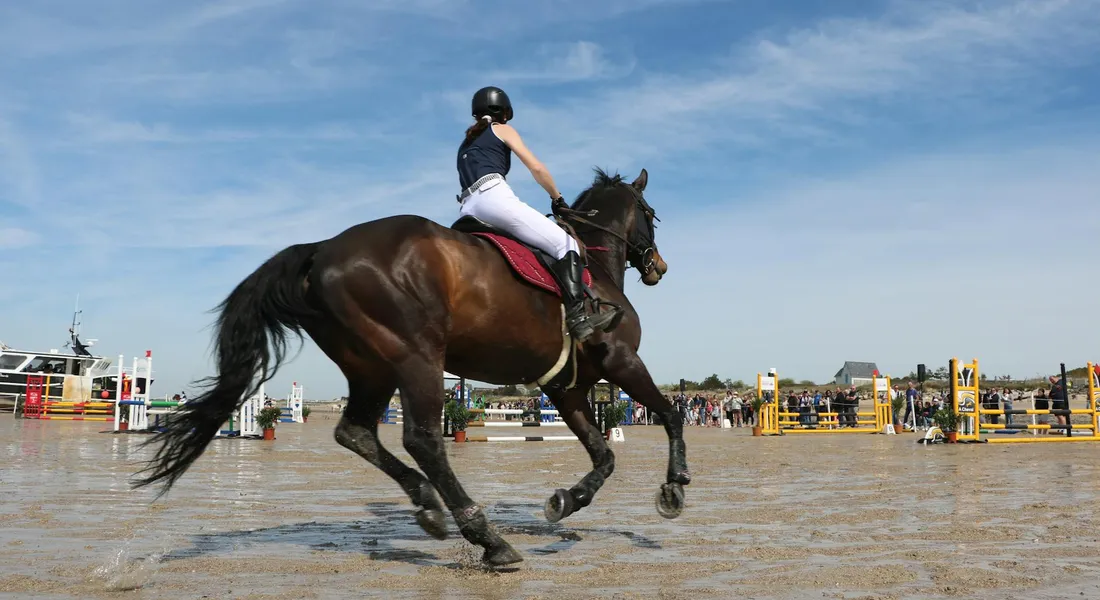
Even with the best foundation, hiccups happen. Most jumping issues stem from a break in rhythm, straightness, or trust. Here’s a quick-reference guide to common problems and their fixes.
| Problem | Likely Cause | Practical Fix |
|---|---|---|
| Rushing | Anxiety, imbalance, or rider pushing. | Half-halts on approach; grid work to regulate stride. |
| Refusal | Pain, fear, or confusion. | Vet check; lower fence; approach from a walk. |
| Run-Out | Lack of straightness or rider focus. | Establish a clear track with ground poles; outside leg support. |
| Crooked Jump | Horse or rider favoring one side. | Pole exercises for alignment; equal leg pressure. |
| Dropping Shoulders | Weak topline or early rider movement. | Hill work; holding mane over fence to stay still. |
Rushing or Running at Fences
A horse that tanks at the fence is often scared or unbalanced. Your job is to be the steady metronome. Use a series of half-halts-a gentle squeeze and release on the reins while your seat stays deep-on your approach to rebalance and remind them to wait for you. If you feel the pace quicken, turn a small circle away from the fence before the point of no return; this reinforces that you control the track, not the jump. Setting up a grid of two or three low fences at a set distance forces a horse to think about their feet and find a rhythm, as rushing will mess up their takeoff spot. Think turnout safety too: a well-planned fencing layout creates calm space for horses before training. A solid turnout design with clear sight lines reduces surprises and supports consistent balance when you work at the fence.
Refusals and Run-Outs
A refusal is a message, not a disobedience. First, rule out pain. A sore back or ill-fitting saddle can make jumping uncomfortable. Once health is cleared, go back to basics. Lower the fence to a pole on the ground and approach from a calm walk. The most effective confidence-builder after a refusal is a successful step-over, not a forced jump. For run-outs, your outside leg is your guard rail. On approach, press your outside leg firmly behind the girth to hold the line, while your inside leg maintains impulsion and your eyes look where you want to go, not at the fence.
Crooked Approaches and Landings
Straightness is non-negotiable for a safe jump. A crooked approach usually starts three or four strides out. Practice by trotting down a line of poles on the ground, focusing on keeping your horse’s shoulders and hips in line. Your reins and legs should work like guiding rails: equal, steady pressure. Imagine your horse is a train on tracks, and your legs are the rails keeping them aligned from chest to croup. If you’re exploring liberty work with no ropes or tack, apply these cues with your body language. Liberty training follows the same principles of straightness and responsiveness. For landing straightness, set a pole on the ground two strides after the fence; aiming for it helps both of you re-balance and focus forward immediately.
FAQ: How to Jump a Horse Properly
How can I tell when my horse is physically and mentally prepared to begin jumping?
Your horse should demonstrate consistent responsiveness to leg and rein aids during flatwork, including balanced transitions. They must be sound, with a veterinarian’s clearance, and show relaxation over ground poles without spooking or rushing. Observing a calm demeanor, such as steady ears and a soft back, indicates mental readiness for low jumps.
What mental strategies can I use to maintain composure and focus while jumping?
Incorporate controlled breathing techniques, like inhaling for four strides and exhaling for six, to reduce anxiety before a fence. Visualize the entire jump sequence beforehand, from approach to landing, to reinforce positive neural pathways. Break your riding sessions into small, manageable tasks, celebrating each success to build self-assurance over time.
Are there specific techniques for jumping wider fences, such as oxers, compared to verticals?
Approach wider fences with a more forward, energetic canter to generate the necessary power and scope. Allow your horse to stretch its neck and back fully over the spread by maintaining a soft crest release with your hands. Focus on keeping a straight line and steady rhythm, trusting your horse to judge the width without interference from your reins.
Final Thoughts from the Stable
Focus on a steady, rhythmic approach and maintain a secure, balanced position over the fence. The single most important factor is a confident horse, so never rush the training or ask for more than he is ready to give. For riders, a step-by-step trail horse training guide offers clear, structured progression. It helps you plan sessions with achievable milestones.
Good jumping is built on trust, not trophies, so prioritize calm repetition over height. Your horse’s willingness and smooth effort are the best indicators you’re on the right path. Be a calm, assertive leader for your anxious horse. Your steady cues reassure and guide them toward confidence.
Further Reading & Sources
- r/Equestrian on Reddit: How is extreme showjumping and cross-country not harmful to horses?
- Eventing Safety PSA: Don’t Jump Junk! | Eventing Nation – Three-Day Eventing News, Results, Videos, and Commentary
- The Ultimate Guide to Horse Jumps and Dressage: Types, Standards, and How to Choose the Right Equipment – JH HORSE STALL
- Safety Tips for Horse Jumping | Old Dominion Horse Jump Company
At Horse and Hay, we are passionate about providing expert guidance on all aspects of horse care, from nutrition to wellness. Our team of equine specialists and veterinarians offer trusted advice on the best foods, supplements, and practices to keep your horse healthy and thriving. Whether you're a seasoned rider or new to equine care, we provide valuable insights into feeding, grooming, and overall well-being to ensure your horse lives its happiest, healthiest life.
Exercise