
Understanding Your Horse’s Key Muscles: How They Work for Better Health and Riding
Hello fellow equestrians. Does your horse sometimes feel stiff, lack impulsion, or show resistance during rides? These common frustrations are often rooted in muscle function, and ignoring them can lead to costly vet visits and safety issues for both of you.
I’ve felt that knot of worry in my own stomach, watching a reliable horse like Rusty move cautiously or feeling Luna’s back tighten under saddle. Recognizing these signs early is your best defense against bigger problems down the trail.
Let’s get a clear picture of what’s happening under the skin. In this guide, we’ll cover:
- The specific muscle groups responsible for power, movement, and stability
- How these muscles function together at the walk, trot, and canter
- Practical, welfare-focused habits to maintain muscle health through turnout and gentle training
This comes from my years of daily barn management and training, where feeling for tension and watching for asymmetry became as routine as mucking stalls.
Why Your Horse’s Muscles Matter for Everyday Care
Knowing what’s beneath the skin transforms routine care. This knowledge sharpens your grooming, perfects your tack fit, and lets you spot lameness when it’s just a whisper of tightness. You become a better steward of your horse’s body.
I remember cooling out Luna after a windy trail ride. She’d been tense, her eyes wide at every rustling leaf. As I ran my hands over her shoulder, I felt it-a hard, rigid knot in her brachiocephalicus muscle where there should be soft elasticity. That tightness was a direct result of her braced posture. Your daily grooming session is your first line of defense for detecting muscular stress.
Here are the direct benefits for your barn time:
- Prevents soreness by identifying tension early for targeted care.
- Guides proper saddle fit, ensuring panels avoid key muscle groups like the trapezius.
- Informs smarter turnout and exercise, matching work to muscle development and recovery needs.
Muscle care is fundamental equine welfare. A comfortable horse is a horse with balanced, supple muscles free to move and graze. Gentle horsemanship is built on the mindful attention we pay to their physical form, understanding horse anatomy and biology.
Mapping the Muscle Groups: A Practical Guide
The Powerhouse Hindlimb Muscles
This is the engine room. The gluteal muscles over the croup generate primary propulsion. The biceps femoris, semitendinosus, and semimembranosus (the hamstring group) work in concert to extend the hip and stifle, creating powerful drive. Feel the thud of hooves on hard ground; that force starts here.
Lower down, the gastrocnemius extends the hock while the quadriceps group stabilizes the stifle joint. Strong quads are crucial for secure engagement and preventing stifle slips. Well-developed hindlimb muscles mean explosive power and reliable stops.
Get to know them hands-on. During grooming, start at the top of the croup and palpate the full, rounded glutes. Move your hands down the back of the thigh, feeling the distinct cords of the hamstrings. Check for equal warmth and firmness on both sides. Consistent palpation trains your hands to recognize the normal so you can instantly feel the abnormal.
The Core Stabilizers: Back and Abdomen
The longissimus dorsi is the long, thick muscle paralleling the spine; it enables back extension and lateral flexion. Underneath, the abdominal muscles form a supportive sling. This core cylinder stabilizes the entire trunk during movement.
A strong core is like a perfectly fitted girth-it provides essential stability without restriction. It allows for collected movement and protects the spine. A horse with a solid core carries weight comfortably and moves with integrated power. Understanding the topline strength definition helps connect core stability to overall carriage. It naturally leads to practical steps for how to build a horse’s topline strength.
Watch for these red flags indicating core weakness:
- A visibly dipped or swayed back when standing at rest.
- Frequent stumbling or a lack of coordination on simple turns.
- Active resistance to rounding or collecting, often by hollowing the back.
The Front-End Engineers: Neck, Shoulder, and Pectorals
The brachiocephalicus muscle controls neck extension, while the trapezius and rhomboideus move the shoulder blade. The latissimus dorsi links the back to the forelimb, pulling the leg forward. You see these muscles engage every time your horse reaches for a treat.
The pectoral muscles across the chest are critical for weight bearing and steering. They help shift balance during turns. Think of the entire shoulder girdle as the front suspension on a pickup truck-it absorbs impact and dictates steering response.
When these muscles are supple, the stride is long and fluid. Tightness here, like I felt with Luna, manifests as a choppy gait or stiffness in the neck. Ample turnout time is non-negotiable for letting these complex structures stretch and function naturally.
How Key Muscles Function in Movement
Propulsion from the Hindquarters
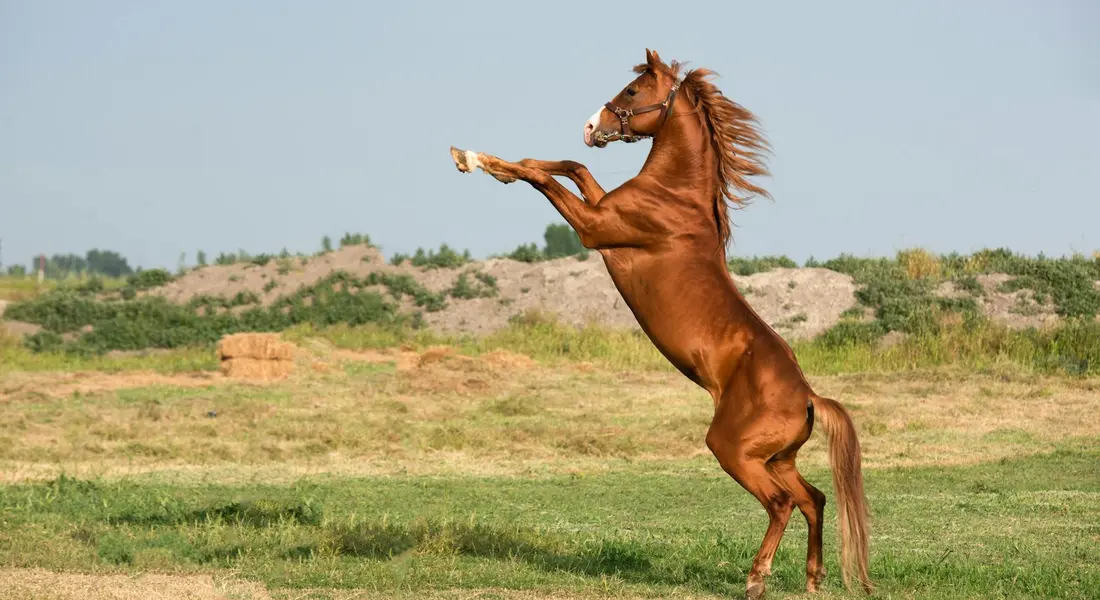
Think of the hindquarters as the engine. The real power for every stride starts deep in the gluteal muscles. These massive muscles contract, driving the femur forward and backward. That energy flows through the hamstring group, down to the powerful gastrocnemius in the lower leg, and finally pushes off from the ground through the tendons and hoof. A strong, engaged hind end lifts the front end and creates impulsion.
You see this sequence clearly in different horses. My Quarter Horse, Rusty, uses his glutes and hamstrings for a steady, powerful trail gait that eats up miles without tiring him. My Thoroughbred, Luna, engages the same muscles but with a more explosive, coil-and-release energy, her hind legs reaching far under her body for that athletic jump or extended canter. The quality of the push-off tells you everything about the engine’s health and training.
Stabilization from the Core and Back
While the hindquarters provide thrust, the topline and abdominal muscles act as a suspension bridge. The longissimus dorsi, that long muscle running along the spine, and the serratus ventralis, which slings the body between the shoulder blades, must work together to support weight and transfer power. A weak back dips under saddle, breaking that kinetic chain.
This core stability is also vital for breathing. The diaphragm and intercostal muscles between the ribs must expand and contract freely during exercise. A tense, hollow back restricts this movement, leaving a horse winded and inefficient. A horse with a strong, supple back carries a rider with ease and breathes with full, deep breaths. Likewise, the horse’s respiratory system must support sustained performance. Efficient breathing delivers oxygen to muscles when work demands are high.
Flexion and Extension in the Limbs
Fluid movement requires precise joint control. At the shoulder, the infraspinatus and supraspinatus muscles act like biological shock absorbers and stabilizers, preventing the joint from wobbling or collapsing during weight-bearing. This allows for that elegant, floating stride.
Forward motion is a dance of flexion and extension. The flexor muscles in the upper leg, like the biceps brachii in front, lift the knee and fold the leg. Then, the extensor muscles, such as the triceps, snap the leg straight to reach forward. Watch a horse move on a hard surface: the clean, rhythmic thud of each hoof landing speaks to perfectly timed muscle teamwork.
Spotting Common Muscle Issues in the Barn
Signs of Soreness and Strain
Muscles talk to you if you listen. Soreness isn’t always dramatic lameness. Common signs include localized heat, subtle swelling or firmness, a reluctance to bend or move sideways, and a shortened, choppy stride. A horse might pin its ears when you groom a specific area or be stiff when first leaving the stall. These can be subtle signs of equine pain that shouldn’t be ignored.
My after-ride check is simple. Run the flat of your hand over major muscle groups-neck, shoulders, back, hindquarters. Feel for unusual heat or tight knots. Watch for flinching or skin twitching. Observe at the walk for any hitch or drag. This two-minute ritual builds a tactile map of your horse’s normal state, so you notice the slightest change.
- Heat or swelling in a specific muscle group.
- Reluctance to perform previously easy tasks (backing up, picking up a canter lead).
- Abnormal sweating patches localized to one area.
- A noticeable dip or asymmetry in the topline or hindquarters.
Understanding Tying-Up and Atrophy
“Tying-up,” or exertional rhabdomyolysis, is a serious metabolic cramp where muscle cells break down during or after intense exercise. The horse will seem stiff, sweaty, and reluctant to move, often with hard, quivering hindquarters. It’s an emergency requiring immediate vet care, rest, and often a management overhaul of diet and exercise.
Atrophy is muscle wasting from disuse. We saw this with Pipin the Shetland after a leg injury. The muscle on his good leg was robust, while the injured one looked sunken and weak. Controlled, vet-guided rehab walks and hand-grazing on a slope were key to rebuilding it. Muscle atrophy is a glaring red flag that signals either pain, nerve damage, or a need for a tailored physical therapy plan.
You can manage minor soreness with hand-walking, gentle stretching, and proper warm-ups. For anything persistent, unexplained, or severe like suspected tying-up, your only call is to the veterinarian. They can diagnose the root cause-be it nutritional, skeletal, or muscular-and get your partner on the right path to recovery.
Practical Care for Strong, Supple Muscles
Turnout is Non-Negotiable
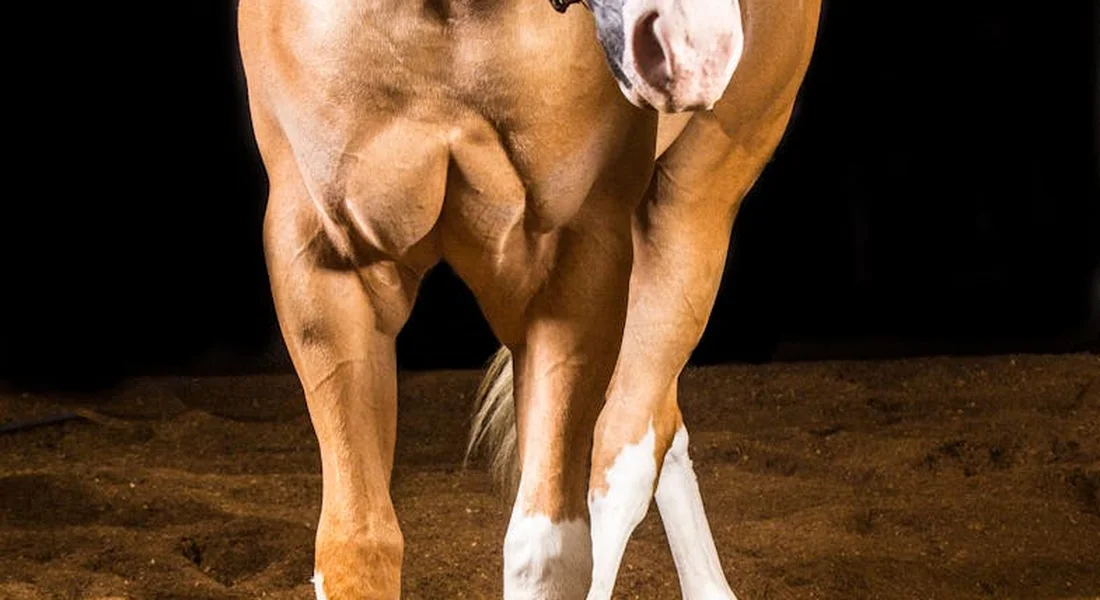
- Daily, unrestricted movement is the best physical therapy your horse’s muscles will ever get. I keep my horses out as much as possible because I’ve watched stalled muscles seize up, while turned-out horses maintain a natural, elastic tone just from walking and grazing.
- Muscles confined to a stall become like stiff, dry leather-brittle and prone to cracking. Consistent turnout keeps them oiled and supple, preventing the atrophy and tension that lead to injury.
Warm-Up and Cool-Down Steps
- Begin every ride with a full ten minutes of walking on a loose rein. This isn’t just a stroll; it’s a deliberate ramp-up of circulation, warming the deep muscles like my old reliable Rusty needs before any trail work.
- Incorporate large, sweeping circles and gentle bends at the walk and trot. This simple movement engages the inner and outer muscle chains on both sides of the spine, promoting symmetry and balance.
- Always finish with a second ten-minute walk on a long rein. This critical phase helps clear metabolic waste like lactic acid from the muscle tissue, reducing soreness and speeding recovery.
Massage and Conditioning Tips
- Condition muscles naturally with gentle hand-walking over varied, grassy terrain. A slow hike up a mild hill does wonders for building the hindquarters and back without joint stress. Even Pipin, our Shetland, develops impressive strength from this.
- For tight shoulders, use the heel of your hand to apply firm, circular pressure along the muscle. Start lightly and increase pressure as the horse relaxes; you’ll often feel a satisfying release under your palm, much like I feel when Luna finally drops her head and sighs.
- A correctly fitted saddle is the foundation of all muscle care. Pressure from a poor fit creates dead spots and atrophy in the crucial muscles under the panels. This isn’t a suggestion-it’s a requirement for soundness.
FAQ: What Are the Key Muscles in a Horse and How Do They Function?
What are the main muscle groups in a horse?
The primary muscle groups are the hindquarter muscles for propulsion, the core muscles for stability, and the front-end muscles for movement and support. These groups work together to enable gaits like the walk, trot, and canter. Recognizing them aids in daily care, from grooming to exercise planning.
How do the muscles in a horse’s legs work?
Leg muscles coordinate through flexion and extension to lift, swing, and stabilize each limb during movement. They absorb shock upon impact and generate thrust for propulsion, ensuring smooth, efficient gaits. Healthy leg muscles are crucial for preventing lameness and supporting overall agility.
What are the key differences between horse and human muscle function?
Horse muscles are adapted for quadrupedal locomotion, with powerful hindquarters driving forward motion and a strong core stabilizing the spine. Human muscles focus on bipedal balance and intricate hand movements, with less emphasis on sustained propulsion. Additionally, horse muscles often have more slow-twitch fibers for endurance, unlike humans’ mix for varied activities. This raises the broader question: are horse-specific muscle adaptations unique to horses, or do other animals share similar muscle traits? This helps connect these ideas to the larger topic of ‘are adaptations horse’.
Ride With Muscle in Mind
Knowing how the major muscle groups power your horse lets you craft smarter workouts and spot early signs of strain. This awareness lays the foundation for building strength efficiently. The single most effective thing you can do is integrate deliberate walking hills and long, slow stretches into every routine to build durable, supple strength from the inside out. Small, steady gains from consistent effort help you build strengthen horse muscle effectively over time.
Progress in muscle development is measured in months, not days, so pair your patience with a watchful eye for any hitch or hesitation. The soft nicker when you approach with the saddle or the relaxed swing of a back—listening to these details—is what truly trains a sound and willing equine partner.
Further Reading & Sources
- Horse anatomy – diagrams of horse body parts – EQUISHOP Equestrian Shop
- How Muscles Work
- Muscular system of the horse – Wikipedia
- Understanding the Equine Muscular System – The Horse
At Horse and Hay, we are passionate about providing expert guidance on all aspects of horse care, from nutrition to wellness. Our team of equine specialists and veterinarians offer trusted advice on the best foods, supplements, and practices to keep your horse healthy and thriving. Whether you're a seasoned rider or new to equine care, we provide valuable insights into feeding, grooming, and overall well-being to ensure your horse lives its happiest, healthiest life.
Health