
Certified Instructor vs. Self-Taught: Choosing the Safer, More Effective Equestrian Path
Hello fellow equestrians, standing at the crossroads between formal lessons and self-teaching is a choice that weighs heavy on any rider’s mind. Your safety and your horse’s well-being hinge on this decision, with the specter of injury, frustration, and unexpected vet bills always lurking in the barn aisle.
Let’s saddle up and look at the real details you need, focusing on:
- The concrete safety frameworks and mistake-proofing that certified instruction provides.
- The subtle but serious risks of self-teaching, from muscle memory errors to misunderstood horse behavior.
- How each path directly influences your horse’s comfort, stress levels, and overall welfare.
- A clear-eyed comparison of long-term value, where upfront cost meets lasting skill.
My years in the barn as a manager and trainer, from correcting foundational errors to celebrating breakthroughs, have given me a front-row seat to how these choices unfold in the real world.
What Exactly Are You Choosing Between?
Let’s get specific. Choosing how to learn isn’t just about preference; it’s about the foundation you’re building on. One path has guardrails, the other is an open field.
- A certified instructor has completed a formal curriculum set by a body like the CHA or USHJA. This includes structured lessons on equine science, proven teaching methods, and hands-on training. They pass rigorous practical assessments where an examiner watches them teach, handle horses, and manage risk. That certification is their receipt from a recognized equestrian authority.
- The self-taught path is learning from books, online videos, and personal trial-and-error. There’s no formal credentialing or external validation of your skills. It’s you, your horse, and a world of information you have to filter alone. This path relies heavily on your own discernment and experience, which can be a steep climb.
Seeing them side-by-side makes the differences stark. This table breaks down the core contrasts.
| Aspect | Certified Instructor | Self-Taught |
|---|---|---|
| Curriculum Quality | Standardized, peer-reviewed, and updated for safety and effectiveness. | Variable, depending on source quality; can be fragmented or outdated. |
| Regulatory Compliance | Bound by a code of ethics and insurance requirements from their certifying body. | No oversight; practices may not align with current industry safety standards. |
| Theoretical Knowledge | Formal education in anatomy, nutrition, and learning theory is tested and verified. | Self-acquired; gaps in knowledge are common and often unknown to the learner. |
| Practical Skills Assessment | Skills are evaluated and signed off by a senior examiner in a real-world setting. | Self-assessed; errors in technique can become ingrained habits. |
A certified program teaches you not just what to do, but why it works, creating a flexible thinker, not just a recipe follower.
Why Safety Always Favors the Certified Path
Safety isn’t a single lesson; it’s the thread woven through every minute of certified training. From the first time you pick up a hoof, you’re taught risk reduction. Certified curricula drill safe horse handling, the critical importance of correct tack fit, and how to read the twitch of an ear or the shift of weight that says “I’m nervous.” This training turns subtle cues into clear conversations, preventing misunderstandings before they become accidents. For newcomers, a handle horse safely beginners guide can lay out practical, step-by-step routines. Think of it as a bridge from theory to hands-on safety at the horse’s side.
Going it alone, you might miss these lifesaving details. Common safety risks in self-teaching include:
- Overlooking subtle lameness signs until a minor strain becomes a full-blown injury.
- Applying incorrect emergency care, like walking a colicking horse or mis-wrapping a leg.
- Unintentionally creating behavioral issues by rewarding the wrong response or missing fear signals.
I learned this with Luna, my sensitive Thoroughbred. I was sure her new resistance to canter was stubbornness. My instructor watched for three minutes and pointed out a slight head-bob I’d completely missed. It was the earliest sign of a sore back, likely from my saddle sitting a hair too far forward. A week of rest and a tack adjustment saved us from a much bigger problem. A second pair of experienced eyes is your best safety net.
Critical Skills That Require a Pro’s Oversight
Some skills are simply too high-stakes for solo experimentation. Competency here isn’t about pride; it’s about preventing pain.
- Starting a young horse: First impressions last a lifetime. A misstep here can build fear or defiance that takes years to undo.
- Jumping: Judging distances, managing pace, and building gymnastic ability requires coached eyes to protect both tendons and confidence.
- Administering injections or treating colic: Dosage errors or incorrect symptom assessment can be fatal. This is veterinary-adjacent work.
In these moments, professional oversight is the direct line between a managed situation and a welfare crisis. Your horse’s comfort and your physical safety depend on skills that are honed under guidance, not guessed from a screen. For horse owners, safety hinges on training and proper handling. Seek trusted resources and routine checks to stay prepared.
Comparing True Effectiveness for Your Riding Goals
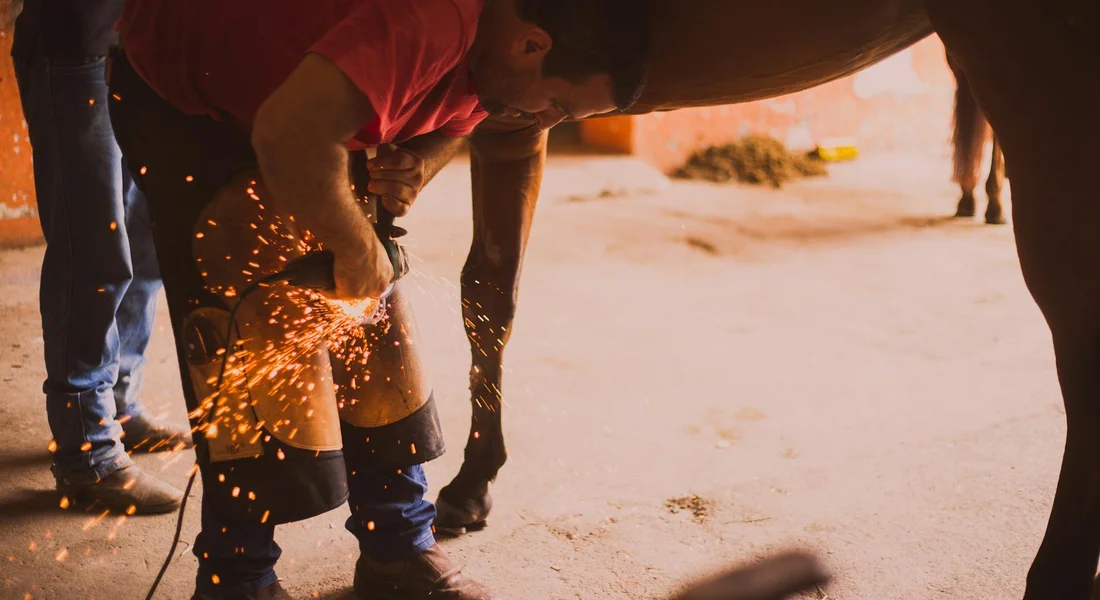
Structured feedback from a certified program doesn’t just teach you steps; it builds a rider’s confidence from the ground up. Watching a student’s face light up after they finally get a smooth canter depart with a tricky horse like Luna is why I teach. This accelerated skill development comes from having errors corrected before they become muscle memory, leading to safer, more effective training for both you and your horse, as opposed to repeating common training mistakes that can cause issues down the line.
Self-teaching can be effective for the wildly motivated, but it has a common ceiling. I’ve watched many dedicated owners hit frustrating plateaus. Without an external guide, subtle mistakes in your balance or aid timing become ingrained, much like a stiff stitch in a saddle that you don’t feel until the horse develops a sore.
If you’re pursuing the solo path, you must become your own coach. Here is how to self-assess progress rigorously:
- Employ video analysis: Film your sessions weekly and critique your position and your horse’s response.
- Schedule clinic audits or participation: Even one weekend with a pro can dismantle a plateau you’ve been facing for months.
- Create a physical training log: Note your horse’s energy, your focus points, and the day’s wins and setbacks.
The Irreplaceable Value of Hands-On Mentorship
A skilled instructor corrects your position in real-time, tuning your body like a fine instrument. I recall a student who couldn’t figure out why Pipin kept cutting corners; a simple touch to her outside hip immediately straightened their line. That instant connection between a felt correction and a horse’s improved movement is something no book or video can fully impart.
The self-taught gap is real. You might not feel that your shoulders are hunched or that your leg has slipped too far back. This lack of immediate feedback can create a communication gap where you blame the horse for not listening, when in truth, your aids are muddy and unclear.
Weighing the Practical Costs: Money, Time, and Proof
Examine the cost-benefit practically. Certification has upfront fees, but it’s an investment in a cohesive system. This structured path is scalable, offering a clear progression from basic horsemanship to advanced concepts, which ultimately fosters better equine welfare through correct practice. The cost of certification might seem like an added expense compared to regular horse training and lessons, but it provides a comprehensive approach that pays off in the long term.
Self-study materials like online courses or books have a lower entry cost and high accessibility. However, the scattered nature of piecing information together can lead to knowledge gaps that cost you later in missed goals or even preventable vet visits.
Time commitment diverges sharply. A certification program has a timeline, providing momentum. Self-teaching is open-ended, relying entirely on your discipline. From my barn manager days, I’ve seen well-meaning riders lose years in a cycle of trial and error that structured lessons could have condensed into months.
Finally, consider proof. A certificate is a recognized validation of knowledge. For the self-taught, proving skill requires constantly demonstrating competence. In our world, your ability to read a horse and act calmly in a crisis, like when Rusty spooks at a puddle, is the ultimate currency, but formal credentials often provide the initial trust to get you in the saddle.
Building a Smart, Hybrid Learning Pathway
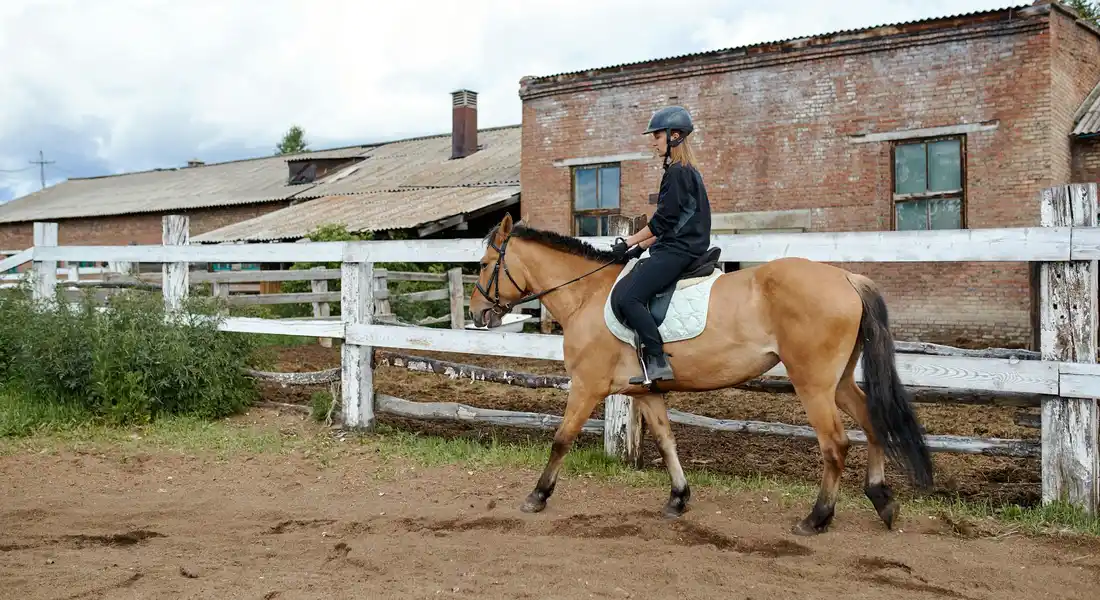
Think of learning horsemanship like learning to drive. A certified instructor is your driving school, ensuring you understand the rules of the road and how to operate the vehicle safely. Independent study is like reading the car manual or watching advanced defensive driving videos. You need both to be truly competent. The safest, most effective route is a hybrid model that uses certified instruction for core, safety-critical skills and self-study for supplementary knowledge. This approach respects both the horse’s needs and your growth as a caregiver.
Let’s get practical. A smart hybrid model looks like taking a focused, monthly lesson on a specific skill-like perfecting your emergency dismount or introducing lateral work. Your instructor gives you the correct form, watches you practice, and prescribes exercises. You then practice those exact exercises during your own rides, keeping a journal of your horse’s responses. This cycle of guided correction and independent reinforcement builds muscle memory and confidence without ingraining dangerous mistakes. For book-learning topics like equine psychology or pasture management, your certified professional can point you toward reliable resources, helping you filter the good information from the bad.
Looking long-term, credentials matter in the professional equine world. When I’m hiring a new assistant at the barn, a certification from a recognized body like CHA or PATH tells me someone has met a baseline of safety and teaching standards. For barns, insurers, and clients, that piece of paper isn’t just a formality; it’s a layer of liability protection and a promise of a known methodology. It shows commitment. Your self-taught knowledge in niche areas makes you exceptional, but your certified skills are what get you in the door and keep everyone, especially the horses, safe.
Resources for the Independent Learner
If you’re going to explore on your own, start with a map drawn by experts. The goal is to build context, not replace it. Always cross-reference what you learn independently with your certified instructor-they know your horse and your riding in a way a book or screen never can. Here are my most trusted resources for supplementary learning, vetted over years of muddy boots and late-night reading. It’s especially important to understand how horses learn when evaluating new training techniques.
- Book Authors: Dr. Sue Dyson for lameness and pain recognition, Dr. Robert M. Miller for equine psychology, and Cherry Hill for absolutely everything on general horse care and handling. Their work is scientifically grounded and beautifully practical.
- Online Video Channels: Look for channels that emphasize observation and quiet communication. Warwick Schiller’s video library is a masterclass in reading horse behavior. Equitopia offers short, science-backed videos on equine biomechanics and welfare.
- Well-Regarded Clinics: Seek out clinicians who prioritize the horse’s mental state over quick fixes. Buck Brannaman’s tours offer profound insight into feel and partnership. For groundwork and liberty, consider a clinic with someone like Jonathan Field.
Remember, these resources are for deepening your understanding. Watching a video on hoof trimming doesn’t make you a farrier, just as reading a book on sensitive horses doesn’t give you the feel for working with a Thoroughbred like Luna. Use them to ask better questions in your next lesson, to understand the “why” behind your instructor’s “how,” and to become a more thoughtful steward for your horse.
Certified Instructor vs. Self-Taught: Which Path is Safer and More Effective? – FAQ
What are the potential legal or liability concerns?
Certified instructors often operate under insurance and ethical codes from accrediting bodies, reducing personal liability in accidents. Self-taught individuals may assume full legal risk if their actions cause harm, as they lack formal training records or oversight. Consulting equine liability laws and considering insurance is essential for both paths to mitigate risks. That said, you may wonder: does horse liability insurance protect me in an accident or claim? Understanding policy terms helps you compare protections and exclusions.
How do employers view certified vs. self-taught credentials?
Employers in horse care, such as barns or training facilities, typically value certified credentials for roles requiring safety and instruction, as they assure standardized knowledge. Self-taught skills may be accepted for auxiliary tasks, but certification often meets insurance requirements and builds client trust. Demonstrating hands-on experience can complement credentials, but certification frequently opens more professional opportunities. Additionally, awareness of essential horse riding regulations and safety requirements is a core part of responsible operation. Complying with these standards complements credentials and helps meet client and insurer expectations.
What are the time commitments for certification vs. self-teaching?
Certification programs demand a structured timeline, ranging from months to years, including coursework and practical evaluations. Self-teaching allows flexible scheduling but can extend learning time due to unstructured practice and knowledge gaps. Investing in certification may lead to faster, more reliable skill acquisition, while self-teaching requires strong self-discipline to progress efficiently.
Your Path to Confident Horsemanship
For building a safe foundation, a certified instructor provides essential structure, accelerates your progress, and helps you avoid hard-to-break habits. The most reliable path is to start with professional guidance, using carefully vetted self-study to supplement those core lessons.
True horsemanship grows from patience and a deep respect for the partnership. Your horse’s feedback—a relaxed snort or a worried ear—is the most valuable guide you will ever have. Learning how to interpret their body language is essential in building that understanding.
Further Reading & Sources
- Why You Should Find a Certified Riding Instructor – Certified Horsemanship Association
- CHA Certifications – Certified Horsemanship Association
- Instructor Certification – American Riding Instructors Association
- Instructor Certification – What Should You Choose? – The Riding Instructor
At Horse and Hay, we are passionate about providing expert guidance on all aspects of horse care, from nutrition to wellness. Our team of equine specialists and veterinarians offer trusted advice on the best foods, supplements, and practices to keep your horse healthy and thriving. Whether you're a seasoned rider or new to equine care, we provide valuable insights into feeding, grooming, and overall well-being to ensure your horse lives its happiest, healthiest life.
Behavior