
Tailored Grooming: A Breed and Coat Type Guide for Healthier Horses
Published on: March 14, 2026 | Last Updated: March 14, 2026
Written By: Henry Wellington
Hello fellow equestrians. If you’ve ever watched your grooming efforts turn into a dusty cloud or a skin rash, I hear you. Getting the brush wrong for your horse’s breed or coat can lead to real problems like itching, infections, and unexpected vet bills.
Let’s fix that. In this guide, I’ll walk you through the specific routines that keep different horses shining and comfortable. We’ll cover:
- Tools and techniques for thick, double coats and heavy feathering
- Gentle care strategies for fine-skinned, short-coated breeds
- Managing curly coats, unique patterns, and sensitive pigmented skin
- Seasonal shedding hacks for the fuzziest of ponies and drafts
My advice comes from a long career in the barn, managing everything from sleek performance horses to woolly backyard best friends.
Why One Brush Doesn’t Fit All: The Connection Between Coat and Care
Run your hand over Luna’s shoulder and then over Pipin’s round barrel. The contrast is instant. Luna’s Thoroughbred coat feels like chilled satin, sleek and fine over taut muscle. Pipin’s Shetland pony coat is a dense, springy puff, like a well-loved wool sweater. This difference isn’t random. It’s a blueprint of breed history and purpose. Fine-coated breeds like Luna’s ancestors were selected for speed, needing lightweight hair that cools quickly. Hardy ponies and draft breeds evolved dense, woolly undercoats to trap heat and block moisture. My Quarter Horse Rusty sits in the middle. His sorrel coat has a sturdy, slightly waxy texture that shrugs off trail debris and light rain, which aligns perfectly with his puddle-averse personality.
Grooming is less about forcing a shine and more about understanding and supporting what the hair is naturally meant to do.
Your tools and technique must adapt. Vigorously scrubbing Luna’s sensitive skin with a stiff brush will make her flinch and tighten up. For her, grooming is about soft pressure and quiet reassurance. Pipin’s thick hide requires firmer, deliberate circles to reach his skin and stimulate his natural oils. I adjust my pressure and tool choice for each of them before I even pick up a brush. It respects their comfort and turns the chore into a connection.
- Skin Health: Removing sweat, scurf, and mud prevents itchy infections and lets the skin breathe.
- Bond-Building: This daily hands-on ritual builds a language of trust far beyond the saddle.
- Spotting Injuries: Your fingertips will find every new scrape, bump, or patch of heat long before it’s a crisis.
- Enhancing Natural Weatherproofing: Proper brushing distributes protective skin oils, boosting the coat’s own rain-shedding ability.
Your Grooming Toolkit: Matching the Tool to the Task
The Core Arsenal for Every Tack Box
You can build a great grooming kit without complexity. Focus on these five fundamentals. Each has a clear job in a logical sequence that keeps your horse comfortable and your tack room organized. Next, we’ll zero in on which items are essential grooming tools horse owners rely on. This will help you identify the core gear your horse truly needs.
- Curry Comb: A rubber circle with nubs used in deep, gentle circles to loosen dirt and lift dead hair from the skin.
- Dandy Brush: A brush with stiff, natural bristles that flicks away the mud and hair loosened by the curry.
- Body Brush: A soft-bristled brush that sweeps away fine dust and polishes the topcoat to a natural gleam.
- Hoof Pick: A sturdy hooked tool for cleaning debris, stones, and packed mud from the sole and frog of the hoof.
- Mane/Tail Comb: A wide-toothed comb or specially designed brush that detangles without snapping precious hairs.
Always follow the order: curry, dandy, body, then hoof pick. This workflow is efficient and prevents grinding dirt back into the coat.
Specialty Items for Specific Coat Types
When the basics meet their match, these specialized helpers save time and effort. They address specific coat textures or seasonal challenges like the great spring shed.
- Shedding Blade: A flexible metal blade with teeth. It is the champion for efficiently pulling out thick tufts of loose winter coat from hairy ponies like Pipin or any horse blowing their coat.
- Rubber Grooming Mitts: Slip these on for a deep, massaging curry on sensitive horses or for applying shampoo evenly during a bath. They give you great control over pressure.
- Silicone Grooming Blocks: These grab dust and dander like a magnet from fine, short coats. I use one as a final pass on Luna to make her grey coat sparkle without irritating her skin.
- Soft Cotton Cloths or Terry Towels: Perfect for a final polish, gently wiping a face, or drying a clipped horse after exercise. They are kind to the most delicate skin.
Keep a dedicated, dry terry towel in your kit; it’s the fastest way to give a dusty horse a presentable glow before heading out on the trail.
Building Your Daily Grooming Routine: A Step-by-Step Process
-
Start with a safety check and gentle connection. I always begin by quietly approaching my horse, letting them sniff my hand and checking their eyes and posture. Run your hands over their neck, back, and legs, feeling for any heat, swelling, or cuts. This mindful first touch isn’t just a safety scan; it’s your conversation starter, setting a calm tone for the entire session.
-
Use a curry comb in circular motions to lift dirt and stimulate skin. Begin on the neck, using firm, clockwise circles to break up mud and shed loose hair. On a thick-coated horse like Rusty, I lean into it, listening to the satisfying crunch of dried sweat loosening. Think of currying as a massage that wakes up the skin and brings dirt to the surface, making the next steps far more effective.
-
Follow with a dandy brush to flick away loosened debris. Use quick, flicking strokes following the hair growth, letting the dirt fall away. For my sensitive Thoroughbred Luna, I use lighter pressure to avoid making her skin twitch. This brush is your debris remover; a good flick at the end of each stroke throws the dirt clear of the coat instead of grinding it back in.
-
Finish with a soft body brush to lay hair and distribute oils. Long, smooth strokes with a soft brush add the final shine. I spend extra time on the neck and shoulders, where natural oils are richest. This step spreads the skin’s natural conditioning agents across the hair shaft, creating a water-resistant barrier and a healthy gleam.
-
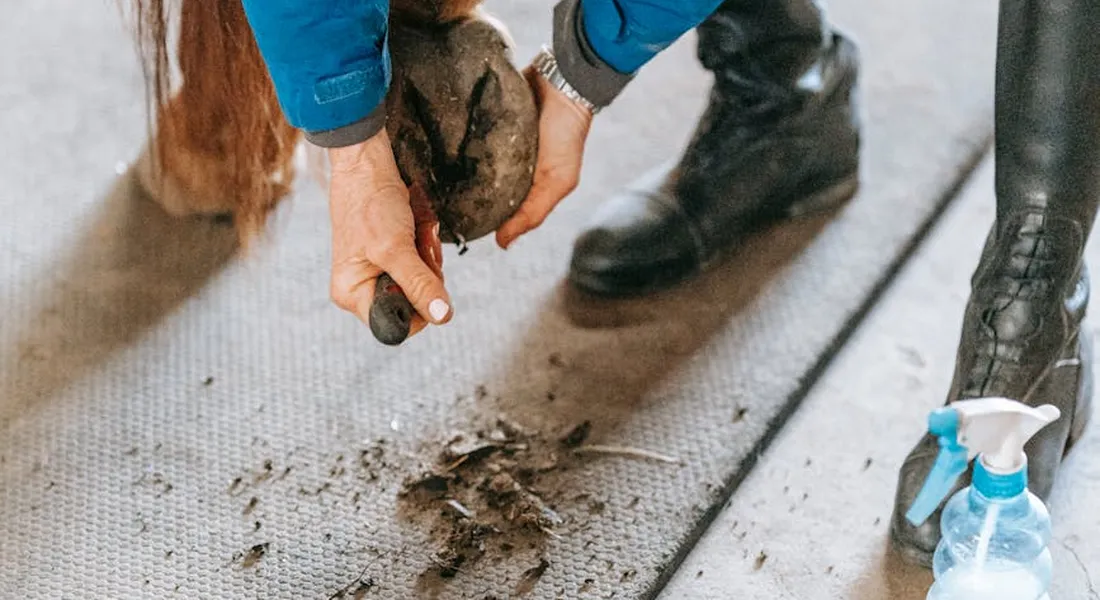
Detail the hoof-picking process, emphasizing safety and thoroughness. Stand at the shoulder, facing the tail, and run your hand down the leg. Clean from heel to toe, clearing the frog, sole, and grooves. I check for stones and the sharp smell of thrush, especially with mud-loving Pipin. How do you pick the hoof? With intention and care, because a clean, dry hoof is the foundation of soundness, and missing this can lead to serious lameness. This mirrors a step-by-step guide to proper horse hoof cleaning that you’ll see in the next steps. Following that guide helps ensure safety and thoroughness.
-
Finish with mane and tail care, using fingers or a wide comb and detangler if needed. Spray a detangler on knotted sections and use your fingers to work from the bottom up. I rarely use a comb on Luna’s tail, opting for finger-combing to preserve every strand. Patience here pays off in thicker, longer hair; rushing with a comb is a sure way to turn a minor tangle into a breaking point.
Coat Type Care Guide: From Sleek to Shaggy
Short, Fine Coats (e.g., Thoroughbreds, Arabs)
-
Advocate for gentler tools like soft rubber curries and fine brushes. Harsh bristles can scratch sensitive skin, causing irritation. To manage sweat marks on Luna, I use a sweat scraper followed by a cool, damp towel rub-down. Keeping a shine on these coats relies on a high-fat diet and gentle dusting, not abrasive scrubbing that strips protective oils.
Medium, Dense Coats (e.g., Quarter Horses, Morgans)
-
Focus on effective dirt removal from a thicker coat. A firm, rubber curry and a stiff dandy brush are your best friends here. On Rusty, I curry until I no longer see dust clouds rising with each brush stroke. That deep, healthy glow comes from completely clearing the coat of grit, allowing light to reflect off clean, flat hair.
Long, Heavy, or Feathered Coats (e.g., Drafts, Cobs, some Ponies)
-
Emphasize patience and detangling from the bottom up. For feathered legs, I apply a lightweight detangler and use a comb only after finger-working the mud out. Coat conditioners prevent the brittle breakage common in long hair. Managing feathers to prevent mud fever is a daily duty; moisture-wicking bedding and thorough drying after turnout are as important as the grooming itself.
Unique Coat Textures (Curly, Appaloosa Spots)
-
Give tips for grooming curly coats without disrupting curls. Spritz with water or a curl-enhancing spray and scrunch with your hands-never brush dry. For Appaloosas, the skin under spots is often thinner; I use a super-soft brush and avoid the sun with a fly sheet. Gentle care for sensitive skin under Appaloosa spots means using hypoallergenic products and watching for sunburn, as this skin lacks protective pigment.
Breed-Specific Grooming Nuances and Quick Tips
-
Thoroughbreds: Mind the Thin Skin
Their skin is notoriously fine, like delicate parchment. I learned this with Luna; a stiff brush leaves pink lines faster than you can say “sorry, girl.” Use a soft rubber curry in gentle circles to lift dirt, followed by a plush body brush. Barn hack: Keep a bottle of silicone-based human hair detangler in your kit-a light spray on your brush helps it glide over sensitive hips and shoulders, preventing rubs and tears.
-
Draft Breeds: Focus on Feathers & Underbelly
All that magnificent feathering on their legs traps mud and moisture, which can lead to scratches. Pay equal attention to the often-ignored underbelly where sweat and dirt mix. My routine involves lifting each feather, drying thoroughly with a towel, and using a coarse comb to work out debris. Barn hack: Before a show, dust feathers with plain baby powder to absorb grease, let it sit, then brush out for fluffier, whiter hair without harsh washing.
-
Gaited Breeds: Show Ring Tail Care
For breeds like Tennessee Walkers, the tail is a flowing centerpiece. Constant brushing can thin it out. Instead, focus on keeping it clean and contained. I wash tails only when necessary with a moisturizing equine shampoo to prevent dryness. Barn hack: For daily turnout, a simple, loose braid secured with a soft hair tie protects the length from tangles and manure stains, preserving that show-ring readiness.
-
Ponies: Managing a Dense, Water-Resistant Coat
Take it from Pipin, my Shetland: their coats are built like a thatched roof, shedding rain and hiding dirt. A quick flick with a brush does nothing. You need to get deep with a shedding blade in spring and a firm curry comb year-round to reach the undercoat. Barn hack: After currying, run a vacuum or a damp towel over the coat to pick up the dislodged dust and hair-it’s a game-changer for getting them truly clean.
-
Arabians: Mane and Tail Fineness
Their silky hair is beautiful but fragile, breaking easily if handled roughly. Never yank a comb through dry hair. I always spray a detangler mixed with a bit of leave-in conditioner on my hands first, working it through the strands before any brushing. Barn hack: For extra protection during rides, loosely plait the mane to one side to prevent it from getting caught on tack or rubbed thin.
Mane and Tail Mastery: Beyond Simple Brushing
Brushing from top to bottom is a recipe for breakage. Always start detangling at the very bottom of the tail or mane, using your fingers to gently separate big knots. Work your way up slowly with a wide-tooth comb, holding the hair above the knot to prevent pulling on the roots.
For a neat bridle path, you have two options: pulling or trimming. Pulling removes hairs at the root for a natural, tapered look but requires skill and can be uncomfortable. Trimming is faster and kinder for the horse, though the edge can appear blunt. For most pleasure horses, I opt for trimming with sharp scissors, keeping welfare front of mind-a happy horse is more important than perfect tradition.
Simple braiding for daily turnout saves hours of detangling later. A basic three-strand braid down the tail or a few loose braids in the mane will do. Use elastic bands designed for horses that won’t snap and tangle, and never braid too tight-you want to prevent knots, not create tension on the scalp or tailbone. Correct technique is key.
Choosing products matters. Look for detangler sprays with silicone or natural oils like argan to add slip. Avoid products with high alcohol content that dry hair out. For a deep clean, I use a moisturizing tail rinse once a month; mix a quarter cup of human hair conditioner with warm water in a bucket, soak the tail, then rinse thoroughly to prevent buildup at the base.
Seasonal Shifts: Adapting Your Routine for Weather
The rhythm of the barn year is set by the sun and the coat. One week you’re covered in a blizzard of winter hair, the next you’re staring at a slick summer coat. Adapting your grooming isn’t just about looks; it’s about supporting your horse’s health and comfort through every weather swing. But it’s not just about hair; understanding what makes up your horse’s coat is equally important.
Shedding Season Strategies
Spring shedding feels like a never-ending task. I’ve stood in the cross-ties with Luna, creating grey dust clouds that seem to regenerate instantly. The key isn’t force, but strategy and patience. A systematic, gentle approach removes loose hair efficiently and feels like a great massage to your horse. Start with the softest tools and work your way up based on your horse’s sensitivity and coat density.
- Begin with a rubber curry comb in a circular motion over large muscle groups. This loosens the deep-down dead hair and dirt. Avoid bony areas like the legs and spine.
- Follow with a stiff-bristled dandy brush to flick the loosened debris away. Use short, flicking strokes in the direction of hair growth.
- For the serious undercoat, introduce a shedding blade. Unfold it to use the curved, serrated edge. Use long, sweeping pulls-don’t saw back and forth. Never use it on the face, legs, or any sensitive areas.
- A grooming mitt is perfect for finishing and for sensitive horses. It lets you apply good pressure and collects hair as you go, ideal for faces and the backs of legs.
- Always finish with a soft body brush to remove the last dust and leave the coat smooth.
My old gelding Rusty would practically lean into the shedding blade, while Luna requires a softer touch with the mitt. Watch your horse’s reaction. Their comfort is your best guide.
Preparing for Winter and Summer Coat Changes
A horse’s coat is their original blanketing system. Your grooming and care directly influence its quality. That glossy, weather-resistant summer coat or dense, plush winter wool starts from the inside out with good nutrition and consistent brushing. Regular brushing stimulates the skin’s natural oils, distributing them along the hair shaft for waterproofing and shine. Seasonal care matters: summer grooming helps keep the coat cool, while winter grooming focuses on insulation and moisture retention. We’ll cover practical winter vs summer grooming tips next.
For working horses in winter, a full coat can be a liability. A sweaty, thick coat takes hours to dry, risking chills. This is where body clipping comes in. A trace clip (removing hair from the neck, chest, and belly) is perfect for the lightly worked horse. A full body clip is for animals in heavy work.
Clipping changes everything. A clipped horse is a committed relationship with blanketing; you have just removed their natural thermostat. They will need a wardrobe of sheets and blankets to match the temperature. In practice, temperature should guide your blanket strategy. A quick forecast check helps you tailor coverage to comfort. Their skin also needs more care-regular light grooming to prevent dryness and check for irritation.
For the unclipped horse, your winter grooming focuses on managing that fluffy coat. Use a curry to break up mud and skin flakes, and brush thoroughly to prevent matting. Baths become rare; a thorough curry and brush-out is often better than wetting down a coat that may not fully dry for days. Understanding how horses handle cold weather helps in deciding when and how to groom.
I learned this with Pipin, our Shetland. One winter we gave him a low trace clip because his workload increased. The difference in his drying time and comfort after lessons was dramatic, but it meant I was swapping his blanket weights like a frantic meteorologist. It was a fair trade for his comfort.
FAQ: Grooming Needs by Horse Breed and Coat Type
Why is a rubber curry comb specifically recommended for fine-skinned breeds?
A rubber curry’s flexible nubs provide deep cleansing without scratching delicate skin. Its gentle massage action effectively loosens dirt and stimulates oil production without causing irritation. This makes it the ideal first step for sensitive breeds where harsh tools can cause discomfort and damage.
What is the most important daily step for preventing mud fever in heavily feathered breeds?
The crucial step is ensuring the feathered legs are completely dry after exposure to moisture. This involves manually separating the feathers and using an absorbent towel to reach the skin. Consistent drying prevents the damp environment where bacteria thrive, which is more critical than frequent washing.
How should my grooming tools change for my horse during peak shedding season?
Your toolkit should pivot to specialized de-shedding tools like a shedding blade or grooming mitt for efficient hair removal. For a thick-coated horse, a shedding blade’s serrated edge is most effective, while a rubber mitt is better for fine coats. The goal is to aid the natural process with the right tool to prevent skin irritation and matting.
A Final Brush-Off
Your grooming kit should be as unique as your horse, built around their specific coat texture and shedding patterns. The most important thing is to make grooming a consistent, thorough check for bumps, heat, or irritation, not just a quick shine before a ride. An essential daily grooming routine supports a healthy horse. Regular care helps keep skin and coat in top condition.
This daily ritual is your chance to connect and catch little issues before they become big ones. Your patience and attention to the feedback you get under your brush and hands are the truest signs of good horsemanship.
Further Reading & Sources
- Horse grooming – Wikipedia
- Grooming Different Coat Types – Equine Knowledgee Equine Knowledgee
- HORSE Care | K9 Coat Care USA | USA | America
- r/Equestrian on Reddit: What are your horse grooming and care advice/tips? What products, methods and supplies do you use?
At Horse and Hay, we are passionate about providing expert guidance on all aspects of horse care, from nutrition to wellness. Our team of equine specialists and veterinarians offer trusted advice on the best foods, supplements, and practices to keep your horse healthy and thriving. Whether you're a seasoned rider or new to equine care, we provide valuable insights into feeding, grooming, and overall well-being to ensure your horse lives its happiest, healthiest life.
Breed-Specific Care