
Teach Your Horse Basic Ground Manners: A Gentle Guide for Safety and Trust
Hello fellow equestrians, does your horse crowd you at the gate or turn a simple hoof pick into a wrestling match? That lack of respect on the ground is more than an annoyance-it’s a genuine safety hazard that can lead to falls, bites, and a whole lot of frayed nerves.
This guide will give you the clear, consistent methods I use daily at the barn. We’ll focus on core skills that make every interaction smoother: setting and enforcing your personal space without drama, teaching a relaxed lead where your horse walks beside you, not ahead of you, building patience for standing tied and during grooming, and creating a calm routine for handling feet and vet visits.
My advice comes from years of barn management and training, fixing these very issues with horses like my clever pony Pipin and my sensitive thoroughbred Luna.
Why Ground Manners Are Non-Negotiable for Safety
Think of good ground manners not as a luxury, but as the bedrock of every single interaction you have with your horse. This is the space where trust is built or broken, and where most accidents are prevented before they even have a chance to happen.
A horse that respects your space is less likely to step on your toes, a lesson I learned painfully from a distracted Rusty years ago. A horse that stands quietly for the farrier makes the visit safer for everyone. Respectful ground manners translate directly to a safer environment for you, your horse, and anyone else in the barn aisle.
It’s not about dominance, but about clear communication. A pushy horse isn’t being “bad,” he’s just confused about where his body should be. My sensitive mare, Luna, used to swing her hindquarters into me when she was anxious-a potentially dangerous move. Teaching her to stand square and yield her hindquarters to light pressure wasn’t a trick; it was a safety protocol.
Every time you correct a small thing on the ground, you’re preventing a big thing later. That moment of impatience at the stall door, the nudging for treats, the dragging you to grass-these are all seeds of larger disrespect. Consistency in the small, boring moments creates reliability in the big, exciting ones.
Your Groundwork Toolkit: Gear and Mindset
You don’t need a bag full of gadgets. In fact, the simpler your tools, the better you’ll communicate. Your primary investments should be in a well-fitting halter, a solid lead rope, and your own mindset.
The Halter and Lead: Your Primary Communication Tools
A poorly fitted halter is a terrible start. It can rub, pinch, and dull your cues. You should be able to fit two fingers comfortably under the noseband and cheekpieces. For a basic training lead, I prefer a 10-12 foot cotton or soft rope lead with a sturdy bolt snap.
Avoid thin, heavy, or chain leads for everyday work; they are tools for specific issues, not foundational training. Your lead rope is an extension of your arm, not a tow cable-if you’re leaning back on it, your communication has already failed.
Here’s my basic gear checklist:
- A well-fitting, breakaway halter for safety.
- A long, soft lead rope that feels good in your hands.
- Gloves to protect your skin from rope burn.
- Sturdy, closed-toe shoes. Always.
The Handler’s Attitude: Projecting Calm Leadership
Your energy is the most powerful tool in your toolkit. Horses are masterful at reading body language and intention. If you are tense, hurried, or uncertain, your horse will mirror that energy back to you.
I think of it as being a calm, mobile fencepost. You are consistent, immovable in your expectations, but not aggressive. Breathe deeply. Move with purpose, not haste. Your shoulders should be back, your gaze up. Your calm, confident posture tells your horse the environment is safe and you are the one to follow.
Remember Pipin, our clever Shetland? He’s a master at testing a handler’s resolve. The moment he senses hesitation, he’ll try to walk right through you. With him, I have to be a cheerful, immovable wall-not angry, just unwavering. The release of pressure when he makes the right choice is his reward. This isn’t about being stern; it’s about being clear. Your attitude sets the tone for the entire lesson.
Core Ground Manners: Step-by-Step Training Guides
How to Lead Your Horse Respectfully
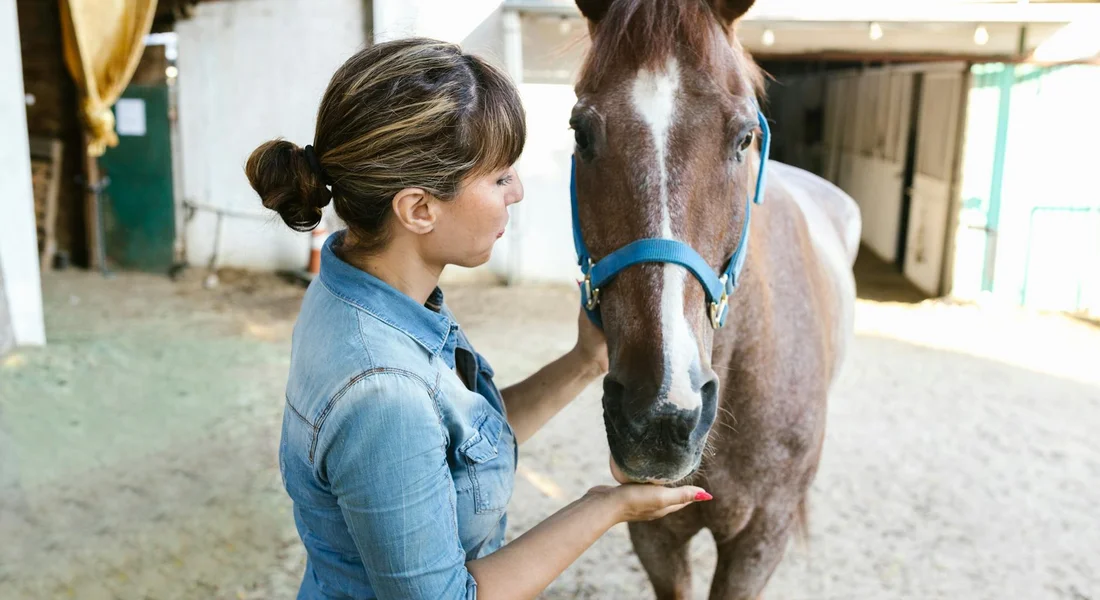
Leading isn’t about dragging a 1,200-pound animal. It’s a partnered walk. Your position is critical: stand by their left shoulder, facing forward. You’re a leader, not a lamppost they’re looping around.
I learned this the hard way with Pipin, who would swing his hindquarters into me, using me as a scratching post. I was too far back. Hold your lead rope with a firm, not death-grip, hand, allowing a gentle arc of slack. Apply light pressure to ask for movement, and release the instant you feel them commit. The release of pressure is the reward, teaching them to seek that comfortable, loose-leash feeling by your side.
- Start in a quiet, enclosed area like a paddock.
- Walk with purpose. Horses read uncertainty.
- To stop, say “whoa,” apply a slight downward pressure on the rope, and plant your feet.
- If they barge ahead, use a quick, rhythmic tug-and-release on the rope, turning them in a small circle to re-establish your shoulder position.
- Practice changes of speed and direction. Make it a conversation, not a monologue.
Teaching a Rock-Solid “Stand” Command
A horse that fidgets during mounting, vet visits, or farrier work is a safety hazard. The “stand” means freeze all four feet until you release them. I use this daily for grooming Rusty. Safe handling protects both you and your horse during mounting, vet visits, and farrier work. It’s a cornerstone of horse owner safety I rely on daily.
Begin with your horse haltered. Ask them to “stand” in a clear, calm voice. Take one small step away, keeping the rope slack. If they move a foot, immediately step back, reposition them to the exact spot, and repeat. The key is consistency: moving their feet back to the original spot every single time reinforces that ‘stand’ means absolute stillness.
- Ask for “stand” and wait for three seconds of stillness. Reward with a pat or verbal praise.
- Gradually increase duration and your distance. Step to their side, then slightly behind.
- Introduce mild distractions, like rustling a brush or lifting a hoof pick.
- Always release with a specific word like “okay” and a step back to signal they can move.
Safe and Stress-Free Hoof Handling
A horse that snatches its leg away is often scared or unbalanced. Your job is to be their steadying post. Start by running your hand down their leg, applying gentle pressure behind the tendon. If they shift weight, praise them! That’s the desired response.
Luna was a leg-snatcher. I spent weeks just resting my hand on her cannon bone, letting her get used to the weight, before even thinking about picking up her foot. When you do lift the hoof, support it securely in your hand, don’t let it dangle, and keep it close to their body for better balance.
- Always work from the side, never directly in front of a hoof.
- Use a consistent verbal cue like “foot” or “hoof.”
- Hold the hoof only as long as you need to clean it, then place-don’t drop-it back down.
- Work on all four feet in every session, but end on a good note, even if you only fully succeed on one.
Establishing Personal Space Boundaries
Horses are large and sometimes forget their size. A horse that leans on you or crowds you at the gate is being disrespectful, not affectionate. Think of your personal space as a bubble, especially when understanding horse behavior and psychology.
My rule is simple: you cannot enter my bubble unless I invite you. If a horse steps into it uninvited, I use body language-a firm push on the shoulder, a step toward them with my arm extended-to ask them to move their feet back out. You are not being mean; you are teaching them to be polite partners who respect your physical safety.
- Be aware of how your horse enters your space. Is it pushy or gentle?
- Use a sharp “ah-ah” sound or “back” as they cross the boundary, followed by a physical cue.
- Reward them immensely when they stop at the boundary or wait for permission.
- Apply this at the stall door, during feeding, and while grooming.
The Art of the Calm Back-Up
Backing up is the ultimate test of control and respect. It moves energy backwards in a controlled manner. Never pull a horse backwards; instead, apply light, rhythmic pressure on the lead rope toward their chest while stepping into their space.
The moment they shift weight back, even a fraction, release all pressure. I practice this in the aisleway with all my horses. A single, deliberate step back in response to light pressure is far more valuable than five frantic steps from harsh pulling.
- Face your horse, standing slightly to one side for safety.
- Apply light, pulsing pressure on the rope or use a finger to tap their chest.
- Add a verbal cue like “back” as they move.
- Ask for one step, then two, always releasing to mark the correct effort.
- Practice from the ground beside them, using body energy to ask them to move away from you.
Addressing Common Ground Manners Challenges
Pulling Back When Tied or Tethering Safely
A horse that pulls back is often terrified of feeling trapped. Panic overrides training. Prevention is your best tool. Always tie to something solid, using a quick-release knot or a safety panic snap. The rope should be at withers height and just long enough for comfort, but not so long they can get a leg over it.
I never tie a horse that hasn’t been trained for it. Start with “mock tying”-run the rope through the tie ring but hold the end in your hand. If they pull, you can instantly release. When you put a halter on, tie with a quick-release knot so you can release immediately if needed. This keeps the setup safer and easier to manage in everyday handling. Invest in a breakable halter or safety tie system; it’s cheaper than a vet bill for a torn ligament or a broken wooden post.
Resistance During Grooming or Saddling
Pinning ears, swishing tails, or cow-kicking during grooming often signals pain or discomfort. Rule out physical issues first with a vet or bodyworker. Assuming health is fine, the resistance is a communication.
Break the process down. If your horse hates the girth, don’t just crank it tight. Do it up one hole, let them stand, walk them a step, then do another. Rushing through a process a horse finds unpleasant only confirms their fear and creates a lasting negative association. Pair each step with a calming voice and reward small acceptances.
Impulse Control Around Food or Gateways
This is about leadership. A horse that bolts through gates or mugs you for treats sees you as a vending machine, not a leader. The rule is: you move your feet, I feed you. You stand calmly, I open the gate.
With Pipin, the master escape artist, I made him stand back from the gate, haltered, while I fumbled with the latch. If he stepped forward, I’d stop and wait. It took ten minutes the first time. Now he waits. Feed treats from a flat hand, palm down, only when the horse is calm and not nudging or demanding. Make them earn every mouthful with a simple behavior like lowering their head or taking a step back.
Integrating Manners into Daily Stable Life
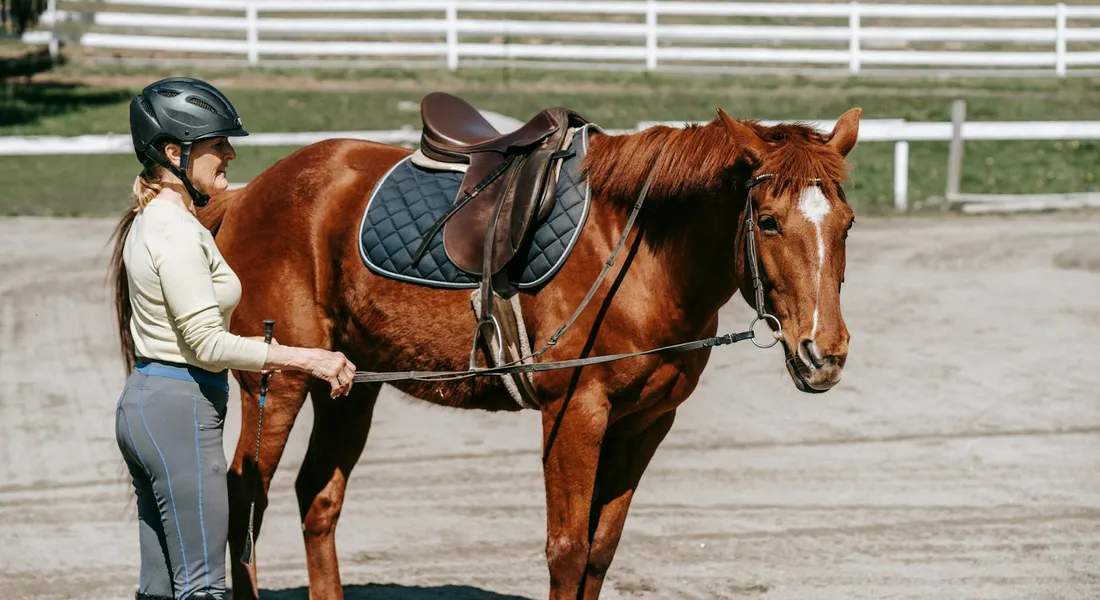
True horsemanship isn’t a scheduled half-hour in the arena; it’s the thousand small choices you make from the moment you walk through the barn door. Every interaction, from feeding to mucking, is a chance to reinforce the polite behavior you want. This approach turns chores into a conversation, building a consistent language between you and your horse.
Making Every Interaction a Training Moment
Your daily routine is your most powerful training tool. It’s where theory meets the muddy, hay-strewn reality of life with a 1,200-pound partner. Here’s how to layer manners into the mundane.
- At Feeding Time: Don’t just dump the grain. Ask for a step back. Have your horse stand quietly while you place the bucket. I do this with Pipin every single evening; his cheeky pony brain wants to dive in, but waiting for my release cue has saved my toes and taught him immense self-control.
- During Grooming: Use your curry comb and brush to teach boundaries. If Luna swings her hip into me, I stop brushing and ask her to move over with a gentle push. Grooming continues only when she gives me space. It turns a pampering session into a lesson in personal space.
- Leading to and from the Field: This is prime training real estate. The horse should walk beside you, not drag you or lag behind. If Rusty gets strong and pulls toward the green grass, we do a small circle and try again. The gate is not a rocket launch pad; it’s a place for calm exits and entrances.
- In the Cross-Ties: This is the ultimate test of standing politely. Reward calm weight-shifting, but immediately correct leaning or pawing. A horse that learns to stand quietly in the cross-ties is a safer horse for the farrier and vet.
The Role of Turnout and Mental Well-being
You cannot ask for focused, polite behavior from a coiled spring. A horse with ample turnout and equine friends is a mentally available horse, ready to learn instead of simply react. I’ve seen the difference in my own herd: after a night out moving freely, Luna’s tension melts away, and her responses become thoughtful, not fearful.
Think of turnout as a non-negotiable part of your training program. It allows for natural movement, which loosens stiff muscles and prevents stocking up. It provides social interaction, which relieves boredom and stress. A horse that spends 23 hours in a stall is often storing pent-up energy that will explode the moment you try to teach something new. Prioritize their mental state, and your training sessions will become more productive and much safer for everyone involved.
Progressing to Confidence: Desensitization and Line Work
Once your horse understands the basics of leading and standing, you can build their confidence in the wider world. This work is about creating a partner who trusts you when things are unfamiliar, not one who is simply desensitized through exhaustion.
Introducing Scary Objects with Curiosity
The goal isn’t to force your horse to endure a scary thing, but to help them investigate it. I keep a “spooky object” bin by the arena: a tarp, some empty plastic bottles in a bag, a pool noodle.
- Start at a Distance: Lay the tarp on the ground far away. Let your horse look at it. Their snort is just them saying, “Well, would you look at that!”
- Approach Together: Walk toward it, but don’t go straight to it. Walk in curves. Let them choose to look. If they stop and stare, you stop and stand with them. You’re a team.
- Touch and Reward: Use a stick or your hand to gently rustle the tarp. The moment their ear flicks forward with curiosity, or they take a step closer, release the pressure and give a soft rub. You’re rewarding the investigative thought.
- Build Slowly: Never flood them. One successful sniff of the blue tarp is a better day than a battle that ends with them standing on it in a sweaty panic. Tomorrow, you can ask for a hoof near it.
The key is to let the horse think its way through the fear, with you as a calm, reassuring anchor. This builds a much deeper trust than just sacking them out. As a calm, assertive leader for your anxious horse, you guide with steady presence and clear expectations.
Basic Longeing for Communication and Exercise
Longeing isn’t about running your horse in circles until they’re tired. It’s a dialogue on a 22-foot line. You’re teaching voice commands, managing energy, and observing movement.
- Equipment: A well-fitting halter and a long, heavy line. I avoid longe lines with chains for this basic work; the goal is clear communication, not correction.
- The Setup: Ask your horse to walk a large circle around you. You are the pivot point, not a post. Your body language directs them: step toward the hip to drive forward, step toward the shoulder to ask for a halt or turn in.
- Voice is Key: Pair a clear “walk,” “trot,” and “whoa” with your body cue. Be consistent. Rusty knows my “and trot” cue so well I can whisper it.
- Watch and Learn: This is a chance to see how your horse moves. Is she stiff on one lead? Is he looking outward and distracted? Use this information.
- Short Sessions: Five to ten mindful minutes are better than thirty of mindless circling. Change direction frequently to work both sides evenly and keep their mind engaged.
Proper longeing teaches a horse to respond to the pressure of the line and the sound of your voice, translating directly to better communication under saddle. It’s about partnership, not just exercise.
FAQ: Teach Your Horse Basic Ground Manners
How to tie your horse safely?
Always use a quick-release knot or a safety panic snap attached to a solid, immovable object at wither height to prevent injury. Keep the rope short enough to avoid tangling but with enough slack for comfort, and never leave a tied horse unsupervised. Practice with mock-tying sessions first to build confidence and ensure your horse understands the expectation without panic.
How to groom your horse without issues?
Start by grooming in a quiet, familiar area to reduce distractions and help your horse stay calm. Use gentle, consistent strokes and inspect your brushes regularly for debris or sharp edges that could cause discomfort. Reward patience with verbal praise or short breaks to foster positive associations and make grooming a cooperative routine.
How to load your horse into a trailer?
Introduce the trailer gradually by letting your horse inspect it while parked in a safe, open space with no pressure. Use positive reinforcement like treats or calm praise for each small step forward, encouraging voluntary entry. Keep sessions brief and end on a positive note to build trust, avoiding any force that could lead to lasting fear or resistance. When you’re ready to progress, a step-by-step guide teaching your horse to load the trailer provides a clear, calm path forward. This natural progression supports steady confidence-building and prepares you for the next steps.
The Heart of Good Horsemanship
Focus on clear communication and consistency in every interaction, from leading to tying. The safest and most lasting manners come from patience, not pressure, so always reward your horse’s slightest effort to get it right.
Remember, this isn’t a race-your horse’s confidence grows in quiet, repeated successes. The best tool you have isn’t a whip or a rope, but your ability to listen and adapt to what your horse is telling you.
Further Reading & Sources
- r/Equestrian on Reddit: Correcting terrible ground manners
- Establish Good Ground Manners – Dressage Today
- Basic Ground Manners – Horses and Ponies
- Good Ground Manners | Colorado Horse Council, Inc.
At Horse and Hay, we are passionate about providing expert guidance on all aspects of horse care, from nutrition to wellness. Our team of equine specialists and veterinarians offer trusted advice on the best foods, supplements, and practices to keep your horse healthy and thriving. Whether you're a seasoned rider or new to equine care, we provide valuable insights into feeding, grooming, and overall well-being to ensure your horse lives its happiest, healthiest life.
Behavior