
Groundwork Gone Wrong: Fixing 10 Common Lunging and In-Hand Mistakes
Hello fellow equestrians. I see you there in the arena, lunge line in hand, watching your horse trot in frantic circles or worse, plant their feet and refuse to move. That flicker of frustration is a shared language among horse people.
Poor groundwork isn’t just an annoyance; it erodes trust, teaches bad habits, and can lead to real safety risks for both of you.
Today, we’ll untangle the most frequent missteps I’ve seen over years of managing a busy barn. We’ll cover how to correct sloppy line management that creates a tangled mess, the truth about why chasing your horse forward rarely works, and the simple fix for a horse that constantly falls in on the circle. You’ll also learn about reading your horse’s balance and posture and using your equipment correctly instead of as a crutch.
I’ve learned these lessons firsthand, often the hard way, through countless sessions with clever souls like my pony Pipin, who taught me more about pressure and release than any textbook ever could.
The Foundation: Why Groundwork Matters and Where It Goes Wrong
Groundwork is the essential vocabulary of your partnership, teaching respect and safety long before you mount up. It establishes clear communication, reduces spooking, and builds a horse that thinks rather than reacts. When done with patience, it forges a bond that makes every ride smoother and safer for both of you.
Here are the ten common lunging and in-hand mistakes I see time and again at the barn:
- Using poorly fitted or damaged tack that causes discomfort.
- Standing in unsafe positions, like directly behind the horse.
- Applying constant pressure on the line without timely release.
- Misusing the whip as a punishment instead of a signal.
- Demanding perfect circles before establishing rhythm and relaxation.
- Overlooking the horse’s stress signals, such as a clamped tail or hard eye.
- Working sessions that drone on too long, boring or frustrating the horse.
- Lunging on hard, deep, or uneven footing that risks injury.
- Having muddy, inconsistent cues for go, whoa, and change direction.
- Sticking to monotonous routines without variety or purpose.
My approach is rooted in gentle horsemanship, where risk management means building a willing participant, not a compliant prisoner. I learned this with Luna, my dapple grey Thoroughbred. Early on, I’d get frustrated when she’d jig and spook on the line. One day, I stopped pushing and just watched her. I saw her tension mirrored my own. When I softened my body and made my requests clearer and quieter, she softened in return. Groundwork is that mirror.
Equipment Blunders: How Poor Tack Fit Sabotages Your Session
The creak of a stiff new lead rope or the smell of aged leather sets the scene, but poor gear choice ruins the play. Ill-fitting halters create pressure points, worn lines snap, and a cavesson placed wrong can make a horse head-shy. These errors translate directly to resistance, as the horse fights discomfort instead of focusing on you.
Always start your session with a hands-on gear check-it’s a non-negotiable safety ritual. Feel the entire length of your lead rope for dry, brittle spots or hidden frays. Listen to the buckles; a secure snap sounds crisp, while a loose one rattles with a hollow promise. A halter that’s too tight will leave marks, and one too loose can slip dangerously.
- Check halter fit: You should easily slide two fingers under the noseband and cheekpieces. The crown should clear the poll without rubbing.
- Inspect the lead rope or longeline: Look for wear at the clip and any knots that might catch or dig into your hand.
- Examine all metal components: Ensure clips swivel freely and buckles latch securely without cracked prongs.
- Assess the cavesson: If used, it must sit below the cheekbones and not interfere with the halter or bridle.
A whip is a conversational tool, like an extended pointer finger, not a shouting threat. Used out of frustration, it teaches fear. Used with clarity, it can ask for more impulsion or define a boundary. I keep mine pointed low, often just tapping my own boot to reinforce a voice cue for Rusty when he gets distracted by a bird.
The Halter and Lead: Your Primary Connection
Fitting a halter correctly prevents rubs and shows your horse you care about their comfort. The noseband should sit a good two fingers’ width below the cheekbone, never so high it presses on sensitive facial nerves. The throatlatch should be loose enough you can fit your whole hand sideways between it and the horse’s jaw. If you’re planning to handle your horse on the ground, you may want to learn how to put on the halter and tie a quick-release knot for safe, easy releases. It’s a handy skill that helps with calm, controlled handling.
How you hold the lead rope dictates the entire conversation. Never wrap it around your hand; instead, fold the excess into neat loops in your palm. This gives you a soft feel and a quick release if needed. Maintain a light, elastic connection-think of a steady handshake, not a tug-of-war rope.
Longelines and Whips: Tools, Not Weapons
The purpose of a longeline is to safely guide movement in a circle, not to restrain or corral. Hold it so the line forms a gentle arc from your hand to the horse, with no sudden dips or pulls. Let it run smoothly through your fingers to adjust the circle size.
Your whip should direct energy, not drain it. Common mistakes are flicking it randomly or holding it aloft like a sword, which just creates background noise. Instead, point it toward the hindquarters to suggest forward movement, or tap it gently on the ground to re-capture attention. With Pipin, a mere lift of the whip in the direction I want him to move is usually enough-his smart pony brain gets it instantly.
Handler Errors: Your Position, Pressure, and Timing
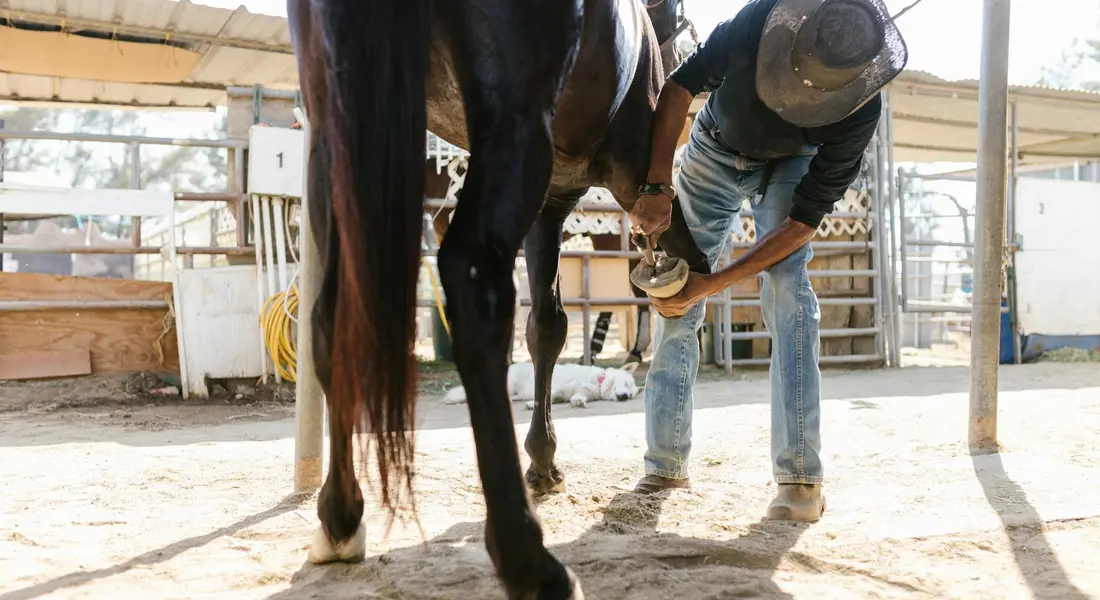
I’ve seen more groundwork sessions derailed by the human on the end of the line than by the horse. Your body is your primary communication tool, and sloppy positioning or muddy signals will confuse even the most patient schoolmaster. Common handler mistakes include standing directly behind the horse (which invites kicks) or facing their head (which blocks forward movement), using frantic, loud body language instead of calm intention, and being inconsistent with your asks from one day to the next. These missteps can seed lifelong behavior issues. In the next section, you’ll find a concise look at the seven beginner horse training mistakes that create lifelong behavioral problems.
Let’s fix that with some clear, actionable steps. For effective pressure-release on the lunge, remember this sequence: ask, wait, release, reward.
- To ask for “go,” point your leading hand toward the hip, step toward that hip with energy, and add a cluck or verbal cue.
- Wait a heartbeat for the horse to process and begin moving.
- The instant they step forward, release the pressure by softening your body and dropping your hand.
- Reward the effort with a calm, praising tone. Use the same crisp timing for “whoa” by stepping toward the shoulder with a raised hand and a steady “whoa” voice, releasing all pressure the moment they halt.
Inconsistency breeds confusion. If you allow trot one day for a head toss but demand walk the next, you teach your horse that your rules are negotiable, which leads to testing and frustration. I learned this with Rusty and his infamous puddle avoidance. He’d slam on the brakes, and I’d sometimes let him walk around it if I was tired. This made the behavior worse. Only when I consistently asked him to stop, stand calmly, then walk forward with steady pressure did he understand. Now he plods through, though he still gives me that classic Quarter Horse side-eye.
The Lunge Triangle: Where to Stand and Why
Imagine a triangle between you, your horse’s head, and their hip. You should be positioned near the horse’s shoulder, facing their barrel, which keeps you in the driver’s seat for influencing both forward and lateral movement. This spot lets you use your body to drive the hindquarters forward or block the shoulder from falling in.
Standing too far back toward the hip can over-drive the horse, causing them to rush and lose balance. Standing too close to the head or directly in front kills impulsion and often makes the horse turn inward, collapsing the circle. Your correct position is a silent cue for balance and rhythm.
The Language of Pressure: Asking Clearly with Your Body
Pressure is not about force; it’s about creating an uncomfortable space that the horse can resolve by moving correctly. Apply pressure with clear intent, like stepping toward the hip to drive, and release it the very second the horse tries what you asked. That release is the reward.
Common timing errors ruin this conversation. Asking for trot but releasing as the horse throws its head up in resistance rewards the head toss. Delaying your release after the horse has already transitioned teaches them that your signals are irrelevant, leading to dullness or irritation. Watch for tail swishing or ear pinning mid-cue-that’s often a horse saying, “I don’t get what you want,” usually due to our poor timing.
Reading Your Horse: Signs of Imbalance and Distress
Groundwork isn’t just about what you do; it’s about reading the horse’s responses in real time. Ignoring your horse’s body language during lunging for exercise and training is like having a conversation while wearing earplugs-you’ll miss all the important feedback. Look for the story their posture tells: a high, tense head carriage often signals anxiety, while a low, snaking head before a buck can mean playful energy or back soreness.
Signs of physical imbalance on the circle are clear if you know where to look.
- Leaning Inward: The horse falls onto its inside shoulder, often due to weak hindquarters or a handler standing too close.
- Falling Outward: Drifting out with the hindquarters, usually because the handler is too far back, over-driving them.
- Rushing or Dragging: An inconsistent rhythm shows a lack of strength or mental focus.
Your first priority is safety; if you see signs of genuine fear or pain, stop the session, assess, and try a softer approach or call it a day. If bucking or sudden stress shows up, pause and address it calmly before proceeding, since a calm start keeps things safer for both horse and handler. I often link sudden distress in a session to a lack of turnout-a horse full of pent-up energy isn’t thinking about circles. A good, long roll and run in the pasture can work wonders for their focus.
From Ears to Tail: Decoding Discomfort
Learn to read the full spectrum of signals. Pinned ears during a specific cue often point to confusion or annoyance with that particular ask, not general grumpiness. A high head with a tense neck can indicate fear or resistance to contact, while excessive, whip-like tail swishing is a classic sign of irritation or frustration.
Compare subtle to obvious. A sudden change in gait, like breaking from canter to trot without being asked, can signal fatigue or physical struggle, whereas a playful buck on a loose line might just be exuberance. Luna, my sensitive Thoroughbred, will get a worried, fixed gaze and quickened breath when she’s overwhelmed, long before she considers rearing. Spotting that early lets me dial the pressure down immediately.
When to Push and When to Pause: Managing Risk
Assessing mental state is key. Is your horse mentally with you, or are their eyes wild and fixed on the tractor in the next field? Use reward-based training to encourage calmness; ask for a simple halt, wait for a soft eye and a sigh, then release and praise lavishly. This builds positive associations and can help tell if your horse is happy.
If you see fear or frustration, de-escalate. Here are my steps:
- Immediately lower your energy. Slow your breathing and soften your posture.
- Ask for a simple, known task like “whoa” or a downward transition to regain communication.
- Reward that compliance instantly with a release of pressure and verbal praise.
- Consider ending on that good note. A short, positive session is always better than a long, battle-filled one.
Knowing when to pause is a skill that protects both of you and builds trust far faster than stubbornly pushing through distress. Sometimes the kindest, most effective thing is to put the horse away and try again after they’ve had more turnout time or a day to process.
Building Good Habits: Consistency, Variety, and Reward-Based Training
Your horse learns through repetition, so using the same vocal cue for “walk on” or a consistent tap of the whip for impulsion creates a clear language. When we talk to horses in a way they can understand, we build stronger, more reliable communication. This shared talk helps your horse anticipate and respond with confidence. Consistency turns confusing signals into reliable cues your horse can trust and follow without stress.
Doing the same monotonous circle every day bores both of you. I mix in transitions, figure-eights, and sudden halts to keep Luna’s sharp mind engaged. Variety prevents mental burnout and teaches your horse to listen actively, not just trot around like a clockwork toy.
Introducing a green horse to lunging requires a slow, patient approach. Here is how I start:
- Begin in a small, secure round pen or enclosed arena where the horse feels safe and cannot bolt.
- Practice leading and halting with just a halter and lead rope, introducing no pressure from a lunge line yet.
- Once they are comfortable, clip on the lunge line and let them walk a small circle around you, keeping deliberate slack in the line.
- Use calm, clear voice commands and gentle body language to ask for movement, never forcing the issue.
- Keep these initial sessions to five or ten minutes, always ending on a positive note before the horse gets tired or frustrated.
When Pipin correctly halts on my voice cue, he gets a piece of carrot. Rewarding the honest try, not just flawless execution, builds a willing partnership rooted in positive reinforcement and gentle horsemanship.
Making It Stick: The Power of Routine and Surprise
Horses crave routine for security, but too much predictability makes them dull and inattentive. I start each session with the same basic grooming and warm-up, then throw in a new pattern or obstacle. A familiar routine peppered with occasional surprises keeps your horse mentally alert and physically adaptable. This approach is crucial for effective training and conditioning.
Simple in-hand exercises can add that necessary spice to your groundwork. Try these variations:
- Serpentines: Walk weaving patterns to improve lateral flexibility and responsiveness.
- Backing up: Practice three or four straight, respectful steps backward to engage the hindquarters.
- Square halts: Ask for a stop at different markers in the arena, rewarding a square, balanced stand.
Starting Fresh: Introducing the Young or Inexperienced Horse
Introducing a young or inexperienced horse, like a fresh-off-the-track Thoroughbred, demands gentle patience. When introducing a new horse to an established herd, take your time with introductions and monitor interactions to ensure safety. Follow these steps for a safe foundation:
- Choose a quiet, enclosed space free from loud noises and other animal distractions.
- Use a well-fitting halter and a soft, cotton lead rope to ensure comfort and clear communication.
- Spend the first few sessions just walking together, building trust through your calm, steady presence.
- Introduce the lunge line slowly, allowing the horse to see and smell it first, then drape it over their back.
- Keep sessions extremely short, under ten minutes, to avoid overwhelming their learning capacity.
- Always end with a reward, whether a treat or a long, satisfying scratch on the withers.
I remember working with a gangly, nervous young horse who spooked at flapping arena letters. We spent weeks just walking in hand, letting him sniff the lunge whip, and rewarding every moment of calm. Building trust with a green horse is not a race; it is the careful, daily deposit into a bank of confidence that all future training will draw from. That daily patience also helps you build a strong bond and trust your horse. With every calm cue you maintain and every patient exposure you provide, you’re creating a partnership that endures.
Groundwork Gone Wrong: 10 Common Lunging and In-Hand Mistakes FAQ
What is the correct way to hold a lunge line to maintain control and safety?
Hold the lunge line by folding excess into neat loops in your palm, avoiding wraps around your hand. Maintain a light, elastic connection to allow subtle cues and a quick release if needed. This method prevents tangles and ensures responsive, safe handling during sessions.
Why is it important to vary the exercises during in-hand work?
Varying exercises prevents mental burnout and keeps the horse engaged and attentive. It teaches the horse to listen actively and adapt to new challenges, improving overall responsiveness. This approach also reduces monotony, making training more effective and enjoyable for both handler and horse.
How does the handler’s position influence the horse’s movement on the lunge?
The handler’s position near the horse’s shoulder helps guide balance and impulsion without causing confusion. Standing too close to the head can block forward movement, while being too far back may lead to rushing or drifting. Correct positioning ensures clear communication and supports a consistent, rhythmic circle.
Stepping Back to Step Forward
Correcting lunging and in-hand errors starts with slowing down, using consistent cues, and ensuring your equipment fits without pinching or rubbing. The best groundwork session ends with a calm, thinking horse who understood the ask, not a sweaty, hollowed-out one who simply obeyed.
Progress hinges on patience and observing your equine partner’s reactions above all else. To truly decode those signals, consult the understanding horse behavior psychology complete guide. It offers practical insights to inform your daily decisions. Your horse’s comfort and willingness are the true measures of success, so let their feedback shape your approach every single day.
Further Reading & Sources
- How to Do Lunges – How to Fix Lunge Mistakes
- Giganti Lesson 1 – The Lunge | Renaissance Fence
- 10 Lunge Mistakes and How to Fix Them – YouTube
- Top 10 lunging mistakes and how to avoid them | Equine Wellness Magazine
At Horse and Hay, we are passionate about providing expert guidance on all aspects of horse care, from nutrition to wellness. Our team of equine specialists and veterinarians offer trusted advice on the best foods, supplements, and practices to keep your horse healthy and thriving. Whether you're a seasoned rider or new to equine care, we provide valuable insights into feeding, grooming, and overall well-being to ensure your horse lives its happiest, healthiest life.
Exercise