
Barn Etiquette Mistakes: How to Be a Good Neighbor at a Boarding Facility
Published on: June 21, 2026 | Last Updated: June 21, 2026
Written By: Henry Wellington
Hello fellow equestrians. That sudden silence when a loose horse clatters down the aisle or the frustrated sigh finding the manure cart blocking the doorway? Lapses in barn etiquette chip away at safety and serenity, risking everything from a tangled lead rope to a costly injury.
Let’s smooth out those rough edges. I’ll guide you through the most frequent oversights I’ve corrected in my years managing barns, focusing on clear solutions for:
- Properly securing all gates and equipment to outsmart clever escapees like Pipin.
- Communicating arena use and respecting shared space to keep everyone safe.
- Maintaining impeccable cleanliness in common areas to prevent accidents.
- Handling shared tools and others’ tack with unwavering respect.
My time spent managing the daily dance of a busy barn, from soothing sensitive souls like Luna to rounding up food-motivated ponies, has shown me that thoughtful etiquette is the bedrock of equine welfare and community trust.
The Foundation of Good Barn Etiquette and Why It Matters
Barn etiquette is the unspoken rulebook for sharing space, horses, and chores. It means treating the barn like a shared home where every action affects the herd and the humans. This mutual respect transforms a collection of stalls into a true community centered on equine care.
Your manners have a direct line to horse welfare and barn safety. Consistent, considerate behavior reduces stress, prevents accidents, and keeps routines predictable for sensitive animals. A harmonious barn means fewer vet bills from spook-induced injuries and more time for joyful rides.
I remember a week when one boarder kept leaving gates unlatged. Our cheeky Shetland, Pipin, seized his chance for a daily escapade, leading to frantic searches and near-misses with tractors. That simple lapse in protocol didn’t just annoy us; it put a clever pony in real danger every single day.
Stall and Aisle Etiquette: Your Daily Barn Manners
Your daily actions set the barn’s tone. Start with how you handle your horse in shared spaces.
Safe Tying Practices
Always tie your horse with a method that allows instant release. For a single tie in the aisle, use a quick-release knot or a panic snap on a sturdy post. This knot could save your horse from injury if they panic or slip.
- Knot Type: Practice a quick-release knot that you can undo with one pull, even under tension.
- Cross-Tie Setup: Ensure ties are attached at chest height to prevent a leg from going over the rope.
- Supervision: Never walk away from a tied horse. I’ve seen Rusty lean back and test his knots in seconds.
Stall Cleanliness Post-Visit
Leave your horse’s stall ready for their next rest. Remove all manure and wet bedding completely from the stall. Fluff the remaining clean bedding to create a dry, cushioned layer. A well-maintained stall discourages hoof fungus and gives your horse a comfortable place to lie down.
- Pick out the stall every time you visit, even if you just stopped by for treats.
- Fluff bedding thoroughly to air it out; packed-down bedding holds moisture and ammonia.
- Check and top off the water bucket with fresh, clean water before you leave.
Aisle Safety and Cleanliness
The aisle is the barn’s main artery. Keep it clear for horses, people, and equipment. Sweep up all hay strands, dirt, and debris right after you finish your task. A swept aisle prevents slips and makes it easy to spot a lost shoe or a potential hazard.
- Return all grooming kits, saddles, and tools to their assigned storage immediately.
- Never store your tack trunk or wheelbarrow in the walking path.
- Coil hoses neatly after use; a tangled hose is a tripping nightmare.
Noise Control Around Stalls
Horses thrive on calm. Keep your voice down and avoid sudden sounds, especially during posted quiet hours or feeding times. Loud noises can startle a dozing horse, leading to a dangerous kick or a broken crosstie.
- Speak in a conversational tone, avoiding shouts or loud laughter near stall doors.
- Close stall gates and doors gently instead of letting them slam shut.
- During feeding, move quietly and predictably to avoid triggering anxiety or food aggression in high-strung horses like Luna.
Protocol for Shared Spaces: Arenas, Wash Racks, and Grooming Areas
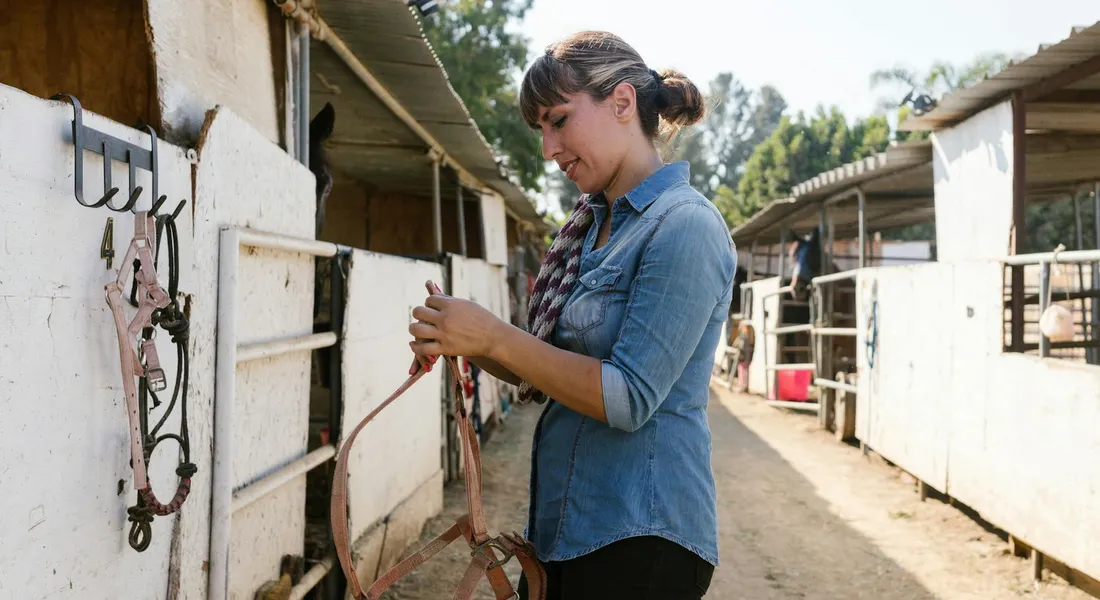
Nothing sours the barn mood faster than a messy shared space. I learned this after Luna spooked at a pile left in the arena, turning a simple training session into a rodeo. Cleaning up after yourself is the golden rule, and it starts the moment you dismount.
Cleaning the Arena: A Step-by-Step Guide
Leaving manure or disturbed footing is like walking out of a public bathroom without flushing. Follow these steps every time.
- Walk your cooled-down horse back to the gate and secure them.
- Grab the designated drag or rake and the manure fork from the arena entrance.
- Pick up all manure piles first. Push the drag in straight lines to redistribute the footing, filling in any deep hoof prints or ruts.
- Deposit the manure directly into a wheelbarrow if one is parked nearby, never just on the sidelines.
A level surface is safer for the next rider and their horse. Taking five minutes to drag the arena prevents trips, falls, and whispered complaints about you at the tack room coffee maker.
Manure Disposal: Where It All Goes
That wheelbarrow isn’t a permanent holding tank. Haul your muck to the designated pile or compost bin immediately. If the main wheelbarrow is full, empty it yourself-don’t just stack more on top hoping someone else will deal with it. An overflowing wheelbarrow is a breeding ground for flies and a universal sign of barn neglect. Know your barn’s specific muck pile location; if you’re new, ask. Never dump manure in empty stalls, behind the shed, or in the pasture gateways.
The Wash Rack & Grooming Stall Queue
These areas are prime real estate during peak hours. Establish an invisible queue. If both stalls are full, your horse waits tied safely at their own stall or a cross-tie away from the action. Always leave the space cleaner than you found it: sweep up loose hair, rinse down all soap suds, and coil the hose neatly. Remove your horse’s wet tail wrap and any leftover shampoo bottles. A clogged drain matted with hair is a soggy, preventable nightmare for the next person.
Don’t Hog the Space
We all want to give our horse a perfect spa day, but be realistic during busy times. Set a mental timer-30 to 45 minutes max for washing or detailed grooming in a shared stall if others are waiting. For complex braiding or a full-body clip, book a private time with the barn manager. I once spent an hour clipping Pipin in the wash rack, only to realize I’d backed up three other boarders. His perfect clip job didn’t earn me any friends that day.
Handling Shared Barn Equipment and Your Personal Tack
Barn tools are the communal glue holding the place together. Treat them like your own, but remember they absolutely are not.
Using and Returning Shared Tools
That wheelbarrow and pitchfork belong to everyone. Follow this ritual.
- Use the correct tool for the job. Don’t use a manure fork to move shavings; you’ll break the tines.
- After use, knock off all debris. Hose off manure forks and shake out brooms.
- Return it to its marked home. Wheelbarrows go wheel-side to the wall, forks hang on their hooks.
A clean, returned tool is a silent thank-you to your barn mates. Leaving a muddy fork in the middle of the aisle is an invitation for someone to trip and curse your name.
Clean to Prevent Contagion
This isn’t just about dirt. If you use a bucket or sponge on a horse with a cough, a skin funk, or even a runny eye, you must disinfect it. A quick rinse with a dilute bleach solution or barn-approved disinfectant can stop the spread of illness in its tracks. Think of it as washing your hands. I’m strict about this after a ringworm outbreak traced back to a shared grooming kit years ago.
Your Stuff, Your Responsibility
Barn clutter is a safety hazard. Establish a clear system for your gear.
- Label everything with permanent marker or engraved tags: your name on brushes, blankets, and saddle pads.
- Use a dedicated tack trunk or locker if provided. If using a shared tack room, keep your area tight and organized.
- Hang bridles by their crowns, don’t drape them over saddle horns. Roll up hose and lunge lines.
A tidy tack space is a sign of a considerate horse owner and makes your own life easier. You’ll never have to dig through a pile searching for your girth again.
The Cardinal Sin of Borrowing
See a nice sweat scraper sitting on a trunk? Need a polocrosse mallet for a quick game? Unless you have explicit, verbal permission, do not touch it. Borrowing without asking, even for a minute, breaches trust and can damage expensive equipment. That bottle of fly spray isn’t communal unless it’s labeled as such. Build a reputation as someone who respects boundaries, not as the barn magpie who always “needs” something.
Safety, Noise, and Visitor Guidelines for a Peaceful Barn
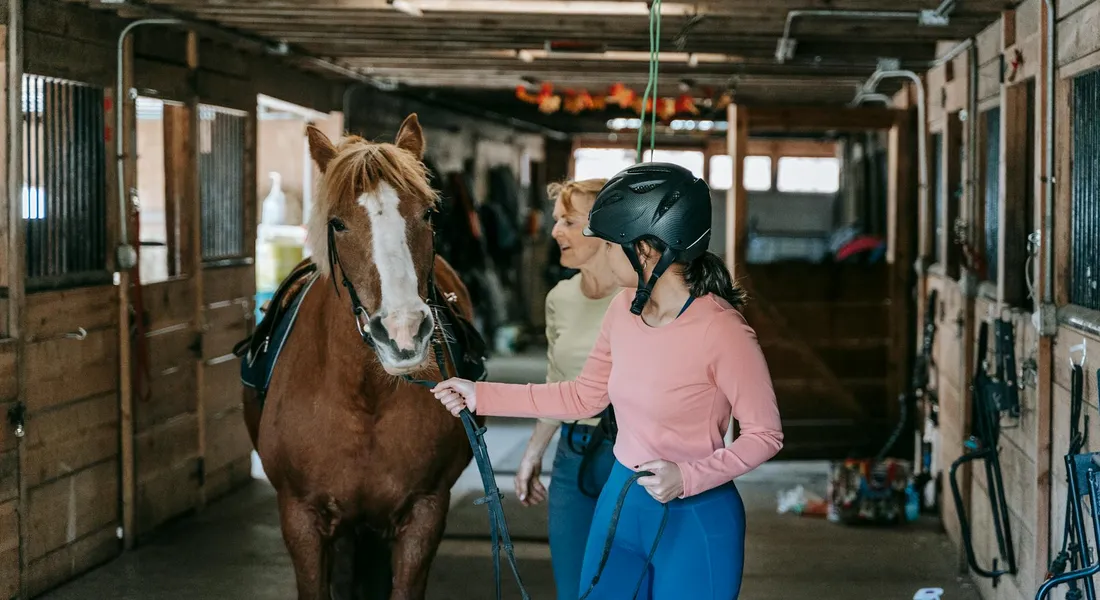
The barn aisle is a shared workspace, not a lounge. A calm atmosphere prevents spooks and keeps everyone focused.
Managing Sound and Distraction
Music can be great, but your playlist isn’t universal. Keep volume low or use one earbud. Loud, sudden laughter or yelling can send a sensitive horse like Luna into a spin. Take heated phone calls outside. The barn’s soundtrack should be the soft chew of hay and quiet chatter, not a competing concert.
A peaceful barn is a safe barn, and controlling controllable noise is the first step.
Parking Protocol
Parking haphazardly blocks access for vets, farriers, and emergency vehicles. Always park in designated areas, never in front of gates, the wash rack, or the barn doors. If you have a trailer, ask the manager where to stow it. A blocked aisle during a colic crisis is a nightmare we can all avoid.
Your truck and trailer should be parked as considerately as you’d park your horse.
Guests and Children
You are responsible for anyone you bring. Give guests a crash course before they step foot inside: no running, no yelling, no reaching into stalls uninvited. Children must be within arm’s reach at all times. I once saw a well-meaning child try to feed a mint to Pipin, only to have the quick pony nab the entire treat bag from her coat pocket. It was funny until we had to monitor him for potential choke.
Brief every guest on barn safety as if their safety and your horse’s depend on it—because they do. Make sure they’re well-versed in all the essential protocols, just as any responsible horse owner prioritizes safety.
Reporting Hazards Immediately
See a broken latch, a dangling wire, or a pile of spilled grain? Don’t just think, “Someone should fix that.” Be that someone. Tell the barn manager or staff right away. Send a text, leave a note, make a call. A quick report about a wobbly stall board or a slick spot in the aisle prevents injuries. This is a non-negotiable part of the barn community contract.
If you see something that could cause harm, you are the first line of defense. Speak up without delay.
Turnout, Feeding, and Respecting the Barn’s Schedule
The barn runs on a delicate clockwork of routines. Respecting that rhythm is the ultimate act of neighborly kindness.
Turnout and Bring-In Etiquette
When you turn a horse out, ensure the gate is securely latched. Double-check it. Lead your horse all the way out, turn them around, and then remove the halter. Never let them bolt backwards out of your hand. When bringing in, return the halter and lead rope to its proper hook immediately-don’t leave it draped on the fence for the next person to hunt for. For beginners, consult the handle horse safely beginners guide as you practice. It reinforces safe handling habits that complement the steps above.
A gate checked twice is secure; a halter put away properly is a courtesy returned tenfold.
The Sacred Feeding Schedule
Do not feed treats to other people’s horses without explicit permission. You don’t know who’s on a diet, who has allergies, or who might become pushy and dangerous. Never adjust a horse’s grain or hay ration because you think they “look hungry,” especially considering feeding myths that can be harmful to your pet. You can disrupt carefully balanced diets and veterinary directives. If Rusty gives you his best sad eyes, just give him a scratch instead.
Feeding another boarder’s horse is like giving someone else’s child medication-it is never your call to make.
Unexpected Visits and Staff Respect
Life happens, and sometimes you need to pop by outside your normal time. If it’s wildly outside barn hours, a quick heads-up text to the manager is appreciated. It prevents alarm and allows them to ensure they’re presentable or that your early arrival won’t disrupt a vet visit or maintenance work. Staff have routines too, and a little notice shows respect for their time and space.
Communicating an odd-hour visit helps maintain trust and shows you see the staff as partners, not just service providers.
Interacting with Other Horses
Keep your hands to yourself unless you have permission. Don’t enter a horse’s stall, don’t offer treats, and don’t try to “fix” a behavioral issue you observe. If a horse like Luna is dancing in the cross-ties, give her space, don’t add to the stimulus. Your safety and the horse’s well-being come before any desire to pet a pretty face. Understanding common horse fears and skittish behavior helps you respond calmly and reduce anxiety for both horse and handler. With this awareness, you can support safer, more trusting interactions. If you’re concerned about a horse’s welfare, report it to the manager, not the owner.
Another person’s horse is their responsibility; your role is to pass by safely and mind your own business. Understanding this is crucial for any rider, especially when considering the legal responsibilities for horse owners and the care they must provide.
Communication and Conflict Resolution with Staff and Boarders
The Polite Art of Cancellation
Life happens, and sometimes you need to cancel a lesson or farrier appointment. Doing it right keeps the barn schedule running and shows respect for everyone’s time. I learned this after a last-minute cancellation for Luna’s training session left my trainer with a gap in her day and a sensitive horse still buzzing with energy. Always give as much notice as possible, ideally 24 hours or more, using the method your barn prefers-usually a direct call or text. A quick message like, “Hi, I need to cancel my 3 pm lesson tomorrow, I’m happy to reschedule for next week,” is clear and considerate.
If it’s a true emergency, communicate that briefly. For repeating cancellations, have an honest chat with your trainer about your schedule. Remember, that vacant slot could have gone to another boarder or given the staff a much-needed breather.
Taking Concerns Straight to the Source
Barn gossip spreads faster than a loose horse in a field. If you’re worried about a care practice, a safety issue, or a shared space, bypass the rumor mill. I once heard grumbling about reduced turnout time and went straight to the manager, which led to a productive discussion about pasture rotation instead of simmering resentment. Schedule a quiet time to talk with the barn manager or owner, stating your concern clearly and without accusation. Frame it around the horse’s welfare or communal safety.
- Be specific: “I noticed the main hose has a leak near the electrical box,” not “Everything here is falling apart.”
- Come with a cool head, not in the heat of the moment after a long day.
- Be open to their explanation; they might have a reason you hadn’t considered.
Direct communication builds trust, while gossip only builds walls between you and the people caring for your horse.
Navigating Conflicts with Fellow Boarders
Sharing a barn means sharing space, tools, and sometimes, disagreements. A conflict over borrowed brushes without asking or a messy aisle can escalate if handled poorly. Step one is always to take a breath-go visit your horse for a few minutes to calm down before you say a word. Approach the other person privately, not in front of an audience.
- Use “I” statements: “I felt worried when I couldn’t find my saddle pad,” not “You always take my stuff.”
- Listen as much as you talk. There might be a simple misunderstanding.
- If you can’t resolve it between yourselves, politely ask barn management to mediate. They’re used to it.
Keeping conflicts calm and respectful protects the peaceful barn atmosphere we all crave for our horses. I’ve seen two boarders become great friends after a respectful chat about stall cleaning habits.
The Unwritten Rules, Learned the Hard Way
After years in boarding barns, I’ve learned that harmony hinges on a few unspoken principles. These aren’t on any sign, but they’re the glue of good barn life.
- Always leave the tack room and wash stall cleaner than you found it. That means coiled hoses and wiped-down surfaces.
- If you use the last of something-like fly spray or shavings-tell the manager or replace it if that’s the barn policy. No one likes an empty bottle when the mosquitoes are out.
- Respect the quiet. Early mornings and late evenings are for soft voices and calm movements, not blaring music or yelling across the arena.
- Your horse’s mess is your mess. If Pipin drags hay halfway down the aisle during his dinner, sweep it up, even if it’s “after hours.”
- Celebrate others’ successes and offer help when you see someone struggling with a spooky horse or a heavy load. The smell of fresh hay and the sound of contented chewing should be the dominant sensations, not tension and side-eyes.
Barn Etiquette Mistakes: How to Be a Good Neighbor at a Boarding Facility – FAQ
What are the rules for feeding treats to horses that aren’t yours?
You should never feed treats to another boarder’s horse without explicit, direct permission from the owner. You cannot know if a horse has dietary restrictions, allergies, or is on a strict management plan for conditions like laminitis. Even a seemingly innocent treat can encourage mugging or pushy behavior, creating a safety risk for the next person who handles that horse. Unlike feeding horses and other animals together, which carries its own risks, feeding treats to unknown horses can be even more problematic.
What are the rules for bringing guests or children to the barn?
You are fully responsible for the safety and behavior of any guest you bring to the facility. All guests must be briefed on essential safety rules before entering, which includes no running, no loud noises, and no touching or feeding horses without permission. Children must be supervised within arm’s reach at all times, as the barn is a workplace filled with unpredictable animals and potential hazards.
How should you handle manure disposal in shared spaces?
Manure should be promptly transported to the designated manure pile or compost bin immediately after cleaning a stall or picking the arena. Never leave a full wheelbarrow blocking an aisle or doorway, and do not simply add more manure on top of an already full one-take the initiative to empty it yourself. Improper disposal creates a health hazard, attracts pests, and is a major sign of disrespect to the barn community.
The Heart of Good Horsemanship
Being a good barn neighbor boils down to respecting shared space, clear communication, and putting the horses’ needs first. The simplest and most powerful rule is to always treat other people’s equipment, horses, and time with the same care you expect for your own.
This patience and awareness forge a safer, happier environment for everyone on two legs and four. Remember, the best etiquette always flows from listening to your horse and extending that same thoughtful consideration to the people around them.
Further Reading & Sources
- Boarding Barn Rules and Etiquette – The Cheshire Horse
- BOARDING FACILITY Definition | Law Insider
- The Boarding Kennel Checklist – Whole Dog Journal
- What to Know When Boarding Your Dog and Finding a Kennel
At Horse and Hay, we are passionate about providing expert guidance on all aspects of horse care, from nutrition to wellness. Our team of equine specialists and veterinarians offer trusted advice on the best foods, supplements, and practices to keep your horse healthy and thriving. Whether you're a seasoned rider or new to equine care, we provide valuable insights into feeding, grooming, and overall well-being to ensure your horse lives its happiest, healthiest life.
Stable Management