
How and Where to Pet Your Horse: A Practical Guide to Bonding and Communication
Published on: August 25, 2026 | Last Updated: August 25, 2026
Written By: Henry Wellington
Hello fellow equestrians! Have you ever reached out to pet your horse, only to be met with a pinned ear or a sidestep instead of a soft nuzzle? That moment of confusion can make you question your connection and even worry about causing stress or misunderstanding.
In this article, I’ll clear up the mystery of equine touch. We’ll move beyond guesswork to proven methods that respect your horse’s instincts and preferences. You will learn the specific zones horses typically enjoy, the techniques that calm rather than annoy, how to interpret your horse’s immediate feedback, and how to integrate petting into your daily care for a stronger bond.
My years of barn management and training have taught me that how you use your hands can build trust as surely as any saddle or bridle.
The Right Approach: Reading Your Horse and Safety First
Understanding Your Horse’s Body-Language
Walking into the barn, the first thing I listen for isn’t a nicker; it’s the quiet thud of a hoof shifting in straw or the soft creak of a horse leaning on the stall door. Their body tells a continuous, silent story that you must learn to read before your hand ever makes contact.
Signs Your Horse is Open to Interaction
Look for these relaxed, welcoming signals. They’re the equine equivalent of a smile.
- Soft, drooping lower lip and half-closed eyes: This is the pinnacle of equine relaxation. I see it on Rusty’s face when he’s soaking up sun in the paddock.
- Ears relaxed to the side or gently swiveling toward you: They’re curious, not alarmed. Luna’s ears will often point my way when I talk to her calmly.
- Head lowered to near ground level: A high head signals tension, while a lowered one shows they feel safe enough to let their guard down.
- A deep, sighing exhale: This audible release of breath means they’re settling into your presence. It’s a sound I always wait for.
- Turning their torso to face you: This is an intentional engagement. Pipin will square his little pony body up to me when he’s hoping for a mint.
Warning Signs to Heed Immediately
These behaviors are a clear “stop.” Ignoring them compromises everyone’s safety.
- Ears pinned flat back against the skull: This isn’t casual annoyance; it’s a direct threat. I give any horse with pinned ears a wide berth immediately.
- Stiff, braced legs and a rigidly raised head: The horse is poised for flight or fight. Any sudden move could trigger a reaction.
- The “hawk eye” – showing the white sclera around the eye: They’re looking at you with fear or anger. This is a major red flag I never ignore.
- Tail clamped tightly between legs or swishing violently: The first signals fear, the second signals irritation that often precedes a kick.
- Chin tucked tightly to the chest with a wrinkled muzzle: This defensive posture says they feel cornered and may bite or strike.
Respecting these warnings isn’t a sign of defeat; it’s the foundation of a trusting relationship built on clear communication.
How to Pet Your Horse: The Art of the Gentle Touch
Step-by-Step Guide to Initial Contact
Think of your first touch as a question, not a statement. Here is my barn-tested method for saying “hello” with my hands.
- Approach at an angle toward the shoulder, not the head. A head-on approach can feel predatory. I always aim for Rusty’s shoulder, a neutral and safe zone.
- Let your horse hear and smell you before they feel you. Speak in a low, steady tone and offer your relaxed hand for a sniff. This engages their primary senses.
- Watch the withers for a subtle skin quiver as you reach out. This involuntary twitch tells you if your horse is truly relaxed or just tolerating you.
- Make first contact on the massive neck or shoulder muscles. These are safe, socially acceptable spots for horses. Avoid the sensitive face and flanks initially.
- Keep your initial touch stationary for a three-second count. Just let your warm hand rest there before any movement. This prevents a startle reflex.
This slow, predictable ritual teaches your horse that your approach always brings calmness, not surprise.
Mastering the Perfect Stroke
A great stroke isn’t a pat; it’s a mindful replication of how horses groom each other in the field. Focus on the quality of contact, not the quantity, to truly soothe your horse.
Pressure and Pace for Different Horses
One touch does not fit all. Adjust your technique like you’d adjust a saddle fit.
- For solid, stoic types like Rusty: Use deep, firm pressure in long, sweeping strokes along his topline. He interprets light, tickly touches as irritating flies.
- For fine-skinned, sensitive souls like Luna: Imagine petting a butterfly’s wing. Use the pads of your fingers with barely any weight. Her feedback is instant-if she hollows away, you’re too rough.
- For clever, opinionated ponies like Pipin: He prefers short, brisk scratches in his favorite itchy zones, like the base of his mane and his chest. It’s a game to find the spot that makes his lip wiggle.
- Universal rule: Long, slow strokes with the hair growth are calming; short, circular rubs or scratches against the grain address itches. Always let the horse’s reaction guide you.
Learning your horse’s unique tactile language turns a simple petting session into a daily dialogue that deepens your connection. By tuning into their responses, you start talking with your horse and building better communication. This everyday dialogue helps your horse understand your intentions and strengthens the bond.
Prime Real Estate: The Best Places to Pet Your Horse
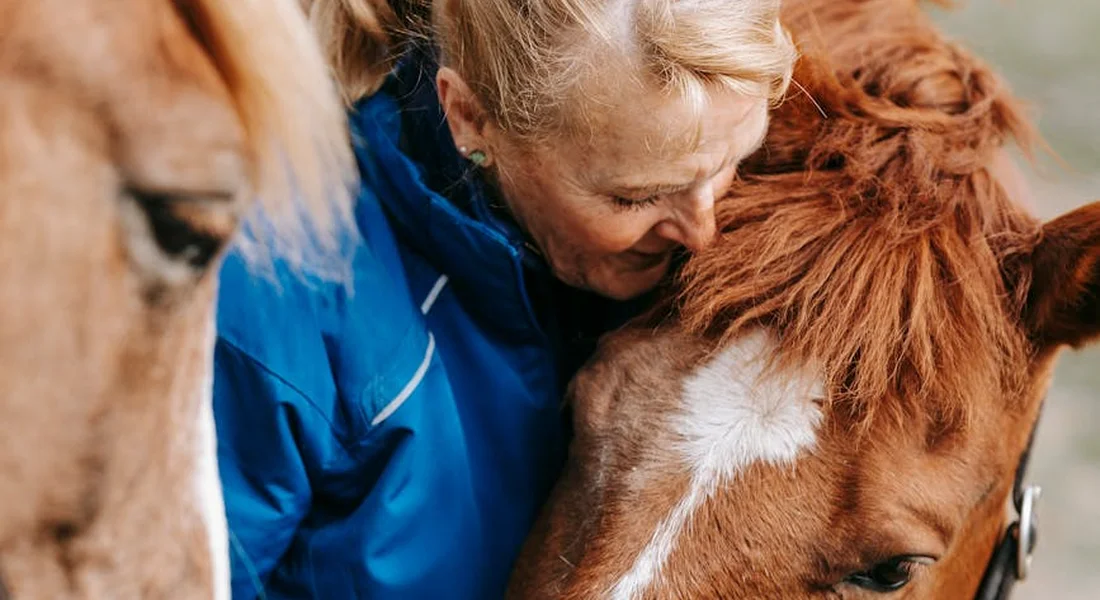
The Neck and Withers: Universal Favorites
Scratching a horse’s neck or withers is like finding the universal remote for relaxation. These areas are often itchy and hard for them to reach, making your attention a welcome relief. I spend quiet moments with Rusty, my Quarter Horse, who will happily stand for a solid neck rub, his lower lip drooping in pure bliss.
- Use firm, flat-handed strokes along the neck muscle, following the direction of the hair.
- For the withers, try gentle circular motions with your fingertips to ease saddle pressure.
- Watch for positive signs: a soft sigh, a lowered head, or the horse leaning into your hand.
Starting your petting session here is a safe bet that builds immediate rapport and sets a calm tone.
The Shoulder and Muzzle: Proceed with Awareness
The shoulder and muzzle are wonderful for connection, but they demand your full attention. A horse’s shoulder is a social zone, but a clumsy pat can feel like a startling thump to a sensitive soul like Luna. Always use open palms and slow, deliberate pressure.
Approaching the muzzle requires even more etiquette. Let the horse initiate contact by sniffing your offered hand first, turning what could be an intrusion into an invitation. Some enjoy light strokes on the side of the nose, but many do not.
- Present the back of your hand for a sniff before touching the muzzle.
- Keep touches brief and observe the ears. Pinned ears mean stop.
- Never grab or poke the nostrils or lips directly.
This mindful approach prevents misunderstandings and keeps your fingers away from inquisitive, food-motivated teeth.
Areas for the Trusted Companion
Deep trust unlocks subtle pockets of affection, like the chest or along the barrel. Pipin, our Shetland, will present his chest for scratches only after he’s decided you’re a reliable treat dispenser and not a threat. These spots are earned through consistency and gentle handling.
- Chest: A firm rub here is often welcomed. It’s in the horse’s line of sight, which feels safer.
- Barrel/Belly: Use slow, firm pressure-light tickles can provoke a kick. Many horses enjoy this after a long ride.
- Back: Light strokes along the spine are fine, but avoid the sensitive loins near the hindquarters.
Building this level of comfort doesn’t happen in a day; it grows from countless hours of quiet companionship and respectful turnout time.
Zones to Avoid: Keeping Your Fingers Safe
Why the Legs and Hindquarters Are Tricky
A horse’s legs and hindquarters are built for powerful flight reflexes. An unexpected touch in these zones can trigger a defensive kick before the horse even processes it was you. I learned this lesson young, getting a swift warning swipe from a mare when I got too casual near her hock.
The hindquarters are a significant blind spot. Always move around a horse in a wide arc, keeping a hand on their shoulder as you pass so they track your location. Petting here is generally off-limits unless you are specifically massaging a known, safe area under direct supervision.
- Save leg touching for grooming or health checks, always sliding your hand down from the body.
- Never stand directly behind a horse, even one you think is dead asleep.
- Teach horses to yield their hindquarters to pressure as a safety cue, not as an invitation for petting.
This isn’t about fear; it’s about understanding equine anatomy and respecting their natural defenses for everyone’s safety.
Respecting the Head and Ears
The head houses a horse’s primary senses, and it’s their personal space. Many horses tolerate head petting but genuinely dislike it, as it can mimic aggressive herd behavior. Rusty tolerates a brief poll scratch, but his ears flick back if I overstay my welcome, especially when they’re not in the mood for affection.
- Ears: Most horses find ear handling invasive. If they allow it, be gentle and brief.
- Eyes: Avoid touching near the eyes. If you need to wipe a tear, move slowly from the side.
- Face: Instead of patting the forehead, try scratching the jaw or the hollow just below the cheekbone.
Offering affection on the horse’s terms, rather than engulfing their head, is a cornerstone of gentle horsemanship. It reduces stress and builds a partnership where your horse seeks you out, rather than enduring your advances. This approach helps you build a strong bond and trust your horse. With patience and consistency, that trust leads to smoother cooperation in daily tasks and training.
Is Your Horse Enjoying This? Interpreting the Response
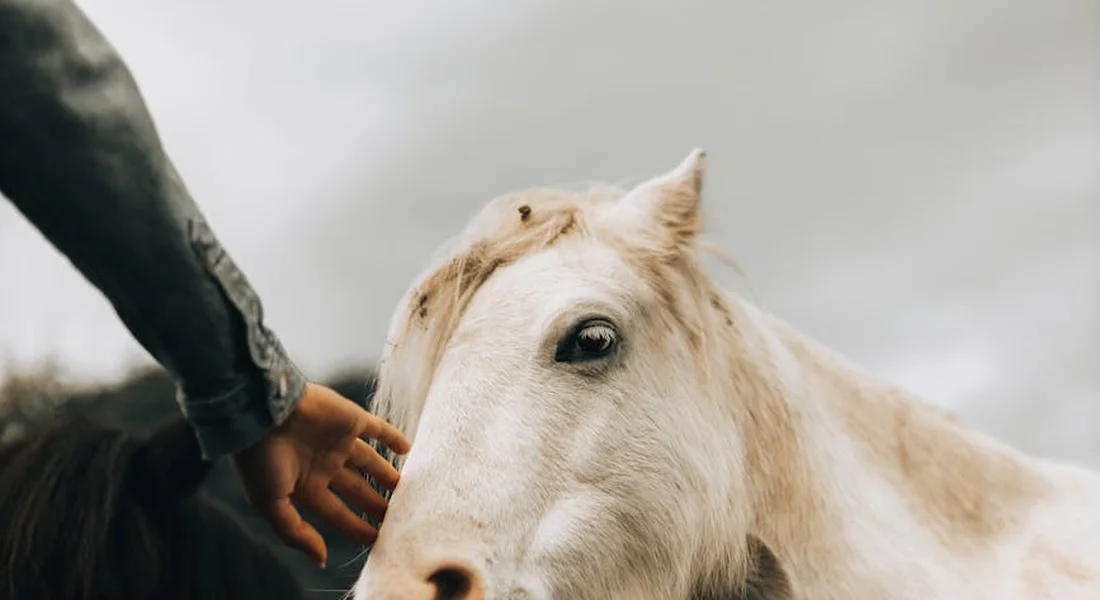
A horse’s opinion is written in the subtle language of muscle and breath, not words. Learning to read it turns petting from a guess into a conversation. But understanding the core behavioral patterns might require more than just regular interaction. You’ll benefit from understanding horse behavior and psychology.
Positive Signs of Equine Contentment
Look for the quiet, loose signals. A happy horse is a relaxed horse. Their head will lower, their eyelids may get soft and droopy, and their lower lip might start to wiggle and hang loose. You might hear a deep, sighing exhale, the kind that comes from their belly. The ultimate sign of trust is when they turn their head toward you and gently rest their muzzle on your arm or side, sharing breath and space. These calm exchanges are often a sign of a strong bond between horse and owner, reflecting how well you understand and respond to each other. Strong bonds show in mutual trust and comfortable communication.
They may also show appreciation through targeted movement. A favorite is when they lean into your scratches, subtly shifting their weight to guide your hand to the perfect itchy spot behind their elbow or along their crest. My gelding, Rusty, will actually crane his neck around and pretend to groom my shoulder with his lips when I hit the right place on his withers.
- Soft, blinking eyes and a lowered head
- A deep, sighing exhalation
- A loose, wiggling lower lip
- Leaning into the pressure of your hand
- Turning to gently nuzzle or “lip” you in return
Subtle Cues That Say “Enough”
Horses are polite, but their patience has limits. Ignoring early warnings can lead to a tail swish or a lifted hoof-their way of raising their voice. Watch for a tightening of the skin on their neck or flank, a subtle flinch away from your hand. The ears are a prime indicator: if they pin flat back, stop immediately. If they just flicker backwards and forwards, they’re likely just monitoring you, but it’s a cue to check your pressure or location. A sudden stiffness or a sharp head toss is your horse moving from a hint to a clear statement; respect it instantly to keep their trust. If you’re trying to tell if your horse is happy, understanding their body language is a quick, reliable guide. Mastering these cues makes daily riding and handling smoother and more trusting.
My sensitive mare, Luna, never pins her ears. Instead, the skin over her ribs will twitch like she’s shaking off a fly, a sure sign my touch is too intense or in a spot that’s overstimulating for her that day.
- Skin twitching or tightening under your touch
- A subtle shift of weight away from you
- Ears flicking back repeatedly or pinning flat
- Tension in the muzzle or a wrinkled nostril
- A low, warning tail swish (different from swishing at flies)
Beyond Petting: Integrating Touch into Daily Care
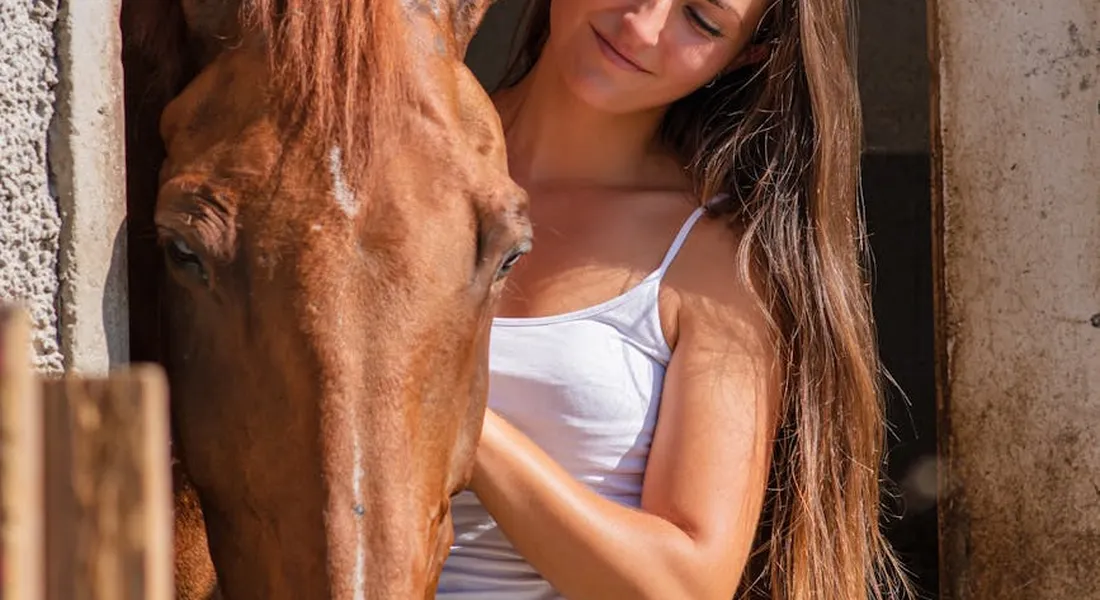
View touch not as a separate activity, but as the foundation of all your interactions. It builds a bank account of trust you can draw from during vet visits, farrier work, or unexpected spooks.
Petting During Grooming and Tack-Up
Transform routine chores into bonding moments. Before you even pick up a brush, run your hand over their neck and shoulder. As you curry, use a reassuring pat on the withers between circular strokes. When tightening the girth, do it incrementally and follow each gentle pull with a firm, soothing hand on their barrel. This teaches your horse that human touch around sensitive areas like the girth groove is predictable and often ends with a pleasant pressure, not just a tight squeeze.
I always spend a moment scratching Pipin’s chest while I fiddle with his tiny halter buckles. It keeps his busy pony brain focused on the good feeling, not on plotting his next great escape.
Using Touch for Leading and Handling
A light touch can be a better guide than a constant pull on the lead rope. Practice walking with your hand resting comfortably on your horse’s neck or shoulder. To ask for a halt, apply gentle downward pressure with your hand as you say “whoa,” rather than just leaning back on the rope. This builds a “body language” between you that doesn’t rely on hardware, which is invaluable in uncertain situations.
When asking a horse to move over in a stall or cross-tie, a light press of your fingertips on their side is clearer and kinder than a shove. They learn to yield to spatial pressure, a cornerstone of respectful handling.
The Role of Treats in Positive Reinforcement
Treats are a tool, not a bribe. The key is timing. Use a small treat immediately after your horse responds well to your touch or a request, creating a positive association. If you offer a treat to stop mugging or pushy behavior, you’re rewarding that very rudeness. Always offer treats in a flat palm, and pair them with a verbal marker like “good” so the praise itself becomes rewarding over time.
I use this with hoof handling. After Piper willingly holds up his foot for cleaning, he gets his favorite carrot bit. Now, he picks up his feet readily because he remembers the sequence: cooperative hoof lift leads to a pleasant scratch on the chest and a tasty reward. The touch and the treat work together.
FAQ: How and Where to Pet Your Horse
Do horses enjoy being petted like dogs do?
Horses do enjoy affectionate touch, but their preferences differ significantly from dogs. They generally prefer firm, steady strokes over light patting, which can feel like an irritating fly. It is essential to read their body language closely to understand their individual comfort and enjoyment. Proper grooming and touch greatly contribute to building trust and a deeper bond with your horse.
What is the safest place to start petting a new or unfamiliar horse?
The shoulder or upper neck is the safest and most universally accepted area for initial contact. These areas are in the horse’s line of sight and are common mutual grooming spots among horses. Always approach calmly and let the horse sniff your hand before making contact to avoid startling them.
My horse sometimes seems to enjoy petting but then suddenly walks away. What does this mean?
This is a common form of equine communication signaling they have had enough interaction. Subtle early cues like skin twitching or weight shifting often precede this move. Respecting this boundary by stopping immediately is crucial for maintaining trust and positive associations with your touch. Recognizing the subtle signs of discomfort can help prevent causing equine pain.
Where Your Hands Speak Volumes
Focus on the neck, withers, and shoulder for a welcome scratch, and always let your horse see your approach. Teaching your horse basic ground manners now helps set a calm, respectful tone for all interactions. This foundation makes subsequent training and grooming sessions safer and smoother. The best petting sessions start with you observing your horse’s body language and ending the moment they seem disinterested.
Take your time to learn each horse’s unique preferences-Luna loves a soft chin rub, but Pipin would rather have his forehead scratched. True partnership is built on these quiet conversations, so let your horse’s reactions be your guide.
Further Reading & Sources
- How To Pet a Horse | PetMD
- r/Horses on Reddit: What are the best spots to pet a horse?
- How to pet a horse – Salisbury Farms
- How to pet a horse? | The Horse Forum
At Horse and Hay, we are passionate about providing expert guidance on all aspects of horse care, from nutrition to wellness. Our team of equine specialists and veterinarians offer trusted advice on the best foods, supplements, and practices to keep your horse healthy and thriving. Whether you're a seasoned rider or new to equine care, we provide valuable insights into feeding, grooming, and overall well-being to ensure your horse lives its happiest, healthiest life.
Basic Grooming Techniques