
Common Horse Grooming Errors and Simple Fixes for a Happier Horse
Published on: September 9, 2026 | Last Updated: September 9, 2026
Written By: Henry Wellington
Hello from the barn aisle. If you’re finding more dust than shine on your horse’s coat or dreading a battle every time you pick up a brush, you’re not alone. These frustrations often signal small grooming missteps that can snowball into skin problems, hoof issues, and a tense relationship with your horse.
Let’s straighten out those habits. I’ll guide you through the frequent fixes I make in my daily rounds, starting with:
- Using a dirty curry comb that just grinds in grime instead of lifting it out.
- Rushing the hoof pick and missing early signs of thrush or stone bruises.
- Brushing in the wrong direction and irritating the skin.
- Neglecting to clean your grooming kit, turning tools into bacteria spreaders.
I’ve built this knowledge over years of managing barns and training horses, from high-strung Thoroughbreds to clever ponies who teach you to check your pockets.
The Foundation: Why Your Grooming Routine Matters
Your grooming session is more than a quick brush-off before riding. It is your hands-on health check and a quiet conversation with your horse. I treat it like my daily barn coffee ritual, slow and intentional. You are not just removing dirt you are mapping your horse’s body for lumps, heat, or tenderness that could signal trouble. This time builds trust. Some riders find that this touch helps deepen their connection with their horse. Grooming with calm, attentive touch is a language your horse understands, often strengthening trust. The steady rhythm of the curry comb lets your horse relax, turning a chore into connection.
Rush through grooming and you risk more than a dusty coat. Common slip-ups lead to real problems.
- Skin irritations from built-up sweat and grime which can turn into rain rot or scratches.
- Missed injuries like small cuts or swelling that worsen without early care.
- Poor hoof health if you skip picking out feet inviting thrush or stone bruises.
I learned this the hard way with Luna my sensitive Thoroughbred. One damp morning I was hurrying to beat the rain and almost missed a faint rub under her girth. Taking an extra minute to run my hand flat over her skin I felt the subtle heat and raised hair of a budding saddle sore. A careful groom caught it before it broke open. Now I always slow down for her. That attention has stopped countless small issues from becoming big ones.
Tool Troubles: Dirty Brushes and Harsh Implements
Dirty grooming tools are like using the same tissue for every cold in the barn. They spread germs. A brush caked with old hair and skin cells can transfer bacteria or fungi from one horse to another. This leads to infections like ringworm. Regularly cleaning tack and keeping hooves well-groomed are essential parts of proper hygiene. Clean tack and hooves help prevent the spread of germs between horses. I have seen a case of ringworm hop between stalls because brushes were not cleaned. Your tools should work for your horse not against them.
Clean your brushes weekly to keep them safe and effective. Here is my simple method.
- Knock out loose hair and dirt by tapping the brush bristles against a hard surface or using a rubber grooming block.
- Wash brushes in warm water with a mild soap like dish detergent. Scrub bristles with your fingers or a soft brush.
- Rinse thoroughly until water runs clear to remove all soap residue.
- Dry brushes completely in the sun or a well-ventilated area before storing. This prevents mold growth.
Using harsh or broken tools is like scrubbing your horse with sandpaper. It damages the hair shaft and irritates sensitive skin. Stiff plastic curries or brushes with bent bristles can cause micro-cuts. Instead opt for gentle options like rubber curry combs that massage the skin and lift dirt without abrasion. Grooming needs vary by breed and coat type, so the tools you choose should match the coat’s texture and length. Tailoring care to each horse helps keep coats healthy and gleaming. For coats like Luna’s fine Thoroughbred skin I use a soft silicone mitt. For Rusty’s sturdy Quarter Horse hide a flexible rubber grid works wonders.
The Art of Brushing: Order, Pressure, and Direction
Mastering the Correct Sequence
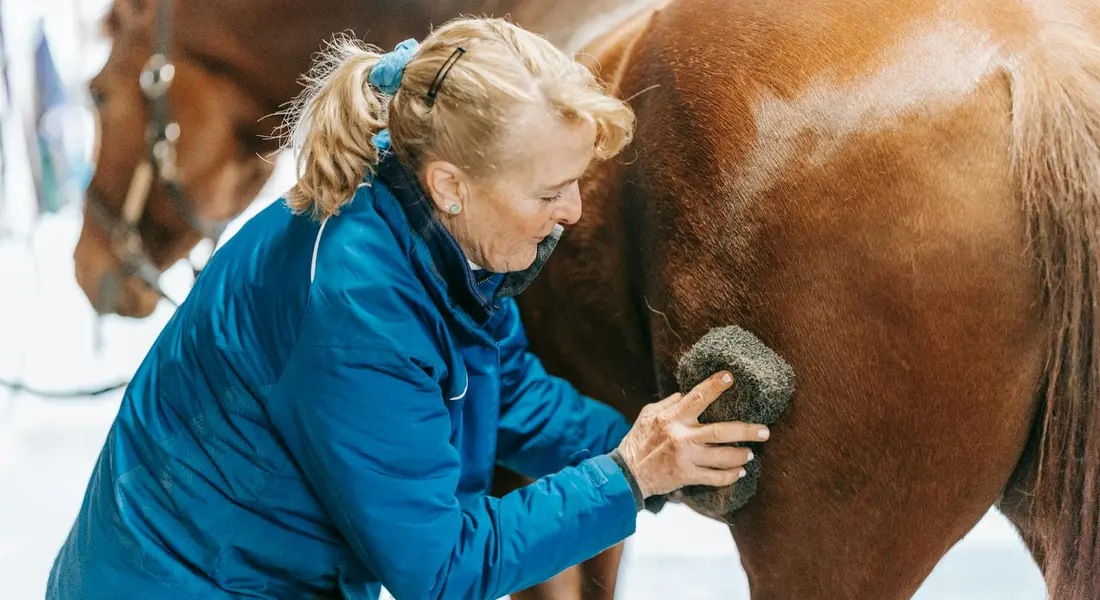
Think of grooming like painting a wall: you don’t start with the finishing coat. A structured order cleans effectively and respects your horse’s comfort. I start every session by listening to the quiet thud of hooves as my horse settles, a small ritual before we begin.
Follow this sequence to lift dirt, remove it, and polish the coat in a way that genuinely benefits the horse, especially when you are preparing it for a show or competition.
- Begin with a Rubber Curry Comb. Use firm, small circles all over the body, avoiding bony areas like the legs and face. This action loosens dried mud, brings dirt to the surface, and massages the skin to stimulate natural oils and circulation. Skipping this step leaves the deep-down grime for your brushes to grind in.
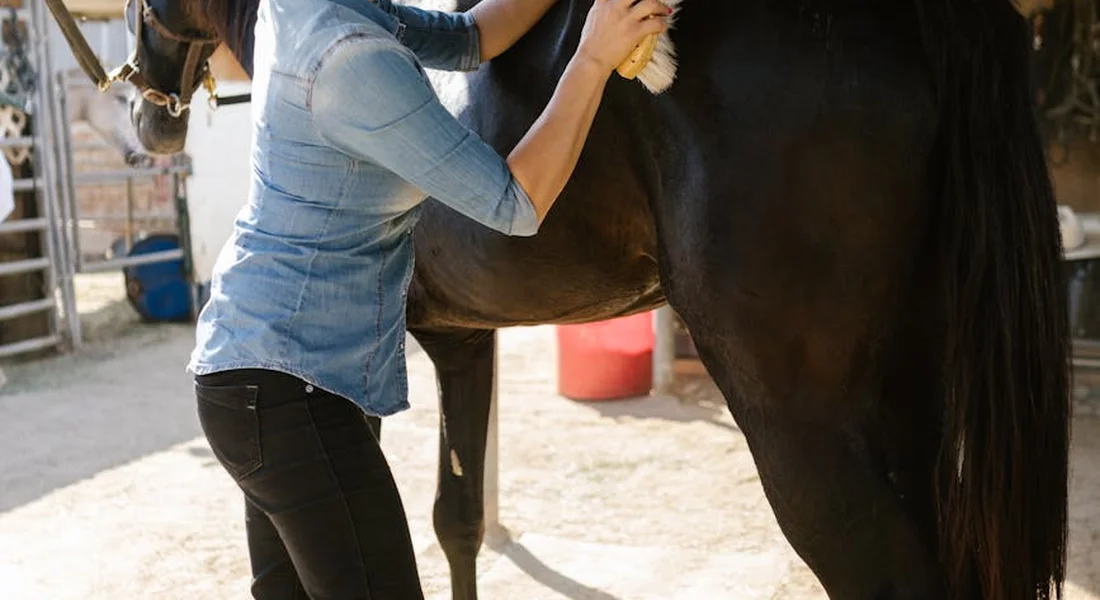
- Follow with a Stiff-Bristled Dandy Brush. Use short, flicking strokes in the direction of hair growth to whisk away the dirt and hair dislodged by the curry. This brush is your workhorse for lifting the bulk of the debris.
- Finish with a Soft-Bristled Body Brush. Long, sweeping strokes with this brush remove the final dust and lay the hair flat for a natural shine. This is the finishing touch that makes the coat glow.
Forgetting the curry comb is like trying to clean a muddy boot with a dry rag-you’re just smearing the problem around instead of solving it.
Applying the Right Touch
Pressure and direction are everything. Brushing against the grain might feel efficient, but it breaks hair shafts, irritates sensitive skin, and tells your horse this is an uncomfortable chore. I learned this with Luna, whose thin skin would flinch with every wrong-angled stroke.
Always, with very few exceptions for specific massage techniques, brush in the direction the hair naturally lies.
- Adjust your pressure like you’re handling different fabrics. A horse’s flank and belly are like silk-use a lighter touch. The muscular neck and rump are more like canvas.
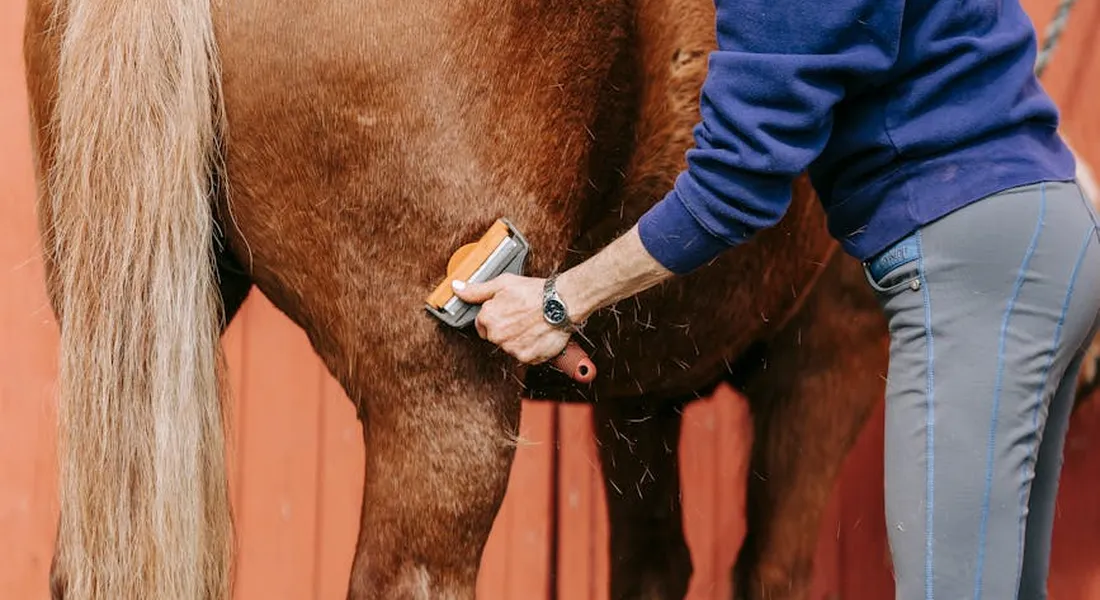
- During heavy shedding seasons, your tools do the work, not your elbow grease. Let a shedding blade or curry comb lift the loose hair; don’t scrub it out with excessive force.
- Pay attention to your horse’s feedback. A twitch, a pinned ear, or a shift in weight means back off and reassess your pressure or tool choice.
A relaxed horse with an intact, shiny coat is the true mark of good brushing, not just a pile of hair in your grooming bucket. This naturally raises the question: do horses have hair or fur? Understanding equine coat types helps tailor grooming and care.
Water Woes: Over-Bathing and Improper Drying
The Bathing Balance
That squeaky-clean, shampoo-scented horse is a satisfying sight, but it comes at a cost. A horse’s coat has natural oils that protect the skin and hair, providing waterproofing and a healthy shine. Over-bathing strips these oils away.
Bathing too often can leave the skin dry and itchy and the coat looking dull and straw-like, defeating the entire purpose of grooming.
- For the average pleasure horse, a full bath with soap is a “when necessary” task, not a weekly routine. Necessity means before a show, after an exceptionally sweaty workout, or to treat a specific skin condition.
- Embrace the spot clean. For saddle marks, dusty legs, or a manure stain, use a damp sponge or towel. Your horse will thank you for the targeted approach, and you’ll save their precious skin oils.
- When you do bathe, use a gentle, pH-balanced equine shampoo and dilute it. You don’t need a mountain of suds to get a horse clean.
More often than not, a thorough brushing session is far better for your horse’s coat health than a sudsy soak.
Safe Drying Techniques
The grooming mistake isn’t always the bath itself-it’s what happens next. Never, ever take a brush to a sopping wet horse. You’ll mat the dirt into the coat and physically stretch the delicate hair follicles, causing damage.
Brushing a wet coat is one of the fastest ways to create a frizzy, unkempt mane and tail and irritate the skin underneath.
- Start with a sweat scraper. Pull it firmly across the coat in the direction of hair growth to remove the bulk of the standing water.
- Use absorbent towels to blot and rub. I keep a stack of old, clean towels for this-rubbing in circles helps soak up moisture from the skin outward.
- If you use a blower, keep it moving on a low heat setting. Hold it at least a foot away and never concentrate hot air on one spot. Let the horse walk or graze in the sun for the final air dry.
Pay special attention to the mane and tail. Saturating the roots of the mane against the crest can trap moisture and lead to skin funk or even mildew, a problem I’ve had to troubleshoot on steamy summer days. Squeeze water out of the tail from the top down, don’t wring it. Proper drying is the final, critical step in a responsible bathing routine.
Hooves, Mane, and Tail: Often Neglected Areas
Daily Hoof Care is Essential
Skip hoof picking for a few days, and you invite trouble. Damp bedding or muddy turnout pads create a perfect home for thrush, a stinky bacterial infection in the frog. Thrush isn’t just a smell; it’s painful rot that can lame your horse if it reaches sensitive tissues. I learned this the hard way with Rusty after a rainy week; a missed stone bruise from unclenched hooves turned into a week of tender steps. Neglect also hides early lameness-heat or a pounding pulse in the pastern are silent shouts for help.
- Pick from heel to toe to avoid jabbing the tender frog. Cradle the hoof securely between your knees.
- Scrape out the clefts around the frog thoroughly. This is where thrush loves to hide.
- Run your hand down the leg before and after to check for unusual heat or swelling.
Gentle Mane and Tail Management
Left alone, manes and tails become bird’s nests of tangles that pull at the skin and snap precious hair. Ripping a comb through from the top down is a surefire way to teach your horse to hate grooming. Luna’s fine Thoroughbred tail used to mat if you just looked at it wrong, requiring a patient strategy. For the best way to manage your horse’s mane and tail, develop a calm, regular grooming routine. Consistency makes detangling quicker and hair stays healthier. For detangling, spray a leave-in conditioner or water mix on the section. Always start at the very bottom of the hairs, finger-combing small knots loose before moving up. Only then, use a wide-tooth comb gently. For clipping, pressing too hard with dull blades causes clipper burn-red, irritated skin. Keep blades sharp and give the horse and clippers a cool break every few minutes to prevent overheating.
Beyond the Brush: Post-Grooming Oversights
Your hands have just traveled every inch of your horse; this is your best chance to play detective. Grooming is not just about shine-it’s a full-body physical exam for cuts, swellings, or hidden ticks. I found a fat wood tick behind Pipin’s ear during a post-ride wipe-down, a reminder to always look closer. Another common mistake? Walking away with dirty tack. Sweat and hair left on leather draw out oils, making it brittle and prone to cracking. After untacking, I always give my bridle a quick wipe with a damp cloth. Follow a simple post-groom ritual: put away clean tools, offer your horse a thankful carrot or mint, and do one final visual scan from nose to tail. Groom your horse step by step to build a stronger bond. A calm, deliberate routine makes each touch meaningful and strengthens trust. Patience and gentle hands build a vocabulary of trust, while rushing and roughness only write a lesson in fear.
FAQ: Common Horse Grooming Mistakes and How to Avoid Them
Why is brushing a wet horse a mistake?
Brushing a wet horse mats dirt into the coat and stretches delicate hair follicles, causing damage. This practice irritates the skin and can lead to a frizzy, unkempt mane and tail. Always dry your horse thoroughly with towels or a sweat scraper before brushing to maintain coat integrity and comfort.
What is the risk of over-bathing a horse?
Over-bathing strips away natural oils that protect the skin and provide waterproofing, resulting in dryness and itchiness. It leaves the coat looking dull and straw-like, increasing the risk of skin infections and discomfort. Reserve full baths for when necessary, such as before shows or after heavy sweating, and rely on spot cleaning for routine maintenance.
How to properly clean a horse’s hooves?
Clean hooves by picking from heel to toe to safely remove debris without jabbing the sensitive frog. Thoroughly scrape out the clefts around the frog to prevent thrush, a painful bacterial infection. This daily routine also lets you check for heat, swelling, or stones that could indicate early lameness or injury.
Grooming as a Bonding Ritual
Follow a logical sequence from curry comb to soft brush, and always pick hooves clean before and after riding. The best grooming habit is using your hands to feel for every bump or patch of heat, turning routine care into early injury detection. In the next steps, you’ll find a concise, step-by-step guide to proper horse hoof cleaning.
My old trail partner Rusty taught me that a slow, mindful brush-down builds more trust than a hurried one. Your horse’s relaxed sigh or shifting weight is the real guide-honor that communication above all. That mindful rhythm is how you build a strong bond and trust your horse. When you show up with patience and consistency, trust follows naturally.
Further Reading & Sources
- Horse Grooming Mistakes – Pro Equine Grooms
- 5 Mistakes to Avoid When Grooming Your Horse
- 10 Horse-Grooming Tips – AQHA
- Equine Industry Pros’ Biggest Grooming *Don’ts* – Horse Sport
At Horse and Hay, we are passionate about providing expert guidance on all aspects of horse care, from nutrition to wellness. Our team of equine specialists and veterinarians offer trusted advice on the best foods, supplements, and practices to keep your horse healthy and thriving. Whether you're a seasoned rider or new to equine care, we provide valuable insights into feeding, grooming, and overall well-being to ensure your horse lives its happiest, healthiest life.
Basic Grooming Techniques