
Essential Warm-Up and Cool-Down Exercises for Your Horse
Published on: September 15, 2026 | Last Updated: September 15, 2026
Written By: Henry Wellington
Hello fellow equestrians, have you ever hurried through saddling up only to feel your horse stiffen or act out under saddle? That initial resistance isn’t just an off day-it’s a warning sign for muscle strains, anxiety, and expensive vet visits down the road.
Let’s build a better routine together. This guide will walk you through practical, horse-friendly exercises to ensure every ride starts and ends well. We’ll cover:
- Gentle ground movements to wake up your horse’s body and mind before you even mount.
- Simple ridden sequences that build suppleness and focus without causing fatigue.
- Effective cool-down steps to regulate breathing, prevent stiffness, and support long-term soundness.
- How to tweak your approach for different personalities, from a sensitive Thoroughbred to a steady trail partner.
I’ve spent over a decade as a barn manager and trainer, refining these routines with my own horses to prioritize their comfort and willingness, day in and day out.
Why Skipping Warm-Up and Cool-Down is a Risk
Think of your horse’s muscles and tendons like cold, stiff rubber bands. Asking for a collected canter or a tight turn right out of the stall is a recipe for a snap. I’ve seen the aftermath of a rushed start-a subtle hitch in a stride, a new reluctance to pick up a lead. It’s a silent bill that comes due weeks or months later. Skipping these phases doesn’t just risk acute injury; it accumulates microscopic strain that weakens the foundation of your horse’s soundness over time.
The cool-down is equally non-negotiable. Letting a sweaty, pumped-up horse stand in a cross-breeze is an invitation for trouble. It’s about managing the internal engine. When exercise stops, blood can pool in hard-working muscles without gentle movement to circulate it. In hot weather, keeping a horse cool is part of safety—shade and airflow help. A proper cool-down supports him in heat. A proper cool-down is your best defense against tying-up, stiffness, and ensuring your horse is truly comfortable in his stall afterwards, not just parked there.
Crafting the Perfect Warm-Up Routine
There is no single perfect routine for every horse. My thoroughbred, Luna, needs a completely different approach than my steady Eddy, Rusty. The goal is universal: to prepare the mind and body for work without draining the battery. A great warm-up is a conversation, not a lecture, letting your horse tell you how he’s feeling today.
Key Components of an Effective Equine Warm-Up
Every warm-up should have three friends: stretch, rhythm, and relaxation. You’re looking for a gradual increase in heart rate, respiration, and blood flow to the muscles. Start with the simplest thing: a quiet walk on a loose rein. This initial walk is not a placeholder; it’s where your horse mentally checks in with his body and you set the tone for the entire session. Think of this walk as the first step in a progressive conditioning plan for your horse. Each session should build on the last, gradually increasing workload while preserving calm and control.
- Mental Connection: Your horse’s brain must be with you before his body can be. A tense, spooky mind means tight, guarded muscles.
- Increased Circulation: Gentle movement raises core temperature and makes muscles more elastic, like warming up taffy.
- Lubrication of Joints: Synovial fluid inside joints thickens at rest. Movement thins it, allowing for smooth, cushioned motion.
- Activation of Core Muscles: The deep stabilizers need to “wake up” to support the spine under saddle.
Starting Slow: The Power of the Walk
I spend a minimum of ten minutes at the walk, and for older horses or chilly mornings, I might double that. This is your diagnostic phase. Is Rusty taking his usual long, swinging steps, or is he a bit short on that left front? The walk reveals everything-a stiff neck, a hesitant stride, a distracted focus-if you are quiet enough to listen.
| Phase | Duration | Goal & Activities |
|---|---|---|
| Free Walk | 5-7 min | Let the horse stretch neck and back. Use the full arena, gentle curves. |
| Active Walk | 3-5 min | Ask for purposeful, marching steps. Practice halts and walk-trot-walk transitions. |
| Lateral Walk | 2-3 min | Introduce gentle shoulder-fore or leg-yield to engage hindquarters. |
Adding Energy: Introducing the Trot
When the walk feels fluid and the back is swinging, ask for a slow, rising trot. The first few minutes should feel like you could balance a glass of water on the pommel. This is not the time for collection, but for encouraging a forward, reaching stride that further warms the larger muscle groups.
Use large circles, sweeping figure-eights, and changes of direction. With a sensitive horse like Luna, I focus on soft bends and steady rhythm to channel her energy. With Pipin, the pony, it’s about maintaining forward without running. Watch for a soft snort, a chewing mouth, and the beginnings of a sweat under the saddle pad. Transitions within the gait-lengthening and shortening the stride-are more valuable than endless circles for building suppleness.
Is Your Horse Ready? Signs of a Proper Warm-Up
You can’t just watch the clock. You must read your horse. A proper warm-up is complete when you feel a physical and mental shift.
- The “Chewing” Reflex: A relaxed horse will start to lick and chew, releasing tension in the jaw and poll.
- Soft Snorts or Sighs: Audible exhales are a clear sign of releasing anxiety and accepting work.
- Even, Damp Sweat: Not a dripping sweat, but a light gloss appearing at the base of the neck and behind the elbows.
- A Swing in the Back: You’ll feel the back muscles lift and soften under your seat, not brace against your leg.
- Supple Neck and Poll: The horse offers a gentle stretch downward when you release the reins, even for a stride or two.
When you feel that unlock of stiffness and see a bright but relaxed expression in your horse’s eye, you have your green light to begin the real work of your ride.
Executing a Thorough Cool-Down
The Primary Goal: Restoring Equilibrium
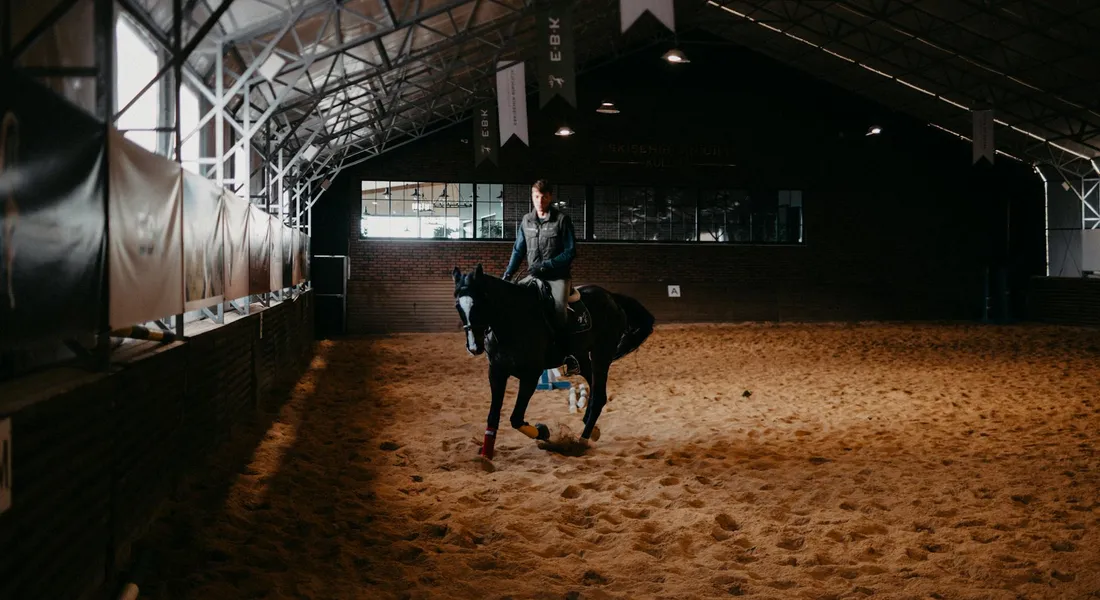
Think of a cool-down as the reverse of your warm-up. Your goal is to guide your horse’s body from a state of elevated work back to a resting baseline. This means systematically lowering their heart rate, dispersing metabolic heat, and encouraging blood flow to clear lactic acid from muscles. A proper way to cool down after exercise is to walk your horse first, then gradually introduce a light trot as their heart rate comes down. This steady, stepwise approach helps regulate breathing and clear residual heat from the muscles. Skipping this is like turning off a car engine after a high-speed drive without letting it idle-it’s hard on the entire system. I’ve found that a proper cool-down is when my horses, like the sensible Rusty, truly relax and process the work we’ve done together.
Essential Cool-Down Exercises
The process is simple but non-negotiable. Start with active walking. Ten to fifteen minutes of steady, purposeful walking on a loose rein is your foundation. This keeps the muscles pumping without demanding more effort. Follow this with suppling exercises to prevent stiffness.
- Large, Loopy Circles and Serpentines: Ask for gentle bends at the walk to keep the spine and ribcage mobile.
- Long-and-Low Stretching: Encourage your horse to stretch their neck down and forward by offering a soft, following contact. You’ll often hear a soft snort here-that’s the sound of relief.
- Strategic Un-tacking: Remove the saddle but keep the bridle on or swap to a halter. Run your fingers over their back, feeling for heat or uneven sweat patterns.
- The Final Walk-Out: Hand-walk your horse until their breathing is completely normal and the skin behind their ears and between their front legs is dry and cool to the touch.
How Long to Cool Down: Timing is Everything
There’s no universal stopwatch. A cool-down’s length is directly tied to the workout’s intensity and your horse’s fitness. A good rule of thumb is that the cool-down should take at least as long as the intense portion of your ride did. For my mare Luna after a spirited flat school, this might be 20 minutes. For Rusty after a mellow trail ride, 10 may suffice. The environment matters, too-a humid summer day demands more time than a crisp autumn one. Listen to your horse’s body, not your watch.
Monitoring Your Horse’s Recovery
During the Cool-Down: What to Watch For
This is your time for close observation. Use your senses. Listen for their breathing to settle into a quiet, regular rhythm. Place your hand on their chest to feel the heartbeat slow. Watch for the sweat to begin drying, starting at the neck and chest. Feel their skin: it should be cooling, not clammy. Check their gums-they should return to a healthy pink within two to three minutes of stopping strenuous work, a quick and vital sign of good circulation. A horse that recovers these baseline signs quickly is telling you they are fit for the work you’re asking. To quantify this, measure your horse’s fitness recovery time after exertion. Tracking recovery time helps gauge improvement and readiness for training.
Red Flags: Signs of Insufficient Cooling
Some signs mean you need to extend your walk or investigate further. Never put a sweating, heavily breathing horse straight in a stall. If you notice persistent signs, your horse may be overworked and in need of more regular, appropriate exercise. Recognizing that need can guide your next steps toward a balanced routine.
- Patchy or Sticky Sweat: Sweat that feels gritty or appears only in uneven patches can indicate electrolyte imbalance or that the horse is not fully hydrated.
- Persistent Rapid Breathing or Flaring Nostrils: If their breath hasn’t settled after several minutes of walking, the workout was too intense or they may be overheating.
- Muscle Trembling or Tightness: A slight quiver in a tired muscle can be normal, but prolonged trembling or a hard, cramped feel in the hindquarters or neck is a warning.
- Disinterest in Water or Treats: A horse like Pipin, who normally muggs for cookies, suddenly ignoring one is a subtle but clear sign of fatigue or discomfort.
If you see these red flags, continue slow walking in a shaded, breezy area and offer small sips of water, and consult your vet if concerns persist. A careful cool-down is the final, critical act of care for the partnership you’ve just shared.
Incorporating Stretches for Flexibility and Mobility
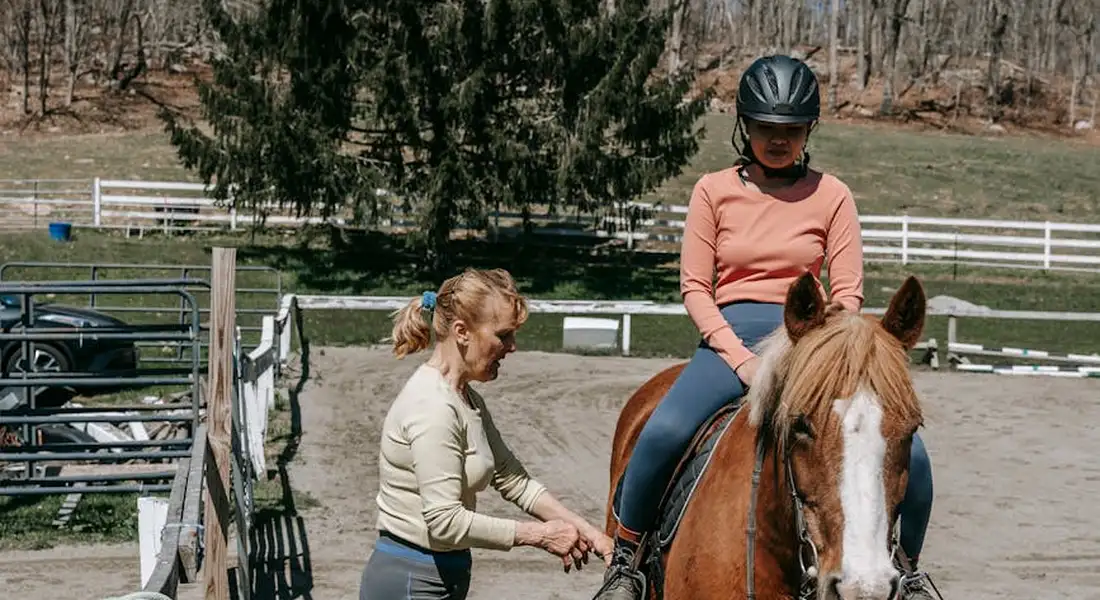
Think of your horse’s muscles like well-worn reins; they perform best when warmed and worked with care. I weave stretches into every handling session, watching Luna’s high-strung nature soften as her body learns to release tension. These movements boost blood flow and joint fluid, preparing them mentally and physically for work or rest.
Carrot Stretches for the Neck and Core
Use a carrot or apple slice to guide your horse’s nose. Ask them to bend slowly toward their shoulder, barrel, and between their front legs, holding each position for a calm breath or two. This mimics natural grazing motions and targets often-rigid neck and back muscles. With Rusty, I do this before tacking up to ease his trail-hardened shoulders.
- Shoulder Bend: Improves lateral neck flexion.
- Barrel Reach: Engages the abdominal core.
- Chest Stretch: Increases forward range of motion.
Passive Leg Stretches
Gently pick up each leg, supporting the hoof and pastern. For a front leg, extend it forward naturally; for a hind leg, ease it slightly backward, letting the horse’s own weight create the stretch. You should feel a gentle give, not resistance. I listen for Pipin’s content sigh when I do this-a sign of relief for his pony-sized joints.
- Stand at your horse’s shoulder, facing the tail.
- Run your hand down the leg, then lift the hoof.
- Allow the leg to extend until you feel light tension.
- Hold for 10-15 seconds, then lower it smoothly.
Back Mobilization Techniques
Apply gentle pressure along the top of the withers and down the spine with your fingertips. Encouraging your horse to round its back downward, away from your touch, activates the crucial “core sling” muscles that support the saddle. The smell of hay and the soft thud of a shifting hoof ground this practice in daily routine. Do this before girting up to prevent pinching.
Stretching is not about forcing a pose. Your horse’s feedback-a relaxed lip, a soft eye-is the true measure of a beneficial stretch, not how far they can reach. Incorporate these into your cool-down as well, helping muscles lengthen and recover after exercise. Turnout time after stretching lets them move freely, sealing in the benefits.
Frequently Asked Questions About Essential Warm-Up and Cool-Down Exercises for Your Horse
What are the key components of an effective warm-up for a horse?
An effective warm-up must first establish a mental connection to ensure your horse is focused and relaxed. It should gradually increase circulation to warm muscles and lubricate joints for better flexibility. Additionally, include exercises that activate core muscles to properly support the spine under saddle. This lays the groundwork for building and strengthening horse muscle effectively. You can explore practical conditioning steps to support this goal in the next section.
How long should a typical warm-up last before more intense work?
A typical warm-up should last at least 10 to 20 minutes, adjusting for factors like your horse’s age, fitness, and the weather. The key is to continue until you observe physical signs such as light sweating and a swinging back. Always prioritize your horse’s readiness over a fixed timeline for optimal safety and performance.
What is the primary goal of the cool-down phase?
The primary goal is to systematically restore your horse’s body to its resting baseline after exercise. This involves lowering heart rate and respiration while promoting blood flow to clear metabolic waste like lactic acid. A proper cool-down helps prevent muscle stiffness and supports overall recovery for long-term soundness.
Ride Safe, Ride Smart
Make a mindful walk the foundation of every warm-up and a gradual decrease in effort the cornerstone of every cool-down. Consistency in these routines prevents injury far better than any quick fix or rushed session ever could.
Good horsemanship is built on the quiet moments of observation and adjustment. Your horse’s breathing, stride, and attitude are the most honest gauges you have-trust what they tell you. Understanding these nuances is key to reading horse behavior and psychology.
Further Reading & Sources
- The right way to warm up | Petplan Equine
- Structure your horse’s warm up and cool down
- The Importance of Warming Up and Cooling Down Your Horse – My New Horse
- Improve Your Horse Show Warm-Up and Cool-Down Routines
At Horse and Hay, we are passionate about providing expert guidance on all aspects of horse care, from nutrition to wellness. Our team of equine specialists and veterinarians offer trusted advice on the best foods, supplements, and practices to keep your horse healthy and thriving. Whether you're a seasoned rider or new to equine care, we provide valuable insights into feeding, grooming, and overall well-being to ensure your horse lives its happiest, healthiest life.
Exercise