
How to Safely Ride Your Horse on the Road: Mastering Rules and Visibility
Hello fellow equestrians! Taking your horse onto a public road instantly amps up the stakes. That hum of an approaching engine or a driver’s momentary distraction can turn a peaceful ride into a dangerous situation for you both.
I’ve felt that jolt of adrenaline too, gripping the reins a little tighter as a truck rumbled past my old gelding. Your worry about safety is not just valid-it’s the mark of a responsible horse owner who prioritizes partnership over peril.
Let’s turn that anxiety into actionable know-how. In this guide, I’ll break down the road riding puzzle into manageable pieces you can implement today. We will cover:
- The non-negotiable road rules and right-of-way etiquette every equestrian must know.
- How to outfit your horse and yourself in high-visibility gear that actually works.
- Progressive training steps to build your horse’s confidence around traffic and noise.
- My stable-tested method for planning and scouting a low-risk route before you mount up.
You’re getting this from someone who’s logged countless miles on asphalt and gravel, training everything from steady Quarter Horses to sharp Thoroughbreds for life beyond the arena gate.
Why Road Riding is a Different Ball Game
From Controlled Spaces to Chaos
Riding in an arena is like practicing in a classroom-predictable, soft, and quiet. Trail riding offers more variables, but the pace is yours, and the sounds are natural. The road is a different beast entirely. You trade dirt for asphalt, bird songs for engine roars, and open trails for narrow shoulders. The constant hum of traffic, the sudden whoosh of a passing truck, and the confined space can frazzle even a steady horse. It’s a sensory overload they aren’t built for.
Your horse isn’t just carrying you; they’re processing garbage trucks, motorcycles, and plastic bags dancing in the wind. Their flight instinct is on high alert. I learned this the hard way on my first major road ride with Luna, my sensitive Thoroughbred. A delivery van backfired, and in a heartbeat, we were sideways, her heart pounding through the saddle. That day taught me that road riding isn’t just about steering; it’s about being your horse’s calm, confident interpreter in a world of fast-moving metal—especially because not all horses enjoy being ridden in such stressful environments.
Know the Rules of the Road
Your Legal Standing as an Equestrian
Traffic Laws You Must Follow
In most areas, horses are considered vehicles or have specific rights on roadways. This means you have responsibilities. Always check your county’s ordinances, as a local rule about bridle paths or road use can change everything. Find out where riding on public roads is legal in your area and what rules apply. This knowledge helps you ride confidently and keep others safe on the road. Knowing the law protects you and tells drivers how to behave around your horse.
- Ride with the flow of traffic, on the right side of the road.
- Obey all traffic signals and signs, just like a car or bicycle.
- Use hand signals to indicate turns or stops.
- You generally have the right to use the lane, but must not unreasonably impede traffic.
- It’s your duty to maintain control of your animal at all times.
Mandatory and Recommended Safety Gear
Your Personal Safety Checklist
Your riding clothes are your crash gear. While jeans are common, their seams can cause terrible abrasions in a slide on pavement. Opt for breeches or durable riding tights instead. Proper gear is your first layer of defense in a fall, and on the road, that fall could be onto hard pavement.
- Helmet (Non-negotiable): Must be ASTM/SEI certified. Your brain is irreplaceable.
- Footwear: Boots with a defined heel to prevent your foot from sliding through the stirrup.
- Body Protector: Highly recommended for road riding to protect your torso from impact.
- Gloves: Improve grip on the reins if your hands get sweaty from nerves.
- High-Visibility Vest or Tabard: Even during the day, this makes you seen.
I never hack out on the road without my hi-vis gear, even on my steady Eddy, Rusty. It’s the simplest way to shout “see me” to a distracted driver, giving them extra seconds to slow down.
Be Seen to Be Safe: Mastering Visibility

I learned this lesson the hard way on a foggy evening with Rusty. A car came up a bit too fast, and despite being on the shoulder, we seemed to materialize out of nowhere for the driver. Making yourself a bright, unmistakable object is the single most effective thing you can do to share the road safely.
Outfitting the Rider for High-Vis
Your goal is to look like a construction worker crossed with a runway light. Think in layers: base color, reflection, and active light.
Guide: Detail rider high-visibility vest types (colors, ANSI classes). Discuss the effectiveness of reflective strips on clothing and helmets. Recommend wearable LED lights for dawn/dusk.
Start with a high-visibility vest or jacket. Neon lime-green or orange are your best bets for daytime. Look for ANSI Class 2 or 3 ratings; these are performance standards for reflectivity and material. A simple mesh vest over your coat is a good start. Reflective strips are non-negotiable, as they catch headlights and create a moving outline of a human on a horse. Sew-on or stick-on tape on your helmet, jacket sleeves, and the back of your boots works wonders.
For low light, passive reflection isn’t enough. Clip a small, durable LED light to the back of your helmet or vest. A steady red light on your back and a white one on your front clearly signals direction. I never hack out at dusk without my little blinking LED clipped to my collar-it’s cheap, lightweight, and a huge peace of mind.
Outfitting Your Horse for the Spotlight
Your horse is a large, dark silhouette. We need to outline that shape and add moving points of light.
Guide: List and describe reflective and LED horse gear: leg bands, tail ribbons, breastplate/quarter sheets, browbands. Compare passive reflection to active light. Advise on desensitizing the horse to this gear first.
Begin with passive reflective gear. Velcro reflective leg bands are fantastic-they move with every stride, creating an unmistakable “animal in motion” signal. A reflective tail ribbon or quarter sheet adds a large block of light from behind. Always introduce any new gear at home in the daylight; let your horse see and smell it, then wear it in the paddock before hitting traffic. Luna needed a full session just watching the LED browband blink before she decided it wasn’t a tiny electric predator.
Active light for your horse is a game-changer. LED browbands or breastplates with steady or pulsing lights make your horse’s head and neck highly visible. The key difference? Reflective gear only works when a car’s headlights hit it. LED lights make you a visible source of light, which is critical for drivers coming around bends or over hills. Use both for the ultimate coverage.
Pre-Ride Prep: The Safe Horse and Route
Gear is useless if your horse is a nervous wreck or you’re on a terrible road. This prep work is where gentle horsemanship pays off in spades.
Is Your Horse Truly Road-Ready?
Not every pasture puff is instantly a traffic-safe mount. You need a honest assessment.
Guide: Outline a simple “road safety test” for evaluating a horse’s calmness with traffic, sudden noises, and strange objects. Suggest progressive exposure training in a safe environment.
Start in a controlled area near the road. Can your horse stand quietly while you:
- Flutter a plastic bag on a fence?
- Open and close a loud umbrella?
- Walk past a rattling trash can?
If they pass, move to the driveway or quiet roadside with a handler. Watch their reaction to a single car passing at a distance. The goal is a relaxed posture, maybe a look, but no spinning, bolting, or dramatic spooking. Lead steer your horse with a relaxed lead rope, guiding small steps and light pressure as you move to the next car. Maintain a calm, confident rhythm in your cues to reinforce a steady response. Build up slowly-one car, then two, then a louder truck. If your horse gets worried, go back to the last step they were calm at. Rushing this process is a direct ticket to danger.
Scouting Your Route Like a Pro
Don’t just head out. Your route is a strategic choice.
Guide: List criteria for choosing a safe route: shoulder width, traffic volume/speed, sight lines, common hazards (mailboxes, barking dogs). Recommend riding with a buddy on new routes.
Walk or drive the route first in your car. Look for:
- Width: Is there a maintained, clear shoulder wide enough for you and your horse to step off if needed?
- Traffic Flow: Are there blind curves or steep hills that hide you? Moderate, steady traffic is often better than infrequent but fast cars.
- Hazards: Note mailboxes, loose dogs, sprinklers, or drainage ditches. I avoid a particular road because Pipin, the Shetland, once tried to sample flowers from a yard, startling a hidden terrier.
- Escape Routes: Are there field entrances or driveways you could use in a pinch?
Your first ride on any new route should ideally be with a calm, experienced horse buddy. Their confidence can bolster your horse’s, and two riders are far more visible than one. Share your planned route and expected return time with someone back at the barn, always. It’s especially important when you’re just starting out—be sure you know how to mount and ride a horse properly.
Communication is Your Superpower
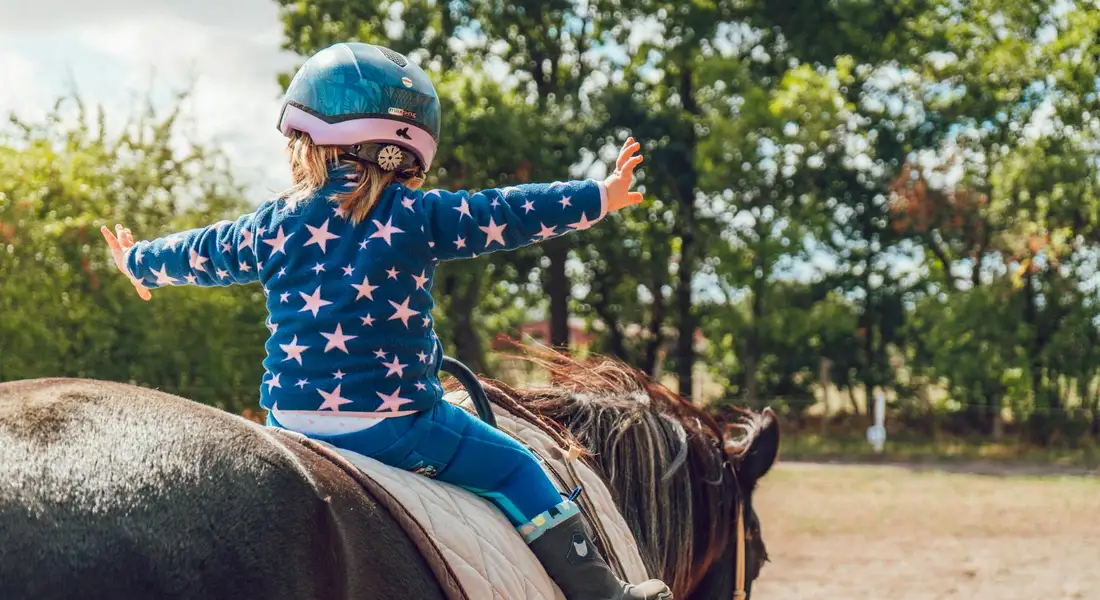
Clear Hand Signals for Drivers
Guide: Provide simple, illustrated steps for standard signals: stop, slow down, turn left/right. Emphasize clear, exaggerated motions. Advise making eye contact with drivers when possible.
Your arms become traffic signals when you ride on the road. Exaggerate every motion so it reads clearly from inside a noisy, fast-moving vehicle. I practice these in the barn aisle with my horses first, so they don’t flinch at my big gestures.
Think of signaling like you’re directing a very slow, very large airplane on the tarmac. Here are the core signals every rider needs:
- Stop: Extend your left arm straight out to your side, palm facing flat down. Hold it still and firm.
- Slow Down: With your left arm, make a deliberate patting motion toward the ground, moving your entire arm up and down.
- Turn Left: Simply point your left arm out to the left. Keep it extended until you begin your turn.
- Turn Right: For maximum clarity, point with your right arm to the right. You can also bend your left arm at the elbow and point across your body.
After you signal, seek out the driver’s face. A direct moment of eye contact is the best confirmation they’ve understood you. With a sensitive horse like Luna, I pair my signal with a deep breath to keep us both steady.
Using Your Voice with Horse and Traffic
Guide: Explain how a calm, steady voice reassures your horse. Describe how to politely signal a driver to slow down or stop with a raised hand and verbal “whoa” if needed.
The rumble of an engine can make a horse’s nerves jangle. Your calm, narrative voice is a steadying anchor in the sensory chaos of the roadside. I talk to Rusty constantly on our road rides, describing what we see, and his ears flick back to listen.
Use a low, rhythmic tone to remind your horse all is well; it’s important to understand their sounds and vocalizations to build trust. For drivers, your voice is a powerful secondary tool. If a car is approaching too quickly, raise your hand high and pair it with a clear, projected word.
Call out a firm “Whoa!” or “Easy!” just as you would to your horse. This verbal cue, delivered with authority, often makes a driver pause and reassess their speed immediately. It’s a polite but unmistakable request for caution.
Road Etiquette and Hazard Navigation
The Polite Equestrian’s Code
Guide: List etiquette rules: acknowledge polite drivers with a nod, pull over to let cars pass if safe, avoid riding abreast on narrow roads, never assume a driver sees you.
Good road manners build goodwill and safety. Acknowledging a driver who slows down reinforces that positive behavior for the next horse and rider they meet. Here is the unwritten code we live by at our barn:
- Always thank a courteous driver with a nod, wave, or smile.
- Listen for traffic behind you and pull over to a safe, wide spot to let cars pass.
- On narrow roads, ride single file. Never ride abreast and block the lane.
- Operate on the principle of invisibility. Assume no driver sees you until you have proof.
- If you must ride at dusk or dawn, your visibility gear is non-negotiable.
I once spent ten minutes with Pipin in a driveway turnout because of heavy traffic. Patience and a good pull-out spot are always better than pushing your luck on a narrow shoulder.
When Things Go Sideways: The Calm Response
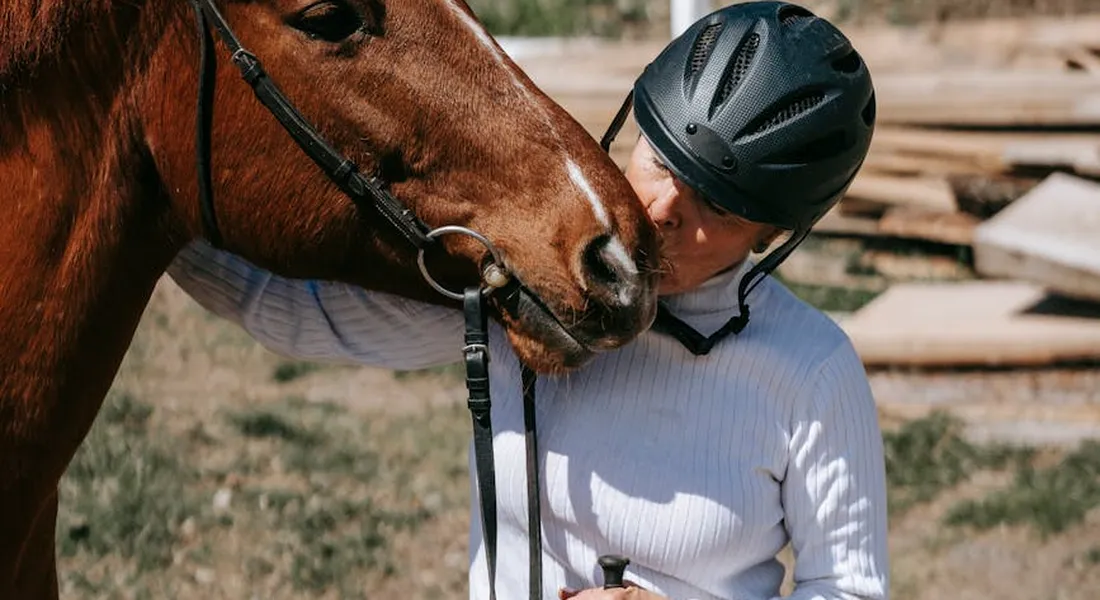
Practicing the Emergency Stop and Turn
Guide: Give step-by-step instructions for teaching a one-rein stop in a safe area. Explain its use to disengage the hindquarters and regain control during a spook.
A sudden bolt or spin on the road can freeze your blood. Your heart thuds in your chest, matching the rhythm of panicked hooves. I’ve been there with Luna, my dapple grey Thoroughbred, when a delivery truck backfired. The one-rein stop is your safest, gentlest brake pedal. It works by flexing your horse’s neck and disengaging their hindquarters, removing their power to flee. Practicing this maneuver in the calm of an arena or paddock builds a muscle-memory safety net for both of you.
Find a quiet, enclosed space like a round pen. Start at a walk. Here’s how to build it, step by step.
- With a soft, steady hand, pick up one rein and bring your horse’s nose around towards your knee. Keep your other hand low on the neck, releasing pressure on the opposite rein.
- Apply gentle pressure with your inside leg to encourage the hindquarters to step under and across. You’ll feel the forward motion stop as the hind legs cross.
- The moment your horse yields and halts, even if it’s clumsy, release all pressure instantly. Pat them and let them stand for a beat.
- Repeat at a walk until it’s smooth, then practice at a trot. The goal is a single, fluid motion that ends in a balanced stand.
This isn’t about force. It’s about teaching your horse to yield to pressure and find relief in stopping. When Luna spooks, I ask for that one-rein bend, and it changes her focus from fear to a simple task she knows well. The creak of the saddle and the shift of her weight underneath me signal she’s listening again.
Dealing with an Aggressive or Ignorant Driver
Guide: Advise on de-escalation: stay calm, move off the road if possible, memorize license plate details. Do not engage in confrontation. Your safety is the priority.
You’re enjoying a quiet ride when a car speeds past, horn blaring. Your horse tenses, and your own temper flares. I’ve watched Rusty’s ears flatten at a roaring engine. In these moments, you are a diplomat on horseback. Your job is to defuse, not engage. Becoming a calm, assertive leader for your anxious horse creates safety and trust in the moment. Your calm, steady presence tells them they can breathe and follow your guidance. Your safety and your horse’s welfare are the only victories that matter.
Follow this immediate action plan. Keep it simple.
- Breathe and steady your horse. Talk in a low, calm voice. Deep breaths help you both. Do not make sudden gestures.
- Create space immediately. If there’s a driveway, field entrance, or wide shoulder, guide your horse off the roadway. Get completely out of the traffic lane.
- Be a recorder, not a debater. Look at the vehicle. Silently repeat the license plate number to yourself. Note the color, model, and any distinguishing features.
- Let it go. Do not shout, gesture, or try to chase the vehicle. Confrontation escalates risk astronomically. A frightened rider cannot protect a frightened horse.
Once safe, you can report the incident with the details you gathered. Moving away from the threat is not a retreat; it’s the smartest tactic in your riding toolkit. I’ve led a shaking Pipin off the road after a close pass, choosing the smell of damp grass over the heat of anger. It keeps everyone whole.
FAQ: How to Safely Ride Your Horse on the Road
Why is a road safety test critical for my horse before venturing onto public roads?
A road safety test evaluates your horse’s temperament and reaction to common traffic stressors in a controlled setting. It helps prevent dangerous situations by ensuring your horse can handle surprises like loud noises or sudden movements. This assessment is foundational for building a safe and trusting partnership on the road, ensuring compliance with horse riding regulations and safety requirements.
What key elements should be included in a thorough horse road safety test?
Beyond basic noise desensitization, incorporate elements like encountering unfamiliar vehicles or navigating narrow spaces with obstacles. Test your horse’s ability to maintain gait and focus while you use hand signals and voice commands. Always conclude with a review of their overall composure and recovery time after exposure to stressors. This is especially important in understanding horse behavior and psychology.
How should I proceed if my horse does not pass an initial road safety test?
Immediately halt road training and revert to foundational desensitization exercises in a secure, familiar environment. Break down failed test components into smaller, manageable steps, using positive reinforcement to encourage calm behavior. Consult with a professional trainer if needed to develop a structured, gradual exposure plan before retesting.
Ride Safe
Outfit yourself in bright, reflective clothing and ensure your horse has leg bands and tack markers for maximum visibility. Planning your route for wide shoulders and quiet times turns a stressful ride into a predictable, calm outing for your horse. Additionally, focus on creating a safe, enriching environment for your horse. This setup helps rides feel safer and more rewarding.
Build trust through short, positive exposures to traffic, always rewarding calm behavior. The soft snort or tense muscle you feel beneath you is your horse’s honest report on the road-honor that communication above all else.
Further Reading & Sources
- Safety Tips for Riding Your Horse on the Road – Horse Illustrated
- Rules of the Road – AQHA
- Can You Ride a Horse on the Road? Rules and Safety Explained
- Is It Illegal To Ride A Horse On The Road? – Huntley Equestrian – Huntley Equestrian
At Horse and Hay, we are passionate about providing expert guidance on all aspects of horse care, from nutrition to wellness. Our team of equine specialists and veterinarians offer trusted advice on the best foods, supplements, and practices to keep your horse healthy and thriving. Whether you're a seasoned rider or new to equine care, we provide valuable insights into feeding, grooming, and overall well-being to ensure your horse lives its happiest, healthiest life.
Equipment