
Why is My Horse Bucking and How Can I Correct It?
Hello fellow equestrians. That sudden, unscripted launch into the air is enough to make any rider’s heart pound. Your horse bucking isn’t just scary; it’s a clear signal that something, whether physical or mental, needs your attention right now.
Your concern for safety and your horse’s well-being is exactly where it should be. We’re going to sort this out together. This guide will cover:
- Systematically ruling out pain in the back, mouth, and limbs.
- Conducting a thorough tack check for fit and comfort issues.
- Understanding behavioral roots like pent-up energy or learned evasion.
- Implementing safe, progressive training methods to rebuild trust and obedience.
I’ve spent years in the barn aisles and the saddle fixing this issue, from calming thoroughbreds like Luna to outsmarting ponies like Pipin, and I’m here to share that straight-talk experience with you.
Decoding the Buck: Is It Pain or Play?
Watching your horse buck can send your heart into your throat. My first step is always to hit pause and read the situation like a detective. Is this a moment of sheer joy, or a cry for help? I’ve seen both in my barn, from Pipin’s celebratory kicks in the spring grass to the day Luna gave a sharp, uncharacteristic buck under saddle that stopped me cold. Your horse’s body language before, during, and after the buck tells the true story.
Signs It’s Likely Behavioral
Behavioral bucks often have a predictable trigger and a playful energy. You might see it during turnout after a few days in a stall. The horse seems to be blowing off steam, with a relaxed face and a loose, wiggly body. A horse bucking from pure exuberance usually looks like they’re having the time of their life, and they’ll stop quickly once they’ve gotten the sillies out.
I think of Rusty on a crisp morning trail ride; sometimes he’ll give a little hop when we first move out, but it’s all forward momentum and zero tension. Other behavioral signs include bucking only when you ask for a canter transition or when another horse passes by. This is often a training or attention issue, not a physical one, and it’s why I’m a zealot for ample turnout time-a tired horse is often a well-behaved horse.
- Occurs during free play in the pasture or at the start of a ride.
- Horse appears bright-eyed, ears may be forward, and body is loose.
- Stops easily when redirected and doesn’t show other signs of distress.
- Often linked to excess energy, excitement, or evading a riding cue.
Signs It’s Likely Pain
Pain bucks are a different creature. They feel sharp, defensive, and often come with a suite of other warnings. The horse’s expression is tight, the ears might be pinned, and the buck may be preceded by tail swishing or a hollowing of the back. A buck rooted in pain is a clear signal that your horse has run out of polite ways to tell you something hurts.
I recall a lesson horse who began bucking over small jumps. He wasn’t being naughty; his back was sore from a poorly fitting saddle. Pain-related bucking can be inconsistent-it happens when a specific muscle is engaged or pressure is applied. If the buck is paired with resistance to grooming, cinching, or mounting, you must assume pain is the cause until proven otherwise.
- Sudden, explosive, or repeated bucks in a specific context (e.g., when loping on a particular lead).
- Accompanied by pinned ears, a clamped tail, or a worried eye.
- Horse flinches when touched in certain areas or shows stiffness moving out of the stall.
- Behavior is new, unusual, and out of character for the horse.
The Pain Checklist: Pinpointing Physical Discomfort
When you suspect pain, become a sleuth. Start from the outside and work your way in, because the culprit is often something you can see, feel, or adjust. I keep a mental checklist, and it has saved my horses and my seat more than once. Never punish a pain buck; your job is to find and fix the source of the discomfort.
Tack Troubles: Saddle Fit and Bit Irritation
This is the most common offender I see. A saddle that pinches or a bit that pokes can turn a gentle horse into a bronc. Run your hand under the saddle pad after a ride. Dry spots where there should be sweat indicate high pressure. A saddle that doesn’t fit is like wearing shoes three sizes too small all day, every day — eventually, you’d kick them off, too. It can also cause lameness in horses if not addressed promptly.
Check your girth for wrinkles that pinch skin and ensure your billet straps aren’t causing rubs. With bits, look for rubs at the corners of the mouth or a horse that constantly fusses with its tongue. I learned this the hard way with Rusty; a simple switch to a softer girth material eliminated the occasional buck during tightening.
- Inspect for uneven sweat patterns or white hairs under the saddle area.
- Watch for girthiness, head tossing, or an open mouth during riding.
- Ensure your saddle’s tree width matches your horse’s back shape; this changes with age and fitness.
- Consider a professional saddle fitter-it’s worth every penny.
Hidden Aches: Back Soreness and Hind End Pain
Muscle soreness, arthritis, or pinched nerves can manifest as bucking, especially when engaging the hindquarters. Press firmly along your horse’s back and loin muscles. Do they tense, sink away, or even swing their head around? A sore back often feels like a board, lacking the soft, supple give a healthy muscle should have.
Hind end issues, like hock or stifle pain, can cause a horse to buck to avoid engaging those joints. Feel for heat or swelling, and note any stiffness when they first walk out. Regular bodywork from a certified practitioner and consistent, gentle warm-ups are non-negotiable for athletes like Luna, who holds tension in her topline.
- Use your thumbs to palpate along both sides of the spine, watching for reactions.
- Observe the horse’s stride for shortness or dragging toes behind.
- Note if bucks happen during transitions, on circles, or when asking for collection.
- Implement a consistent stretching routine to maintain flexibility.
Internal Issues: Gastric Ulcers and Dental Problems
Discomfort you can’t see is the trickiest to diagnose. Gastric ulcers are a frequent, silent agitator. A horse that bucks when asked to collect or when trotting might be reacting to acidic splash in an empty stomach. The gurgle of a hungry gut isn’t just noise; it can be a burning pain that makes a horse reactive.
Dental problems cause pain when chewing or from bit pressure. Sharp points on the molars can cut cheeks, and wolf teeth can interfere with the bit. Listen for quidding-dropping half-chewed hay-or smell for foul breath. I schedule dental checks like clockwork; Pipin’s cheeky attitude improves dramatically after his floats, making him less head-shy and much more comfortable.
- Watch for bucking correlated with feeding times or intense work.
- Look for subtle signs: poor coat condition, weight loss, or a reluctant eater.
- Schedule annual dental exams with an equine dentist or vet.
- Discuss ulcer prevention with your vet, focusing on constant forage access and stress reduction.
Rider Safety First: Immediate Actions When Bucking Starts

That first unexpected lift of the hindquarters sends a jolt straight to your core. Your immediate reaction sets the tone for whether this is a brief protest or a full-blown battle.
Forget punishment; focus on becoming a steady, unshakable part of your horse. Deepen your seat, let your weight sink into your heels, and breathe out to keep your own tension from fueling the fire. I recall Luna’s telepathic sensitivity-my clenched jaw once tipped her from anxious to airborne.
Follow these steps in order when the bucking begins:
-
Shorten your reins with steady, even pressure. This gives you direct contact to guide the head up and disrupt the bucking leverage.
-
Steer firmly into a small circle or toward a solid fence line. Changing direction and limiting space breaks the horse’s momentum and focus.
-
Keep your eyes up and your body tall. Looking down at the swirling ground guarantees a loss of balance and a hard landing.
-
If you feel your balance going, execute a planned dismount. Push away from the horse’s side, tuck your knees, and aim to land on your feet, letting go of the reins.
Afterward, walk your horse calmly and check for obvious irritants. A sudden buck can be as simple as a buzzing horsefly or a too-tight cinch, like the time Rusty humped his back over a wrinkled saddle pad. Understanding why horses bite can guide you to stop this behavior early. That insight helps you spot triggers and manage them calmly.
Fixing the Root Cause: Corrections for Pain and Discomfort
Bucking is rarely a choice; it’s a consequence. Your horse isn’t being naughty-it’s communicating that something hurts. Lasting correction means playing detective and fixing the physical source.
Step 1: Veterinary Investigation
Schedule a comprehensive exam, not just a quick look. Request palpation of the entire topline, limb flexion tests, and a detailed dental check. Subtle issues like sacroiliac pain or molar spurs can manifest as explosive behavior under saddle.
Discuss the possibility of gastric ulcers with your vet. Stress from training, travel, or stall confinement can erode the stomach lining, causing pain that emerges as bucking during collected work. I’ve seen moody horses transform after a course of ulcer medication and management shifts.
Step 2: Tack Overhaul and Saddle Fit Assessment
An ill-fitting saddle is a common torture device. Pressure points from a pinching tree or bridging panels feel like a rock in your shoe for every step of the ride. Have a qualified fitter assess your saddle on the horse’s bare back, then again with a pad. Recognizing the signs of a poorly fitting saddle can guide that assessment. Look for discomfort, rubs, or changes in movement as you ride.
Examine every piece of gear. A bit that sits too high, a dirty girth, or a noseband cranked tight can all trigger defensive bucking. After Pipin’s escape-artist phase, I found his bucking stopped when I switched his harsh bit for a milder one and cleaned his tack regularly.
- Wither Clearance: Always have two to three fingers’ space between the withers and the saddle pommel.
- Panel Contact: The panels must make even contact along the back, with no bridging or heavy spots.
- Girth Alignment: The girth should sit behind the elbows, allowing free movement without chafing.
Step 3: Management Changes for Gut and Dental Health
Health starts from the inside out. Prioritize constant forage access to mimic natural grazing and buffer stomach acid. A horse with an empty gut is a horse in discomfort, and discomfort seeks an outlet.
Maximize daily turnout on varied terrain. Movement lubricates joints, relieves stiffness, and burns mental energy that might otherwise fuel bucking. Even my senior horse, Rusty, gets stiffer and crankier if he misses his daily wander.
Schedule regular dental exams and floats. Sharp edges on teeth make chewing painful, leading to quidding, weight loss, and resentment of the bit. Combine this with a diet low in inflammatory sugars and starches to support a calm, comfortable horse. Regular dental floatings are essential to maintaining oral health.
Training Through the Buck: Behavioral Corrections and Groundwork
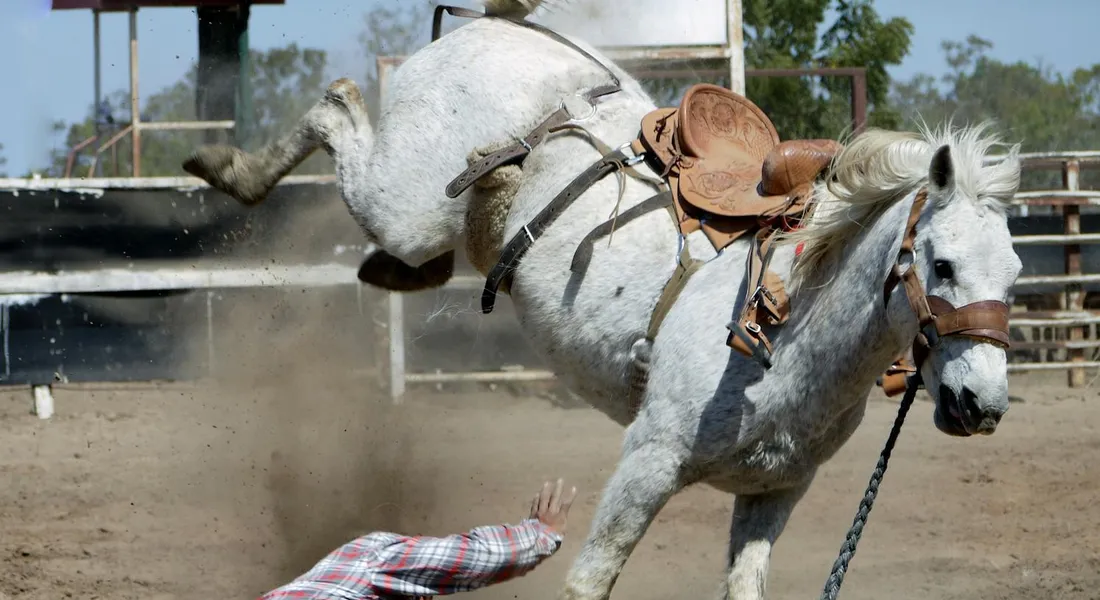
When a horse bucks under saddle, the solution often starts on the ground. I view bucking as a form of communication, and groundwork is how we have a clear, safe conversation. The goal isn’t to punish the energy, but to redirect it into something productive and teach the horse that standing still or moving forward is a better choice. This builds a foundation of respect before you ever step into the stirrup.
Groundwork Foundations: Lunging and Desensitization
Effective lunging is more than just running circles. It’s about control of the feet, pace, and transitions. I spend the first five minutes of every session with a horse like Luna on the lunge line, asking for sharp walk-trot-canter transitions. This engages her mind and takes the edge off that fizzy energy. The moment she even thinks about a little buck or kick-out, I drive her forward immediately-bucking is hard work, and making it result in more work is a powerful deterrent.
Desensitization is your best friend for the spooky buck. This is all about desensitizing a spooky horse to new objects and sounds. With each calm exposure, they learn to assess rather than flinch. I make a game of it, introducing scary objects like plastic bags or flapping tarps in a controlled way. Start with the object quiet and distant, rewarding calmness with a rub and a soft voice. Gradually bring the object closer, allowing the horse to sniff and investigate, until they understand it won’t eat them. The thud of a hoof striking the ground in fear is a sound you want to prevent, and this method builds immense trust.
Here is a simple three-step routine I use with every horse:
- Yielding the Hindquarters: Ask the horse to move its back end away from light pressure. This disengages their “engine” and is a fundamental “whoa” cue.
- Backing Up with Purpose: Don’t accept a lazy shuffle. Ask for three crisp steps back from a gentle finger touch on the chest. This establishes respect for your space.
- Standing on a Loose Line: The ultimate test. Drop the lead rope and step away. A horse that stands quietly, without fidgeting, is a horse learning self-control.
Rider Technique: Building Confidence and Clarity
Your position in the saddle is your first line of defense. A stiff, braced rider who leans forward is an invitation for a bronc ride. I learned this the hard way years ago. Sit deep, keep your heels down, and maintain a soft but following contact with the horse’s mouth. If a buck comes, your instinct might be to curl up-fight it. Sit up taller, almost leaning back slightly, to keep your center of gravity over the horse’s. These fundamentals are especially important for mount ride horse beginners. They set the stage for safer, smoother starts.
Your aids must be a clear language. Mixed signals create frustration, which can boil over into bad behavior. Be deliberate. If you ask for a canter, mean it. If you ask for a halt, be prepared to support it with your seat and voice. A sudden, confused buck is often a horse saying, “I don’t know what you want, so I’m going to do this instead!” Practice transitions at the walk and trot until they are seamless before you ever pick up a canter where bucks are more likely.
When you feel that pre-buck tension-the head snatching down, the back hollowing-your job is to disrupt the pattern immediately. Don’t wait for the explosion.
- Instantly bend the horse’s head and neck to one side by pulling gently on one rein. A horse cannot buck effectively when its spine is bent.
- Drive the horse forward with your seat and legs into a powerful trot or canter. Forward motion is the enemy of a planted, bucking stance.
- Use a firm, low voice command like “Easy” or “Walk.” Pair this consistently on the ground and under saddle so it becomes a calming cue.
Prevention is Key: Building a Buck-Resistant Partnership
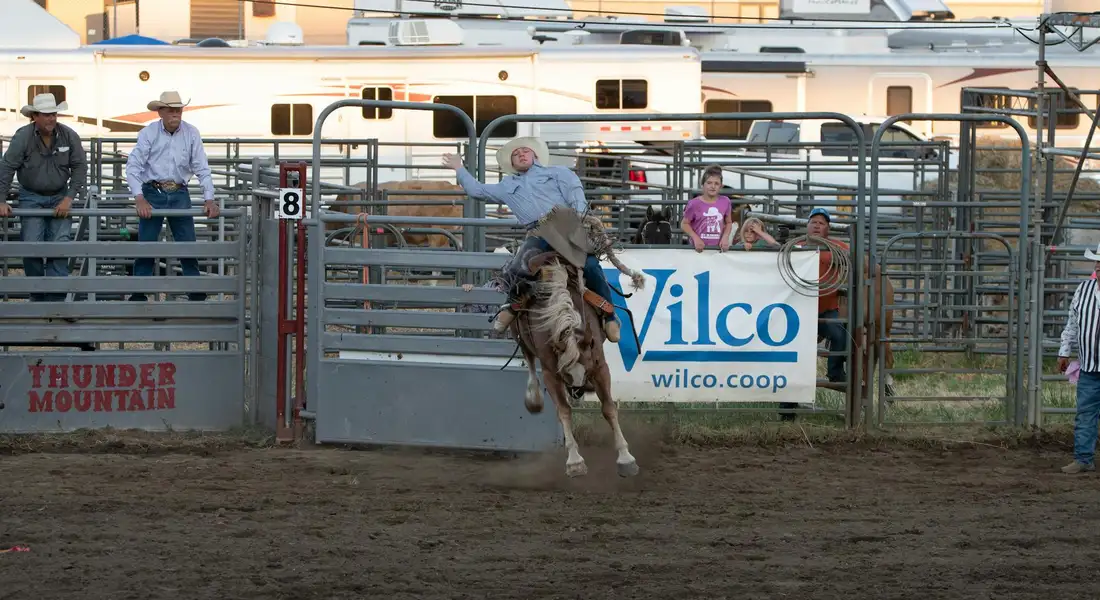
The best cure for bucking is ensuring it never becomes a habit. This boils down to consistent management and compassionate riding. A horse that feels good, understands his job, and trusts his rider has little reason to protest. I structure my entire barn routine around this philosophy. It’s all about preventing bucking through proper care.
Ample turnout is non-negotiable. A horse cooped up in a stall for 23 hours is a powder keg of pent-up energy. I aim for a minimum of 12 hours of turnout daily, even if it’s just in a small paddock. The smell of fresh grass, the sound of birds, the simple act of moving freely-this is basic equine welfare. I’ve watched the high-strung Thoroughbred relax and the cheeky pony like Pipin focus better after a good roll and gallop. A healthy exercise turnout schedule for horses makes this balance intentional, not left to chance. When turnout and movement are thoughtfully planned, energy stays calmer and performance improves.
Your riding approach sets the tone. Every ride should have a clear, achievable goal, even if it’s just ten minutes of relaxed walking on a loose rein. End every training session on a good note, even if you have to backtrack to a simpler task the horse can perform perfectly. This builds confidence and makes riding a positive experience. I always finish by loosening the girth and walking the last five minutes back to the barn, letting the horse stretch and unwind.
Finally, listen to the small protests so you never hear the big one. A pinned ear, a swishing tail, a reluctant transition-these are your horse’s whispers. Address the whisper with a check of your tack, a review of your request, or a simple break, and you’ll rarely have to weather the scream of a full-blown buck. Partnership is built in these quiet moments of attention.
FAQ: Why is My Horse Bucking and How Can I Correct It?
What are the broad categories of causes for horse bucking?
Bucking generally stems from either physical discomfort or behavioral responses. Physical causes involve pain from sources like ill-fitting equipment or underlying health issues. Behavioral causes include excess energy, evasion tactics, or reactions to fear.
How can management practices influence bucking behavior?
Inadequate turnout can lead to pent-up energy that manifests as bucking. Irregular feeding times might contribute to gastric discomfort, causing pain-related bucks. Insufficient warm-up or cool-down routines can result in muscle stiffness and defensive reactions.
What psychological or environmental factors might trigger bucking?
Sudden changes in environment or herd dynamics can increase anxiety and bucking. Boredom from monotonous training sessions may lead to evasion behaviors like bucking. Past negative experiences or lack of consistent handling can erode trust and cause explosive reactions.
Partners, Not Adversaries
The fastest fix for bucking is to stop treating it as a discipline issue and start seeing it as communication. First, rule out pain from saddle, teeth, or hooves with your vet and a skilled saddle fitter. Only then, with a pain-free partner, can you safely address behavioral causes through consistent groundwork and confident riding.
This process demands patience and a commitment to your own education as a horseman. True safety comes from listening to what your horse is telling you with his whole body, long before his feet leave the ground. It involves understanding horse behavior and psychology.
Further Reading & Sources
- Understand and End Your Horse’s Bucking Habit With These Expert Tips
- Help! My Horse Keeps Bucking
- How To Stop A Horse From Bucking
- Bucking & The Flank Rope~Old Technique – New Way.
At Horse and Hay, we are passionate about providing expert guidance on all aspects of horse care, from nutrition to wellness. Our team of equine specialists and veterinarians offer trusted advice on the best foods, supplements, and practices to keep your horse healthy and thriving. Whether you're a seasoned rider or new to equine care, we provide valuable insights into feeding, grooming, and overall well-being to ensure your horse lives its happiest, healthiest life.
Behavior