
Spotting a Poorly Fitting Saddle: Signs Every Horse Owner Must Know
Hello fellow equestrians. That head toss during cinching or the stubborn hollow back you feel trotting out isn’t just a bad day-it’s your horse speaking up about saddle pain. Ignoring these signs risks your safety and can lead to long-term muscle damage and costly veterinary care.
Let’s break down exactly what to look for. In this guide, I’ll walk you through:
- The visual giveaways like uneven dirt and pad marks
- Behavioral red flags, from girthiness to bucking
- Physical evidence on your horse’s back and withers
- Practical steps for a basic fit assessment at home
I’ve spent years in the barn aisle figuring this out, from fitting saddles for my stoic trail horse Rusty to my sensitive Thoroughbred Luna, and I’m here to translate those experiences for you.
Why Saddle Fit is Non-Negotiable for Horse Health
Think of your saddle as your horse’s primary piece of tack-it’s in direct conversation with their body. I’ve spent years in the barn watching horses like Luna, my Thoroughbred, tense up under a pinching tree. A poorly fitted saddle doesn’t just cause a bad day; it creates a cascade of physical and behavioral issues that undermine everything you’re trying to build.
Pressure from an ill-fitting saddle restricts blood flow and damages soft tissue. Over months, this leads to muscle atrophy, sore backs, and a horse that dreades being tacked up. I advocate for ample turnout because free movement builds healthy toplines, but a bad saddle undoes all that natural conditioning in minutes.
Gentle horsemanship means listening before asking. Your horse’s comfort is the baseline. Ignoring saddle fit is one of the quickest ways to break trust and create a reluctant, sore partner.
- Chronic pain leads to evasion: bucking, bolting, or refusing fences.
- Muscle waste creates hollows behind the withers, changing the horse’s shape.
- Compromised welfare affects their entire demeanor, from the pasture to the paddock.
The Physical Evidence: What to Look For on Your Horse
Your horse will show you the truth if you know how to look. This isn’t about fancy tools; it’s about your eyes, your hands, and a bit of barn-smart observation.
Pressure Points and Skin Changes
Run your bare hands over your horse’s back the moment you pull the saddle off. Search for heat, swelling, or tenderness that wasn’t there before. The feel of a hot spot is a immediate warning sign of friction and inflammation.
Look for visual markers in good light. White hairs, often in a pattern, signal permanent damage to hair follicles from sustained pressure. On a horse like Rusty, a white stripe behind his withers was our first clue his old saddle was too narrow.
Follow this simple check every ride:
- Remove all tack and pads.
- Use your palms to feel from withers to loin.
- Look for bald patches, scabs, or thickened, calloused skin.
Consistent checks catch small issues before they become big, painful problems.
The Sweat Pattern Test
After a solid workout, let your horse cool for a moment, then lift the saddle. The sweat marks left on the coat are a perfect pressure map. A good fit shows even, damp moisture across the entire panel area.
I use this test on dry days after a lunging session or trail ride. With sensitive horses, the pattern is stark. Be sure your saddle pad isn’t a super-wicking type, as it can steal the moisture and hide the evidence.
Interpreting Common Patterns
Read the sweat like a story. Here are the most common tales:
- A dry channel under the gullet: Excellent! This means the spine is clear.
- Dry spots under the front or back of the panels: The saddle is “bridging,” putting pressure only in the middle.
- A soaked, narrow strip down the center: The tree is too narrow, pinching the withers and bars.
- Uneven, blotchy patches on one side: The saddle may be twisted, or your horse has muscular asymmetry.
An ideal sweat pattern mirrors the saddle panel, with consistent dampness and no glaring dry islands.
Assessing Shape and Position
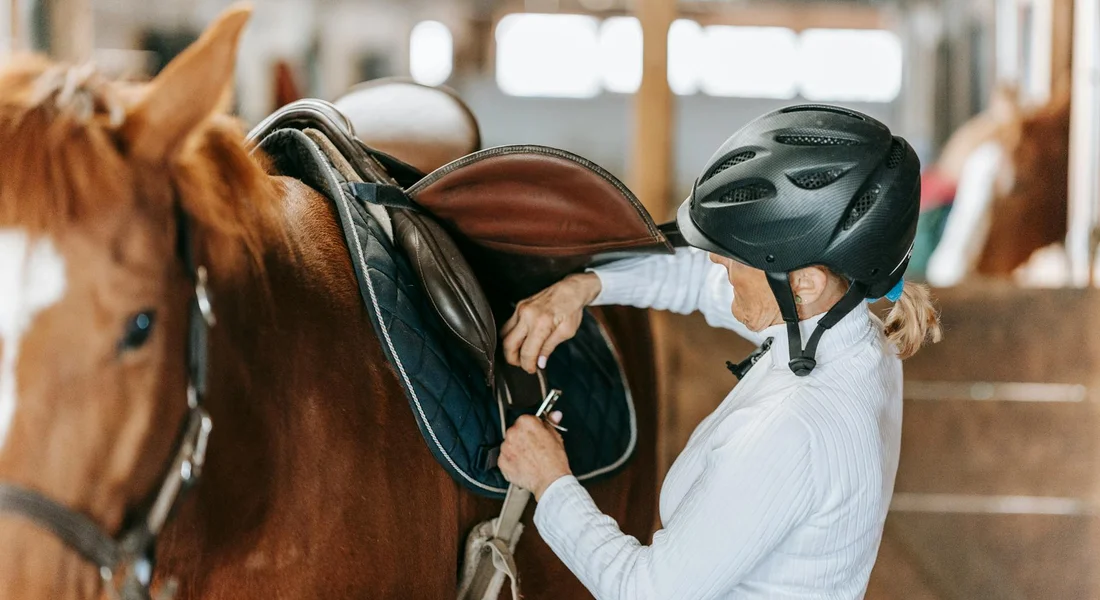
Place the saddle directly on your horse’s clean back, no pad. Step back and view it from the side. The seat should be level, not tipping forward into the withers or back toward the loin. Properly saddling a horse is essential for their comfort and your safety.
Check the clearance at the withers-you should comfortably fit two to three stacked fingers between the pommel and the top of the withers. I watch Pipin, my Shetland, walk off; if the saddle wobbles or rocks, it’s not matching his round barrel.
Use this quick position checklist:
- Tree width: The points of the tree should sit parallel behind the shoulder blades, not pinching.
- Gullet clearance: Look from the rear to ensure a clear, wide channel over the spine.
- Panel contact: There should be no visible gaps between the panel and the horse’s back along its length.
Assess fit every few months, as seasons, fitness, and age will change your horse’s shape.
Behavioral Clues: When Your Horse is Trying to Tell You Something
On the Ground: Grooming and Tack-Up
Your horse speaks volumes in the quiet moments of daily care. A poorly fitting saddle often announces itself long before you swing a leg over. I learned this with Luna, my sensitive Thoroughbred, who would subtly shift her weight away when I lifted the saddle pad. Observing your horse during grooming and tack-up is non-negotiable detective work for their comfort.
Look for these tell-tale signs as you prepare to ride:
- Skin twitching or flinching when brushed over the back or withers.
- Pinned ears or a swishing tail as the saddle is placed.
- Hollowing the back or dipping the spine when the girth is snugged.
- Turning the head to nip or stare intently at the saddle area.
- General restlessness or reluctance to stand square at the mounting block.
Even my food-motivated pony, Pipin, will ignore a treat if his saddle pinches, which is his most dramatic review. Treat any new ground-level evasion as a serious clue, not a behavioral quirk.
Under Saddle: Movement and Attitude
Once mounted, the conversation continues through movement. A horse in physical distress cannot perform willingly. My old trail partner, Rusty, once started refusing simple creek crossings, a huge red flag for a horse who only hated puddles. A change in your horse’s fundamental attitude under saddle is rarely a training issue; it’s a comfort crisis—often lameness should be ruled out first.
Watch for these performance clues:
- Resistance to moving forward freely or breaking gait unexpectedly.
- Short, stiff strides instead of fluid, swinging movement.
- Excessive head tossing, bucking, or rearing during transitions.
- Inability to bend evenly on both reins or a constant drift to one side.
- Grinding teeth, opening the mouth, or an excessively tense jaw.
The thud of hooves should sound rhythmic, not hesitant. Listen to the quality of the stride-it tells the truth about pressure points you cannot see.
How a Poor Fit Manifests in Performance
Rider Feedback: Your Own Discomfort is a Clue
Your own body is the most immediate gauge of saddle balance. If you finish every ride with a sore seat or aching knees, the problem likely isn’t you. I spent weeks blaming my posture before realizing a too-narrow tree was pitching me forward onto Luna’s neck. Persistent rider ache is a diagnostic tool, pointing directly to saddle fit.
Pay attention to these physical signals from your own body:
- Feeling perpetually crooked or fighting to stay centered.
- One-sided soreness in your seat bones, hips, or lower back.
- Constant gripping with your thighs or knees to feel secure.
- Stirrup leathers that never seem even, no matter how you adjust them.
- A general sense of being “behind the motion” or struggling to follow the horse’s gait.
A good saddle makes you feel connected and stable. Your comfort and your horse’s are a package deal. When you are constantly adjusting your position, the saddle is adjusting your horse’s spine with every shift. To build your horse’s topline without a saddle, many riders begin with off-saddle exercises that encourage lift and engagement. This approach can support a stronger topline while preserving your horse’s comfort.
Immediate Steps to Take If You Suspect a Problem
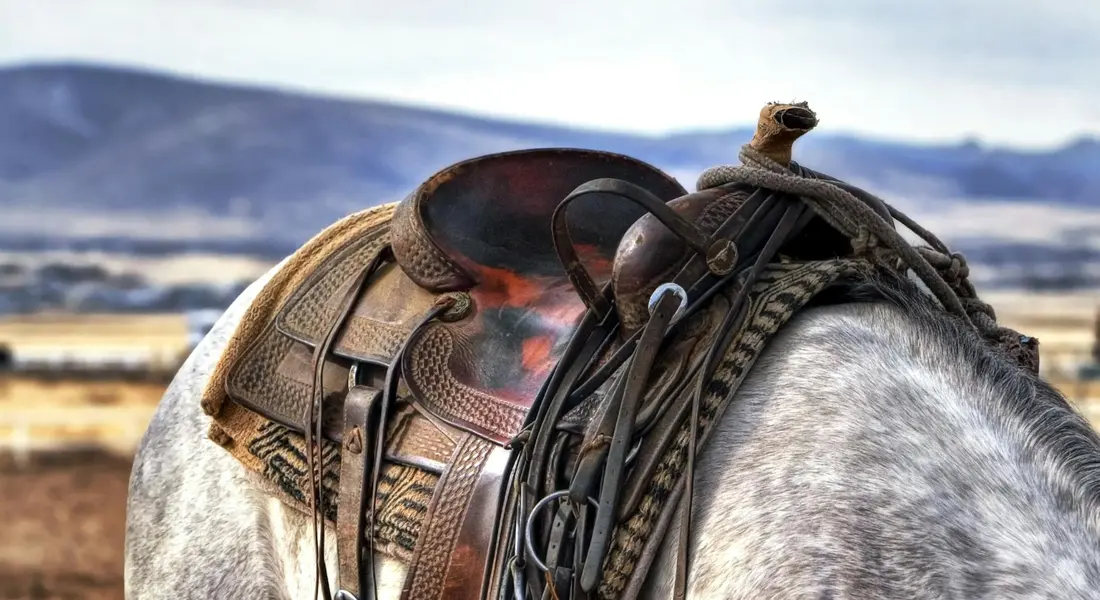
Your horse’s back isn’t just a place to put a saddle; it’s a living, changing landscape of muscle and bone. When you feel a new dip behind the shoulder or see your horse flinch at girthing, act fast. I remember the day Luna, my dapple grey, started hollowing her back the moment I approached with the saddle-it was a silent shout I couldn’t ignore.
First, halt your ride and perform a hands-on inspection right there in the aisle or arena. Feel for heat, swelling, or tight knots along the spine and withers. Look for patches of dried sweat or ruffled hair that map out pressure points.
- Pull the saddle and check its balance. Set it on a fence rail or saddle stand. Does it sit level, or does it rock like a teeter-totter?
- Run your fingers along the panels. Are they evenly stuffed, or do you feel hard, compacted spots? Uneven flocking is a common culprit.
- Watch your horse walk away. Note any stiffness, shortened stride, or a reluctance to move freely. Rusty once developed a subtle hitch in his gait that spoke volumes about a pinching tree.
This quick detective work gives you the facts you need to make a smart, safe decision for the next step.
When to Use a Temporary Pad vs. When to Stop Entirely
A temporary pad is a tool, not a trick. It’s for managing a minor, known issue for a very short time, not for masking a fundamental misfit.
You might use a quality correction pad, like a shimmable half-pad, if you have a scheduled fitting in a few days and need to do a light walk-trot school. I’ve done this with Rusty when his back muscles changed slightly with the season, using a thin foam pad just to take the edge off for our quiet trail walks.
You must stop riding completely if you see any sign of acute pain, broken skin, or major behavioral stress. This includes visible sores, significant swelling, or reactions like bucking, rearing, or total refusal to move. With a horse as sensitive as Luna, any dramatic evasion means the saddle comes off and the ride is over. Her long-term soundness is never worth one more session.
- Use a pad for: slight muscle asymmetry, a saddle that’s become a hair wide, or bridging that you’re actively addressing with a fitter.
- Stop entirely for: open wounds, pronounced lameness, severe back sensitivity, or any behavior that screams “this hurts.”
Think of a pad as a temporary spacer, not a structural fix; if the problem is in the tree’s shape or the saddle’s fundamental balance, no pad in the world will solve it.
Working With a Professional Saddle Fitter: What to Expect
Booking a saddle fitter is one of the best investments you’ll make in your horse’s comfort and your partnership. It’s not a quick tack shop adjustment; it’s a comprehensive biomechanical assessment.
A certified fitter will start by watching your horse stand square on level ground, assessing their conformation and topline without any tack on. This initial step can be complemented by equine body condition scoring to assess your horse’s overall health and weight status. They’ll palpate the back, feeling for muscle development and soreness, much like a physiotherapist would. This integrated approach helps you track changes over time and make informed management decisions.
Then comes the dynamic part. They’ll observe your horse in motion, often on a lunge line, to see how their back moves. The fitter is looking for free, fluid movement and how the shoulder rotates back—a critical space where the saddle panel must clear for the horse’s anatomy and joints to function properly.
- The saddle evaluation. They check the tree for soundness, the panel contact, and the gullet clearance. They’ll often use a flexible wire to trace your horse’s wither profile.
- The ridden assessment. They’ll watch you ride at all three gaits to see how the saddle performs under weight and motion. Be ready to trot and canter.
- The recommendations. This could range from adjusting the flocking (the stuffing in the panels), changing the gullet plate, or discussing different saddle models that match your horse’s shape.
Come ready with questions about your riding discipline, your horse’s workload, and any history of back trouble. The more context you give, the better the solution.
Preparing Your Horse for a Fitting
A successful fitting requires a cooperative and representative patient. You want the fitter to see your horse’s normal posture, not their “I just rolled in the mud” or “I’m full of beans” persona.
Give your horse a thorough grooming the day of, focusing on removing all dirt and sweat from their back, shoulders, and girth area. A layer of grime can hide the true contour of their muscles. I always spend extra time on Pipin’s broad pony back to ensure a clean slate. This is a core part of an essential daily grooming routine for a healthy horse. Sticking to it daily helps you spot changes early and keeps the coat and skin in good condition.
Manage your horse’s energy so they are calm but not fatigued. A light hand-walk or brief longing session before the appointment can take the edge off. For a high-energy horse like Luna, I schedule fittings for the afternoon when she’s had all morning to relax in her paddock.
- Clean your saddle and bring all tack you use with it-girth, pads, stirrup leathers.
- Have your horse’s recent health notes handy, like any chiropractic or bodywork they’ve had.
- Ensure the fitting area is quiet, well-lit, and has safe, level footing for lunging.
A calm, clean horse in a familiar environment allows the fitter to get an accurate read, leading to recommendations that truly work for your unique team.
Maintaining a Good Fit Over Time
Finding the perfect saddle fit is a victory, but it’s not a permanent one. Your horse’s back is a living, changing landscape, and a static piece of equipment like a saddle must be constantly re-evaluated against it. I’ve spent years adjusting tack for everything from Rusty’s seasonal weight gains to Luna’s developing topline.
Why Fit Shifts Under You
Saddle fit is a dynamic puzzle with pieces that constantly move. Changes in your horse’s musculature, weight, and even their coat thickness will directly impact how pressure is distributed from the saddle tree. Pipin the pony taught me that a few weeks of extra treats can turn a good fit into a pinchy one almost overnight.
- Muscle Development & Atrophy: Increased work builds muscle, often raising the withers and back, while layoff or aging can cause dipping. Luna’s thoroughbred frame requires assessments every time her exercise intensity changes.
- Weight Gain/Loss: Fluctuations of even 5% of body weight alter the shape of the ribcage and back. A broader back needs a wider tree.
- Seasonal Changes: A dense winter coat adds significant padding, making a saddle feel tighter. Always check fit on a horse that’s been thoroughly groomed.
- Flocking Compression: The wool or foam in your saddle panels compresses with use, reducing cushioning and changing the pressure map on your horse’s spine.
Your Proactive Maintenance Schedule
Waiting for a head toss or a sore back to signal a problem is waiting too long. Incorporate these simple checks into your regular routine to become an expert on your own horse’s shape. By learning to spot early signs of illness or injury in your horse, you can intervene sooner and maintain their well-being. Recognizing small changes now helps you act quickly and keep them comfortable. The thud of hooves during turnout is the sound of muscles changing, so your vigilance must be constant.
- Monthly Hands-On Check: Run your hand firmly down the withers and along the back after riding. Feel for any heat, swelling, or sensitivity that wasn’t there before.
- Bi-Annual Professional Fit: Schedule a certified saddle fitter to visit at least twice a year, ideally during spring and fall when routines shift. They see what we often miss.
- Post-Ride Pad Inspection: Look for uneven sweat patterns or dry spots on your saddle pad. These are clear diagrams of pressure points.
The Role of Turnout and Conditioning
Gentle horsemanship means building a horse from the ground up, literally. Consistent, free movement in turnout is the best foundation for a strong, symmetrical back that can comfortably carry a saddle. I prioritize it above almost all else in my barn management. Watching Rusty wander and graze keeps his older back supple and his muscles engaged, which preserves his saddle fit far longer.
A horse’s core strength directly supports the saddle. Incorporate ground work and correct riding to develop topline muscles evenly, preventing one-sided saddles and asymmetrical pressure. Luna’s sensitivity demands this balance; if her work is lopsided, her discomfort with the saddle is immediate and obvious.
Caring for the Saddle Itself
The saddle ages and wears just like your horse does. Leather trees can warp with humidity or impact, and internal structures fatigue, making regular saddle maintenance a non-negotiable part of equine welfare. Have a master saddler inspect the tree and re-flock the panels every 1-2 years for an active horse. The creak of old leather shouldn’t come from a twisted frame.
FAQ: Spotting a Poorly Fitting Saddle
How do I properly check for wither and spine clearance?
Place the saddle on your horse’s bare back and look from the side; the pommel should clear the withers by about two to three finger widths. View from behind to ensure the gullet channel provides clear, even space along the entire spine without any contact. A saddle that touches or presses along the spine or withers is a primary cause of pain and injury.
What does ‘bridging’ look like, and why is it bad?
Bridging occurs when only the front and back of the saddle panels make contact, leaving a gap under the middle section. You can often spot this in sweat patterns as dry patches under the center of the saddle after a ride. This creates extreme pressure points at the front and rear, preventing the saddle from distributing weight evenly and comfortably.
Can a saddle fit change if my horse seems uneven under saddle?
Yes, a consistently uneven feel, like your horse always drifting to one side, can indicate a twisted saddle tree or panels that don’t match your horse’s asymmetry. First, rule out other causes like dental issues or lameness with your vet. A professional saddle fitter can assess if the saddle itself is causing or exacerbating the crookedness.
Your Horse’s Comfort is the Best Fit Check
Check your saddle’s fit every few months, as your horse’s shape changes with work, age, and seasons. The single most reliable step you can take is to have a qualified saddle fitter assess your tack at least twice a year.
Take your time with this process, as rushing a solution often creates new problems. The best indicator of a good fit isn’t a checklist, but a happy, moving freely underneath you.
Further Reading & Sources
- 15 signs your saddle doesn’t fit – negative behaviour in your horse – Horse Blog | The Saddle Bank
- English Saddle Fitting Guidelines – Dover Saddlery
- Check the fit of your saddle – 7 simple steps – Horse Blog | The Saddle Bank
- 5 Signs of Saddle-Fit Issues (and a Solution!) – Horse and Rider
At Horse and Hay, we are passionate about providing expert guidance on all aspects of horse care, from nutrition to wellness. Our team of equine specialists and veterinarians offer trusted advice on the best foods, supplements, and practices to keep your horse healthy and thriving. Whether you're a seasoned rider or new to equine care, we provide valuable insights into feeding, grooming, and overall well-being to ensure your horse lives its happiest, healthiest life.
Equipment