
Positive Reinforcement Horse Training: The R+ Guide for Trust and Results
Hello fellow equestrians. Is your training session a battle of wills, leaving you both frustrated and worried about safety? That feeling when your horse pins its ears or spooks at a plastic bag is a real signal that your current methods might not be building the partnership you want.
Let’s talk about a different path. This guide will give you the tools to shift from pressure to partnership. We will cover:
- The simple, science-backed definition of positive reinforcement that goes beyond handing out snacks.
- How to start with a clear marker signal, turning confusion into confident communication.
- Practical steps to teach basic behaviors and solve common problems like trailer loading or hoof handling.
- How this approach nurtures a willing attitude, putting your horse’s mental welfare first.
I’ve managed barns and trained horses for over a decade, using R+ to help everyone from reliable Rusty to clever Pipin learn with curiosity instead of coercion.
Understanding Positive Reinforcement: The Basics of R+ Training
Think of positive reinforcement like a favorite squeaky barn door. Your horse learns that a gentle nudge makes it open, revealing lush pasture. The core idea is simple: behaviors that are rewarded get repeated, building a language of ‘yes’ between you.
Positive reinforcement means adding a pleasant consequence, like a carrot chunk, to strengthen a behavior. Negative reinforcement removes pressure, like ceasing leg aid when your horse moves forward. R+ training focuses on what your horse earns, not what he avoids, making him an active participant in his learning.
Timing is your most critical skill. The reward must follow the desired behavior instantly, so your horse makes the correct connection every single time.
Operant Conditioning Made Simple
Operant conditioning is how animals learn from consequences. It has four quadrants, but we champion R+. Using rewards builds a curious and cooperative horse, not one who acts just to stop an annoyance.
| Scenario | Positive Reinforcement (R+) | Negative Reinforcement (R-) |
|---|---|---|
| Leading Politely | You give a treat the moment the horse walks beside you on a loose lead. | You release pressure on the lead rope when the horse steps forward. |
| Hoof Handling | You offer a peppermint after the horse lifts his foot calmly for cleaning. | You stop tapping the cannon bone once the hoof is lifted. |
R+ creates a memory of ‘good thing happened when I did that,’ which is a powerful motivator for any horse.
Why Reward-Based Training Supports Welfare
This method directly reduces stress and fear. Horses become willing partners, not compliant subjects. I pair all my R+ work with ample turnout, because a horse who can just be a horse is a better student.
Watch your horse’s posture during a session. Soft eyes, a lowered head, and a quiet sigh signal a learning brain free from anxiety. By learning to read these cues, you can tell if your horse is happy and relaxed. It also helps you respond appropriately during training.
I remember early sessions with Luna, my high-strung Thoroughbred. Using treats for calm standing, I saw her tense neck muscles finally relax, a change more telling than any perfect maneuver.
Core R+ Techniques: Clicker Training, Targeting, and Shaping
These three techniques are your primary tools. They turn training into a clear conversation, eliminating guesswork for your horse. For beginners, a guide to using clicker training with horses can be a helpful next read. It shows how to apply these ideas step by step with a clicker and rewards.
-
Clicker Training: Uses a distinct sound to ‘mark’ the exact behavior you will reward.
-
Targeting: Teaches your horse to touch an object, guiding his focus and feet.
-
Shaping: Rewards small steps toward a larger goal, building complex behaviors.
Clicker Training: Your Precision Marker
The clicker is a promise marker. You must first ‘charge’ it so the sound predicts a reward is coming.
-
With your horse relaxed, click and instantly give a treat. Repeat this 10-15 times until his ears flick toward you at the sound. This simple step is part of teaching your horse basic ground manners, setting the stage for safer, more confident handling.
-
Practice in different spots-the cross-ties, the paddock. Short, frequent sessions work far better than marathon ones.
-
Begin marking simple behaviors, like standing still. The click ends the behavior; the treat is the paycheck.
A common mistake is clicking without an immediate follow-up reward. That breaks the promise and undermines the entire system.
I used a clicker with Pipin to teach him to wait on a rubber mat. Now that clever pony stations himself there for grooming, keeping his busy feet in one place.
Target Training for Focus and Movement
A target can be a stick with a ball on end or even your open hand. It gives your horse a specific job for his nose, which directs his brain and his body.
To teach targeting, follow these steps.
-
Hold the target near your horse’s nose. Click and reward any investigative sniff or glance.
-
Wait for an actual nose touch, then mark and reward. Soon, he’ll actively seek out the target.
-
Move the target to guide him a step sideways or forward. This turns leading into a game of follow-the-target.
Targeting is brilliant for desensitization. Ask your horse to touch a target near a scary object, like a new blanket; he learns to investigate instead of flee.
Shaping: Building Behaviors Piece by Piece
Shaping is the art of rewarding approximations. You celebrate the journey, not just the destination.
To shape a behavior like backing up, you would first reward a slight weight shift back. Next, you wait for one hoof to step back, then two, building the full sequence.
Keep these principles in mind.
-
Reward the smallest try. Break every skill down into cookie-sized pieces for your horse to digest.
-
Avoid overusing lures. Lure with a treat to start, but fade it quickly so the behavior comes from his own choice.
-
Patience is non-negotiable. Let your horse problem-solve; his ‘aha!’ moment is the best reward for you both.
I shaped Rusty to back from a light chest touch. We started with a treat for just leaning away, and now he steps back smoothly, a testament to building confidence one click at a time.
Getting Started with Your Horse: A Step-by-Step Plan
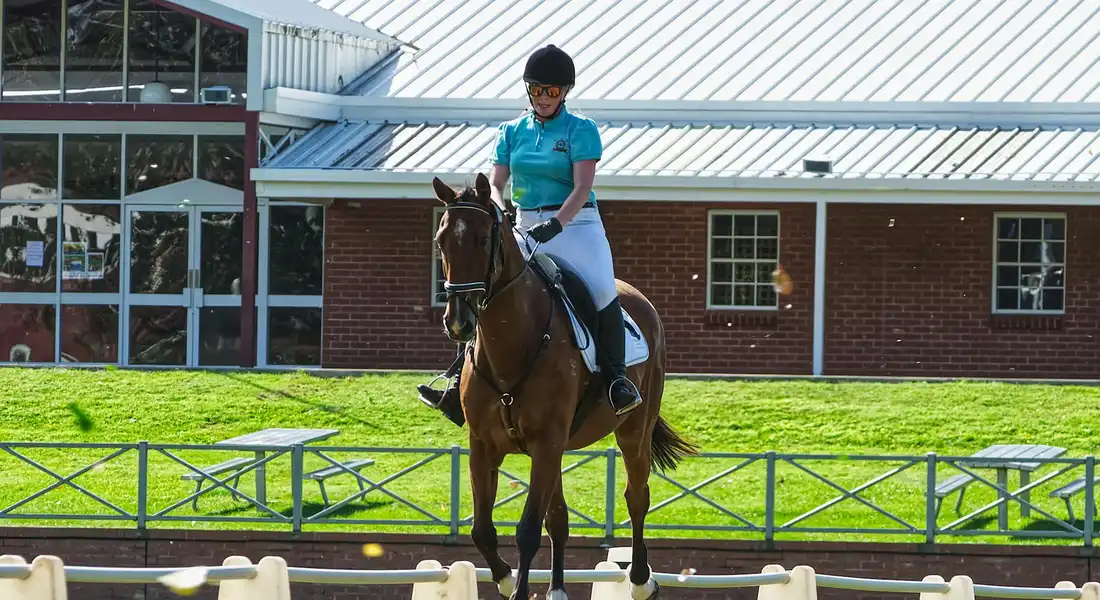
Jumping into positive reinforcement feels like leading a curious horse into a fresh, green pasture for the first time. You want the experience to be calm, inviting, and free of pressure. This numbered plan sets the foundation for trust and clear communication from the very first session.
- Gather your rewards in a small pouch before you even catch your horse. This prevents fumbling and keeps your focus on them.
- Select a quiet, familiar environment like a spacious stall or a calm corner of the paddock. The thud of hooves from a distant ride or the clang of a gate can shatter a beginner’s concentration.
- Set a timer for five minutes. Short, sweet sessions prevent mental fatigue and keep your horse hungry for more interaction.
- Watch for a simple success, mark it, reward it, and then stop. Ending on a high note is more important than checking off a training goal.
Your horse’s willingness to participate tomorrow depends entirely on how you finish today.
Choosing and Delivering Rewards Effectively
Rewards are not bribes; they are clear information about what you liked. The type and delivery matter as much as the timing.
- Food rewards: Think small pieces of carrot, chopped apple, or plain hay pellets. I keep a mix in my treat pouch for variety.
- Scratches: A firm rub on the withers or where the mane meets the neck can be pure gold for some horses. Rusty would trade a carrot for a good scratch any day.
- Rest: For a sensitive soul like Luna, the reward of stopping and taking a deep breath together is incredibly powerful.
Always offer food from a flat, open palm to teach polite manners and protect your fingers from an eager muzzle. I learned this after Pipin nearly took my thumbnail with a strategically aimed nibble.
Reserve high-value treats like peppermints for major breakthroughs and use low-value options like oat flakes for daily training to maintain steady motivation without overfilling their bellies.
Your First Session: Building the “Yes!” Moment
Your first goal is not to teach a trick, but to build a shared language. This five-step sequence creates that “aha!” moment for your horse.
- Charge the marker. Stand calmly and pair your chosen sound-a click or a word like “nice!”-with a treat. Do this ten times in a row. The sound itself should become good news.
- Reward for simple attention. The instant your horse flicks an ear toward you or makes eye contact, mark and treat. You are rewarding engagement, not just obedience.
- Introduce a target. Hold out a closed fist or the end of a traffic cone. When their nose touches it, mark and reward. This builds focus and is the first step toward guiding movement.
- Capture a calm behavior. Simply wait. When your horse stands with a relaxed posture or lowers its head, mark that exact moment and deliver the reward. Let them figure out what earned the click.
- End the session. After one clear success, give a final reward, put your clicker away, and just stand together. A soft sigh or a relaxed lick of the lips tells you the session was a win.
Reading the subtle shift in body language-a softening eye, a dropped head-is your real-time report card on the session’s success.
Common R+ Training Mistakes and How to Fix Them
Everyone makes mistakes; it’s how you untangle them that counts. Think of these fixes like calmly sorting out a knotted lead rope-frustration only makes the knots tighter.
- Poor timing marks the wrong behavior. The fix is to practice your click without the horse. Click the moment a leaf hits the ground or your foot lands on a stair.
- Accidentally reinforcing pushiness or nervousness. If you click when your horse spooks, you reward the spook. Fix it by marking only the behavior you want, like a moment of stillness after the jump.
- Causing frustration by raising criteria too fast. This is like asking for a flying lead change before the horse understands leg yield. Fix it by breaking every task into tiny, achievable steps and celebrating each one.
A frustrated horse isn’t learning; they are just waiting for the session to be over, so always prioritize their emotional state over your training agenda. This is especially important when doing any methods as it is the foundation of how horses learn.
Timing Troubles and How to Improve
Your marker is a camera shutter, not a commentary. It must capture the behavior the instant it happens, not a second before or after.
Practice your timing in daily life by clicking or saying your marker word for simple actions you see, like a bird landing or a door closing. This builds the muscle memory you need when with your horse.
When I worked with Luna on accepting a fly spray bottle, my click had to be laser-fast. I marked the exact micro-second her head stopped swinging away, not when she finally stood still. That precise feedback taught her that curiosity, not fear, paid off.
Navigating Food Motivation and Manners
Yes, you can use food without creating a monster. It’s all about setting clear rules from the start, just like you do with stall feeding times.
- Use a dedicated treat pouch worn on your belt or hip. This keeps your hands empty for signals and prevents horses like Rusty from mugging your pockets.
- Teach a simple “wait” or “back” cue early on. Reward the horse for taking a single step back from your space, building on that to create polite manners around food.
- Blend in non-food rewards regularly. A soothing scratch, a walk break, or even the chance to just gaze at the pasture reinforces good behavior without always using treats.
Incorporating breaks for free movement and turnout is a profound reward that honors their need for locomotion and social contact, reinforcing your role as a provider of good things, not just a treat dispenser.
Essential Tools for Positive Reinforcement Training
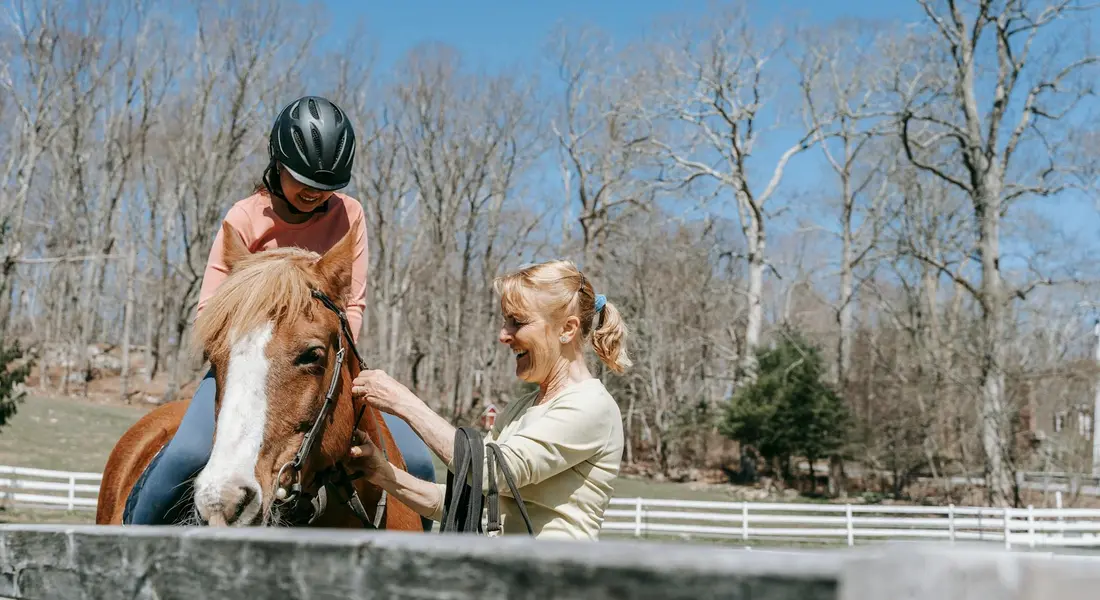
Gathering your gear for positive reinforcement is easier than organizing a tack room. You only need a few key items to start communicating clearly with your horse, and none require a big investment.
I keep my kit in an old bucket by the door, ready for spontaneous sessions after turnout. Here is your core shopping list.
- Clicker: This small plastic box makes a consistent “click” sound to mark the exact moment your horse does what you asked.
- Target Stick: A retractable stick or even a capped PVC pipe teaches targeting, giving your horse a clear, physical point to focus on.
- Treat Pouch: A simple waist-worn bag keeps rewards handy, your hands free, and prevents eager muzzles from diving into your pockets.
- Rewards: High-value treats your horse will work for, which we will cover in detail next.
An optional upgrade is a multipocket training vest. My stained canvas vest has seen years of service, holding clickers, treats, and a hoof pick through countless sessions with Pipin, our resident escape artist.
Selecting a Marker: Clickers vs. Verbal Cues
Your marker signal is like a camera shutter, capturing the precise behavior you want to reward. Choosing the right marker depends on your consistency and your horse’s sensitivity.
| Marker Type | Pros | Cons |
|---|---|---|
| Clicker | Sound is identical every time. It is clear and cuts through barn distractions. Ideal for beginners. | You must have it with you. It can be dropped or forgotten. |
| Verbal Cue (e.g., “Yes” or a tongue click) | Always available. No extra gear. Useful for quick, informal training. | Tone and timing can waver with your mood. Less precise for fine-tuning behavior. |
I advise all newcomers to start with a clicker. Its sharp, mechanical sound gave Luna, my high-strung Thoroughbred, the unambiguous feedback she needed to build confidence. You can always transition to a verbal cue later.
Treat Options: From Hay Pellets to Apple Slices
Think of treats as your training budget, not candy. Smart reward choices keep your horse healthy and motivated without spoiling their dinner.
I adjust treats based on the horse and the lesson. For Rusty, who watches his weight, low-calorie options are key. Here are my barn-tested favorites.
- Hay Pellets or Cubes: These are low-sugar, high-fiber, and mimic their natural diet. Soak them for seniors.
- Chopped Carrots or Apple Slices: Cut them into tiny pieces to prevent choking and prolong your session.
- Commercial Training Treats: Seek out brands with limited ingredients and no added sugars.
- Plain Cheerios or Rice Krispies: These are light, crunchy, and often a novel, high-value reward.
- Peppermints: Use these sparingly for major breakthroughs, but check for sugar-free versions.
For horses with metabolic issues, use their regular soaked hay pellets as rewards. In positive reinforcement, treats are a planned part of daily rations, not an extra that leads to an overweight partner. These practices align with equine nutrition basics that support feeding for optimal health and performance. Understanding basic nutrition helps balance calories and nutrients to sustain performance.
The Science and Benefits of R+ for Equine Learning
Positive reinforcement works because it aligns with how a horse’s mind already operates. We are not imposing our will but inviting their participation using a language they understand: cause and effect.
This method reduces fear and builds curiosity. The benefits are real and profound. You will see trust deepen, anxiety melt away, and a problem-solving partner emerge. This is gentle horsemanship in action, where learning feels like play and respect is earned, not demanded.
How Horses Learn: Motivation and Memory
Horses are brilliant at connecting dots. Their learning is driven by immediate consequences, making timing your most powerful tool.
When Pipin touches a target and gets a click followed by a treat, he links those three events. Use clear, consistent cues and reward every correct response initially. Later, you can reward unpredictably, which actually strengthens the behavior and keeps their attention sharp, like a game they want to keep playing.
Their memory for positive events is strong. I have seen Rusty walk over to the target stick days after a session, clearly remembering the fun.
Building a Confident Partner: Welfare Outcomes
Training without conflict produces a relaxed and willing horse. When you replace pressure with invitation, you build a volunteer, not a conscript.
This mental state translates directly to safer handling and better performance. A calm horse thinks, while a stressed horse reacts. I measure success by the soft blink of an eye, the low sigh, and the eager walk toward me in the paddock. That calm, measured approach also helps stop bucking and steady a stressed horse before it escalates. With patience and consistent handling, you guide the energy toward calm cooperation rather than resistance.
Groundwork becomes a dialogue, and riding evolves from that foundation of mutual understanding. It turns daily care into a partnership that honors the horse’s mind as much as their body.
Applying R+ to Daily Care and Riding
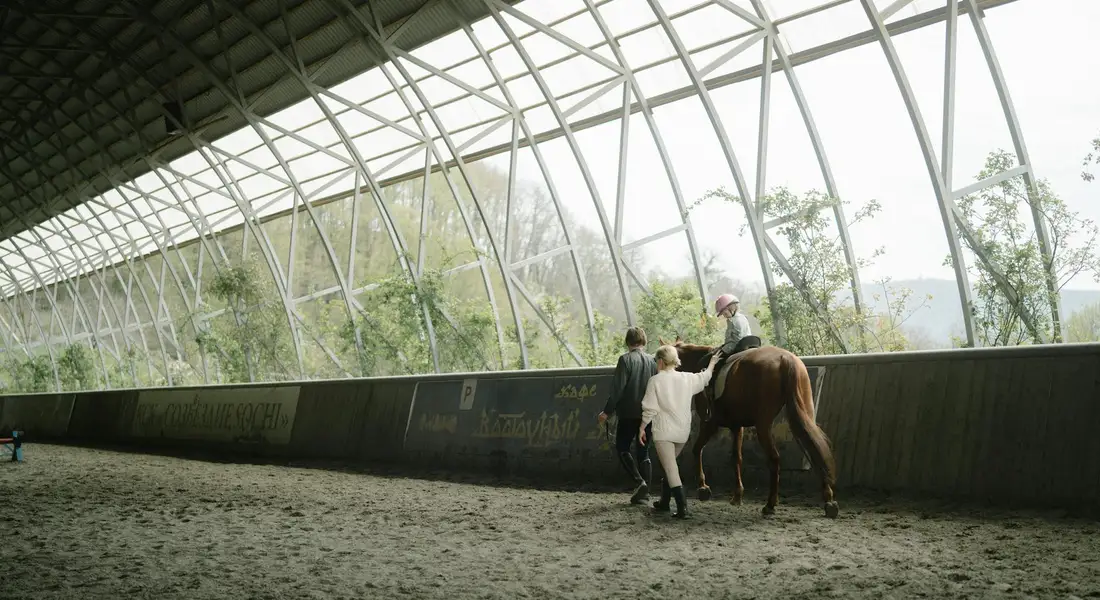
Positive reinforcement weaves itself into the fabric of your daily routine, turning necessary tasks into games your horse wants to play. The click of a marker or a cheerful “yes” can transform hoof picking from a struggle into a cooperative puzzle. I build these moments into every interaction at my barn, from filling water buckets to tightening the girth. It’s about looking for the behaviors you want and making them worthwhile for your horse.
Consider these common scenarios where a well-timed reward changes everything.
- Grooming: Mark and reward moments of relaxed stillness, especially for ticklish areas. With Pipin, I click when he stands quietly for the curry comb on his belly, followed by a oat cube.
- Hoof Handling: Teach your horse to offer his foot by rewarding the slightest weight shift. This turns a farrier visit from a wrestling match into a series of clear, rewarded choices.
- Trailer Loading: Reward every forward thought. For Rusty, who hated the dark void, we celebrated each sniff of the ramp, then one foot on, then two. Now he walks on for his grain.
- Under-Saddle Cues: Use a marker from the saddle to pinpoint the exact second your horse responds correctly to your leg or seat. This clarity is a game-changer for refining aids.
The goal is to make your horse an active participant in his own care. When he learns that calm cooperation unlocks good things, vet visits and grooming become significantly less stressful for everyone involved.
Gentle Handling for Grooming and Vet Care
Shaping is your best friend for teaching patience. You reward small approximations of the final behavior, like standing for clipping. I spent weeks using this method with Luna, who viewed clippers as giant, buzzing monsters; now she dozes while I tidy her feathers. The key is to never force. Let the horse tell you when he’s ready for the next step.
Follow this numbered sequence to teach a calm hoof pick, starting from scratch.
- Stand beside your horse in a quiet stall or paddock. Gently touch his shoulder. The instant he stands still without moving away, mark with a click or “yes” and give a treat.
- Over several sessions, slowly slide your hand down his leg. Mark and reward any tolerance of your touch near the knee or cannon bone.
- Apply a faint, downward pressure on the back of his pastern. If he shifts his weight or even thinks about lifting, mark that intention and reward generously.
- The first time his hoof clears the ground, even an inch, mark it enthusiastically! This is the big breakthrough. Follow with a high-value reward like a carrot piece.
- Hold the hoof for only a heartbeat, then release. Gradually, over many sessions, increase the hold time before your marker and reward. Always release before he struggles.
This process respects the horse’s autonomy and builds real trust. Rushing creates fear, but rewarding each tiny “try” builds a solid foundation for a lifetime of easy care.
Incorporating R+ Under Saddle
Bringing R+ into riding requires a safe, thoughtful setup. It’s about communication, not correction. For safety, always start with a skilled ground person who can deliver treats while you remain focused on riding. I practice this in a enclosed arena, often with Luna as my willing-if occasionally spooky-partner.
Choose one simple cue to clarify, like asking for a halt from a walk. As you apply your seat and rein aids, the moment she takes that first step into halt, use a clear marker sound from your voice. Then, have your ground person offer a reward. This instant feedback helps her understand exactly what she did right, making the cue more precise and light.
For transitions, the same principle applies. Asking for a trot, I’d mark the precise lift of her shoulders into the new gait, then reward after a few strides. It turns riding into a dialogue. The thud of hooves in a new rhythm becomes a sound we both celebrate, not just a response to leg pressure. This method is powerful for sensitive horses, as it replaces escalation with information and partnership.
Frequently Asked Questions About Positive Reinforcement Horse Training
How much does hiring a professional R+ trainer cost?
Costs vary based on the trainer’s experience, your location, and whether sessions are private or group-based. Initial consultations may range from £80-£150, with follow-up sessions typically costing less. Investing in a qualified trainer provides personalized guidance to build a strong foundation, ultimately saving time and preventing common mistakes in your R+ journey.
What are the best books for learning about positive reinforcement horse training?
Excellent foundational books include “The Click That Teaches” by Alexandra Kurland and “Don’t Shoot the Dog!” by Karen Pryor, which explains the core principles of reinforcement. For practical step-by-step guides, consider “Connecting with Horses” by Peggy Hogan or “Teaching Horses with Positive Reinforcement” by Katherine Bartlett. These resources offer deep dives into the theory and application you can explore beyond this introductory guide.
How do abiotic factors like weather or the training environment affect an R+ session?
Abiotic factors such as high winds, extreme heat, or a distracting environment can significantly impact your horse’s ability to focus and learn. It is crucial to adapt your session by choosing a sheltered, familiar area and keeping training very short and simple under challenging conditions. Consistent, quiet settings help your horse feel safe and secure, which is essential for successful positive reinforcement learning.
Final Thoughts from the Stable
Keep your R+ sessions short and focused, using a clear marker signal followed by a high-value reward to shape behaviors. Success depends entirely on your timing and consistency, turning simple interactions into a shared language of trust.
Progress might come in small steps, so celebrate each try and always put your horse’s emotional safety first. The most powerful tool in your tack room is your ability to listen and respond to what your horse is telling you about their behavior and psychology.
Further Reading & Sources
- The Power Of Positive Reinforcement For Horses
- Positive reinforcement training : r/Horses
- Two Ways I Use Positive Reinforcement Training in My Competitive Event – NOËLLE FLOYD
- Positive Reinforcement Horse Training from a Dog Trainer’s Perspective – IAABC FOUNDATION JOURNAL
At Horse and Hay, we are passionate about providing expert guidance on all aspects of horse care, from nutrition to wellness. Our team of equine specialists and veterinarians offer trusted advice on the best foods, supplements, and practices to keep your horse healthy and thriving. Whether you're a seasoned rider or new to equine care, we provide valuable insights into feeding, grooming, and overall well-being to ensure your horse lives its happiest, healthiest life.
Behavior