
How to Build Horse Jumps for Training: Save Money and Boost Your Horse’s Confidence
Hello fellow equestrians. Watching your horse hesitate at a wobbly, store-bought jump? Worried that a cheap construction might splinter or collapse, leading to a vet call and shaken trust? I’ve felt that same knot in my stomach when a poorly built standard tipped over with a thud, startling my good-natured gelding Rusty.
Today, I’ll show you how to craft safe, sturdy jumps that make training rewarding for both of you. We’ll walk through selecting affordable, durable materials from your local hardware store, constructing bases that won’t slip on grassy or uneven footing, adjusting pole heights easily for any skill level, and incorporating creative fillers to keep your horse mentally sharp.
From managing a busy lesson barn to training my own sensitive Thoroughbred, Luna, I’ve built countless jumps that prioritize safety, horse welfare, and your peace of mind.
Gathering Your Jump-Building Toolkit
Core Materials for Rails and Standards
Choosing your materials wisely sets the stage for safe, durable jumps. I’ve learned through trial and error in my barn that the right wood or PVC can mean the difference between a confidence-building lesson and a scary moment.
Here’s a breakdown of your best options:
- Pressure-Treated Lumber: My default for permanent standards and rails. Use 4×4 or 6×6 posts for uprights and 2×6 boards for rails. Always opt for “ground contact” rated wood-it resists rot from arena moisture and pasture dampness. Sand all edges until completely round.
- PVC Pipe: Perfect for lightweight gallop poles or beginner cavaletti. Schedule 40 PVC in 4-inch diameter is visible and forgiving. It’s the only pole my pony Pipin hasn’t managed to dent. The main drawback is it can feel too light and bouncy for some horses.
- Metal Poles: Aluminum or steel offers a professional, solid feel. Ideal for a fixed course. Ensure every edge is rolled or capped; a sharp corner is an accident waiting to happen.
Standard rail length is 10 to 12 feet. This gives enough width for a straight approach, preventing horses from cutting corners. Source materials from local lumberyards or equine suppliers-sometimes you can find good scrap wood, but inspect it thoroughly first.
Essential Hardware and Safety Padding
Hardware secures your jumps, but padding protects your horse. After Luna once scraped her fetlock on an unpadded rail, I made rubber wrapping a non-negotiable rule.
Your shopping list should include:
- Jump Cups: Plastic or rubber-coated metal cups that allow the rail to release. Secure them with sturdy steel pins or bolts. Cheap cups can bend or break, dropping a rail unexpectedly.
- Galvanized Screws & Eye Bolts: Use these for assembling standards and creating anchor points. Drill pilot holes first to prevent the wood from splitting under pressure.
- Rubber Padding: Old garden hose split lengthwise or commercial jump guards work. Wrap all rail ends and any protruding hardware. This muffles the terrifying clatter if a pole is hit, keeping both horse and rider calm.
Run your hands over every finished component. If you feel anything sharp, file it down until it’s smooth. Safety is in the details.
Step-by-Step: Constructing Your First Training Jumps
Building a Simple Ground Pole or Cavaletti
Start with a ground pole; it’s the perfect introduction for any horse. I use these every day to establish rhythm before asking for more, especially when teaching basic ground manners.
- Select a straight 10-foot 2×6 board or a 4-inch PVC pipe.
- Sand the entire surface vigorously. Pay special attention to the ends. Your goal is a surface smooth enough to run a bare hand over without a catch.
- Seal wood poles with an exterior-grade polyurethane. For PVC, a quick wash is enough.
- For a cavaletti, attach X-shaped legs made from 2x4s at each end. Ensure the leg span is wider than the pole to prevent easy tipping.
PVC poles are my go-to for trot or canter lane work. They’re light enough for me to move solo but substantial enough to give Rusty a clear visual guide.
Assembling an Adjustable Vertical Jump
A solid vertical teaches respect for the fence. Wobbly standards shake a horse’s trust, so stability is your top priority when selecting the right fence.
- Cut two 4×4 posts to 5 feet in height for your standards.
- Build a heavy base for each. I bolt my post to a 2-foot square of 3/4-inch plywood. Add sandbags or a concrete block to the plywood for immovable weight.
- Drill a line of 3/4-inch holes up each standard, spaced 2 inches apart, starting 12 inches from the ground.
- Insert your jump cups into the desired holes and secure with pins. Always use a pair of cups per rail to distribute the weight evenly.
- Set the standards 10-12 feet apart. Use a carpenter’s level to check that each is perfectly plumb. A level rail encourages a centered, confident jump.
Creating a Forgiving Cross Rail
The cross rail is a gentle teacher. Its shape naturally funnels the horse toward the center, making it ideal for green or uncertain animals.
Construction is straightforward:
- Take two rails of equal length.
- Secure them at the center with a heavy strap or a bolt through a pre-drilled hole. The connection should be firm but allow a slight pivot if bumped.
- Set the base of the ‘X’ about 4-5 feet wide on the ground.
- Adjust the center height to 18-24 inches for starters. This low, inviting height helps horses learn to bascule without fear.
Advancing to a Simple Oxer (Spread Jump)
An oxer introduces width, encouraging a fuller jump. Start with a simple vertical-to-vertical spread to build scope safely.
- Use two identical pairs of standards. Mismatched heights create an uneven challenge.
- Set the front rail as a vertical at your chosen height, say 2 feet.
- Place the back rail 2 to 3 feet behind it, at the same or slightly higher height. For training, keep the width equal to or less than the height to prevent overfacing.
- Double-check that all cups and pins are secure on both sets of standards. A loose back rail can swing and trip a horse on landing.
Non-Negotiables for Jump Safety and Sturdiness
Engineering for Stability: Bases and Assembly
A stable jump doesn’t distract. I design every base to be heavier and wider than seems necessary-it’s the best insurance against a spook.
Key features of a safe base:
- Substantial Weight: I fill hollow bases with sand or attach concrete blocks.
- Wide Footprint: The base should extend at least 6 inches beyond the standard on all sides.
- Non-Slip Bottom: Glue indoor-outdoor carpet or rubber matting to the base to prevent sliding.
Before any horse approaches, walk the course and physically shake each standard and rail connection. This quick check is a habit that prevents accidents. It also helps avoid common stable setup mistakes, such as loose hardware and insufficient clearance.
Designing Frangible and Forgiving Elements
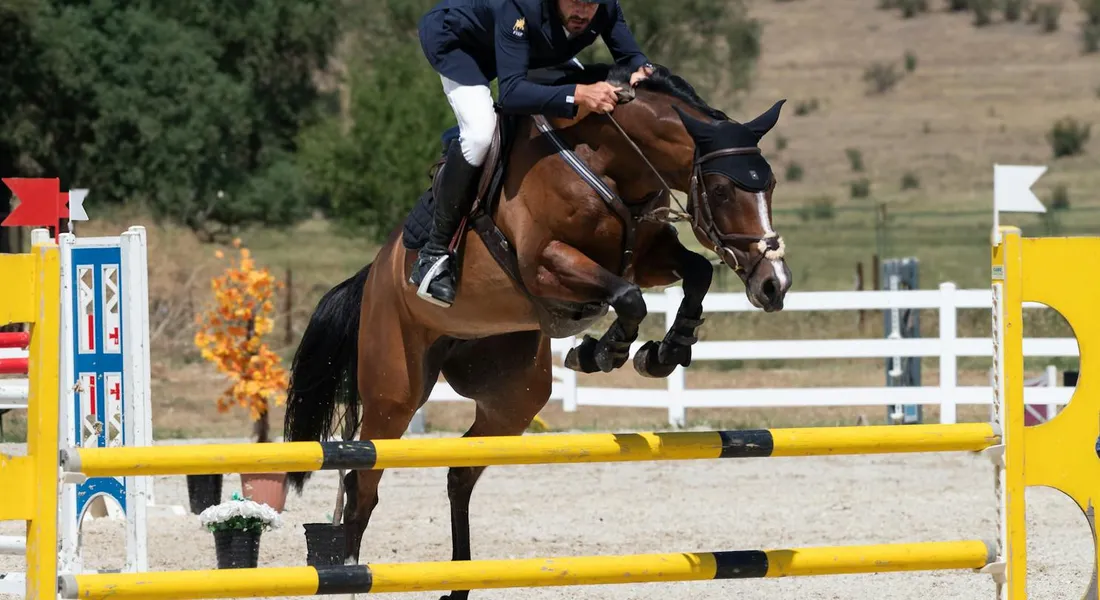
Jumps should fall, not fight. Frangible design means your equipment fails safely before your horse does. These safety requirements are part of essential horse riding regulations. They help riders and trainers prioritize safety in every jump and routine.
Incorporate forgiveness in these ways:
- Use lightweight rails like PVC that will easily knock away.
- Choose plastic jump cups that release the rail under moderate pressure. Fixed metal cups can hold a rail rigid, leading to a dangerous somersault.
- Allow rails to simply rest in the cups without additional locking mechanisms. This lets them tumble free on impact.
For a sensitive soul like Luna, forgiving jumps turn a mistake into a learning moment, not a trauma.
Designing Jumps for Different Horses and Goals
Adjustable Height Features for Progressive Training
Adjustability lets you meet your horse where they are. I raise jumps one hole at a time, often over weeks, to build confidence invisibly.
Effective adjustment systems:
- Drilled Hole Patterns: Simple, reliable, and cheap. Drill holes every 2 inches up your standard. This is the method I use on all my schooling jumps-it never fails.
- Sliding Pin Systems: Metal brackets that slide in a channel, secured with a bolt. More precise for fine-tuning but requires more maintenance.
Portable and Easy-Storage Solutions
Not all of us have a dedicated arena. Portable jumps mean you can create a training circle in any open field.
To make jumps easy to move and store:
- Build entire jumps from PVC-they disassemble into light, manageable pieces.
- Construct folding bases using hinges on plywood panels. They lay flat against a barn wall when not in use.
- Store components on a simple rack made from pallets. Keep cups and pins in a labeled bucket to avoid frantic searches.
Configuring Poles for Cavaletti and Grid Work
Gymnastic grids fine-tune stride and balance. Correct spacing is critical; a mis-measured pole can cause a stumble.
Follow these spacing guidelines for a 15-hand horse:
- Trot Poles: Place 4 to 4.5 feet apart (measured from the center of each pole).
- Canter Poles: Space 9 to 10 feet apart. Adjust for your horse’s natural stride-Rusty needs a bit more room than Luna.
For a grid, link cavaletti with ground poles in between. Use sturdy tent stakes or weights to anchor poles so they don’t roll when brushed. Always walk the distances yourself in your riding boots first.
Caring For Your Homemade Jump Course
Routine Maintenance and Weatherproofing
Wood rots, metal rusts, and PVC gets brittle. A seasonal inspection routine catches small problems before they become hazards.
My annual maintenance schedule:
- Spring: Check all wood for soft spots or splintering. Sand and reseal immediately.
- Summer: Inspect PVC for sun-bleaching and cracking. Move jumps to shade if possible.
- Fall: Look for rust on any metal hardware. Treat with a rust converter and fresh paint.
- Winter: Store all jumps completely off the damp ground. Moisture is the enemy of every jump material.
Smart Storage to Prolong Jump Life
Good storage saves money and time. An organized system means you can set up a course in minutes when the training mood strikes.
Implement these storage tips:
- Build a simple rack from 2x4s to store rails horizontally-this prevents warping.
- Keep all small hardware in a sealed, labeled container. Nothing disappears into the barn abyss faster than jump cups and pins.
- Store rubber padding in a sealed bin to protect it from sun damage and rodents who love to chew it.
Non-Negotiables for Jump Safety and Sturdiness
Engineering for Stability: Bases and Assembly
I learned the hard way with Pipin that a cheeky pony will test every bolt and bracket. Your jump’s foundation must be boringly predictable, so the horse can focus on the task, not the wobble. Think of it like building a trust-worthy fence-it should stand firm without surprise. When you jump a horse properly, rhythm and balance guide the flow, not sheer effort. The next steps will tie these ideas together.
Guidance: List features of a safe base (weight, width, non-slip surface). Advise on always checking tightness of all connections before each use.
Forget flimsy setups. A proper base has three best friends: heft, breadth, and grip. Here is what to look for every time you build.
- Weight: Bases should be heavy enough to resist a glancing blow. I use filled plastic barrels or wooden boxes with sandbags inside-nothing that tips if a horse like Luna brushes it with a hip.
- Width: A wider footprint beats a tall, narrow one. Aim for a base at least two-thirds the length of your rail; it lowers the center of gravity and prevents rocking.
- Non-Slip Surface: Rubber matting on the bottom or built-in rubber feet are game-changers. They grip the arena footing, especially on dewy mornings or after a rain.
My pre-ride ritual includes a kick-test on each standard and a visual scan of all pins and cups. Run your hands over every connection point before your horse does; a loose pin today is a bent one tomorrow. This two-minute check is cheaper than a vet call.
Designing Frangible and Forgiving Elements
Horses aren’t machines, and a rigid jump punishes honest mistakes. Frangible design isn’t about being weak; it’s about being smart enough to get out of the way. I want a rail that falls with a harmless clatter, not one that trips or spears.
Guidance: Explain how to make rails that safely knock down. Discuss using lightweight PVC or plastic cups that release, rather than rigid, unyielding constructions.
Your goal is a jump that disassembles on impact. This keeps legs safe and minds confident. Start with the rail itself.
- Lightweight woods like spruce or pine are standard, but for beginners, I often use schedule 40 PVC pipes. They’re light, cheap, and make a satisfying ‘thud’ without weight.
- Never bolt a rail directly to a standard. Instead, use open-ended jump cups or plastic safety cups that hold the rail but let it roll free when hit.
- For a homemade touch, set your cups on pins or in brackets that angle slightly outward. This encourages the rail to fall away, not straight down.
A releasing cup is a kindness to a horse learning its job, allowing for a teachable moment instead of a traumatic one. I’ve seen the difference with my thoroughbred, Luna; a forgiving rail lets her try again without fear.
Designing Jumps for Different Horses and Goals
Adjustable Height Features for Progressive Training
We don’t ask a green horse to climb a mountain in one day. Adjustability lets you scale the challenge to match the horse’s confidence, which is how trust is built, one hole at a time. My quarter horse, Rusty, appreciates the slow climb.
Guidance: Describe methods for easy height changes, like drilled hole patterns or sliding pin systems. Link adjustability to building horse confidence slowly.
The simplest system is also the most reliable: a series of pre-drilled holes in your jump standards. Space them 2-3 inches apart for fine control.
- Use a drill press for clean, straight holes to prevent splintering.
- Insert galvanized steel pins or hefty bolts through the holes to hold your cups. Always use pins with a ring or ball end so they can’t slide out unnoticed.
- For a slicker option, metal standards with sliding pin locks allow height changes in seconds without lifting the standard itself.
Start low and slow, raising the rail only when the horse hops over with relaxed ease. This methodical approach turns potential spooks into mastered skills, building a confident trail horse.
Portable and Easy-Storage Solutions
Barn space is precious, and a permanent jump course isn’t always practical. If you can’t store it easily, you won’t use it regularly, and that’s a loss for your horse’s education. My rule is simple: build for the space you have. That planning should also consider whether you meet essential horse housing land requirements on your property. Understanding those requirements helps you make the most of the space you have.
Guidance: Offer tips for making jumps lightweight or knock-down for storage. Mention materials like PVC for easy disassembly and compact stacking in a barn corner.
PVC pipe is a barn hack for portable gymnastics. It’s lightweight, rust-proof, and connectors let you build entire jump wings that twist apart.
- Construct bases from PVC frames that can be filled with water for weight and drained for storage.
- Use threaded fittings or push-to-connect joints for tool-free assembly. A full set of cavaletti can stack flat against a wall.
- For wooden jumps, design standards in two interlocking pieces that bolt together. Store them disassembled in a tidy bundle.
Keep your storage simple: a designated corner with a tarp keeps everything clean and ready for tomorrow’s session. This practicality means more turnout time and less fuss.
Configuring Poles for Cavaletti and Grid Work
Gymnastic lines are like physical therapy for horses, building strength and coordination. Proper spacing is the difference between a balanced exercise and a scrambling mess. I set poles by listening to the rhythm of the hooves.
Guidance: Provide spacing guidelines for trot and canter poles. Explain how to securely link multiple cavaletti for gymnastic lines while maintaining stability.
Measure from the back of one pole to the back of the next. This distance dictates your horse’s stride.
- For trot poles: Space them 4.5 to 5 feet apart for an average 15-hand horse. Adjust slightly based on your horse’s natural stride.
- For canter poles: Place them 9 to 12 feet apart. Start wider and shorten as your horse collects.
To link cavaletti into a steady grid, use lightweight chains or rope between standards. This keeps the alignment perfect while allowing individual elements to tip safely if struck. Secure each cavaletti base independently-don’t rely on the connection for stability. A well-set line encourages powerful, even strides without the risk of tangling.
Caring For Your Homemade Jump Course
Creating your jumps feels great, but preserving them is what keeps your horse safe and your training consistent. I learned this through seasons of mending chewed poles and replacing weather-warped planks. Just as you routinely check your horse tack equipment—saddles, bridles, and cinches—for wear, give your course the same careful eye. Treat your jump course with the same attentive care you give your tack, and it will reward you with years of reliable service.
Routine Maintenance and Weatherproofing
Your jumps live outdoors, battling sun, rain, and curious mouths. A proactive check-up rhythm prevents small issues from becoming dangerous failures. I pair my jump inspections with routine tasks like checking water troughs, making it a natural part of the barn day.
Your Seasonal Check-Up List
Go through this list at least twice a year-I do it in spring and fall when the herd’s routines change.
- Wood Rot: Knock on posts and rails with a knuckle. A dull thud signals soft spots. Use a pocket knife to pick at the wood near the ground; if it flakes away like wet cardboard, it’s time to replace. After a soggy season, I once found a standard holding Rusty’s jump had rotted straight through.
- Metal Rust: Examine every pin, hinge, and cup. Surface rust can be sanded and painted, but pitted metal is weak metal. A quick spray with a rust-converter stops the creep. I keep a wire brush and a can of paint in my maintenance bucket.
- PVC Brittleness: Lift each pole and listen for a faint crackling sound. Look for chalky white lines or a loss of flexibility. PVC left in the sun becomes as fragile as an old plastic bucket; Luna once spooked badly when one snapped under her shadow.
Never let jumps sit directly on soil or wet grass. Elevate everything on pressure-treated pallets or a bed of gravel to stop moisture from wicking up and rotting wood from the bottom. Re-seal all wooden components with a quality, non-toxic water sealant every year to guard against the elements.
Smart Storage to Prolong Jump Life
Good storage isn’t just about tidiness; it’s about respecting your equipment and your time. A chaotic pile is a trip hazard and guarantees broken parts. An organized system means you can set up a course quickly and get straight to the good part: riding.
Practical Storage Strategies
Here’s how I keep my jump yard functional, inspired by years of chasing Pipin after he dismantled poorly stored decorations.
- Build Dedicated Racks: Simple horizontal racks made from 2x4s keep poles straight and prevent warping. Store standards upright on a rack or pallet to keep their bottoms dry.
- Corral Small Parts: Use heavy-duty bins with lids for cups, pins, and wing accessories. I label mine clearly-nothing halts a training session faster than hunting for a missing pin.
- Guard Your Padding: Store decorative boxes, flower pots, and wing covers in a sealed container. Rodents love to nest in them, and the sun bleaches colors fast. A dark, dry corner of the tack shed works perfectly.
Keeping everything together and protected directly extends the usable life of your jumps. This mindful practice saves money, reduces waste, and most importantly, ensures every piece your horse approaches is solid and secure.
FAQ: How to Build Horse Jumps for Training
How to build horse jumps on a budget?
You can save significantly by using repurposed and affordable materials like PVC pipe for lightweight rails and wings. Focus on constructing simple, versatile jumps like adjustable verticals and cross-rails that can be used for many training exercises instead of specialized fences. Always prioritize safety and stability, even with budget materials, by ensuring all components are smooth, sturdy, and properly secured.
How to design horse jumps for different skill levels?
Design jumps with adjustable features, such as standards with multiple cup holes, to easily modify height and width for any horse. For beginners, use low, inviting fences like cross-rails and ground poles, while more experienced horses can tackle spreads (oxers) and varied fillers. Incorporate forgiving elements like lightweight PVC rails and safety cups that release easily to build confidence and prevent accidents during the learning process.
How to maintain and store homemade horse jumps?
Conduct seasonal inspections to check for wood rot, metal rust, and PVC brittleness, sanding and resealing components as needed. Store jumps completely off damp ground, using horizontal racks for poles to prevent warping and labeled bins for small hardware. Protect your investment by keeping decorative fillers and padding in sealed containers and ensuring all equipment is clean, dry, and organized after each use.
Building for Success and Safety
Focus on creating lightweight, forgiving jumps using materials like PVC or breakaway cups that minimize risk during a knock. As you build that foundation, you can plan for higher, longer lines used in high, far jumps. This progression should remain controlled and safe. Your primary goal is to build confidence, so every jump must be constructed to fail safely before a horse or rider ever gets hurt.
I’ve learned from years in the ring that progress hinges on patience and observing your partner. Let your horse’s posture and pace tell you when a jump is right, because their trust is the foundation of every good round. Build a strong bond through consistent care and clear communication, and trust your horse to guide you forward. When you ride as a team, every challenge becomes an opportunity.
Further Reading & Sources
- How To Build Your Own Horse Jumps – Budget Equestrian
- Building Your Own Horse Jumps (Part One)
- Jump Standards – Home Made Horse Jumps
- Building Your Own Horse Jumps (Part Two)
At Horse and Hay, we are passionate about providing expert guidance on all aspects of horse care, from nutrition to wellness. Our team of equine specialists and veterinarians offer trusted advice on the best foods, supplements, and practices to keep your horse healthy and thriving. Whether you're a seasoned rider or new to equine care, we provide valuable insights into feeding, grooming, and overall well-being to ensure your horse lives its happiest, healthiest life.
Equipment