
What Are the Signs of a Healthy Horse? Your Daily Check Guide
Hello from the barn aisle! Do you ever watch your horse and feel a flicker of doubt, wondering if that quiet stance is contentment or the first whisper of a problem? That nagging worry about missed cues, unexpected vet bills, or a sudden behavioral shift is something every responsible owner feels.
This daily guide will turn your observation into confident knowledge. We will break down the key, tangible signs of equine well-being you can spot in just minutes each day. Look for these pillars of health:
- A bright, alert expression and a coat that gleams
- Consistent enthusiasm for feed and steady water consumption
- Normal manure piles and regular urination
- Sound movement and a willingness to move freely
- Restful sleep patterns and calm, predictable behavior
My years of barn management and training, from keeping a watchful eye on Luna’s sensitive digestion to ensuring Pipin the pony doesn’t trick his way into extra grain, are built on this daily ritual of gentle, informed observation.
The Daily Check: Why Your Minute Matters
That first look as you walk down the barn aisle isn’t just about saying hello. It’s a critical surveillance scan. You’re looking for the story of their last 24 hours written in their posture, their eyes, and the state of their stall. I start every single morning with this quiet assessment before I even grab a halter. This daily minute of observation is your most powerful tool for catching small issues before they become big, expensive, and painful problems.
Listen to the barn’s symphony. You should hear the steady crunch of hay being chewed, the deep sigh of a content horse, maybe the thump of a hoof against a wall. Silence, or the constant shuffle of a pacing horse, tells a different tale. Sniff the air. The healthy barn smells like clean hay, leather, and horse. A sharp, sour odor or the smell of ammonia hints at digestive upset or a soiled stall that needs immediate attention.
Watch how they stand. A healthy horse rests a hind leg, ears flicking softly at flies. I remember noticing Pipin standing “parked out” like a show horse, but he wasn’t in a show ring-he was in his stall. That slight change from his normal slouch was my first clue to a bellyache. Understanding a horse’s body language helps you tell if they’re happy and relaxed. Those cues—soft eyes, a loose jaw, and a content stance—guide daily care as much as health checks do. Your horse’s “normal” is the only benchmark that matters, and you learn it not in a crisis, but in these daily, quiet moments.
Vital Signs: Knowing Your Horse’s Baseline
Numbers don’t lie. When your horse seems “off,” knowing their normal temperature, pulse, and respiration (TPR) is like having a secret decoder ring. I keep a small notepad in my tack trunk for each horse-Rusty’s resting pulse is different from Luna’s, and that’s perfectly okay. Take these readings on a calm, cool day when your horse is relaxed to establish your personal baseline, not just the textbook average. That groundwork also ties into understanding heart rate and respiration monitoring as part of horse fitness. Tracking these trends over time shows how training shapes conditioning.
Taking a Temperature Safely
A digital rectal thermometer with a string and clip is your best friend. A dab of petroleum jelly makes the process smoother.
- Stand safely to the side of your horse’s hindquarters, not directly behind.
- Gently lift the tail and insert the thermometer slowly.
- Hold it in place until it beeps, usually about 30 seconds.
- Clean it thoroughly with alcohol after each use.
A normal temperature ranges from 99°F to 101.5°F (37.2°C to 38.6°C). Heat, excitement, or recent exercise can cause a temporary spike. But a temperature of 102°F or higher without an obvious reason warrants a call to your vet. I check temperatures if a horse leaves their grain, seems lethargic, or has a dull coat. In addition, monitoring heart rate and other normal horse vital signs is an important part of evaluating whether a horse’s condition warrants veterinary advice.
Finding Pulse and Counting Breaths
Learning how to take your horse’s pulse provides a direct window to their cardiovascular health. The easiest place to find it is under the jawbone. Place your fingertips (not your thumb) firmly on the inside of the jaw until you feel a soft, rhythmic tap.
- Count the number of beats you feel in 15 seconds, then multiply by four.
- A normal resting pulse for an adult horse is 28-44 beats per minute.
- A fit horse like Luna might be on the lower end, while an excited or in-pain horse will be higher.
For a complete, step-by-step guide to taking your horse’s vital signs, refer to the comprehensive resource.
Respiration is even easier to track. Watch the flank rise and fall, or feel the air from their nostrils. One inhale and one exhale counts as one breath.
- Count for 15 seconds and multiply by four.
- A normal resting respiration rate is 8-16 breaths per minute.
Listen for the sound of the breath itself-it should be quiet and effortless, not a cough, wheeze, or labored groan. Panting after a workout is normal; panting in a cool stall is a red flag.
Hydration and Mucous Membranes: The Inside Story
A horse can look glossy on the outside but be running dry on the inside. Your first clue is often in their mouth and eyes. This is a daily peek into their internal health.
The Gum and Capillary Refill Check
This takes thirty seconds and tells you about circulation and hydration. I do this when I slip Luna a mint; she’s too busy savoring it to fuss about me lifting her lip.
Healthy gums are a soft, bubblegum pink and feel slick and wet to the touch. Dry or tacky gums can signal dehydration. Press your thumb firmly against the gum above a front tooth for two seconds, then release. You’ll see a white thumbprint that should blush back to pink within one to two seconds. This is the capillary refill time.
What you’re looking for (and what you’re not):
- Ideal: Pink, moist gums with a 1-2 second refill.
- Warning Sign: Bright red or dark red gums can indicate toxicity or severe inflammation.
- Emergency: Pale, white, blue, or purple gums require an immediate call to the vet.
- Tip: If your horse is head-shy, try rubbing the gum gently with a carrot tip first to get them used to the sensation.
Monitoring Water Intake
Horses drink 5 to 10 gallons a day, more in heat or with hard work. You can’t watch them sip all day, but you can outsmart them with simple tricks. Knowing how much water a horse needs daily is essential for their health.
The most reliable method is to mark your buckets in the morning with tape or a chalk line and note the level again at night. A sudden drop or increase can be a silent alarm bell. Rusty, for instance, will practically drain a trough after a long trail ride, but if he left it untouched on a cool day, I’d be worried.
- Listen for the sound of regular drinking during your barn time.
- Check for wet whiskers and drips on the chest as clues.
- In winter, ensure water heaters are working; ice-cold water discourages drinking.
- Watch for “playing” in water-a horse who mouths it but doesn’t swallow may have dental pain.
A dehydrated horse is a horse in crisis, as their massive digestive system requires a constant flow of fluid to function and prevent colic. It’s one of the most vital daily checks you can do — especially knowing how to tell if your horse is dehydrated to ensure their wellbeing.
Appetite and Digestion: The Gut Check
A horse’s world revolves around forage. Their digestion is a finely-tuned, continuous conveyor belt. When that belt stops, trouble starts fast.
I start my day with a visual scan of each stall and paddock. Is there leftover hay from the night? Has Pipin hoarded his in one corner? Is Luna’s pile untouched, a sign her mind is elsewhere? A horse off their feed is a horse telling you something is wrong.
The rhythm of their eating is as important as the amount; a healthy horse approaches meals with steady, eager interest. That moment of shared quiet in the morning, hearing nothing but the sound of contented chewing, is the barn’s best soundtrack.
Assessing Manure and Urine
This isn’t glamorous, but it’s a non-negotiable report card. Make a habit of noticing the piles as you muck or walk the pasture.
Healthy manure should be:
- Formed into moist, greenish-brown balls that break apart upon hitting the ground.
- Produced 8-12 times a day, depending on forage intake.
- Free of strong, foul odor.
What to be concerned about:
- Very dry, hard balls or cow-patty diarrhea.
- Undigested, long pieces of hay or whole grain.
- Mucus, blood, or an unusually gritty texture.
- A complete absence of new manure over several hours.
Urine should be pale yellow to deep amber, like apple juice. Watch for straining, dribbling, or a horse repeatedly posturing to urinate without producing much, which can signal a urinary tract issue or, in mares, a potential infection. Reddish or brown urine is a vet call. Remember, what goes in must come out, and tracking the “out” is your frontline defense.
Coat, Weight, and Body Condition: The External Glow
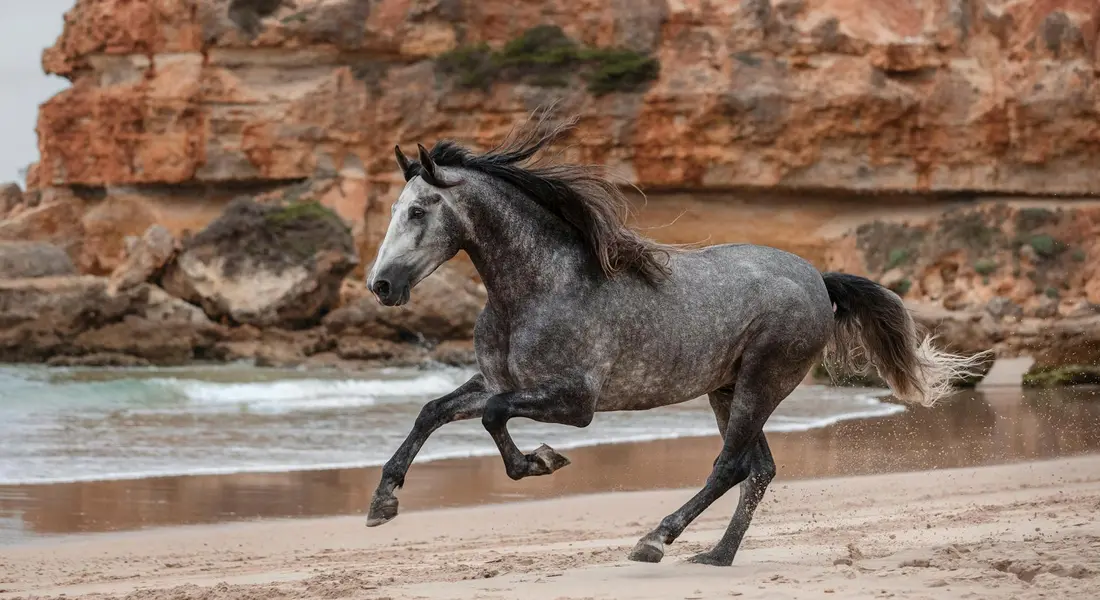
Run your hand over your horse’s side. A healthy coat should feel smooth and lie flat, with a subtle, natural shine that comes from within, not from a bottle. It’s the difference between polished wood and plastic laminate.
That soft gleam is a direct report card on internal health, telling you about parasite control, protein intake, and how well they’re metabolizing those good fats in their feed. A dull, staring, or patchy coat often whispers about nutritional gaps or underlying discomfort.
I track Luna’s coat quality like a weather report; when her dapples get fuzzy and her shine dims, it’s my first clue to reassess her feed or check for a brewing issue, long before she shows a dip in energy.
Body Condition Scoring in a Minute
Forget the scale. Your eyes and hands are the best tools. We use the Henneke Body Condition Score (1-9), where a 5 is ideal. Aim to know three key areas by heart.
- Ribs: You should be able to feel them easily with light pressure, like running your palm over the corduroy ridges of a winter jacket. You might not see them on a stockier breed, but they must never be buried under a thick, squishy layer.
- Tailhead & Withers: These bony points should be rounded, not sharp or jagged. A sunken area around the tailhead or withers that looks like a cliff face means your horse is too thin.
- Neck & Shoulders: Look for a clean transition from neck to shoulder, not a fatty crest or a deep divot. A cresty neck or fatty shoulders on a non-draft breed is a red flag for metabolic health.
Do this quick hands-on check weekly; weight gain or loss sneaks up like a quiet barn cat, and catching it early saves months of corrective work. My old reliable Rusty maintains a perfect 5 on good grass and hay alone, proving more is not always better.
Attitude, Energy, and Movement: Reading the Vibe
Your horse’s personality is your baseline. The cheerful gossip (Pipin) should still be cheerfully scheming for treats. The sensitive soul (Luna) should still be alert and interested, not dull or explosively reactive.
A sudden change in attitude-a normally social horse hanging back, or a calm horse becoming agitated-is often the loudest alarm bell your horse can ring. It’s their first line of defense in saying something is wrong.
Watch how they move in the field. A healthy horse moves with purpose, even at rest. They should shift weight comfortably, take a few casual steps to swat a fly, and lie down to roll or snooze in the sun. A horse standing statue-still, constantly resting a leg, or reluctant to move off pressure is telling you a story.
The Lameness and Posture Check
Watch your horse walk away from you and back toward you on firm, level ground. Your eyes are looking for symmetry-the smooth, equal swing of both hips, the matching arc of both front legs.
Head bobbing is a classic sign: the head goes up when the sore leg hits the ground, as if trying to lighten the load on that hoof. Also watch for a shortened stride or a subtle “hitch” in the rhythm, like a skipped beat in a song.
Check posture at rest. Are they standing square, or are they perpetually camped out or stretched out? A horse that constantly points a toe might be trying to ease pressure in that hoof or leg. Observe them picking their feet out of the mud. Do they do it evenly, or is one hoof consistently snatched up faster than the others?
Lameness often starts as a tiny change in feeling, not a dramatic limp, so trust your gut if the movement just looks “off” even if you can’t pinpoint why. Catching it here, in the subtle vibe shift, is what prevents a minor strain from becoming a long-term rehab project.
Eyes, Ears, and Nose: The Sensory Trio
Your horse’s face tells a daily story of health or hassle. I start every morning with a quiet moment at each stall, listening to the soft munching of hay and looking for that bright, alert expression. A healthy horse greets the day with clear, curious eyes, attentive ears swiveling at barn sounds, and a clean nose free of troubling discharge.
Eye Clarity and Nasal Discharge Inspection
Look for eyes that are wide open, moist, and clear, like dark pools reflecting your silhouette. Cloudiness, squinting, or excessive tearing are red flags. Run your hand down the bridge of the nose; it should feel dry or have just a hint of moisture, never a constant stream of thick, colored mucus. For nasal checks, I think of my thoroughbred, Luna; her delicate system often shows the first signs of dust irritation with a slight clear drip, prompting me to dampen her hay.
- Eye Check: Stand facing your horse. Both pupils should be equal in size. The area around the eye (conjunctiva) should be pink, not bright red or pale.
- Discharge Decoder: Clear and watery is usually okay. Thick, yellow, green, or foul-smelling discharge means call the vet.
- Ears as Indicators: Ears should be mobile and responsive. A head held with one ear constantly drooped or flat back can signal pain or illness, not just a bad mood.
I make it a habit to cup my hands and gently blow warm air onto my pony Pipin’s muzzle; his subsequent snort and head shake are a perfect way to see his nasal passages work freely. Gentle, daily observation builds a baseline so you instantly spot when something is “off.”
Hoof Health: The Foundation Check
No part of your horse deserves more consistent attention than their hooves. The reassuring thud of a solid hoof on good ground is the sound of a happy horse. Ample turnout time on varied terrain is nature’s best hoof conditioner, promoting circulation and robust horn growth. Every day, before and after riding, I run through my foundational check.
The Daily Hoof and Lameness Check
Start on level ground. Watch your horse walk away from you and back toward you. Their stride should be even, rhythmic, and fluid. Any head-bobbing, shortened step, or reluctance to move is your first clue to potential lameness. Next, pick up each hoof. The smell should be earthy, not pungent or rotten.
- Pick it Clean: Use a hoof pick from heel to toe, clearing the sole and the critical grooves around the frog. Look for lodged stones or signs of thrush-black, tarry debris.
- Feel for Heat: Place your hand on the hoof wall and coronary band. Unusual warmth can indicate inflammation or abscess.
- Check the Frog: It should be firm and elastic, not mushy or shriveled. A healthy frog acts as a shock absorber.
- Look at the Wall: Check for cracks, splits, or unusual wear patterns. The hoof should grow evenly.
My quarter horse, Rusty, taught me the value of this ritual when a barely-noticed pebble caused him to favor his leg the next day. Catching small issues during your daily pick can prevent weeks of lame strides. Remember, a horse standing in a stall all day cannot self-clean their hooves; this simple act is a cornerstone of compassionate care.
Frequently Asked Questions: Signs of a Healthy Horse
What are the most subtle early warning signs that my horse might be unhealthy?
The most subtle signs are often behavioral shifts or minor changes in routine. A horse that is slightly less enthusiastic about meals, stands in an unusual posture, or has a dullness in their eyes can be early indicators. Listening for changes in the normal barn sounds, like a lack of chewing or increased restless movement, is also crucial. These small changes often appear before more obvious physical symptoms like lameness or colic. Being vigilant and aware of these subtle hints can make all the difference when it comes to spotting early signs of illness or injury in your horse.
How do the external signs of health, like a shiny coat, connect to internal well-being?
A glowing coat and ideal body condition are the direct results of excellent internal health, including efficient digestion and nutrient absorption. They reflect proper hydration, balanced nutrition, and effective parasite control. Monitoring external signs like coat quality and weight provides a daily, non-invasive window into the function of internal systems you can’t see.
Where can I find trusted, in-depth resources to learn more about equine internal health?
For comprehensive knowledge, always start by consulting with your equine veterinarian and a qualified equine nutritionist. Reputable sources include university agricultural extensions, peer-reviewed journals, and established equine science publications, such as Horse & Hay’s Equine Nutrition Basics. Be cautious of unverified online information and prioritize resources that emphasize science-based, holistic care tailored to your individual horse.
Your Partner’s Silent Language
Make a quick daily hands-on check of eyes, coat, manure, and demeanor your non-negotiable routine. Catching a subtle change early, like a dull eye or a shifted hoof, is always better than reacting to a full-blown problem later.
Trust your instincts when something feels off, because you know your horse better than any chart ever could. This daily practice of quiet observation is how you build true feel and deepen your partnership.
Further Reading & Sources
- Recognizing a Healthy Horse
- The Most Common Health Problems in Horses | Albany Vets
- What Are the Signs of An Unhealthy Horse? | Veterinarian in Brighton, Colorado | Brighton Animal Clinic
- Horse health checklist: What is your horse’s normal? – Vetster
At Horse and Hay, we are passionate about providing expert guidance on all aspects of horse care, from nutrition to wellness. Our team of equine specialists and veterinarians offer trusted advice on the best foods, supplements, and practices to keep your horse healthy and thriving. Whether you're a seasoned rider or new to equine care, we provide valuable insights into feeding, grooming, and overall well-being to ensure your horse lives its happiest, healthiest life.
Health