
How Do Horses Play? Understanding Their Social and Play Behavior
Hello fellow equestrians. If you’ve ever watched your horse bite a buddy’s neck, pin its ears during a chase, or buck wildly in the field, you’ve likely felt a pang of worry. It’s natural to wonder if that roughhousing is friendly fun or the start of a real behavioral issue.
In this guide, we’ll make sense of the squeals, bucks, and mock fights. We’ll decode the unique “language” of horse play, learn to spot the clear line between fun and aggression, and explore safe, engaging toys to encourage healthy play.
My years of managing a busy barn and training everything from sensitive thoroughbreds to cheeky ponies have given me a front-row seat to the hilarious and complex social world of horses.
The Language of Equine Play: Recognizing the Games
Watch any pasture at dusk and you’ll see it: the secret social club where rules are made of snorts and spins. Learning to distinguish between play and conflict is your first step in speaking fluent ‘horse’. I’ve spent countless hours leaning on fence posts, coffee in hand, decoding these interactions between my own herd.
Common Play Behaviors and Their Meanings
Play isn’t random chaos; it’s a repertoire of specific actions with clear intent. Recognizing these patterns helps you ensure everyone is having fun, not starting a feud.
Social Play: Chasing, Wrestling, and Mutual Grooming
This is the heart of equine friendship. You’ll see two horses take turns chasing each other, arcs of muscle and mane flashing across the field. True play chasing involves loose, fluid movements and frequent role reversals-the pursued becomes the pursuer. My Quarter Horse, Rusty, will initiate this with Luna by trotting up with a dramatic head toss before wheeling away to be followed.
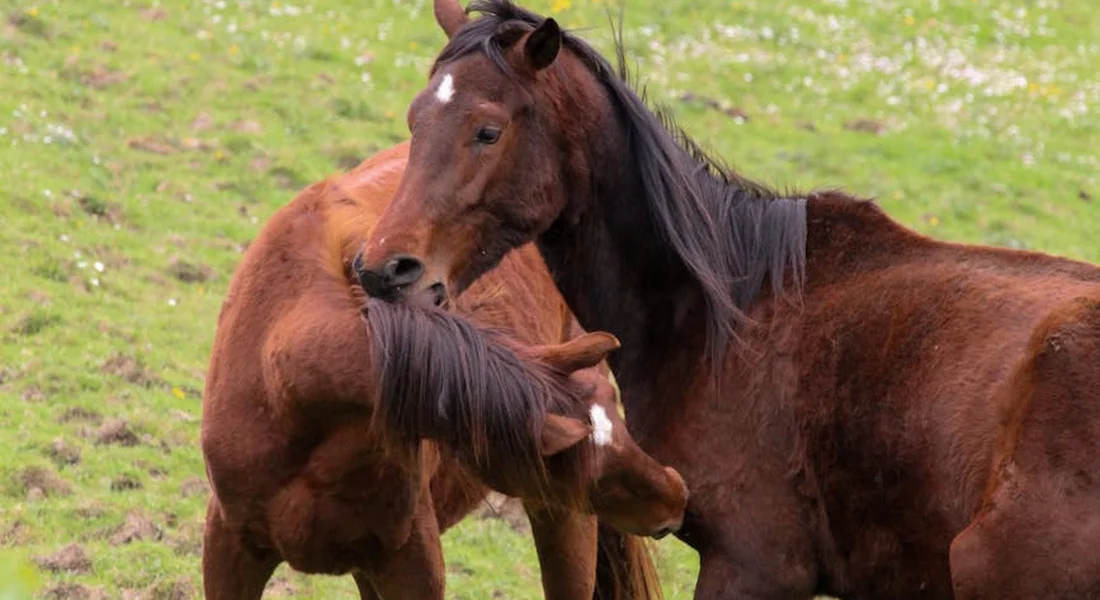
Wrestling, often seen with necks entwined and playful nipping at knees or withers, builds strength and social understanding. Listen for the lack of squealing; playful nips are gentle and met with relaxed ears, not pinned flat. Mutual grooming, or allogrooming, is the quiet game. They’ll stand head-to-tail, chewing gently on each other’s withers and backs. This isn’t just itch relief; it’s the equine equivalent of sharing secrets and strengthening bonds.
Object Play: Kick Balls, Jolly Balls, and Mysterious Sticks
When a horse invents a game with an inanimate object, it’s a sign of a curious and engaged mind. Object play is often solitary but no less important for mental stimulation. The classic kick ball provides a satisfying thud that resonates through the barn. I’ve seen Luna, the sensitive Thoroughbred, delicately nose a Jolly Ball around her paddock for twenty minutes straight, a focused break from her usual high-energy pace.
Never underestimate the entertainment value of a found stick. A simple branch dragged around, tossed, or investigated engages their problem-solving skills and mimics natural foraging behaviors. Pipin, our Shetland pony, is a master of this, treating every new stick like a treasured toy before inevitably trying to eat it.
The Invitation: Decoding Play Signals and Body Language
Horses issue very clear invitations, but you have to know the lexicon. The universal ‘play bow’ is a lowered front end with a wiggly, excited stance, often paired with a soft snort. They might approach another horse with a exaggerated, bouncy trot, or offer a gentle, open-mouthed nip to the shoulder.
Watch the ears and eyes. During play, ears are often flicking back and forth in relaxed interest, not pinned aggressively, and the eyes are bright, not worried. A horse that leaps away after a nip, then stops and looks back, is asking, “Are you coming?” I’ve watched Rusty do this repeatedly, his blaze-faced expression utterly cheeky, until Luna gives in and joins the chase.
Why Play is Non-Negotiable for Horse Health
Viewing play as optional luxury is a serious mistake in equine management. Regular, voluntary play is a vital sign of a horse’s overall well-being, as crucial as clean water and quality hay. Cutting turnout time to limit ‘risky’ play creates more problems than it solves.
Physical Benefits: Fitness, Coordination, and Digestion
The sudden bursts of speed, twisting turns, and playful bucks are nature’s perfect fitness regimen. This unstructured movement builds cardiovascular health, strengthens tendons and ligaments, and hones coordination in ways structured riding often cannot. It’s the foundation for a sound, resilient athlete.
Don’t forget the digestive system. Movement stimulated by play keeps the gut motile, helping to prevent colic and other stall-bound issues. A horse that plays is a horse in constant, gentle motion, which is exactly what their digestion evolved for.
Mental and Social Benefits: Bonding, Learning, and Stress Relief
Play is the primary classroom for young horses and continues to be a learning tool for adults. Through play, horses learn social boundaries, communication skills, and how to regulate their own energy and emotions. It forges the friendships that make herd life stable and low-stress. For a young rescue horse, early social exposure to other horses helps translate these lessons into daily herd life. Guided, calm introductions with compatible herd mates reinforce the social skills learned through play.
For a horse like Luna, a good romp is the best stress reliever I can provide. Play allows for the natural release of pent-up energy and anxiety, resulting in a calmer, more focused partner under saddle. The bonding that happens during mutual grooming or synchronized running creates a peaceful herd hierarchy, reducing conflict overall.
The Dark Side: When Play Masks Boredom or Stress
Not all spirited activity is healthy play. Repetitive, frantic pacing along a fence line or aggressive, one-sided chasing can be a scream of boredom from a stalled mind. A horse with insufficient turnout or mental enrichment may play roughly or obsessively with objects because it’s their only outlet.
Listen to the quality of the interaction. Play that seems frantic, lacks give-and-take, or escalates to real kicks and bites is a red flag that your management needs adjustment. I’ve intervened when what started as play between Rusty and a new boarder began to lack those calming pauses and reciprocal gestures. More space and separate time with enrichment toys helped diffuse the tension. Your job is to provide the safe space and time for play to be joyful, not desperate.
Play Through the Life Stages: From Foal to Senior
Foals and Youngsters: Learning Herd Rules Through Play
Watch any foal for five minutes, and you’ll see a fuzzy bundle of energy practicing for adulthood. I spent last spring observing a new filly at our barn, and her games were never random. Every playful chase, mock bite, and sudden wheel around taught her about spatial boundaries, reading body language, and the consequences of being too pushy with an elder. This isn’t just fun; it’s critical social education.
Their play revolves around a few key lessons:
- Bite Inhibition: Play-fighting teaches how hard is too hard. A too-rough nip gets a sharp correction from a peer or dam.
- Flight Response: Zooming around in sudden bursts builds coordination and speed for real threats.
- Herd Positioning: Games of “follow-the-leader” instill understanding of movement and hierarchy within the group.
You’ll see them testing these rules constantly. The bold one will instigate, the cautious one will hang back, and by dusk, they’ve all negotiated their temporary rankings.
Adult Horse Play: Maintaining Friendships and Hierarchy
Play doesn’t stop when childhood ends. For horses like my reliable Rusty, play is the glue of long-term friendships. I’ve seen him invite his pasture mate to run with a dramatic play-bow, all four legs splayed, before thundering off in a perfectly synchronized gallop. This synchronized movement isn’t just burning energy; it’s a powerful trust-building exercise that reinforces their social bond.
Adult play is often more ritualized and subtle than the foals’ antics. It serves two main purposes:
- Friendship Maintenance: Mutual grooming sessions, often started with a soft nudge, are a form of social play that reduces stress and strengthens pair bonds.
- Hierarchy Checks: A playful shove at the water trough or a mock squeal during turnout is a low-stakes way to remind others of social standing without serious conflict.
My sensitive thoroughbred, Luna, uses play to communicate. Her version involves delicate chasing games where she’ll trot after a friend, then abruptly switch roles, all with soft, intent expressions. It’s her way of saying, “We’re good.”
Does Age or Gender Change How Horses Play?
Absolutely. Age mellows the style, while gender can influence the choice of playmates. My old gelding prefers a slow, thoughtful game of “keep-away” with a traffic cone, while the youngsters are all about body slams.
Consider this breakdown:
| Life Stage | Common Play Style | Social Function |
|---|---|---|
| Foals (0-1 year) | Physical, exuberant: running, jumping, biting. | Learning herd etiquette and motor skills. |
| Youngsters (1-4 years) | Testing boundaries: more structured chasing, dominance games. | Establishing adolescent rank within the peer group. |
| Adults (5-15 years) | Ritualized, affiliative: synchronized running, mutual grooming. | Maintaining stable friendships and social order. |
| Seniors (15+ years) | Gentle, object-based: nuzzling toys, slow-walking with a friend. | Sustaining mental engagement and low-impact social contact. |
Geldings often form larger, looser play groups, while mares tend toward intense, one-on-one friendships where play is deeply integrated into their daily routine. Stallions, when managed in bachelor herds, engage in vigorous play that hones fighting skills for potential future competition. Our cheeky pony Pipin, a gelding, breaks all rules-his play is entirely invent-your-own-adventure, focused on outsmarting latches and stealing hats.
The Pasture vs. The Stall: How Environment Shapes Play
Natural Play in Herd and Turnout Settings
Turnout on good pasture is the horse’s ultimate playground. The space allows for the full repertoire: the galloping chase, the rolling party, the sneaky grab-a-bite-while-nobody’s-looking game. Ample turnout time directly fuels healthy play, which acts as a pressure valve for herd dynamics and prevents pent-up energy from morphing into aggression. The sound of hooves pounding in a playful sprint is a sign of a content herd.
In a natural setting, play unfolds organically:
- Morning Zoomies: After a night of rest, horses often release energy with bursts of running and kicking up heels.
- Object Play: They’ll investigate and toss branches, roll on chosen spots, and play “soccer” with manure piles.
- Social Rituals: The whole herd may participate in a moving “grooming chain” that travels across the field.
I structure our turnout so horses like Luna and Rusty are together. Their compatibility means their play is fluid and relaxed, not tense or bullying.
The Challenges of Stabled Life: Limited Space and Social Contact
Contrast the pasture with a 12×12 stall. The physical and social walls change everything. A stabled horse’s world shrinks, and so do their play options. Without an outlet, play behavior can become directed inward or at the environment, leading to stereotypies like weaving or wood chewing. I’ve spent nights listening to a bored horse rhythmically bang its water bucket-a sad substitute for interactive play.
You can mitigate these challenges with simple stable hacks:
- Ensure visual contact with other horses. A solid wall is socially isolating.
- Provide play objects like a sturdy Jolly Ball or a hanging lick toy that encourages manipulation.
- Schedule turnout, even if it’s in a small paddock, with a compatible friend. This is non-negotiable for mental health.
Pipin, our resident escape artist, taught me that intelligent horses will create their own fun. He learned to untie knots in his hay net for the sheer puzzle of it, turning a chore into a game.
Nighttime in the Barn: Understanding Stabled Play Behavior
The barn doesn’t fully sleep. When the lights go out, a different kind of play often emerges. It’s usually quieter, more investigative, and focused on available objects. Listening to the nocturnal sounds of your barn-the soft rustle of hay being tossed, the gentle knock of a toy, the quiet nicker to a neighbor-gives you insight into which horses are contentedly self-entertaining.
Common nighttime play in stalls includes:
- Bedding Forts: Horses will paw, nuzzle, and rearrange shavings or straw into nests or piles.
- Toy Engagement: A ball or treat dispenser becomes far more interesting in the quiet of the night.
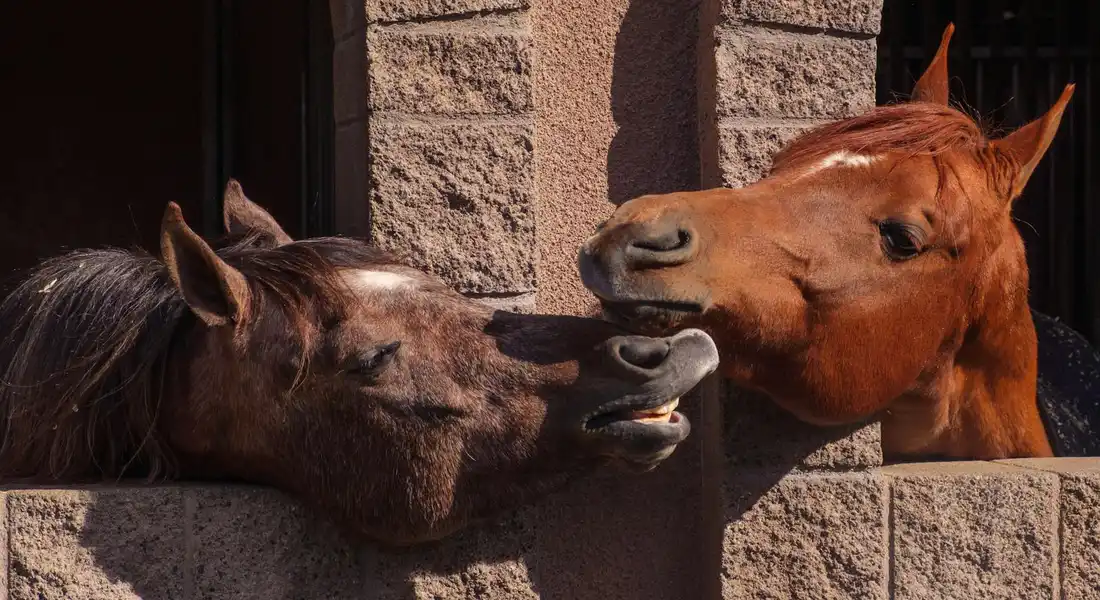
- Social Communication: Playful lip smacking or blowing through the bars to the horse next door maintains social bonds.
I once found Luna’s stall in the morning with her grain tub neatly centered in a perfect circle of pawed bedding. It was her nighttime project, a clear sign she needed more daytime activity. We increased her turnout, and the nighttime interior decorating stopped.
Reading the Field: Is It Play or Is It Trouble?
From my years of managing a busy barn, I’ve spent countless hours leaning on the fence, listening to the thud of hooves and the snorts of horses at play. Telling the difference between a friendly romp and the start of real trouble is a skill every owner needs. It saves you from unnecessary worry and prevents injuries.
Signs of Healthy, Friendly Interaction
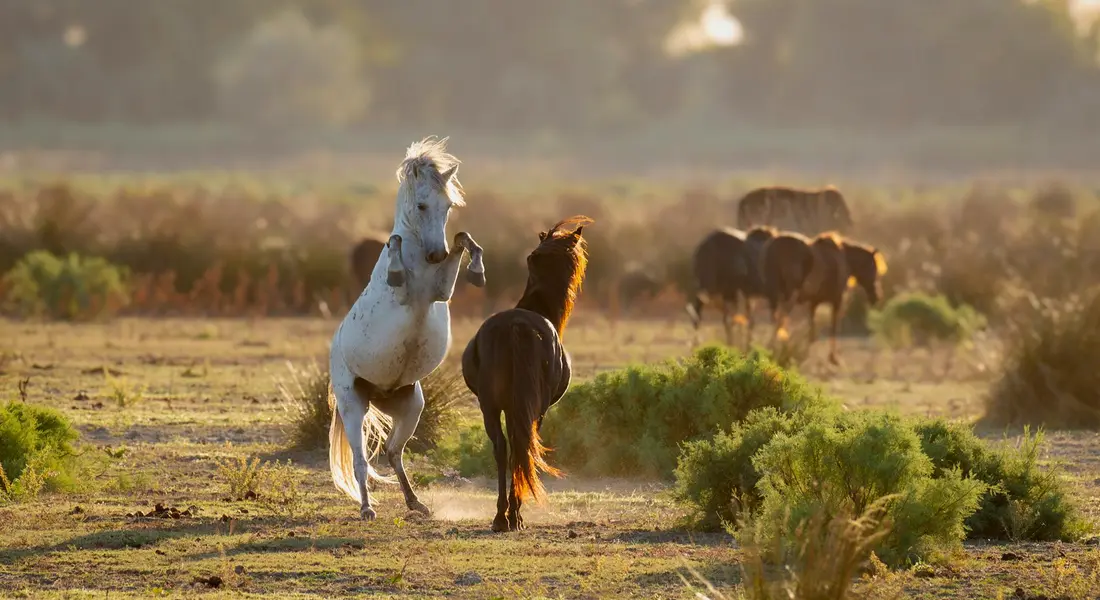
Healthy play is a conversation. You’ll see loose, fluid movements and frequent role reversals. Watch for the “play bow,” where a horse drops its front end with a bouncy wag of the tail-it’s an invitation, like a dog asking for a game. I often see Rusty and a paddock mate take turns chasing each other, then stopping to catch their breath with soft, blowing noises. Their ears will be forward or flicking casually, not pinned flat. Bites are inhibited and nudging is gentle, more like a push than a strike.
- Relaxed, wiggly body language with loose tails.
- Reciprocal actions: one chases, then is chased.
- Frequent, mutual breaks in the action where both horses disengage.
- Playful squeals that are high-pitched and short, not prolonged screams.
Red Flags: When Play Escalates to Aggression
Play turns serious when the conversation becomes one-sided or frantic. The energy shifts from joyful to tense. A major warning sign is a horse that refuses to break off the interaction, relentlessly pursuing or cornering another. Luna, with her thoroughbred sensitivity, can sometimes escalate from frisky to frazzled if over-stimulated. Look for pinned ears that stay flat, hard staring, and biting or kicking with full force and intent. The thud of a connecting kick sounds entirely different from a playful miss.
- Ears pinned flat back for extended periods.
- Chasing that involves herding into fences or corners with no escape.
- Bites that make contact and cause the other horse to flinch or squeal in pain.
- Stiff, tense body posture with a clamped tail.
Intervening Safely: When to Step In and When to Watch
Your instinct is to protect, but rushing in can put you in danger. I’ve learned to let most roughhousing resolve itself. Step in immediately if you see true aggression, if a horse is being bullied and cannot retreat, or if they’re risking serious injury near sharp fence corners. Even a calm horse can buck when stressed; your calm, steady cues can help stop the horse from bucking before it escalates. A stressed horse benefits from gentle reassurance and clear boundaries. Use your voice first-a sharp “HEY!” can break their focus. I always keep a long-handled broom or a rattle can handy by the gate to create a noise barrier. Never get between them; work from the periphery to redirect their attention.
Your Barn Manager Playbook: Encouraging Safe Play
Creating an environment where play happens naturally is my core mission. It’s not about orchestrating fun, but about removing the obstacles to it. A horse that can be a horse is a happier, healthier partner.
Priority One: Maximize Turnout and Herd Socialization
This is non-negotiable. Stalls are for bad weather and vet care, not for living. Twenty-four-seven turnout with compatible friends is the single best thing you can do for your horse’s mental and physical well-being, bar none. I’ve watched anxious horses like Luna transform when moved from solitary confinement to a herd. They graze, doze, and play on their own schedule, which dramatically reduces stable vices and riding tension. Their digestive systems work better, and their minds are quieter.
Enrichment Ideas for Stalled or Limited Horses
For horses on strict stall rest or in limited boarding situations, we have to get creative. The goal is to mimic the mental and physical work of living in a herd but also to provide mental stimulation.
Social Enrichment: Strategic Buddy Introductions
Introducing a new horse isn’t just opening a gate. It’s a slow dance. Always introduce horses over a safe fence line for at least 24-48 hours, allowing them to meet without the risk of a full-blown fight. I did this with Pipin when he arrived; his cheeky nature meant he needed clear boundaries from the start. Feed them separately but within sight of each other to build positive associations. The first shared turnout should be in a large, neutral space with no hidden corners. It’s especially important when integrating into an established group.
Physical Enrichment: Safe Toys and Foraging Puzzles
Toys aren’t silly-they’re tools. The best ones encourage natural foraging behavior. A simple Jolly Ball is brilliant because they can bite, kick, and chase it without it getting destroyed or stuck. For the food-motivated like Pipin, I use treat balls or a slow-feeder net stuffed with hay and a few carrot sticks. Hanging a lickit from a safe rope provides a distracting, time-consuming task. Rotate toys weekly to prevent boredom.
- Durable rubber balls they can roll and nudge.
- Treat-dispensing puzzles that require pushing with the nose.
- Hanging branches of safe, edible browse like willow or apple.
- A pile of smooth, large rocks to investigate and roll.
Managing the Herd: Space, Resources, and Introducing Newcomers
Peace in the pasture comes from good management. Always provide one more resource than you have horses-if you have three horses, have four piles of hay, four watering spots, and multiple salt licks. This prevents guarding and bullying. Space is critical; crowded horses become stressed horses. For newcomers, I use a “buddy system,” introducing them first to the herd’s most calm, non-dominant member-often a steady soul like Rusty-before integrating them into the whole group. Monitor the herd dynamic daily; the social order can shift with the weather or a new bale of hay.
When Play is Absent: Identifying Stress and Boredom
You know that happy snort and playful buck you look forward to in the pasture? When that vanishes, the silence in the barn feels heavier. A horse that stops playing is often a horse whispering that something is wrong. Seeing a sudden drop in playful antics is your first clue to look deeper into your horse’s daily life and comfort.
Common Causes for Reduced Play Behavior in Stabled Horses
Play is a luxury of a content mind and body. When it dries up, I start looking for these common culprits, often rooted in how we manage their environment.
Insufficient turnout is the number one joy-killer I see, turning vibrant horses into stalled statues. Horses are movement machines, and play is the fun version of that primal need. A 12×12 stall cannot replicate the freedom of a paddock.
Social isolation is another silent thief. Herd animals like Rusty, my reliable Quarter Horse, thrive on companionship. Alone, they lack a playmate and feel vulnerable, which shuts down their playful mood. I’ve seen stoic Rusty get downright mopey when separated from his pasture buddy for too long.
Pain or discomfort is a major factor. A subtle sore back from a poorly fitting saddle or a brewing hoof abscess can make a horse conserve energy. Luna, my sensitive Thoroughbred, will stop all her lively frolicking and become unusually still at the first hint of physical discomfort.
Monotony in diet and environment plays a huge role. Eating the same grain from the same bucket in the same stall day after day does nothing to stimulate a curious mind. Boredom isn’t just a human problem; it’s a equine welfare issue that stifles natural behavior.
Linking Stress to Stereotypies and Other Behavioral Issues
When the stress of boredom or isolation builds with no outlet, it often morphs into more troubling behaviors. These are clear signs a horse is coping with an environment that doesn’t meet its needs.
Stereotypies-like cribbing, weaving, or stall walking-are repetitive actions with no obvious goal. Think of these behaviors as a desperate, physical scream of frustration from a brain with nothing better to do. The rhythmic clunk of a cribbing horse or the endless sway of a weaver are sounds of distress, not habits.
This pent-up energy can also redirect into aggression. A normally gentle horse might start pinning ears, biting at stall doors, or becoming difficult to handle. Pipin, my clever Shetland, once turned his boredom into masterful gate-latch manipulation, a sign his brain needed a proper job.
Chronic stress also weakens the immune system and can lead to digestive issues like ulcers. A horse that never plays is a horse living in a state of low-grade alarm, and their body pays the price.
Restoring Balance: Practical Steps for the Concerned Owner
If your horse’s playfulness has faded, don’t worry-you can guide them back. These are the steps I take in my own barn to reignite that spark. Learning how to understand horse behavior and psychology is key in this process.
First, audit their turnout. This is non-negotiable. Prioritize daily, unstructured turnout with compatible buddies, even if it’s just for a few hours more than they get now. The smell of fresh air and the thud of hooves on dirt is the best therapy.
Next, enrich their daily environment. You don’t need fancy equipment. Try these simple hacks:
- Use a slow-feed hay net to mimic grazing and keep them busy for hours.
- Hide carrot chunks in a traffic cone or scatter hay in their paddock to encourage foraging.
- Introduce a sturdy ball or a hanging lick toy they can investigate safely.
Re-evaluate their social setup. Can they see and touch another horse? If boarding alone, consider a calm goat or donkey as a companion. The quiet presence of a friend can work wonders, especially since horses are herd animals by nature.
Schedule a thorough health check. Rule out pain with a vet and bodyworker. An ounce of prevention in addressing minor aches restores a ton of playful potential. Ensure tack fits perfectly; that saddle pad shouldn’t bridge, and the girth must allow full shoulder movement.
Finally, vary their routine. Take a different path on your walk, hand-graze in a new spot, or introduce a gentle groundwork game. Watch for signs your horse is overworked, like fatigue after light work or reluctance to move. In some cases, a bit more structured exercise can help rebuild endurance under proper guidance. Your goal is to build a day full of small, positive choices for your horse, breaking the cycle of monotony that breeds stress.
FAQ: How Do Horses Play? Understanding Their Social and Play Behavior
How does stabling affect a horse’s play behavior?
Stabling confines horses, reducing opportunities for expansive social play like chasing or mutual grooming seen in pastures. Instead, play often shifts to solitary object engagement, such as interacting with stall toys or manipulating feed nets. Without regular turnout, this limited play can contribute to boredom and increased stress behaviors.
Can play behavior in horses be a sign of stress?
Yes, play can sometimes signal stress when it appears frantic, repetitive, or lacks the reciprocal give-and-take of healthy interactions. Obsessive play with objects or aggressive, one-sided chasing may indicate underlying anxiety or environmental dissatisfaction. Recognizing these patterns helps address stressors before they escalate into stereotypic behaviors.
What does play behavior look like in stabled horses at night?
Nocturnal play in stalls is typically subdued and investigative, involving activities like tossing hay or nudging durable toys quietly. Horses may engage in social play through gentle vocalizations or tactile interactions with neighboring stalls over barriers. This nighttime engagement helps satisfy their natural curiosity and provides mental enrichment during inactive hours.
Reading the Herd’s Happy Chatter
Providing regular, supervised turnout with compatible pals is the single best way to encourage healthy play and social bonding. Make it a habit to observe their interactions without intrusion, as changes in play style are often the first clue to a shift in health or herd dynamics.
From Rusty’s dignified grazing games to Pipin’s cunning hide-and-seek, I’ve learned that play is their honest communication. True horsemanship means putting your agenda aside sometimes to hear what they’re saying.
Further Reading & Sources
- Social Behavior of Horses – Behavior – Merck Veterinary Manual
- Types of Equine Behavior | Extension Horses
- On the significance of adult play: what does social play tell us about adult horse welfare? – PubMed
- VM270/VM270: The Importance of Understanding Horse Behavior
At Horse and Hay, we are passionate about providing expert guidance on all aspects of horse care, from nutrition to wellness. Our team of equine specialists and veterinarians offer trusted advice on the best foods, supplements, and practices to keep your horse healthy and thriving. Whether you're a seasoned rider or new to equine care, we provide valuable insights into feeding, grooming, and overall well-being to ensure your horse lives its happiest, healthiest life.
Behavior