
How to Manage Aggression and Bullying in Your Horse Herd
Hello fellow equestrians. That sick feeling when you see pinned ears and a sudden kick in the pasture is all too real. Herd aggression threatens your horse’s safety, risks expensive injuries, and turns daily turnout into a source of dread.
Let’s fix that. I’ll guide you through the practical steps I use at my barn to defuse tension and build a happier herd. We’ll focus on three core solutions:
- Spotting the subtle signs of stress and dominance long before a fight breaks out.
- Executing calm separations and slow reintroductions that actually stick.
- Redesigning your feeding stations and pasture layout to remove competition.
I’ve spent years as a barn manager and trainer, smoothing out squabbles between everything from food-obsessed ponies to high-strung thoroughbreds, and I’m here to share that real-world advice.
Understanding Herd Aggression and Bullying
Equine aggression is simply a horse using threats or force to control space, food, or social rank. Bullying is when this behavior becomes a persistent, one-sided campaign of intimidation. I see it in my own herd: Luna, my sensitive Thoroughbred, will pin her ears flat and snake her neck toward Pipin the pony if he gets too close to her hay pile. It’s a quick, clear message. Recognizing the intent behind these actions is your first step in keeping the peace.
Watch for these common physical signs:
- Pinned ears
- Forceful tail swishing
- Kicking out
- Chasing or herding
- Biting or attempted bites
Not every argument is a five-alarm fire. This table helps you gauge the severity.
| Mild Dispute | Dangerous Bullying |
|---|---|
| Brief ear pinning with a warning squeal | Ears pinned constantly in one horse’s presence |
| One corrective kick that misses | Repeated, targeted kicks aimed to connect |
| Quick chase that ends after a few strides | Relentless pursuit that doesn’t allow the other horse to stop or eat |
Horses must establish who’s who, but problematic bullying is relentless and creates victims. Look for stress indicators like weight loss in one horse, constant pacing at the fence line, or herd mates who are always sweaty and wide-eyed. Normal sorting out doesn’t leave lasting physical or psychological scars.
What is Normal Herd Behavior?
Horses create a pecking order much like a classroom settles into a seating chart. There’s some initial shuffling and negotiation, but then everyone knows their spot and the day runs smoothly. This natural hierarchy is built on clear communication, not constant violence.
You’ll see posturing, squealing, and the occasional shoulder bump. I let Rusty, my steady Quarter Horse, use his calm confidence to diffuse tensions without me stepping in. A little drama is just healthy herd talk, not a sign you need to call the vet.
Red Flags for Problematic Bullying
When does normal become neglect? Take action if you see these specific issues:
- One horse is systematically denied access to all food or water sources.
- Injuries go beyond superficial nicks to include cuts, significant hair loss, or lameness.
- A horse is chased so relentlessly it cannot rest, lie down, or find shelter.
Chronic stress from bullying compromises a horse’s immune system and mental state. Allowing one animal to live in constant fear is a direct welfare failure we must prevent.
Establishing Safe Herd Dynamics
Your job is to set the stage for natural order, not to micromanage every interaction. I manage this by understanding individual personalities. Rusty’s calm demeanor often stabilizes the group, while Luna’s sensitivity means she needs a confident but gentle pasture mate. Think of yourself as a referee who sets the rules, not a player in their game.
Daily monitoring is non-negotiable. Don’t just glance-watch for 15 minutes at different times. I keep a simple notebook log: date, time, which horses interacted, and what happened. Patterns emerge quickly in a behavior log, showing you if a scuffle was a one-off or a growing problem.
Maximum turnout time is the single best tool for healthy herd dynamics. It allows for movement, foraging, and social bonding on their terms. A horse stuck in a stall is a social creature deprived of its most basic mental health needs.
The Role of Dominance and Submission
Horses speak rank with their bodies. A lowered head and slow chew shows submission, while a high head and pinned ears broadcasts dominance. Understanding these cues helps you tell if your horse is happy and relaxed. You’ll spot signs of contentment and well-being in their posture. Learn this language by watching from the fence line without interrupting every squabble.
Your interference can prevent a clear hierarchy from forming, which actually increases long-term tension. Let them sort it out safely through body language. A settled pecking order, where everyone knows their place, creates a more peaceful pasture for all.
Introducing a New Horse Smoothly
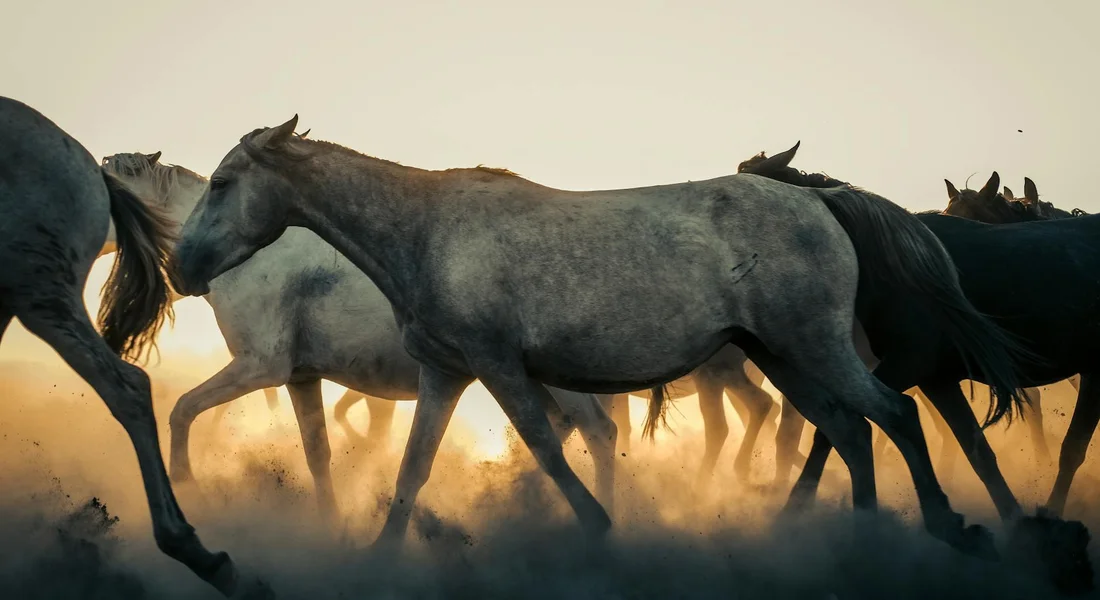
I learned the value of patience the hard way when a new boarder, a stout Paint gelding, came in hot and upset the whole herd’s rhythm. A smooth introduction isn’t just polite; it’s a cornerstone of equine welfare that prevents injuries and lasting fear.
- My protocol always starts with days of separation with a shared fence line, letting horses learn each other’s smells and sounds.
- I never skip the pre-introduction health and temperament screening-it’s the bedrock of safety.
- The first physical meeting happens in a boring, wide-open space where no horse feels territorial.
Pre-Introduction Checklist
Before that new horse even sniffs the herd, I run down this list. A horse in pain, like a hidden sore back or toothache, will often react with aggression, so a veterinary check is your first line of defense.
- Conduct a pain assessment: watch for subtle lameness, sensitivity to grooming, or reluctance to pick up feet.
- Verify all vaccinations and deworming are current to protect the entire herd.
- Observe the new horse’s base personality alone for 48 hours-is it anxious, bold, or aloof?
- Enforce a quarantine period if the horse’s travel history is unknown, keeping them in a separate barn aisle.
The Gradual Introduction Process
When I introduced Luna to Rusty, we followed these steps to the letter. Rushing these stages is how you end up with a kicked rail or a terrified horse.
- House horses in neighboring stalls or paddocks for several days. I let Luna and Rusty live next door, sharing the sound of chewing hay and the sight of each other’s daily routines.
- Allow controlled, supervised contact over a safe fence. I used a solid gate where they could briefly touch noses without any chance of a full kick.
- Introduce in a large, neutral area with no food or water present. An empty arena works perfectly, removing all competition for resources.
- Monitor closely for several hours before leaving them together. I watch for loose body language and mutual grooming, not just the absence of squeals.
Managing Resources to Prevent Conflict
Nothing sparks a barnyard brawl faster than a scarce resource. I’ve seen Pipin guard a single salt block with the intensity of a dragon. Smart resource management is a simple hack that fosters peace and gives every horse, even the low-ranking one, a fair shot.
- Space out all resources-hay, water, mineral blocks-so no single point becomes a chokehold for bullying.
- Time feedings consistently but consider staggering them if you have a known food guarder.
- Always provide more shelter space and exit routes than you think you need to prevent cornering.
Food and Feed Management
The thud of hooves at feeding time used to set my teeth on edge until I implemented these rules. Placing feed buckets twice the horse’s body length apart is a foolproof method to reduce frantic competition.
- Use more hay piles than horses; for my three, I always put out four piles in far-flung corners.
- Feed in separate corners or use stalls temporarily for the most submissive eaters.
- Consider slow-feed nets to prolong eating and reduce competition; they turn a frantic meal into a leisurely graze.
- Good-quality pasture can reduce food-based tension by allowing constant, natural foraging behavior.
Water and Shelter Access
A blocked water trough on a hot day is an emergency waiting to happen. Install multiple water sources, like automatic waterers or several troughs, so a bossy horse can’t dominate the supply.
- Ensure multiple watering points in different areas of the paddock, cleaned regularly to encourage use.
- Clear shelter entrances of ice, mud, or debris to ensure easy escape and prevent a horse from being trapped.
- Provide windbreaks in open fields so all horses can find comfort without being forced into a cramped shelter.
Designing a Peaceful Paddock
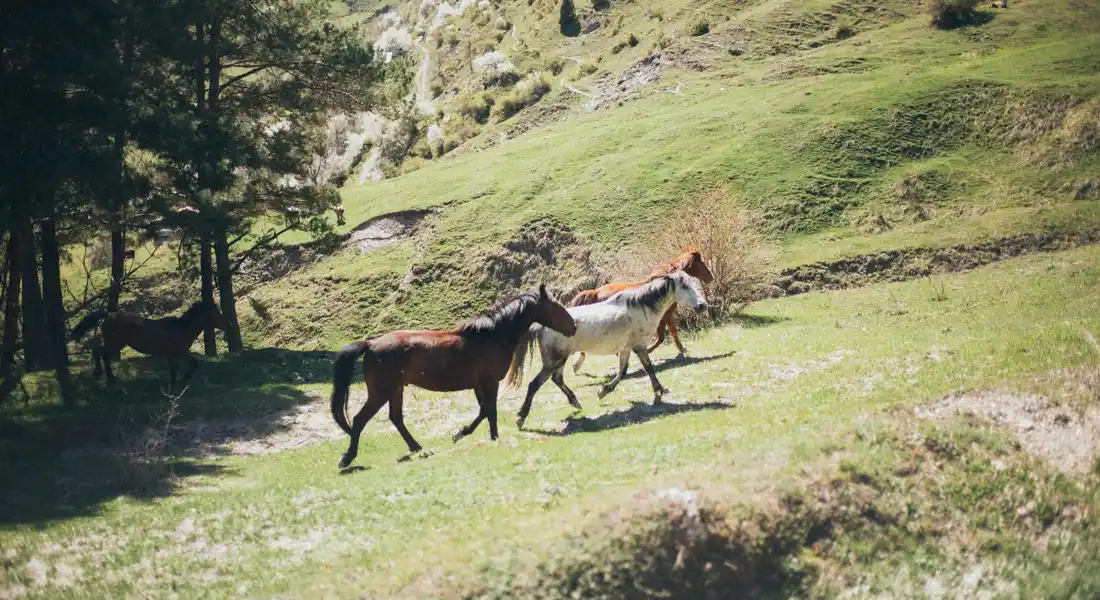
The foundation of herd harmony isn’t just about the horses-it’s about the dirt under their feet and the fences that contain them. A well-managed paddock can turn tense stand-offs into relaxed grazing. I’ve watched my own herd’s dynamics shift completely simply by moving them from a hard, packed area to a space with softer footing. The thud of hooves changes from a sharp, anxious crack to a dull, comfortable thump, and the whole group seems to exhale. It’s a subtle reminder that even with good horse management, the environment plays a crucial role in their social behaviour.
Start by ensuring each horse has enough room to avoid feeling trapped; a general rule is at least one to two acres per horse, but more is always better to reduce those aggressive face-to-face encounters. Knowing how much pasture per horse you truly need helps with planning. This informs how many horses your land can sustainably support. Cramped spaces force disagreements, while space allows for polite retreats.
Your fencing choices speak volumes about your horsemanship. Barbed wire is a hard no-it’s a recipe for disaster. Opt for smooth wires or highly visible electric tape. The goal is a boundary they respect without fear of nasty cuts. I always check for tight corners where a horse could be cornered; rounded corners are a much safer bet for a fluid herd movement. Curious about the best types of fencing for horses and their pros and cons? Weighing those trade-offs can help you choose safe, practical options that fit your layout.
Fencing and Layout Tips
Think like a horse when you lay out your space. Design wide alleys or pathways so a lower-ranked horse always has an escape route. Never place hay nets, water troughs, or mineral blocks in dead-end corners. Instead, put these resources in open areas where everyone can approach and leave freely.
Gentle horsemanship means creating an environment that prevents panic, so a horse never feels the need to fight its way out of a scary situation. I learned this after seeing Luna, my sensitive Thoroughbred, get pinned in a bad spot-it took days for her confidence to return.
- Use round corners instead of 90-degree angles.
- Ensure all fencing is intact, with no loose wires or posts.
- Place multiple hay piles and water sources far apart to reduce competition.
Enrichment for Herd Harmony
Boredom is a bully’s best friend. A busy mind is a peaceful mind. Simple, cheap enrichment can work wonders. Hang sturdy traffic cones from a safe tree branch for them to mouth and play with. Create varied terrain with a gentle mound or a sandy roll spot.
Scratching posts made from sturdy broom heads or even old carpet samples nailed to posts are hugely popular in my barn-watching Pipin the pony give himself a good scratch is a sure sign of a content herd. If your setup allows, rotating pasture mates every so often can also reset dynamics and prevent stagnant boredom.
- Introduce treat balls or slow-feed nets to make mealtime last longer.
- Allow access to different types of footing like grass, dirt, and sand.
- Consider safe, herd-friendly toys like large rubber balls.
When and How to Intervene Safely
Knowing when to step into herd drama is a critical skill. Your safety is the absolute priority-you are no match for a half-ton animal in a rage. I have a firm rule: never, ever get between kicking horses. The sound of connecting hooves is a sickening reminder of how quickly things can go wrong.
Have a clear emergency plan before you need it: a stocked equine first-aid kit, knowledge of how to quickly open any gate, and your vet’s number on speed dial. Sometimes, the best intervention is strategic companionship; a chronic bully might just need a steady friend like my old Quarter Horse, Rusty, to model calm behavior.
Recognizing When to Step In
Not every pinned ear requires action. Normal herd hierarchy involves squeals and feints. You need to intervene when the situation escalates from communication to crisis. I step in when it looks less like a disagreement and more like a WWE match.
Clear signs include visible blood drawn, a horse that is trapped, trembling, and unable to flee, or when the aggression is so persistent that one animal is being chased away from food and water entirely. Trust your gut; if the hair on your neck stands up, it’s time to act.
- Blood is drawn from a bite or kick.
- A horse is cornered and showing clear signs of terror (wide eyes, screaming).
- The aggression is non-stop, preventing a horse from essential activities like eating or drinking.
Safe Separation Techniques
If you must intervene, follow these steps methodically. Rushing in is how people get hurt.
- Make a loud, sharp noise to break their focus. Bang two feed buckets together-it’s startling and effective.
- Use a long lead rope to safely loop around a neck from a distance. Never try to grab a horse with your bare hands in a fight.
- Always have a dedicated holding pen or stall ready to isolate a horse immediately. This avoids frantic searching in the moment.
- Once separated, check both horses thoroughly for any signs of lameness, swelling, or cuts once they have completely calmed down.
This process is about controlled deflection, not heroic confrontation-your goal is to safely create a pause in the action.
Managing the Persistent Bully
For the horse who just can’t seem to play nice, you need a tailored strategy. Temporary isolation in a nearby paddock where they can still see the herd can be a powerful reset button. Use this time for positive reinforcement training; reward calm behavior over the fence with a handful of hay.
Sometimes, the issue is physical, not psychological, so a veterinary check for underlying pain, like back soreness or dental issues, is a non-negotiable first step. If all else fails, pairing the bully with a more dominant but calm horse can work wonders. Rusty has rehabilitated more than one troublemaker simply by being an unflappable, confident presence who won’t tolerate nonsense but also doesn’t start fights.
- Consider temporary isolation with visual contact to remove reinforcement from the herd.
- Implement short, positive reinforcement sessions focusing on calm demeanor.
- Re-pair with a steady, confident herd mate who can establish order without violence.
Long-Term Herd Management Strategies
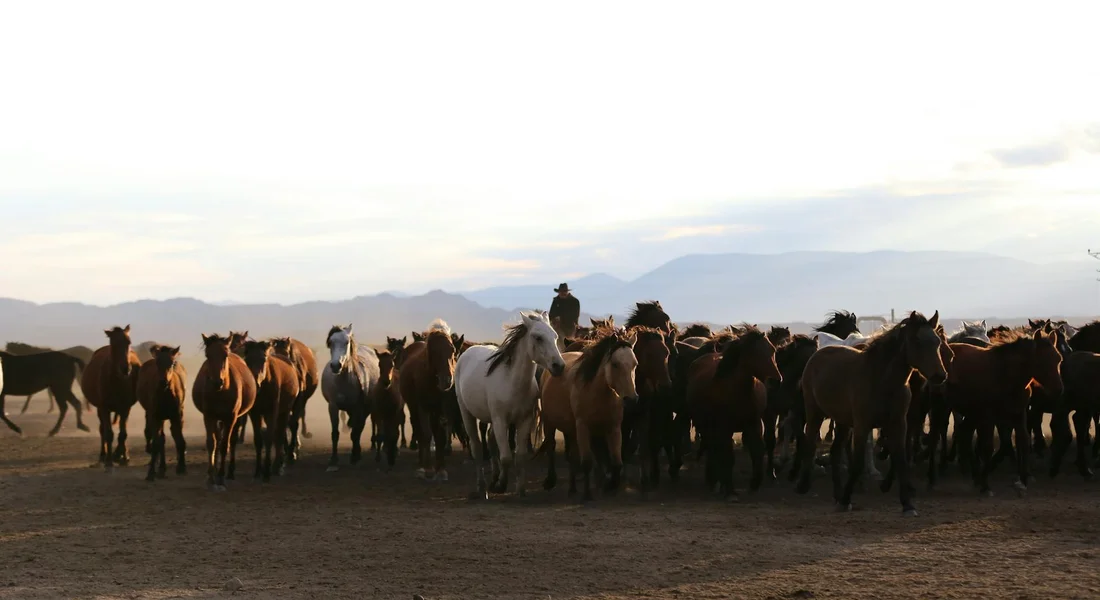
Managing a herd isn’t a set-it-and-forget-it job. You must watch your horses like a slow, shifting weather pattern, because their social world changes with the seasons, new arrivals, and as they age. The boss mare at ten might be more tolerant at fifteen, and spring grass can turn a peaceful paddock into a frisky free-for-all.
Always question sudden snappishness. A horse who lashes out overnight is often shouting in the only language they have: that aggression is frequently a mask for pain. I’ve seen a usually gentle gelding pin his ears over hay, and it turned out to be a brewing abscess. His behavior wasn’t bullying; it was a plea.
Proactive training builds polite herd citizens. Basic desensitization and positive reinforcement teach horses to look to you for guidance rather than resorting to force with their peers. That approach aligns with the Positive Reinforcement Training for Horses guide. It offers practical steps you can apply. I used this with Pipin, our Shetland escape artist. By rewarding him for standing calmly instead of mugging my pockets, he learned patience transfers to the paddock gate with other horses.
Your role is to be a steady, confident leader. Provide clear boundaries through consistent daily interactions, but also know when to step back and let horses settle their own low-level disputes. Constant micromanagement creates tension. Sometimes, the best management is a good fence and the wisdom to let them be.
Monitoring and Adjusting
Keep a simple logbook. Note the date, time, horses involved, and what triggered a squabble-was it over grain, the favorite shelter, or a particular resource? Patterns emerge quickly, showing you which relationships need space or which feeder location causes traffic jams.
Schedule regular vet checks beyond the obvious. Sudden herd aggression can stem from a hidden tooth spike or subtle hoof soreness that makes a horse irritable. A sore horse is a defensive horse. Your first response to new bullying should be a thorough health exam.
True welfare means more than just food and water. I advocate fiercely for 24/7 turnout or the maximum possible, because a horse with room to move and friends to groom is a horse with less pent-up energy to take out on others. Social interaction isn’t a luxury; it’s a requirement for a calm herd mind.
Training for Better Behavior
Positive reinforcement is powerful. Use a quiet “yes” and a bite of carrot to immediately reward calm standing near another horse at the fence line. You’re marking the behavior you want, building their tolerance and focus.
Reinforce basic respect through yielding. Practice asking your horse to yield their hindquarters or back up a step from light pressure; this reinforces that you control their space, which translates to better manners around herdmates. It reminds them to be mindful. This is a foundational step toward teaching your horse basic ground manners. Mastery here makes future handling on the ground safer and easier.
Keep sessions short and sweet. Just five minutes of focused groundwork each day, asking for simple moves and rewarding try, dramatically improves a horse’s overall demeanor and herd politeness. Consistency builds a quieter, more thoughtful partner. That steady, patient practice builds a strong bond and trust with your horse. With that trust, daily communication becomes clearer and the partnership grows.
FAQ: How to Manage Aggression and Bullying in a Horse Herd
How to identify signs of aggression in a horse herd?
Look for clear physical threats like pinned ears, forceful tail swishing, and bared teeth. More dangerous signs include repeated, targeted kicks aimed to connect and relentless chasing that prevents another horse from eating or resting. Chronic stress signals in victimized horses, such as weight loss, constant pacing, or a perpetually sweaty and wide-eyed appearance, are key indicators of a serious problem. These signs raise the question of healthy vs unhealthy herd behavior. Understanding where they fit on that spectrum can help guide welfare assessment.
How to establish a clear hierarchy within the herd to reduce conflict?
Allow horses to communicate and establish their natural pecking order through normal body language, like posturing and squealing, and vocalizations, without unnecessary human interruption. Act as a referee who sets up the environment for success by providing ample space and resources, but avoid micromanaging every interaction. A settled hierarchy, where every horse knows its place, is established through clear equine communication and creates long-term pasture peace.
What are the best practices for introducing a new horse to an existing herd?
Always begin with a period of separation with a shared fence line, allowing the horses to become familiar safely. Introduce the new horse in a large, neutral area with no food, water, or other resources present to eliminate competition. Monitor their initial interactions closely for several hours, watching for loose, calm body language before considering leaving them together unsupervised. This step is crucial, especially when introducing a new horse to an established herd.
Herding Toward Harmony
Effective herd management comes down to space, smart introductions, and sharp observation. The single best thing you can do to prevent conflict is to provide ample, high-quality turnout space with multiple hay piles and water sources. Introduce new members slowly and be prepared to separate and try again if necessary.
Progress here is measured in quiet days and relaxed body language, not overnight fixes. Your most valuable tool isn’t a whip or a flag, but your own patience and your willingness to watch and learn from the herd’s subtle conversations.
Further Reading & Sources
- Aggression in Horses: Causes, Types & How to Manage Dangerous Behavior | Mad Barn
- Understanding Horse Aggression – The Horse
- Dealing with Horse Food Aggression
- How to Help a Horse with Aggressive Response Behavior
At Horse and Hay, we are passionate about providing expert guidance on all aspects of horse care, from nutrition to wellness. Our team of equine specialists and veterinarians offer trusted advice on the best foods, supplements, and practices to keep your horse healthy and thriving. Whether you're a seasoned rider or new to equine care, we provide valuable insights into feeding, grooming, and overall well-being to ensure your horse lives its happiest, healthiest life.
Behavior