
Understanding Horse Behavior and Psychology: Your Guide to a Safer, Stronger Bond
Hello fellow equestrians. If your horse’s sudden spook or stubborn refusal has ever made your heart race or your budget groan from a potential vet bill, you’re not imagining the stress. These moments fray our patience and challenge our safety.
This guide will walk you through the fundamentals of the equine mind. We’ll cover:
- Decoding the subtle meanings behind ear position, eye tension, and tail swishes
- How innate herd dynamics and pecking orders dictate your horse’s reactions
- Actionable methods to gently correct common issues like napping or anxiety
- Fostering a trusting partnership through predictable, pressure-free communication
My years of barn management and training, from deciphering Luna’s high-strung signals to outsmarting Pipin’s clever escapes, have taught me that true horsemanship starts in the horse’s head.
What Drives Horse Behavior: Instincts and Herd Life
The Flight Response and Core Instincts
Hear that sudden crack of a branch? In the barn, that sound instantly refocuses every horse, their heads high and bodies tense, ready for flight. This isn’t drama; it’s a million-year-old survival script. Horses are prey animals, meaning their default setting is to perceive and flee from potential threats, a reality that shapes every interaction in the saddle and on the ground. I see it with my sensitive Thoroughbred, Luna; a flapping tarp can transform her from calm to coiled in a heartbeat. Working with this instinct, not against it, is the heart of gentle horsemanship.
That primal wiring explains so much. A “spook” is not disobedience, but a lightning-fast risk assessment. To build trust, introduce new sights and sounds gradually, letting your horse’s curiosity eventually override that initial surge of adrenaline. With my trail horse Rusty, who despises puddles, I’ll dismount and lead him through, making it a shared, positive experience. It turns a fear into a partnership moment, reinforcing safety for both of us.
Your daily management must account for this instinct. Loud noises, sudden movements, or even a shift in your energy can trigger that flight response. Always ensure your horse’s environment, especially turnout spaces, is free of hazards where a panicked bolt could cause injury. I design paddocks with rounded corners and secure fencing because when fear takes over, a horse’s only thought is to run.
Social Hierarchy and Herd Dynamics
Stand by any pasture and watch the silent ballet of herd life. You’ll see one mare lead the group to water, another claim the prime grazing spot, and a lower-ranking horse wait patiently. This social structure is not about bullying; it’s a sophisticated system that creates predictability and reduces conflict within the herd. Understanding horse herd dynamics and social enrichment helps caretakers design environments that keep horses mentally engaged and well-adjusted. Recognizing these patterns guides how we enrich social life and reduce stress. In my field, steady Rusty is the peacekeeper, while clever Pipin the pony knows exactly how to duck under the fence for extra grass when the big guys are distracted.
Understanding this pecking order is critical for barn management. When introducing a new horse, I always use a gradual process over a safe fence line, allowing the initial squeals and posturing to happen without physical contact. Forced introductions in a small space invite kicks and bites. I pair turnout buddies by personality-a nervous horse often calms next to a steady Eddy-which directly supports equine welfare by reducing chronic stress.
Isolation is a profound stressor for a herd animal. Maximizing turnout time isn’t just a luxury; it’s a non-negotiable need for mental health, allowing horses to groom, play, and simply be together. The smell of fresh hay and the contented thud of hooves in a shared space is the sound of a happy herd. A horse alone in a stall for too long is a horse deprived of its core social identity.
Reading the Silent Conversation: Equine Body Language
Ears, Eyes, Tail, and Posture
A horse communicates volumes without a single whinny. Their body is a continuous broadcast of mood and intention. Start with the ears: they are radar dishes for emotion. Forward-pointing ears signal interest or focus, while ears pinned flat back against the skull are a clear warning sign of anger, irritation, or pain. Complementing this physical dialogue, horse sounds and vocalizations add depth to their expressive range. Do horses truly understand human vocalizations, or do they simply react to tone and rhythm? They can differentiate between voices and respond to intonation, hinting at a capacity for cross-species communication. If Luna’s ears start swiveling independently, I know she’s processing multiple sounds, trying to decide if something is worrisome.
The eyes and tail fill in the rest of the story. Wide eyes with the whites showing indicate fear or high alert. A softly blinking, half-closed eye shows a relaxed and trusting mind. A tail clamped tightly down against the hindquarters often signals anxiety or submission, whereas a tail carried high can mean excitement or alertness. But context is everything-a swishing tail might mean flies or it might mean annoyance at your leg aid.
| Body Part | Key Signals and Meanings |
|---|---|
| Ears | Forward: Attentive. Swiveling: Listening. Pinned: Angry/Annoyed. Droopy: Relaxed or sleepy. |
| Eyes | Soft: Calm and trusting. Wide with white: Fearful. Hard stare: Tense or defiant. |
| Tail | Loose, low swing: Content. High and stiff: Alert/Aroused. Rapid swish: Irritation. |
| Posture | Weight rocked back: Ready to flee. Leaning forward: Curious. Standing square with a lowered head: Deeply relaxed. |
Posture ties it all together. A horse standing with its weight shifted back onto its haunches is preparing for flight. Recognizing this “launch position” gives you a crucial second to de-escalate a situation before a spin or bolt. I see it often with green horses; they freeze, their muscles tense, and that’s my cue to soften my own posture and breathe out, signaling there’s no danger.
Spotting Stress, Fear, and Calmness
Stress often whispers before it screams. Chronic signs include stall-walking, excessive yawning, or repetitive chewing when no food is present. A horse that constantly looks over the stall door or fence line may be expressing anxiety from social isolation or lack of mental stimulation. When I increased Pipin’s turnout with a companion, his habit of rattling his bucket for hours stopped completely. His mind was finally engaged.
Fear is more acute and intense. Look for trembling, flared nostrils, a head held high, and a tense, sweaty neck. The moment you see signs of fear, the best thing you can do is remove pressure, create space, and allow the horse to process without forcing a confrontation. If Rusty balks at a strange object on the trail, I let him look, sniff, and step back. Pushing him only confirms his suspicion that it’s dangerous. Understanding common horse fears and skittish behavior helps you anticipate reactions and manage anxiety more effectively. This awareness guides your approach to training and daily handling.
Calmness is the gold standard. It’s seen in a drooping lower lip, a hind leg rested, slow blinking, and the deep, sighing breath of relaxation. You can actively encourage this state by maintaining predictable routines and using a steady, soothing voice during grooming and tacking up. The creak of leather and the rhythm of currying should be predictable, soothing rituals.
- Stress Signals: Pawing, weaving, withdrawn posture, lack of interest in surroundings.
- Fear Signals: Whites of eyes visible, elevated heart rate (visible at the flank), snorting, attempts to escape.
- Calmness Signals: Relaxed ears pointing gently forward, soft eye, rhythmic chewing, head lowered to grazing height.
Reading this silent conversation is your most powerful tool. Every time you correctly interpret your horse’s body language and respond appropriately, you deposit trust into your partnership bank account. It tells them you are a safe, predictable part of their world. Knowing how to tell if your horse is happy is another key piece in understanding their body language. That insight guides every interaction you have with them, turning quiet moments into meaningful, trusting exchanges. I’ve learned more from quiet evenings watching the herd interact than from any book, and that knowledge has made me a better caretaker for every horse in my barn.
How Horses Learn: Training Theory for Gentle Horsemanship
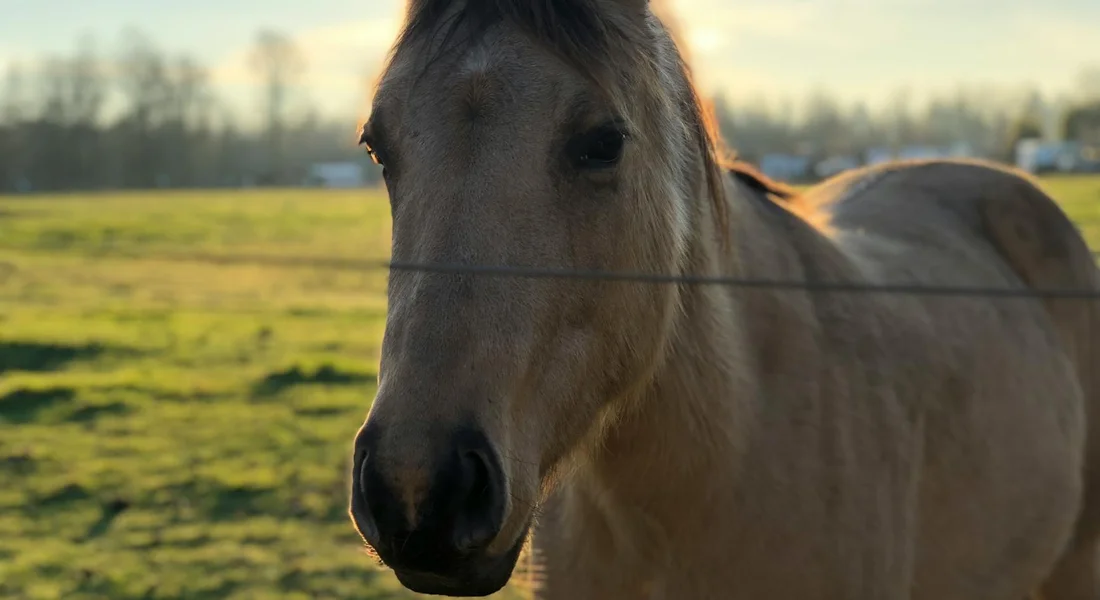
Training isn’t about bending a horse to your will. It’s a conversation where you teach them your language. At the barn, I see this daily. With Luna, a whisper works. With Pipin, you need a firm, clear bargain. Success starts when you see learning from the horse’s perspective, not a human schedule.
Operant and Classical Conditioning Basics
These fancy terms are just the science behind every “good boy” and peppermint. Think of them as the rules of your equine dialogue.
Operant Conditioning is cause and effect. The horse performs a behavior, and a consequence follows. We use it constantly, often without realizing. The key is timing. When Rusty yields his hip from a light touch, I release the pressure instantly. That release is the reward. The instant you release pressure or give a treat, you stamp that exact moment in the horse’s mind as the ‘right’ answer.
- Positive Reinforcement (R+): Adding something good to increase a behavior. A click and a treat for Pipin standing quietly at the mounting block.
- Negative Reinforcement (R-): Removing something unpleasant to increase a behavior. This is most groundwork and riding aids. Leg pressure is applied, the horse moves forward, pressure is removed.
- Positive Punishment (P+): Adding something unpleasant to decrease a behavior. A sharp vocal “no” for nipping. Use sparingly and clearly.
- Negative Punishment (P-): Removing something good to decrease a behavior. Turning away and ignoring a horse that’s mugging you for treats.
Classical Conditioning is about creating associations. It’s the Pavlov’s dog of the pasture. The squeak of the feed room door makes every head shoot up. You’ve paired that sound (neutral stimulus) with dinner (awesome stimulus). You can build positive associations to desensitize fears; the quiet ‘click’ of a target stick can become a promise of safety for a spooky horse.
Stages of Learning and Effective Cues
Horses don’t learn in one brilliant flash. They climb a ladder. Pushing them up a rung too fast causes confusion, resistance, and shattered trust. I learned this the hard way with a young horse years ago.
- Acquisition: This is the “aha!” moment. You teach the cue and the behavior. Keep sessions short-five minutes is plenty. Be crystal clear. For Luna, teaching ‘head down’ for haltering meant a light touch on the poll and the millisecond her muscles relaxed, I released. Repeat. Repeat. Repeat.
- Fluency: Now the horse knows the behavior, but needs practice. This is where you proof it. Ask for that head-down with the saddle creaking, with a dog barking, while you’re holding a blanket. Practice in different locations and with mild distractions to build a reliable response, not just a stall trick.
- Generalization: The final stage. The horse understands that ‘whoa’ means stop whether you’re on the ground, in the saddle, on a trail, or in the arena. They realize the principle, not just the pattern. This takes time and consistency across all handlers.
Your cues must be distinct. A leg aid for a canter depart should feel different from one for a leg-yield. My body language with cheeky Pipin is deliberate and steady, while with sensitive Luna, it’s almost a thought. A muddy, inconsistent cue is like shouting at someone in a language you’ve only spoken once; it creates anxiety, not understanding. Watch your horse. A flicked ear, a soft sigh, a slight weight shift-these are their words in reply. That’s the conversation. That’s gentle horsemanship.
Building Trust and Solving Common Behavioral Problems
Foundations of the Human-Horse Bond
Trust isn’t built in a day, but in the quiet moments of daily care. I learned this with Luna, my sensitive Thoroughbred, who would tense at a plastic bag’s rustle. By moving slowly and speaking softly during grooming, she learned my hands were safe. Your consistency is the cornerstone; horses thrive on predictable routines that make their world feel secure. This means feeding, turnout, and handling at regular times whenever possible.
Turnout is non-negotiable for a sound mind. A horse stuck in a stall is like us stuck in a tiny room-frustration builds. I advocate for maximum pasture time because it allows natural herd interaction and movement, which directly defuses behavioral powder kegs. Remember, a tired horse is often a good horse, and mental fatigue from boredom is just as problematic as physical exhaustion. Watching Rusty doze in the sun after a long roam is proof of that. This perspective aligns with the good horse, tired horse concept and with debunking 5 exercise turnout myths. You’ll see implicit links to these ideas in the next steps.
Gentle horsemanship means listening more than you direct. Pay attention to ear flicks, breath patterns, and weight shifts. Here are three pillars I lean on every day:
- Predictability: Be a steady presence. Sudden, erratic movements or moods create anxiety.
- Respect for Space: Teach and honor boundaries. I never let Pipin crowd me for treats, reinforcing that polite behavior gets rewards.
- Time Investment: Spend time doing nothing together. Just sit on the fence while they graze; it builds companionship without pressure.
The bond forms in the details: the rhythmic sound of chewing hay, the warm steam rising off a back on a cold morning. Investing time in simply being together, without agenda, forges a connection that underlines every training session.
Addressing Spooking, Nipping, and Herd Bound Issues
Behavioral issues are communication, not defiance. Your job is to translate and address the root cause, which is often fear or insecurity.
Spooking is a hardwired survival instinct. When Luna spooks at a tarp, she’s not being naughty; she’s sure it’s a horse-eating monster. Punishment here destroys trust. Instead, practice systematic desensitization.
- Control the Environment: Start with the scary object (like a tarp) far away and motionless.
- Reward Curiosity: Let the horse look. Click or softly say “good” when they relax or sniff. Feed a treat if they take a step forward.
- Build Gradually: Over sessions, slowly move the object closer or add gentle movement. Always work at a pace where your horse can think, not just react.
The goal is to become your horse’s trusted anchor, so when they feel fear, they look to you for guidance instead of bolting.
Nipping often starts as playful mouthing or treat-seeking. Pipin was a master, always testing pockets. To stop it, you must be boringly consistent.
- Withdraw attention immediately. Turn your back or step away.
- Redirect the energy. Ask for a simple task like “back up” or “target my hand” to reward an alternative behavior.
- Examine your routine. Are you inadvertently rewarding nipping by giving a treat to make him stop? Hand-feed treats sparingly and only for clear, correct actions.
Nipping is solved by making the unwanted behavior fruitless while providing clear, positive outlets for interaction.
Herd Bound Anxiety screams from the gate when you try to ride away alone. It stems from a lack of confidence in you as a herd leader. Build independence slowly.
- Practice Separation in Sight: Walk your horse just out of sight of their buddies for a minute, then return. Praise lavishly.
- Increase Distance and Time Gradually: Make each successful short trip a victory. The thud of their hooves walking willingly with you is the sound of growing trust.
- Make Yourself Interesting: Carry treats, do fun ground games, or find lush grass to graze on your solo adventures. You must become more rewarding than the safety of the herd.
I worked on this with Rusty, who used to call incessantly. Now, he knows our trail time means steady companionship and perhaps a peppermint. Solving herd bound behavior is about proving, through patient repetition, that being with you is a safe and rewarding place to be.
Daily Management for a Content Mind: Routine and Enrichment

The Psychological Power of Turnout and Routine
Unlocking the stall door and hearing the immediate, eager shuffle of hooves is a daily reminder of what horses truly need. I learned this from Rusty, who would stand patiently until his turnout, then amble out with purposeful calm, his whole demeanor softening as his feet hit the grass. Turnout time is the single most effective stress-reliever you can offer, acting as a mental reset button that no amount of stall toys can replicate.
Their psychology is built on movement and herd life. Confinement forces their alert, prey-animal minds into a state of low-grade panic. I’ve watched Luna’s focus improve dramatically after just a morning in the paddock, where she can see other horses and move freely. Regular access to space and companionship directly lowers cortisol levels, reducing the risk of stereotypic behaviors like weaving or stall-walking.
Routine provides the predictable structure that makes that freedom feel safe. Feed times, grooming order, and turnout schedules should be as reliable as sunrise. Horses are brilliant pattern-recognizers. Pipin knows his dinner time to the minute, and that predictability makes him a more willing partner. A consistent daily rhythm tells your horse the world is orderly and safe, freeing up mental bandwidth for learning and relaxation instead of vigilance.
Implement these core practices to build psychological security:
- Prioritize Pasture Time: Aim for a minimum of 12 hours of turnout daily, even in a smaller paddock, with at least one compatible herd mate.
- Sequence Matters: Keep the order of daily events consistent-for example, turnout before grooming, or hay before grain.
- Forage First: Use slow-feed hay nets to promote constant, trickle-feeding that mimics natural grazing and keeps the mind peacefully occupied.
- Quiet Observation: Make time to simply watch your horse in the field; knowing their normal behavior is your first clue to spotting mental distress.
Mental Enrichment and Play
Play is not frivolous for horses; it’s fundamental cognitive exercise. I once gave Pipin a jolly ball, and his focused investigation-pushing, chasing, and figuring out its bounce-was a masterclass in equine problem-solving. Providing outlets for play and curiosity is proactive care that staves off boredom and builds a more resilient, adaptable mind. Do horses also play to understand each other and their social bonds? Exploring social play reveals how they read cues and navigate herd interactions.
Enrichment engages their senses in novel ways. It can be as simple as scattering herbs in their hay or hanging a crunchy cabbage for them to explore. The goal is to spark gentle curiosity. Introducing safe, new sensory experiences-like the smell of lavender or the sound of a crinkly tarp-keeps their environment stimulating without being stressful.
Think like a horse. Their enrichment revolves around foraging, socializing, and exploring. Try these specific, barn-tested ideas:
- Snuffle Mats or Scatter Feeds: Hide chopped carrots or apple pieces in a pan of packed sand or a rubber mat with holes. This turns treat time into a foraging game that engages their sense of smell and touch.
- Movable Objects: Introduce sturdy, horse-safe items like a large rubber ball or traffic cone. Allow them to interact freely, observing how they choose to investigate-nudging, licking, or pushing.
- Positive Reinforcement Games: Teach a simple behavior, like touching a target stick, using only a clicker and a bite of alfalfa. This shifts their mindset from passive recipient to active participant.
- Change the Scenery: Hand-walk your horse on a different barn path or let them graze in a seldom-used corner. Novel vistas are potent mental refreshment.
For high-energy horses like Luna, I combine physical work with mental puzzles. Weaving through a pattern of ground poles at a walk demands her attention to foot placement and my body language. Mental fatigue from positive challenges often leads to a deeper, quieter relaxation than physical exertion alone.
When Behavior Signals Health: Welfare Indicators
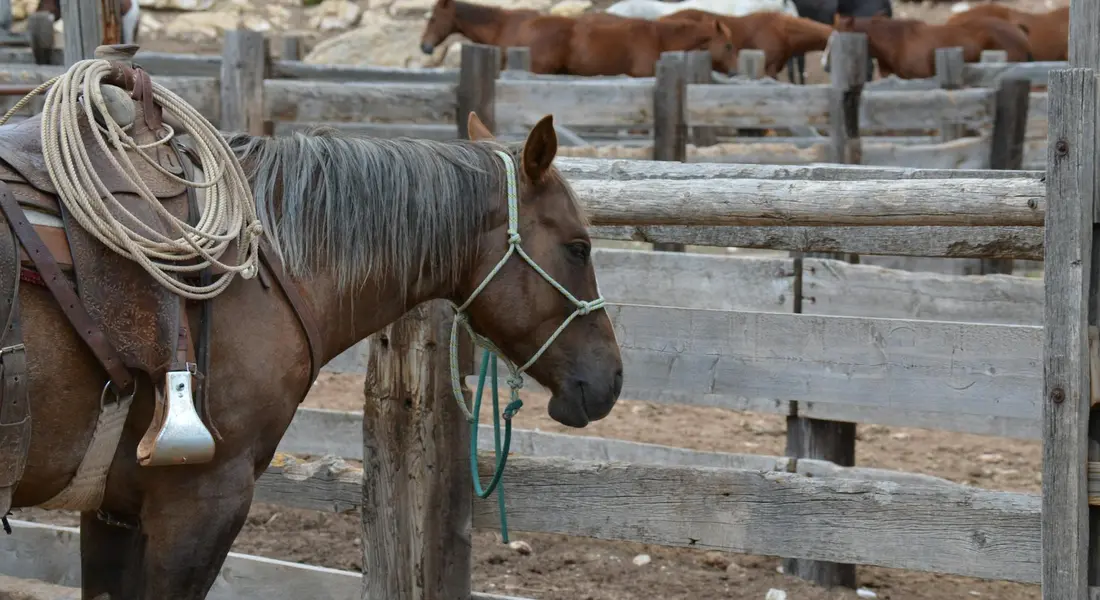
After decades in the barn, I’ve learned that a horse’s mood is their primary language of wellness. You start to feel the rhythm of a healthy herd like your own heartbeat. Observing behavior isn’t just about training; it’s your first and most reliable daily health check, long before you reach for a stethoscope.
Behavioral Signs of a Healthy Horse
A truly healthy horse isn’t just one that isn’t sick. Their behavior shows a positive state of being. You’ll see it in their relaxed posture, their curiosity, and their predictable daily rhythms. Recognizing these signs on a daily basis is key to good care.
Watch for these consistent signs of a horse thriving in both body and mind:
- Bright, Engaged Demeanor: Their ears flick forward with interest at novel sounds. They watch farm activity with a calm, alert expression, not a tense stare.
- Relaxed Posture at Rest: A hind leg is cocked, head lowered, lips may droop slightly. You might hear a deep, sighing breath. This is the equine version of flopping on the couch.
- Healthy Social Interactions: They groom a buddy for a few minutes, then wander off to graze. Play includes spirited bucks and playful nips, but stops before real aggression starts.
- Consistent Eating & Drinking Habits: They approach their hay with steady enthusiasm and have a regular drinking pattern. A happy gut makes for a happy horse.
- Free Movement in the Paddock: They don’t just stand. They walk to different grazing spots, roll with gusto, and occasionally break into a spontaneous trot or canter just for the joy of it.
I judge Pipin’s day as a success if I catch him napping flat out in the sun, all four legs splayed. That level of vulnerability screams, “I feel safe here.” That profound sense of security is the ultimate welfare indicator we should all be striving to provide.
Behavioral Red Flags for Pain or Illness
Horses are masters of hiding weakness, a survival instinct from the wild. Their pain signals are often whispers, not shouts. You must become a detective of subtle changes. The shift is what matters: a horse that usually meets you at the gate now hangs back.
These behavioral changes demand your immediate attention and often a call to your vet:
- Withdrawal from the Herd: Standing apart, often facing a wall or corner. This is a classic “I don’t feel well” signal, as seen in a stoic like Rusty when he had a low-grade fever.
- Altered Facial Expression: A fixed, glazed stare, ears held stiffly to the side, tight muscles around the eyes and nostrils. It’s a look of enduring discomfort.
- Changes in Eating Patterns: Playing with grain, taking unusually long pauses between bites of hay, or dunking mouthfuls in water (which can indicate dental pain).
- Abnormal Posture or Movement: Constant weight-shifting, pointing a toe, standing stretched out like a urinating male but not urinating (a sign of abdominal pain), or a consistently stiff gait.
- Uncharacteristic Aggression or Resentment: A usually tolerant horse pins ears when girthed or swishes tail violently under saddle. This isn’t “bad behavior”; it’s often a plea, saying the saddle hurts or their back is sore.
- Excessive Repetitive Behaviors: Vigorous stall-walking, weaving, or cribbing can be stress indicators, but a sudden increase in these behaviors can also point to physical discomfort like gastric ulcers.
Luna taught me this lesson starkly. Her “spookiness” under saddle escalated from lively to explosive. It wasn’t disobedience; it was a sore back from a poorly fitting saddle. When a horse’s behavior changes, your first question must always be, “Where does it hurt?” not “Why are they misbehaving?” This mindset shift is the cornerstone of ethical, effective horsemanship.
FAQ: Understanding Horse Behavior and Psychology
What are the differences in behavior between stallions, mares, and geldings?
Stallions often exhibit more assertive and territorial behaviors driven by hormones, requiring experienced, consistent handling. Mares can show more pronounced cyclical mood and performance changes related to their estrus cycle, though this varies individually. Geldings are typically more even-tempered and predictable, as gelding removes the hormonal influences that drive reproductive-related behaviors.
What is the importance of routine and consistency in horse care and training?
Routine provides a predictable structure that satisfies a horse’s prey-animal need for safety, directly reducing anxiety and stress. Consistency in cues and daily management builds clear communication and trust, allowing the horse to understand expectations. A reliable schedule in feeding, turnout, and handling supports both psychological well-being and efficient learning during training sessions.
How do horses perceive their world through their senses?
Horses have a panoramic field of vision but see details differently, often perceiving familiar objects in a new location as potential threats. Their highly sensitive hearing allows them to swivel their ears to pinpoint sounds, making them acutely aware of their auditory environment. A horse’s primary sense is smell, which they use powerfully for recognition, assessing safety, and exploring their surroundings. How do these senses compare to humans? Do horses perceive the world as humans do, or differently?
Your New Language
Reading your horse’s body language is a learnable skill that builds a safer, happier partnership. The most critical shift is to stop viewing their reactions as disobedience and start seeing them as communication-your horse is always telling you something. By learning to talk to your horse in their language, you unlock deeper understanding and clearer communication. In the next steps, you’ll see practical ways to apply this in daily interactions.
This understanding grows with patience and consistent, kind handling. True horsemanship begins not with control, but with quiet observation and a willingness to listen.
Further Reading & Sources
- Horse Psychology & the Language of Horses By Julie Goodnight
- Practical Horse Psychology | MU Extension
- Horse behavior – Wikipedia
- horseOlogy | What to Know About Equine Psychology
At Horse and Hay, we are passionate about providing expert guidance on all aspects of horse care, from nutrition to wellness. Our team of equine specialists and veterinarians offer trusted advice on the best foods, supplements, and practices to keep your horse healthy and thriving. Whether you're a seasoned rider or new to equine care, we provide valuable insights into feeding, grooming, and overall well-being to ensure your horse lives its happiest, healthiest life.
Behavior