
Treeless vs. Treed Saddles: Choosing for Horse Comfort and Rider Security
Hello fellow equestrians! Does your horse hollow its back or seem resistant to move forward? Are you facing unexplained soreness or gait changes after training? These frustrating signs often point straight to saddle fit, a detail that can make or break your horse’s well-being and your safety.
We’ll walk through the core comparison so you can make an informed choice. This article will break down:
- The fundamental anatomy of each saddle and how it contacts your horse’s back
- Real-world pros and cons for equine comfort and long-term soundness
- How the rider’s feel, balance, and connection differ dramatically between types
- My hands-on fitting protocol for evaluating both options in your own barn
I’ve spent years as a barn manager and trainer, wrestling with saddle pads and sweat patterns on everything from wide-bodied Quarter Horses to sharp-witted Thoroughbreds, and I’m here to translate that dirt-under-the-fingernails experience for you.
Understanding Treeless and Treed Saddles
What is a Treed Saddle?
Picture the classic saddle silhouette you see in every riding school. That’s a treed saddle. Its backbone is a rigid frame, the tree, traditionally made of wood but now often fiberglass or steel. This tree creates the saddle’s permanent shape, like the foundation of a house. It’s designed to distribute the rider’s weight across a broader area of the horse’s back, away from the sensitive spine. I’ve spent countless hours adjusting stirrup leathers on treed saddles, listening to that familiar, reassuring creak of well-oiled leather as I tack up. A properly fitted treed saddle provides clear structure and stability, which is why I trust one on Rusty for long, rocky trail rides where a solid feel is non-negotiable.
Think of the tree as a bridge that arches over the horse’s spine. Its width, twist, and bar angle are fixed, meaning it must be meticulously matched to your horse’s unique conformation. A saddle that fits my broad-shouldered Quarter Horse, Rusty, would be a torture device on Luna’s narrower, more prominent withers. The thud of hooves on hard ground transmits less shock to the horse when a well-shaped tree correctly channels the rider’s weight.
What is a Treeless Saddle?
Now, imagine a saddle that hugs your horse’s back like a thick, flexible blanket. That’s the treeless design. Without a rigid internal tree, it relies on layered cushioning and advanced fabrics to conform directly to the horse’s musculature. The feel is completely different for both horse and rider. I first tried one on Luna, my high-strung Thoroughbred, after noticing her tension under a standard saddle. The absence of a rigid frame can offer incredible freedom for the horse’s shoulder movement and back flexion, which is a game-changer for sensitive or asymmetrical horses.
Riding in a treeless saddle feels closer to bareback, but with security. You feel every shift of muscle underneath you. This can be wonderful for building a subtle connection, but it also means the rider’s balance becomes paramount. Your posture directly influences pressure points, so a crooked seat in a treeless saddle is something your horse will feel immediately and protest. They are not just padded pads; quality treeless saddles have structured panels and often a flexible spine channel for protection.
Saddle Fit: The Foundation of Comfort
How Fit Differs: Treed vs. Treeless
Fitting these two saddles is like comparing a tailored suit to high-performance athletic wear. Both need to fit, but the principles differ.
- Treed Saddle Fit: This is about matching a static object to a moving animal. You’re looking for the tree to mirror your horse’s shape. Key checks include two to three fingers of clearance at the withers, a clear path along the shoulder blade, and even pressure along the bars. A misfit here creates focal pressure points-I’ve seen the white hairs and dry spots left behind, a silent testament to a saddle that didn’t bridge the back correctly.
- Treeless Saddle Fit: Fit is dynamic and relies heavily on the saddle pad system. Since the saddle itself molds down, your focus shifts to ensuring the padding beneath prevents any “bridging” or pressure concentration along the spine. The right pad is not an accessory; it is an integral part of the saddle system, providing the necessary shock absorption and weight dispersion. The saddle should sit evenly without rolling, and you must watch for signs of the panels folding or pinching behind the shoulders.
Key Points of Saddle Fitting for Both Types
No matter which saddle you choose, these universal truths apply. I run through this mental checklist every time I saddle up, whether it’s for Pipin’s cheeky pony rides or a training session with Luna.
- Assemble Your Team: Always fit with a clean, dry horse and the pad you intend to use. A layer of sweat or mud can hide a multitude of fit sins.
- The Static Check: Place the saddle without a girth. Look for balance-it shouldn’t tip forward or backward. There should be a clear channel over the entire spine with no contact.
- The Mounted Check: This is non-negotiable. Fit changes under weight. After gently mounting and settling, have someone check the clearance at the withers and the angle of the saddle. You should be able to slide your hand easily along the shoulder and panel. Your horse’s behavior is the best gauge; ears back, tail swishing, or a stiff gait are clear red flags.
- Post-Ride Evidence: Remove the saddle and pad immediately after riding. Run your hand over your horse’s back. You’re feeling for even sweat patterns and warmth. Any dry spots, especially along the shoulders or loin, or areas that are noticeably hotter, indicate pressure.
- Re-evaluate Regularly: Horses change with age, fitness, and season. A saddle that fit perfectly in spring may be tight after a summer of lush grass. I check Rusty’s fit every few months, without fail.
Comfort Showdown: Horse vs. Rider
Horse Comfort: Pressure Distribution and Movement
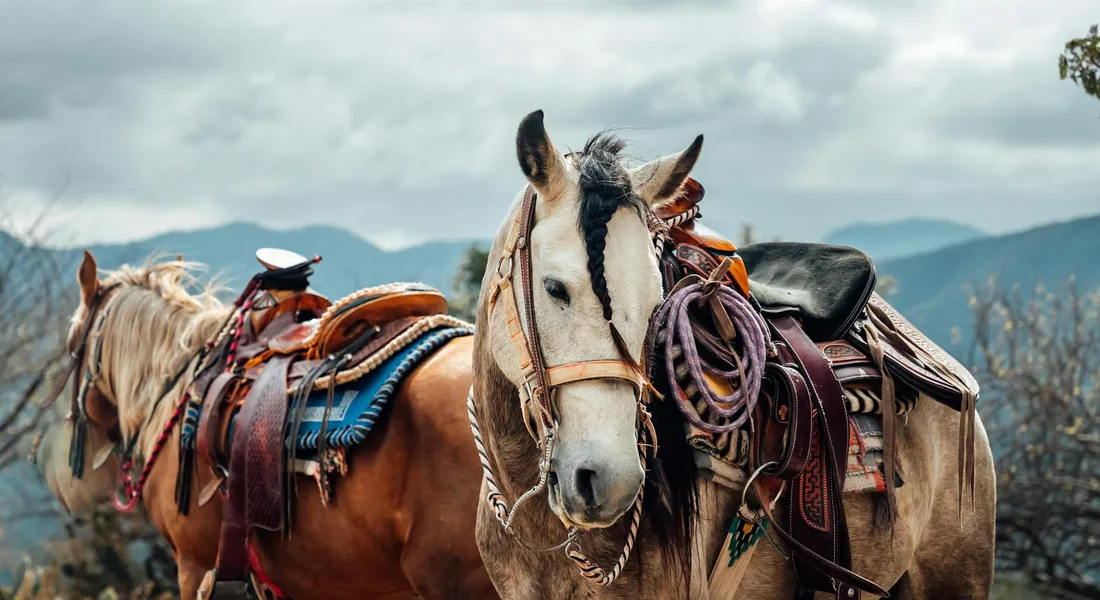
Think of your horse’s back like a sensitive suspension bridge. A treeless saddle sits directly on it, molding to every curve. This can be a blessing for a mutton-withered Quarter Horse like Rusty, but it demands vigilance. The entire saddle’s pressure distribution relies on your balance and the quality of the pad underneath, as there’s no rigid frame to lift weight off the spine. Without that structure, uneven rider weight can create hot spots faster than you can say “trot.”
Contrast that with a treed saddle. Its solid tree acts like a well-engineered arch, designed to bridge the spine and spread your weight across the panels. For a high-withered, sensitive soul like my Thoroughbred Luna, a properly fitted tree is the difference between a relaxed back and a tense, hollow one. The key is flocking that adapts to her changing muscle tone, which I check monthly with a gentle palm-down press along her withers.
Consider movement freedom. A treeless design allows the shoulder blade to rotate back without a rigid point interference. However, a well-designed treed saddle with a forward-cut gullet provides just as much shoulder liberty, and often more stability for lateral work. Watch for dry spots or white hairs-they’re your horse’s quiet report card on saddle comfort.
Rider Comfort: Seat, Balance, and Support
Your comfort isn’t just about a soft seat. It’s about how the saddle helps or hinders your body. Climb into a treeless model, and you’ll notice the immediacy. You’re sitting closer to your horse, which can improve balance by making you more responsive to his movements, but it offers minimal structural support for your seat bones or thighs. Your core and legs will work harder, which is great for building strength but can lead to fatigue on a three-hour trail ride.
A treed saddle provides a defined cockpit. The seat, panels, and flaps create a consistent platform. This structure is a gift for riders learning proper alignment or those with old injuries, as it helps maintain position without constant muscular correction. When Pipin decides to execute one of his famous treat-motivated spins, the secure knee block of my treed trail saddle keeps me centered and safe.
Let’s break down the rider support elements:
- Seat Security: Treed saddles often feature deeper seats; treeless saddles tend toward a shallower, closer feel.
- Stirrup Stability: The rigid tree of a treed saddle provides a fixed point for stirrup leathers, reducing swing and twist.
- Long-Haul Logistics: For endurance, the shock absorption of a treed saddle can reduce rider fatigue. For short, sensitive training sessions, a treeless saddle might enhance communication.
Rider Feel: Close Contact or Structured Feedback?
The Treeless Connection: Feeling Every Movement
Riding in a good treeless saddle is an exercise in raw communication. You feel the shift of ribs with each breath, the bunching of muscles before a transition, and the precise moment a hoof lands on a stone. This unfiltered feedback is unparalleled for developing a sophisticated feel and training a responsive horse, as you become hyper-aware of the smallest tensions or releases. It’s just you, the horse, and the creak of the leather.
That connection comes with responsibility. You also feel every stumble, spook, and imbalance directly in your seat. This requires an independent, balanced rider to avoid becoming a passenger who bounces and creates pressure points. I learned this with Luna; feeling her anxiety build through the saddle gave me a chance to breathe and soften my hands before she exploded, turning a potential bolt into a teachable moment.
The Treed Stability: Secure and Consistent
A treed saddle offers a processed, consistent dialogue with your horse. The tree filters out the minutiae, giving you clear, amplified signals about impulsion and direction. This structured feedback provides a secure and predictable ride, which builds confidence for both green riders and horses working in demanding environments. It’s the difference between hearing every instrument in an orchestra separately and hearing the cohesive symphony.
The stability is tangible. Your seat feels planted, and your leg has a reliable surface to drape against. This lets you focus on cues, strategy, or simply enjoying the smell of fresh hay on the wind instead of constantly micromanaging your balance. Those same design principles apply to the stable: a well-designed stable quietly supports the horse with thoughtful features. Think safe stalls, solid footing, and good ventilation—designs that matter as much as saddle fit. On Rusty’s steady back in a treed saddle, I can relax into the rhythm of the trail, knowing the saddle is a trusted partner, not another variable to manage.
Long-Term Back Health: What Matters Most
This debate isn’t just about a single ride; it’s about the years of partnership ahead. A saddle is an investment in your horse’s soundness. I’ve spent afternoons running my hands over Luna’s back, feeling for the subtle differences in muscle tone that tell a story of comfort or complaint. The right saddle preserves freedom of movement, allowing the back muscles to lift and swing, while the wrong one creates tension that eventually hardens into a physical memory.
Assessing Long-Term Effects on the Horse’s Spine
Think of a tree as a consistent architectural support system. A well-fitted tree distributes rider weight over a broad, stable surface. The goal is to avoid focal pressure points on the spine and dorsal processes. Over years, this consistent support can help maintain back musculature, provided the tree width and angle continue to match the horse’s shape as he ages and changes condition.
Treeless designs rely on perfect pad systems and even pressure distribution. Without a rigid structure, they conform closely, which is excellent for a perfectly symmetrical back. The long-term risk with a treeless saddle isn’t the saddle itself, but the potential for uneven saddle placement or a shifting rider to create inconsistent pressure, which can lead to asymmetrical muscle development over time. I check my treeless pad with the diligence of a farrier checking hoof balance.
Signs of Poor Fit to Watch For
Your horse gossips with his body. Listen closely. Learning to read these signals tells you whether your horse is happy and relaxed. Understanding his body language lets you respond in time and maintain a good bond. These signs apply to both treed and treeless setups, and ignoring them leads to long-term issues.
- Dry Spots: After removing the saddle, a patch of completely dry hair in the middle of a sweated-back area is a glaring red flag for a pressure point.
- Tension & Tail Swishing: Persistent swishing under saddle, pinning ears when girthing, or a hollowed, resistant back are cries for help.
- Behavioral Changes: A usually willing horse like Rusty becoming cinchy or refusing to move forward is a major signal.
- Muscle Atrophy: Look for hollows behind the shoulder blades or alongside the spine, not from work, but from compression and inhibited movement.
- Gait Irregularities: A shortened stride, reluctance to canter, or stiffness turning one direction can originate from back pain.
Discipline by Discipline: Which Saddle Performs Where?
There is no universal winner. The “best” saddle is the one that fits both your horse’s back and the job you’re asking them to do. It’s like footwear-you wouldn’t wear hiking boots to a ballet. If you’re new to saddling, a step-by-step guide to saddling your horse properly can help you start with the right approach.
Western Riding: Treed Tradition vs. Treeless Flexibility
The Western tree is a legend for a reason. It’s designed to secure a horn and distribute the weight of a roped steer, or to provide stability for long hours in the ranch saddle. For working cattle, roping, or heavy trail work with substantial gear, a quality treed saddle is the safe, proven choice. Its solid base keeps the rider secure during sudden movements.
Treeless western saddles have found a passionate following among trail and pleasure riders who cover varied terrain on horses with broader, flatter backs. They offer exceptional closeness and flexibility, allowing the horse to move freely over rocks and inclines. The trade-off is a different feel; the rider sits more “on” the horse than “in” a rigid seat, which some love and others find less secure for technical work.
English Disciplines: Dressage, Jumping, and Endurance
- Dressage: The close contact feel is paramount. Most high-level dressage riders use treed saddles with deep seats and long, supporting panels to facilitate precise aids and a balanced seat. The tree provides a stable platform for the rider’s position as the horse collects and engages.
- Jumping: Security and freedom for the horse’s shoulder are non-negotiable. Treed jumping saddles feature forward-cut flaps and panels designed to stay clear of the scapula. While some endurance-style treeless saddles are used for low-level jumping, for consistent gymnastic work, a professionally fitted tree is generally the safer bet for rider stability.
- Endurance: This is where treeless designs truly shine. Lightweight, adaptable, and coupled with scientific pad systems, they excel over 50-mile rides where a horse’s back can swell and change. The flexibility reduces chafing and hot spots during endless miles, prioritizing the horse’s long-distance comfort above all else.
Trail and Pleasure Riding: Comfort for Miles
This is the great playground for the treeless vs. treed discussion. For meandering weekend trails on a reliable mount like Rusty, both can work wonderfully. A well-fitted, lightweight treed trail saddle offers traditional security and ample gear attachment points.
If your trail horse has a hard-to-fit shape or you prize minimal weight and maximum horse movement, a high-quality treeless system with a proper shim pad can be a game-changer for all-day comfort. I’ve seen horses move with a looser, more relaxed stride over rough ground in a good treeless setup. Pairing that comfort with consistent, step-by-step training can help you develop a confident trail horse. A step-by-step training guide can walk you through steady conditioning and terrain-focused practice. The key is honesty about your riding style-if you’re often off-camber or in steep terrain, consider how secure you feel in each option.
Pros and Cons: Making an Informed Decision
Advantages and Disadvantages of Treeless Saddles
From my time managing a barn, I’ve found treeless saddles feel like a thick, flexible blanket between you and your horse. They mold to the horse’s back, which can be a game-changer for a moving target like a growing youngster or a muscle-building rehab case. The biggest perk is their adaptability to a wide range of back shapes, eliminating the hassle of finding the perfect tree width. You’ll notice a closer contact feel; it’s just you, the pad, and the horse.
But that flexibility has a trade-off. Without a solid tree, rider weight concentrates more directly under your seat bones. I learned this the hard way on a long trail ride with Rusty; without careful pad selection, he started showing subtle signs of discomfort. Treeless designs require exceptional quality padding to prevent pressure points and protect the spine. They can also feel less stable for the rider during fast work or sharp turns.
- Advantages:
- Conforms to unique or changing back conformation.
- Promotes a closer, more sensory connection to the horse’s movement.
- Often lighter in weight, easier to lift and carry.
- No rigid points to create bridging or pressure.
- Disadvantages:
- Less inherent weight distribution, relying heavily on the saddle pad.
- Can offer less lateral stability for the rider.
- May not be suitable for heavier riders or demanding disciplines.
- Requires meticulous attention to pad fit and condition.
Advantages and Disadvantages of Treed Saddles
A well-fitted treed saddle is like a good foundation for a house-it provides structure and support. The rigid tree distributes your weight over a larger area, which I’ve seen keep horses comfortable for hours. The solid pommel and cantle offer security, something I appreciate when Pipin decides on a sudden spook at a blowing leaf. The tree creates a consistent channel over the spine, guaranteeing clearance even when you’re in the saddle. This is crucial compared to riding bareback, where no such support exists.
That same rigid structure is the source of its main challenge: fit must be precise. A tree that’s too narrow pinches; too wide rocks and pounds. I remember a saddle that fit Luna in spring but was tight after a summer of conditioning. An ill-fitting tree doesn’t just cause soreness; it can restrict shoulder movement and create long-term muscle atrophy. They are also generally heavier and require more storage care to prevent wood warping.
- Advantages:
- Superior weight distribution for rider and horse comfort.
- Provides stable, predictable support for various riding styles.
- Clear, protected gullet channel safeguards the spinal processes.
- Durable framework can last for decades with proper care.
- Disadvantages:
- Inflexible; must match the horse’s width, wither shape, and back profile exactly.
- Can be heavy and cumbersome to handle daily.
- May need frequent adjustments or re-flocking as the horse’s body changes.
- Initial investment for a quality fitted saddle is often higher.
Choosing for Your Horse: Conformation and Individual Needs
Horse Conformations Suited to Treeless Saddles
Think of treeless saddles as the stretchy jeans of the saddle world. They work beautifully for horses without a “standard” shape. A broad, flat-backed draft cross or a round-barreled pony like Pipin often finds a treeless option more forgiving. They are a smart choice for horses in rehabilitation, whose musculature changes weekly, allowing the saddle to adapt as they build topline. I also consider them for very short-backed horses where finding a short-enough tree is a nightmare.
Horses with minimal withers, sometimes called “mutton withered,” can thrive in a treeless system with the right pad. The saddle won’t perch on top of them. Always prioritize a horse with a healthy, resilient back; a treeless saddle is not a fix for existing soreness or structural issues. Understanding the withers’ role helps explain why fit matters. They anchor back support and help guide saddle placement, so gear should respect that function. For the high-energy, sensitive types like Luna, the closer feel can improve communication, but only if the pad disperses pressure flawlessly.
Horse Conformations Suited to Treed Saddles
Treed saddles are the tailored suit. They excel for horses with defined structure. A horse with prominent withers and a sloping shoulder needs a tree with an appropriate cut to clear those bones. Thoroughbreds and many sport horses fall into this category. A properly fitted tree provides a locking point at the withers, stopping the saddle from sliding forward during uphill work. This is non-negotiable for safety on the trails with a horse like Rusty.
Horses with a narrower, more triangular back shape from wither to loin get essential support from a tree’s panels. For disciplines requiring precise rider position or greater stability, like jumping or cutting, the tree’s framework is invaluable. If your horse has a dip behind the withers or a sway back, a skilled fitter can adjust flocking in a treed saddle to fill gaps, something a treeless design can’t do.
The Final Fitting: Trying Saddles On
No catalog description replaces the thud of the saddle landing on your horse’s back. First, place the saddle without a pad or girth. Look for even contact along the panel or pad. You should see clear daylight through the gullet channel from front to back, with no pressure on the spine or withers. Run your hand under the front; it should feel snug but not tight. This check also ties into properly fit and adjust horse tack to keep the overall setup balanced and comfortable.
Next, do up the girth snugly, but not cinched tight. Have a friend watch as you mount and sit quietly. The saddle should not rock or pinch. Watch your horse’s ears and back muscles; a subtle swish, head toss, or hollowing is their review of the fit, and it’s usually accurate. Be alert for signs of a poorly fitting saddle—rubbing, heat, or an uneven movement. If you notice these, the next steps will guide how to assess fit. After riding, check for dry spots or uneven sweat patterns under the pad-these are maps of pressure.
- Assemble your tools: a bareback pad, a thin numnah, and your chosen saddle.
- Position the saddle correctly, just behind the shoulder blade.
- Check static fit, then move the horse’s legs to check for shoulder interference.
- Ride at all three gaits, noting stability and your horse’s demeanor.
- Inspect the sweat pattern immediately after removing the saddle.
This process takes time, but the sound of contented chewing after a ride tells you it was worth it. Your horse’s comfort is the ultimate metric, far beyond any brand name or trendy design. Investing in a professional fitter, even for a treeless setup, is one of the best things you can do for your partner’s welfare.
Frequently Asked Questions: Treeless vs. Treed Saddles
What are the long-term effects on the horse’s back for each saddle type?
A well-fitted treed saddle provides consistent architectural support, promoting even muscle development by distributing weight over a broad, stable area. A treeless saddle’s long-term success depends entirely on perfect, even pressure distribution via its pad system to avoid creating asymmetrical muscle development. The primary risk with treeless designs is not the saddle itself, but inconsistent rider weight or placement leading to long-term, uneven pressure on the back.
Which type of saddle is generally better for specific disciplines or riding styles?
For demanding, precise work like dressage, jumping, or Western performance events, a properly fitted treed saddle generally provides the necessary rider stability and secure platform. Treeless saddles excel in endurance riding and flexible trail riding, where lightweight adaptability and minimizing pressure points over long distances are priorities. The choice ultimately hinges on the required balance of close-contact feel versus structured support for the specific athletic demands.
Are there specific horse conformations that are better suited to one type over the other?
Horses with very broad, flat backs, mutton withers, or those in rehabilitation with changing toplines often adapt well to the forgiving, flexible nature of a treeless saddle. Horses with prominent withers, a narrower triangular shape, or a dipped back typically benefit more from the structured support and bridging ability of a correctly fitted treed saddle. There is no universal rule, as individual fit and the quality of the entire saddle system are the most critical factors for any conformation.
Making Your Choice
The right saddle is the one that fits your horse’s unique back first and suits your riding discipline second. Always prioritize your horse’s comfort and soundness over the trend or type of saddle.
Take your time with this decision, and pay close attention to the feedback your horse gives you during and after every ride. Their comfort is your safest and most rewarding path to a better partnership—and it can only come from understanding how horses respond to being ridden.
Further Reading & Sources
- Saddles With Tree vs Treeless Saddles – Synergist Saddles
- r/Equestrian on Reddit: Advice tree vs treeless saddle
- The Great Debate: Treeless Saddles vs. Traditional Saddles
- The Ongoing Controversy – Treed vs. Treeless Saddles – Part III • Schleese
At Horse and Hay, we are passionate about providing expert guidance on all aspects of horse care, from nutrition to wellness. Our team of equine specialists and veterinarians offer trusted advice on the best foods, supplements, and practices to keep your horse healthy and thriving. Whether you're a seasoned rider or new to equine care, we provide valuable insights into feeding, grooming, and overall well-being to ensure your horse lives its happiest, healthiest life.
Equipment