
Why Horses Wear Masks, Fly Veils, and Blinders: Protecting Eyes and Easing Minds
Hello fellow equestrians! That frustrated head toss or sudden spook you see isn’t just a behavioral quirk-it’s often a cry for help against flying pests, harsh sun, or overwhelming distractions. Left unchecked, these irritants can lead to scratched corneas, allergic reactions, and accidents that no owner wants to face.
Let’s clear up the confusion around equine face gear. In this article, I’ll break down the practical reasons for each piece so you can choose wisely for your horse. We will explore:
- How fly masks act as a daily shield against UV rays, dust, and relentless insects
- The specific job of fly veils in adding lightweight, breezy protection during work
- Why blinders are used not to blind, but to gently focus a horse’s attention and reduce panic
After years in the barn fitting these on everything from fiery thoroughbreds to clever ponies, I’ve seen how the right choice safeguards both equine welfare and your peace of mind.
What Are Masks, Fly Veils, and Blinders in Horse Care?
Walk into any barn in summer, and you’ll see a wardrobe of equine headgear. They’re not fashion statements but functional tools. Each one solves a specific problem, from pest control to psychology.
Basic Definitions and Everyday Uses
Think of these items as specialized equipment, like choosing between work boots, running shoes, and slippers for yourself. The right choice depends entirely on the job and the environment.
Fly Masks: The Bug Shield
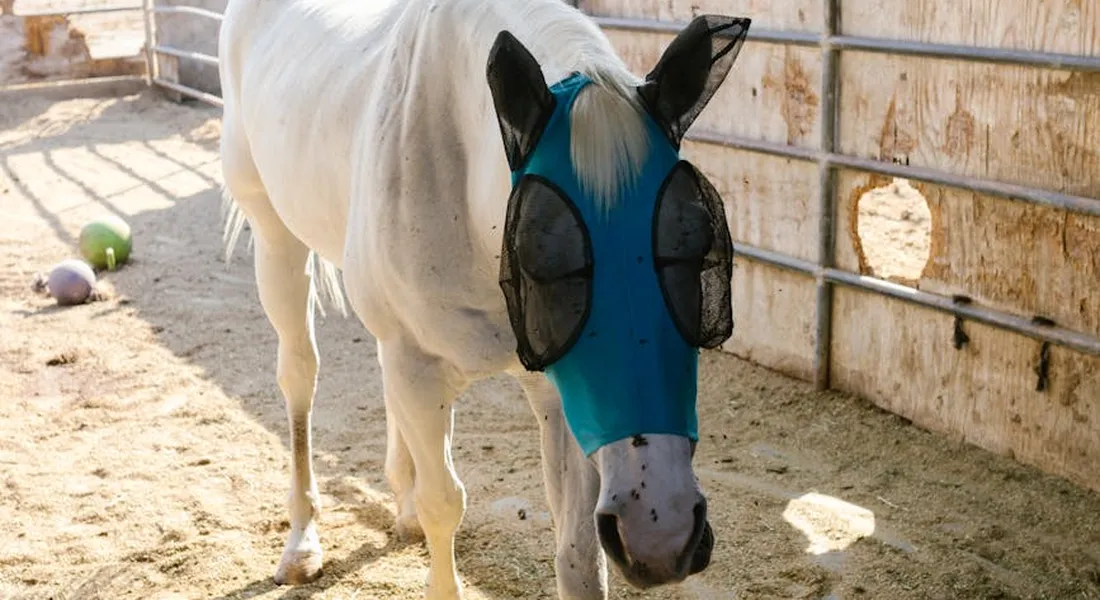
A fly mask is a mesh screen worn over the horse’s face, often with ears. Its primary job is to protect against flies, mosquitoes, and gnats. Nothing ruins a peaceful pasture nap like the relentless buzz and bite of flies around sensitive eyes. By preventing insect bites and the constant head-tossing they cause, a good fly mask is a cornerstone of summer welfare. I’ve seen a horse like Luna, already sensitive, transform from a nervous wreck to a calm grazer simply by wearing one.
Fly Veils: The Lightweight Protector
A fly veil is the riding counterpart, typically a shorter fringe of yarn, mesh, or leather attached to the bridle’s browband. It drapes over the horse’s forehead and eyes. While it helps shoo flies during a trail ride or in the show ring, its protection is lighter. The main benefit of a veil is disrupting that landing zone on the forehead, keeping a distracted horse more focused on you instead of the pests.
Blinders or Blinkers: The Focus Tool
Blinders are cups, usually leather or plastic, attached to a bridle or hood to restrict a horse’s peripheral vision. They are not for bug protection. Instead, they are a training and management aid. By limiting what the horse can see beside and behind them, blinders help a high-strung or easily distracted animal concentrate on what’s in front of them, reducing spooks and channeling attention. They’re common in driving, where a horse needs to focus on the road and not the cart behind.
Types of Eye and Face Protection for Your Horse
The variety can be overwhelming, but it means there’s a perfect fit for every horse and situation. Fit is everything-too tight rubs, too loose snags.
Fly Masks for Pasture and Stall
These are your workhorses for 24/7 wear. Look for durable, soft mesh that provides a clear field of vision. The best ones have breakaway safety features, like velcro closures that give way under pressure. A mask left on in the field must be safe.
Full Face Masks with Ear Covers
These offer maximum protection, shielding the eyes, cheeks, and even the ears from biting insects and summer sun. If your horse is plagued by gnats or has pink skin prone to sunburn, a full-face style with ear covers is a non-negotiable summer staple. My old gelding Rusty lived in his from May to October; it kept his white blaze from burning and his ears free from itchy bites. On hot days, keeping horses cool and safe in the heat is essential. Breathable fabrics and proper shade help with cooling while maintaining protective coverage.
Nose-Only Masks and UV Protection Styles
Some horses tolerate eye covers but hate things on their ears. A nose-only mask protects just the eyes and muzzle. For horses with eye conditions or those in intense sun, UV-blocking masks are critical. UV protection masks are medically vital for horses with recurring uveitis, as they can dramatically reduce painful flare-ups triggered by sunlight.
Fly Veils for Riding and Showing
Veils attach to your bridle and are meant for ridden work. They come in show-ready, colored yarn or discreet, practical black mesh. The key is ensuring the fringe is long enough to be useful but not so long it obscures vision. Always check that the veil lies flat and doesn’t flap into the horse’s eyes with every stride, which is more annoying than the flies.
Blinders for Driving and Training
These are serious tools, not for casual use. They come as part of a driving bridle or as separate training equipment. The goal is a controlled limitation of vision, not total blindness.
Cup Blinders vs. Standard Blinders
Standard blinders are flat or slightly curved panels. Cup blinders are deeper, bowl-like pieces that restrict vision more severely. Cup blinders are typically used for racehorses or extremely reactive animals, creating a very narrow “tunnel vision” to keep them running straight and ignoring competitors. For most pleasure driving or retraining a spooky horse, standard blinders offer sufficient focus without being overly restrictive.
Debunking Common Myths About Masks and Blinders
You’ll hear all sorts of opinions at the tack shop or on the fence line. Let’s clear the air on a few persistent myths I’ve encountered over the years.
Myth: Masks Cause Sweat Marks or Discomfort
A poorly fitted, cheap nylon mask will absolutely rub and cause sweat buildup. A well-designed mask made from technical, breathable fabric does the opposite. Modern fly masks are engineered like athletic gear, wicking moisture away and allowing air to flow freely over the sensitive eye area. I’ve left a good-quality mask on Luna during a hot, buggy afternoon, and when I removed it, her coat was dry and smooth-far more comfortable than she’d have been swishing her head non-stop.
Myth: Blinders Are Cruel or Restrictive
This one comes from a place of concern, but misunderstands the horse’s experience. Horses see the world differently than we do. Blinders don’t create blackness; they simply create a focused tunnel of vision that removes confusing movement from the rear and sides. For a horse pulling a cart in traffic, this prevents panic. It’s not a punishment-it’s a safety measure that reduces sensory overload, much like putting noise-canceling headphones on a nervous traveler.
Myth: Gear Creates Shadows That Spook Horses
If a mask or blinder is fitted correctly, it sits away from the eye itself. The key is ensuring there’s enough clearance so the horse’s eyelashes don’t brush the mesh or fabric, which eliminates strange, moving shadows in their vision. A horse spooked by its own mask is telling you the fit is wrong. Pipin the pony once got a mask stuck halfway off his forehead, and yes, he danced around like he’d seen a ghost. Once I repositioned it properly, he went back to grazing, utterly unbothered. Understanding how horses see colors and movement helps explain why mask fit matters for their vision. You’ll see how color vision ties into gear choices and responses.
How to Properly Fit a Fly Mask or Blinder on Your Horse
Fit is everything. An ill-fitting cover is worse than none at all. Here’s how to get it right, every time.
Step-by-Step Fitting for a Fly Mask
Never just grab a size and hope. Take two minutes to do this properly.
Measuring Your Horse’s Head Correctly
Use a soft measuring tape. You need two numbers:
- From the center of one cheekbone, up over the poll, to the center of the other cheekbone.
- From the middle of the forehead, down the side of the face, to about an inch below the prominent cheekbone.
Compare these to the manufacturer’s size chart-brands vary wildly, and a “full” size in one might be a “warmblood” in another.
Adjusting Straps for Snug, Safe Comfort
- Start with all straps fully loosened. Drape the mask over the face.
- Fasten the poll strap first, ensuring the mask’s front seam sits centered on the forehead.
- Adjust the cheek straps so the eye mesh is centered and clear of the eyelids and lashes.
- Check the chin strap. It should be snug enough to prevent a hoof from catching it, but loose enough for your horse to yawn comfortably.
You should be able to fit two fingers flat between any strap and your horse’s skin; if it leaves a deep indentation after five minutes, it’s too tight. This is part of properly fitting and adjusting horse tack. In the next steps, we’ll show you how to assess and adjust each strap for a secure, comfortable fit.
Fitting Blinders for Driving and Riding Safety
This is precise work, often done by harness makers or experienced drivers, but knowing the principles helps.
Ensuring Clear Vision Without Chafing
The blinder cup should be positioned so the horse’s eye is centered when looking straight ahead. The entire inner edge of the blinder must be smooth and padded, sitting parallel to the face without touching the whiskers or eyelashes. Any tilt or contact point will cause a sore. Watch your horse as it moves its head up and down-the blinder should move with the headgear, maintaining that consistent, clear space.
Using Blinders for Riding and Trail Safety
While most common in driving, some riding disciplines use blinkers (similar to blinders) for specific purposes.
Applications in Driving Equipment and Trail Riding
In driving, blinders are standard for safety. In riding, you might see blinkers on racehorses or occasionally on a spooky trail horse in very controlled situations.
Improving Focus on the Task Ahead
By blocking the rear view, the horse’s attention is directed forward, which can help a nervous animal feel less surrounded by potential threats. It’s a tool for a specific issue, not an everyday solution. Understanding common horse fears and skittish behavior can guide when to apply this technique. It also ties into broader strategies for understanding and managing anxiety.
Minimizing Distractions in Busy Environments
Think of a busy horse show or a trail ride past flapping flags. For a genuinely anxious horse, temporary blinkers can prevent the “startle-and-spin” reflex by removing the visual trigger from behind, allowing them to calmly navigate the challenge. This is advanced gear and should be used with expert guidance.
Introducing Gear to Sensitive or Young Horses
You can’t just buckle a mask on a fresh horse and walk away. Take it slow.
Patience and Positive Reinforcement Techniques
- Let them sniff the mask in your hands, paired with a treat.
- Gently drape it over their neck and shoulders, not their face.
- Hold it briefly over their eyes, then immediately remove and reward.
- Fasten one strap at a time, for just a moment, building duration slowly.
I spent three days introducing Luna to her first fly veil, using this exact method; now she drops her head for me to put it on, because she associates it with relief from flies. Rushing this process creates a head-shy horse.
How to Properly Fit a Fly Mask or Blinder on Your Horse
Getting the fit right is the difference between a happy horse and a rub-filled headache. I learned this the hard way with Luna, whose delicate skin can turn a slightly loose strap into a raw spot overnight. A properly fitted mask or blinder should stay put without pressure, allowing full movement and clear vision.
Step-by-Step Fitting for a Fly Mask
Start with a calm horse in a safe space. Let them sniff the mask first-I always do this with Pipin, who needs to investigate everything with his nose before he accepts it.
Measuring Your Horse’s Head Correctly
Use a soft measuring tape. Measure from the middle of the poll, down one side of the face, under the jaw, and back up to the poll. This crown measurement is your golden number for selecting the right size, much more reliable than guessing. For broad-faced horses like Rusty, I add an extra inch to ensure cheek clearance. Understanding your horse’s measurement size helps you choose properly fitted gear. That crown measurement ties into the overall horse measurement size you’ll use when selecting tack.
Adjusting Straps for Snug, Safe Comfort
Slide the mask on gently, starting over the ears. The fabric should not press on the eyes or whiskers. Adjust the poll strap so you can fit two fingers flat underneath it. Check the throat latch strap daily; it must be loose enough for a full yawn but not so loose it catches on fences. Listen for the soft click of buckles, not the strained creak of tight leather.
Fitting Blinders for Driving and Riding Safety
Blinders, or blinkers, are more precise. They are part of a bridle or harness and must be fitted by an experienced hand.
Ensuring Clear Vision Without Chafing
The blinder cup should sit just outside the eye’s orbit, never touching the lashes or the bony ridge above the eye. You must see daylight between the horse’s eye and the cup all the way around-this prevents chafing and allows for safe peripheral vision. Run your finger along the edge; it should be smooth, with no rough seams.
Using Blinders for Riding and Driving: Safety and Focus
Blinders aren’t about blinding; they’re about focusing. In a world full of fluttering leaves and scary trash cans, they can be a tool for confidence.
Applications in Driving Equipment and Trail Riding
In driving, blinkers keep a horse from spooking at the cart or vehicle behind them. For trail riding, some use smaller blinkers to help a nervous horse look forward on busy trails.
Improving Focus on the Task Ahead
By limiting the visual “noise” from behind, a horse can concentrate on the path and your cues. I’ve seen this help a green horse learn to pole drive without constantly worrying about the drag of the logs. For riders aiming to develop a confident trail horse, a step-by-step training guide can provide a clear path. This approach supports consistent progress on the trail.
Minimizing Distractions in Busy Environments
At a bustling showground or on a road with traffic, blinkers can dampen the whirl of movement. Always ensure your horse is acclimated to the gear in a quiet setting first-throwing them into chaos is a recipe for panic.
Introducing Gear to Sensitive or Young Horses
Go slow. For a horse like Luna, I might let a fly mask hang in her stall for a week before even trying it on.
Patience and Positive Reinforcement Techniques
Break the process down. Let them feel the straps with no pressure. Pair each step with a reward. Rubbing the forehead or a small piece of carrot can turn a suspicious object into a positive experience. With Pipin, I turned fitting his fly hood into a short, daily game that ended with his favorite peppermint.
Selecting Horse Gear: Material and Fit Considerations
Your choice of fabric and design directly impacts your horse’s welfare during those long turnout hours we advocate for.
Choosing Breathable Fabric for Horse Welfare
Look for mesh that feels cool and soft against your cheek. Nylon mesh is common, but some newer technical fabrics offer even better airflow and UV protection.
Prioritizing Comfort During Turnout Time
A horse wearing a mask 12 hours a day needs to forget it’s there. Breathable material prevents heat buildup and sweat, which is crucial for preventing fungal issues around the eyes and ears. I always choose masks with a soft, padded noseband for horses who graze constantly, like Rusty.
Durability and Ease of Cleaning for Daily Use
You’ll be washing this gear often. Mud, pollen, and slobber are part of the deal.
Checking for Safe, Rub-Free Designs
Inspect the interior for flat seams or bound edges. Double-stitched stress points and quick-dry materials are non-negotiable for gear that sees daily pasture use. A design with a removable ear cover is a stable hack I love; you can wash the sweaty ears separately.
| Material Type | Best For | Care Tip |
|---|---|---|
| Soft Nylon Mesh | General fly protection, good airflow | Machine wash cold, air dry |
| Technical Micro-Mesh | Maximum UV protection, sensitive skin | Hand wash to preserve coatings |
| Fleece-Lined Edges | Horses prone to rubs (like Thoroughbreds) | Check lining often for wear and tear |
Selecting Horse Gear: Material and Fit Considerations
Choosing the right face covering isn’t about grabbing the prettiest one off the rack. A poorly chosen mask can cause more problems than it solves, from skin irritation to overheating. I’ve learned this the hard way after a summer where Luna developed a rub under her jaw from a ‘bargain’ fly veil. The right material and a precise fit are non-negotiable for your horse’s daily comfort and safety.
Choosing Breathable Fabric for Horse Welfare
Think of your horse’s mask like you’d think of your own summer riding shirt. You want technical fabric that wicks moisture and allows air to flow freely. A horse’s face has sensitive skin and they cool themselves through respiration, so breathability is paramount.
- Fine, Synthetic Mesh: This is the gold standard for fly masks. Look for a tight, soft weave that blocks tiny gnats but lets air pass through effortlessly. The best ones feel light as a cobweb in your hand.
- Solid Fabric Panels: Some masks have solid sections for UV protection. Ensure these are made from a lightweight, moisture-wicking material, not a heavy, vinyl-like plastic that will trap heat and sweat against the skin.
- Natural Fibers: For fly veils or ear bonnets, cotton or a cotton-blend is often used. While breathable, it can hold moisture longer than synthetic mesh if it gets soaked with sweat or rain.
I always do the “hand test.” Hold the fabric up to your mouth and try to breathe through it. If you can feel your breath passing through easily, it’s a good sign. If not, it’s a hard pass.
Prioritizing Comfort During Turnout Time
Your horse is wearing this gear for hours during turnout, often unattended. Comfort is everything. A mask that shifts, binds, or irritates will drive them crazy and may even get torn off.
Focus on the points of contact: the ears, the poll, the bridge of the nose, and behind the jaw. These areas should be padded or lined with a soft, fleece-like material. I look for masks with stretchy, contouring shapes that move with the horse, not against them. Being able to tell if a horse is happy is all about reading their body language and comfort cues. That skill will help you assess gear fit and overall mood. A happy horse in turnout is a horse that can relax, graze, and socialize without constantly twitching and shaking its head to dislodge an annoying mask. Watching Pipin, our Shetland, you learn fast-if it’s uncomfortable, he’ll have it destroyed and hanging on a fence post in under ten minutes.
Durability and Ease of Cleaning for Daily Use
This gear lives in the dirt, the dust, and the mud. It will be chewed on by pasture mates, rubbed on fence posts, and exposed to daily sun and sweat. Durability isn’t a luxury; it’s a necessity for both safety and your wallet.
- Reinforced Stitching: Check the seams, especially around the ears and noseband. Double-stitching or bonded seams last much longer.
- Breakaway Safety Features: Many quality masks have a breakaway crown strap or velcro closures designed to tear free if the mask gets caught. This is a critical safety design you must look for.
- Washable Materials: You’ll be cleaning it weekly, if not more. Choose masks that are machine washable and dry quickly. A mask that holds grime can lead to bacterial or fungal infections on the skin.
My routine is simple: a quick hose-off to remove mud, then into a mesh laundry bag for a gentle cycle. Air dry. Investing in two masks per horse is a stable hack I swear by; one can be in the wash while the other is in use, ensuring your horse is always protected with clean gear—it’s just as crucial as cleaning your horse’s tack and hooves for proper hygiene.
Checking for Safe, Rub-Free Designs
The final step is the fitting room. A mask can be made from the best materials, but if it doesn’t fit *your* horse, it’s useless. Here’s my barn-tested fitting checklist:
- Eyes: The eye openings must be large enough that the mesh never touches the eyelashes or eyelids, even when the horse lowers its head to graze.
- Ears: For ear covers, they should sit smoothly without twisting or pinching. Listen for that soft rustle of fabric, not a strained crinkle.
- Noseband: It should lie flat, a good two fingers’ width below the prominent cheekbone. You should be able to slide two fingers comfortably underneath it all the way around.
- Overall Movement: Buckle it up and watch your horse move. Let them shake their head, chew, and lower their neck. Nothing should shift into their eyes or create tight pressure points. Check again after an hour of wear.
That old saying, “measure twice, cut once,” applies here. Fit once, check twice, and you’ll prevent the heartbreak of a raw spot or a lost, expensive mask in the back pasture. Rusty, with his broad cheekbones, needs a completely different shape than fine-boned Luna. Their comfort, and your peace of mind, depend on these details.
FAQ: Why Do Horses Wear Masks, Fly Veils, and Blinders?
Can leaving a fly mask on for extended periods cause sweat marks or skin issues?
Improperly fitted masks made from non-breathable material can trap moisture and cause rubs. A well-fitted mask made from technical, breathable mesh is designed to wick moisture away and allow air circulation. Regularly removing the mask to check for dirt, moisture, and proper fit is essential to prevent any skin problems.
Is it safe to leave a fly mask on my horse 24/7?
While many masks are designed for safe, prolonged wear, 24/7 use is not generally recommended. Daily removal allows you to inspect your horse’s eyes and face for any issues, clean the mask, and give the skin a chance to breathe. Safety features like breakaway straps are crucial for any mask intended for unsupervised turnout.
What mask material is best for a horse that sweats heavily on its face?
For heavy sweaters, prioritize a mask made from a technical, quick-dry micro-mesh fabric. These materials are engineered to pull moisture away from the skin and dry rapidly, preventing chafing. Ensure the design has ample ventilation and avoid masks with large solid panels that can trap heat and sweat against the skin.
Final Thoughts from the Stable
Selecting a mask, veil, or blinder is about matching the tool to your horse’s specific need, whether for comfort, protection, or focus. The most critical step is always ensuring a correct, comfortable fit and watching for your horse’s honest feedback-scratching, shaking, or settling-to gauge if the gear is helping or hindering.
Introduce any new piece slowly and with a calm demeanor, putting your horse’s ease above all else. True horsemanship means letting your horse’s reactions, from a relaxed sigh to a pinned ear, be your definitive guide—especially when teaching basic ground manners.
Further Reading & Sources
- Recovery Vizors – Medical/Preventative Eye Protection for Horses – Protective Pet Solutions
- A great new option for eye protection – Horse Care
- Eye Mask Recommendations – Horse Care – Chronicle Forums
- Fly Mask with Special Eye Protection? – Horse Care – Chronicle Forums
At Horse and Hay, we are passionate about providing expert guidance on all aspects of horse care, from nutrition to wellness. Our team of equine specialists and veterinarians offer trusted advice on the best foods, supplements, and practices to keep your horse healthy and thriving. Whether you're a seasoned rider or new to equine care, we provide valuable insights into feeding, grooming, and overall well-being to ensure your horse lives its happiest, healthiest life.
Equipment