
How Smart Are Horses? A Grounded Guide to Equine Intelligence vs. Dogs and Humans
Hello fellow equestrians. Have you ever been convinced your horse is plotting against you, or felt stumped when they learn a bad habit faster than a good one? That uncertainty about what’s going on in their head is a real and common training hurdle.
Let’s clear the air on equine cognition. We’ll move past myths and look at the evidence, covering key insights you can use today.
This article will provide clear answers on:
- The specific kinds of intelligence horses use every day in the pasture and arena.
- How a horse’s learning style directly compares to your dog’s, and why they aren’t simply “big dogs.”
- Practical, observable signs of smart behavior in your own horse, from problem-solving to social savvy.
- How to adjust your training to engage their mind, preventing boredom and building a better partnership.
I’ve based this on years of hands-on barn management and training, reading the cues of horses like clever Pipin and sensitive Luna to understand how they truly think.
What Exactly is Horse Intelligence?
Horse intelligence isn’t about solving complex puzzles on a chalkboard. It’s the quiet, practical wisdom of an animal built for survival in a herd. I see it every morning when Rusty positions himself perfectly at the gate for his first peppermint, having memorized the exact sound of my truck. Equine intelligence is measured by how well a horse learns, adapts, and communicates within its world. It’s the reason Luna can sense a shift in my posture before I even pick up the reins, or why Pipin remembers which stall latch yields to a determined nudge.
Forget comparing them directly to dogs or humans; their minds work on a different frequency. Where a dog might learn to please you, a horse learns to coexist with you for mutual safety. Their brilliance is rooted in perception, memory, and social negotiation, not obedience for its own sake. The thud of hooves moving in unison during turnout isn’t just noise-it’s a conversation about hierarchy and space, conducted in a language of movement and pressure.
Beyond Tricks: The Components of Equine Smarts
Break down “smart” in horse terms, and you’ll find several key areas where they excel. Watch your own herd, and you’ll start spotting these traits daily.
- Spatial Awareness & Problem-Solving: This is Pipin’s specialty. It’s not just escaping; it’s calculating. He assesses fence lines, gate mechanics, and human routines to find the path of least resistance. A horse navigating a tricky trail or backing out of a tight trailer space is using advanced spatial reasoning.
- Social Intelligence: Horses are masters of herd dynamics. They recognize dozens of individuals, remember past interactions, and form complex alliances. Luna’s sensitivity means she reads the emotional state of every horse and person around her, adjusting her behavior to keep the peace.
- Associative Memory: This is powerful and why consistency in handling is vital. Rusty associates the smell of leather and hay with a calm ride. He also remembers that the vet’s blue truck precedes a shot, which is why he becomes hard to catch. Their memories are deeply tied to sensory cues, both good and bad.
- Cross-Species Communication: A smart horse reads human body language with startling accuracy. They learn the subtle meaning of a sigh, a relaxed hand, or a tense shoulder. This isn’t mimicry; it’s adaptive communication for survival in a human-dominated environment.
Putting Horse Smarts to the Test
Scientists have moved beyond anecdotal stories to design experiments that reveal the equine mind. As a barn manager, I see these tests play out in the paddock every day, just without the lab coats.
Research often focuses on a horse’s ability to make choices and remember outcomes. The true test of horse intelligence is how they apply learned information to new, unpredictable situations. For instance, a study might hide a carrot under one of three buckets, but the real-world test is whether your horse can figure out how to open a stuck stall door when a storm is coming.
The smell of fresh hay can be part of a clever experiment. Researchers might see if a horse will choose a companion’s empty hay net over their own full one, testing empathy and social preference. These studies validate what we see in the stable: horses are deliberate thinkers with strong social bonds.
Common Equine Cognition Experiments
Let’s look at a few classic setups that show how horses think. You can even try adapted versions at home with safe, positive reinforcement.
- The Mirror Recognition Test: Horses don’t typically recognize themselves in a mirror like some primates do. However, they use the reflection to locate hidden food, showing they understand the mirror is a tool for spatial information. I’ve seen Luna notice a bird in a trailer’s mirrored surface before she sees it in the sky.
- The Problem-Solving Barrier Task: A favorite. A treat is placed behind a clear, lightweight barrier. The horse must move around or manipulate the barrier to get it. This tests inhibitory control and problem-solving. Rusty would nudge it with his nose, while Pipin would likely try to kick it over-both valid strategies.
- The Social Learning Experiment: One horse watches another solve a puzzle, like opening a feed bin. Then, the observing horse gets a turn. Studies show horses learn faster from watching a dominant herd member. This is why introducing new tasks in a group setting can be so effective.
- The Symbolic Communication Test: Horses can be taught to touch a specific symbol, like a black square, to indicate they want a blanket on, and a white square to have it removed. This proves they can learn abstract associations and communicate desires beyond basic commands.
In the stable, your own “experiment” is daily life. Notice how your horse reacts to a new saddle pad or a changed walking path. Their immediate feedback-a relaxed ear, a hesitant step-is data on their cognitive processing. For a deeper grasp of these cues, a complete guide to understanding horse behavior psychology can help. It translates daily observations into practical training choices. Always advocate for their mental welfare by providing varied turnout and gentle, consistent training that challenges their mind respectfully.
Horses vs. Dogs: A Cross-Species Comparison
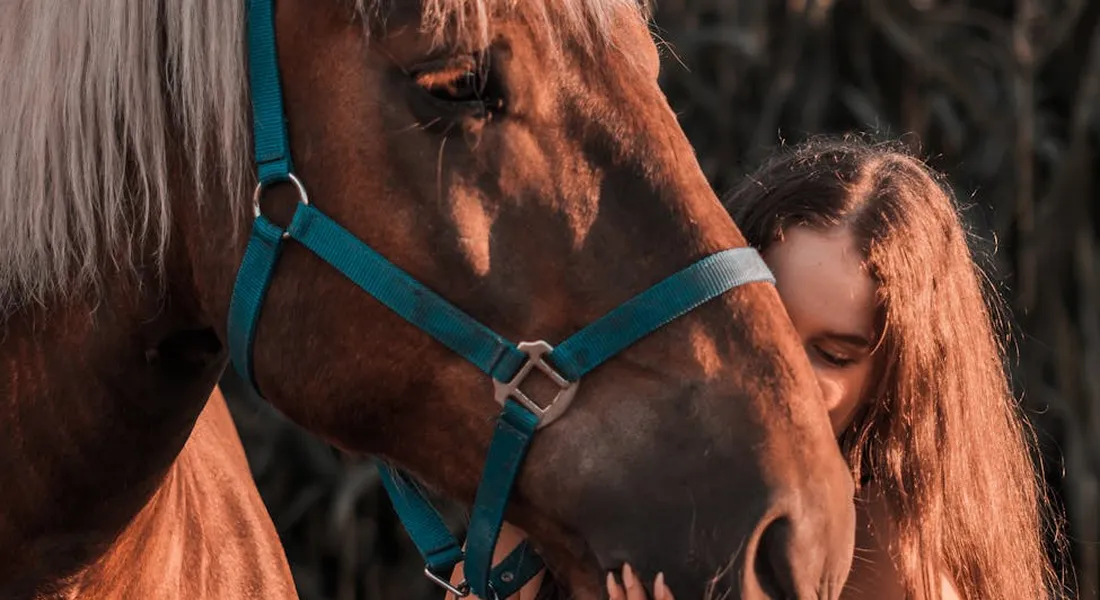
It’s tempting to compare every animal to our familiar canine companions, but horses operate on a completely different social and cognitive wavelength. A dog’s intelligence is often geared towards reading and manipulating their human family. A horse’s intelligence is fundamentally about reading and surviving within a herd.
Social Bonds and Communication Styles
Dogs are overt communicators. They bark, whine, and use clear body language like wagging tails or play bows directed at us. Horses are masters of subtle, whole-body conversation meant for other horses. The flick of an ear, a slight shift in weight, a soft nicker-these are their sentences. Sometimes a gentle nod or brief head shake communicates something specific—attention, hesitation, or a request for space. Understanding why horses nod and shake their heads helps explain this behavior.
In my herd, I see this daily. Rusty will simply pin his ears and turn his hindquarters slightly to tell Pipin the pony to back off from his hay pile. No teeth, no kick, just a polite but firm “move along.” A dog might snarl or lunge. Understanding this difference is the key to speaking ‘horse’ instead of expecting them to speak ‘dog.’
Their social memory is profound. They form lasting friendships and equally lasting grudges. Luna remembers which horse was rude to her three years ago at a clinic and will still give that horse the side-eye if they meet again.
- Primary Goal: Dogs seek to integrate with a human-led pack. Horses seek harmony and clear hierarchy within an equine herd.
- Communication: Dogs are vocal and demonstrative. Horses are quiet and nuanced, relying on posture and energy.
- Problem-Solving: Dogs often look to humans for solutions. Horses are conditioned to flee first, but will quickly learn routines that benefit them, like stall latches.
The Human Benchmark: Brain Size and Beyond
Comparing a horse’s brain to a human’s by size is a useless metric—a horse’s skull houses massive sinus cavities for warming air, not just thinking matter. The real story is in the structure. A much larger proportion of a horse’s brain is dedicated to processing sensory input and coordinating movement—especially when it comes to their senses compared to humans.
They don’t plot or scheme in a human way, but they are phenomenal perception machines. Their intelligence is less about innovation and more about perfect, instantaneous reaction to their environment.
Perception and Senses: How Horses Experience the World
Imagine seeing almost 360 degrees around you, hearing the rustle of a snake in grass we can’t see, and feeling the faintest shift of a rider’s balance. That’s a horse’s reality.
- Vision: Their wide-set eyes provide a panoramic view, with small binocular blind spots directly in front and behind. This is why sudden movements from the side can startle them-they saw it late. They also see more shades of blue and yellow than we do, but reds appear as brown or gray.
- Hearing: Those swiveling ears are independent radars. A horse can point one ear at a rider and another at a suspicious bird in the bushes, processing both sounds simultaneously. Pipin can hear the rustle of a treat bag from three paddocks away.
- Touch: This is our greatest communication tool. Their skin is incredibly sensitive, able to feel a fly land. A gentle, consistent cue is a clear whisper; a heavy, jerky cue is a confusing shout. Luna taught me to use the weight of a feather, not the force of my hand.
The thud of hooves on the trail isn’t just sound; it’s a vibration they feel through their legs, communicating with the horse ahead. The smell of fresh hay isn’t just pleasant; it’s a detailed map of nutritional content and safety. Do horses understand the sounds they hear or even their own vocalizations? Listening to how they respond can reveal how they interpret cues beyond our words. To work with a horse effectively, you must learn to appreciate the rich, detailed world their senses are constantly building, not the simplified one you perceive.
Smart Care: Leveraging Intelligence for Equine Welfare

A smart horse is a bored horse if we only meet their physical needs. Their minds crave engagement just as their bodies crave movement. I learned this early on managing a barn where horses like Pipin would invent his own “enrichment” by unlatching gates if we didn’t provide it. True equine welfare means designing care that challenges their intellect, preventing the stable vices that stem from mental stagnation. This starts with the cornerstone of good health: unrestricted turnout.
Horses are nomadic thinkers, wired to solve problems like finding the best grass or navigating herd dynamics. Confining them to a stall for most of the day is like putting a puzzle-loving child in an empty room. Ample turnout time isn’t a luxury; it’s non-negotiable brain food that lets them be horses, making choices and moving freely. Creating a safe, enriching environment for your horse is essential. It means secure spaces, consistent routines, and mental challenges that keep them curious and calm. I’ve watched Luna’s high-energy anxiety melt away when she has miles of pasture to explore, her mind occupied by the environment instead of fixating on stable sounds.
Enrichment Ideas for the Thinking Horse
Enrichment turns daily care into a game that works their noggin. It doesn’t need to be expensive-it needs to be thoughtful. The goal is to mimic natural foraging and problem-solving behaviors. Start by simply scattering their hay in a large pile instead of a net; they’ll spend time sorting through it, just like they would on the open range.
Here are a few stable-tested ideas to engage your horse’s curiosity:
- Food Puzzles: Use a slow-feeder ball or a muffin tin with rocks placed in the cups to hide treats. Listening to Rusty nudge a ball around for his pellets keeps him busy for hours.
- Novel Obstacles: Introduce safe, new items in the paddock. A traffic cone, a tarp on the ground, or a row of pool noodles can become a fascinating thing to sniff, touch, and walk around.
- Social Swaps: Rotate which horses share a fence line. The fresh interaction is mental exercise, as they re-establish greetings and hierarchy without the stress of a new herd.
- Trail Walks: Even in-hand, a walk on a new path engages all their senses. Let them stop to look at the weird mailbox or smell the fallen leaves.
Remember, the smell of fresh hay, the sound of a crinkling treat bag, the texture of a scratchy brush-all these sensory inputs are part of a rich mental life. Rotate your enrichment tools weekly to prevent boredom; even the best puzzle loses its challenge once it’s solved.
Training the Thinking Horse: Methods That Work With Their Minds
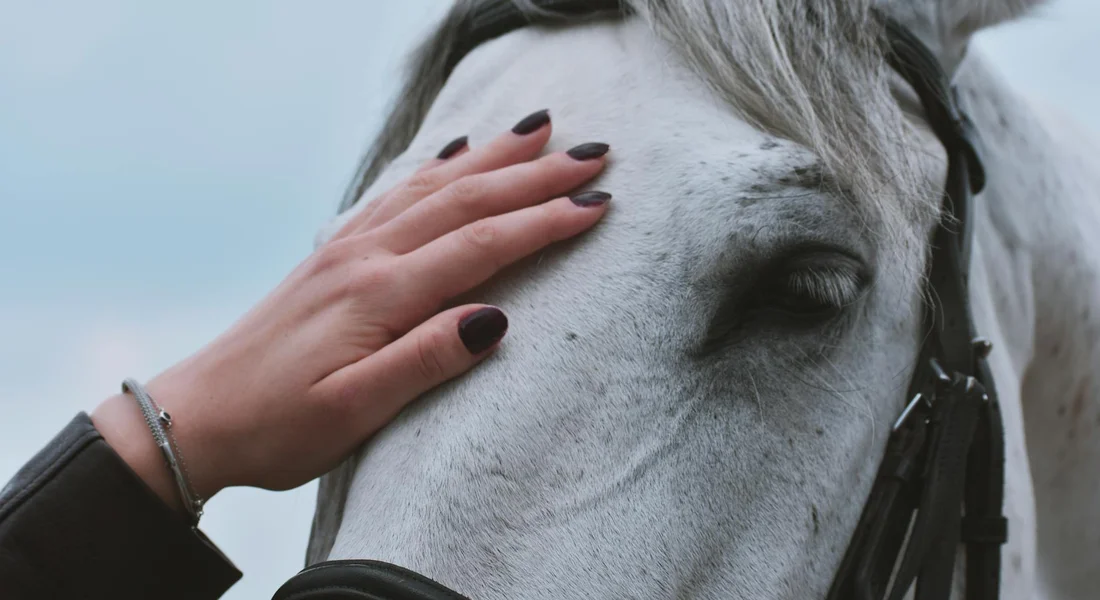
Training a smart horse with force is like trying to shout a math problem into solution; it just creates fear and resistance. Their intelligence demands partnership. Methods based on clear communication and positive reinforcement don’t just teach behaviors-they build a willing dialogue. I build every training session on a simple rule: make the right choice easy and the wrong choice hard, but never scary. The thud of hooves calmly backing up when asked is the sound of a horse thinking, not just reacting.
Pressure-and-release is the language horses speak naturally. A fly lands on their side (pressure), they twitch their skin (response), the fly leaves (release). We use the same concept in training, but with intention. Apply gentle pressure, wait for the smallest try, then instantly release to mark the correct thought. This turns training into a puzzle they want to solve. With Luna, a mere shift of my weight is often pressure enough; a release of tension rewards her for reading my subtle cue.
Reading Your Horse’s Learning Style
Just like people, horses have individual learning styles. Spotting yours saves frustration and accelerates training. Watch their reactions closely in new situations. The key is to observe whether your horse learns best by doing, by watching, or by taking extra time to process. Their personality in the barn is your biggest clue to understanding how to communicate effectively with them.
Consider the horses I’ve worked with:
- The “Doer” (Like Rusty): Reliable and trial-and-error. He learns through repetition and clear, consistent cues. Short, positive sessions with immediate rewards for correct actions work best. He hates puddles, so training near one requires patience, not pushing.
- The “Observer” (Like Pipin): Cheeky and strategic. This horse learns by watching other horses or even you. Let them see another horse load into a trailer first. They’re often food-motivated, making a well-timed treat a powerful teacher for complex tasks.
- The “Processor” (Like Luna): Sensitive and thoughtful. They need quiet, slow introductions. Flooding them with information causes shutdown. Ask once, then give them a long pause to think about it. Soft hands and a calm voice are your best tools here.
Your horse will tell you how they learn if you listen. If a training method isn’t working, the fault isn’t with the horse’s intelligence-it’s with our failure to adapt our teaching to their unique mind. Adjust your pace, your rewards, and your expectations accordingly, and you’ll unlock a deeper level of cooperation. The creak of leather as you saddle up will then signal a shared understanding, not a struggle. Understanding how horses learn is the first step in forming that bond.
FAQ: How Smart Are Horses? Comparing Horse Intelligence to Dogs and Humans
How does a horse’s problem-solving intelligence differ from a dog’s?
Horses often solve problems related to spatial navigation and accessing resources independently, using observation and memory of their environment. Dogs typically solve problems with a more human-centric focus, often looking to manipulate people or objects for direct social reward. This means a horse might figure out how to open a gate for freedom or better grazing, while a dog might solve a puzzle to please its owner and receive a treat.
In what way is a horse’s social intelligence distinct from human social intelligence?
Equine social intelligence is a non-verbal, herd-centered system focused on maintaining harmony and reading subtle body language for immediate survival. Human social intelligence involves complex language, abstract theory of mind, and long-term strategic planning within vastly larger social networks. A horse brilliantly navigates herd hierarchy and bonds, but it does not conceptualize social relationships or emotions in the abstract, narrative way humans do.
Can you compare how horses and dogs learn from humans during training?
Horses primarily learn from humans through pressure-and-release, interpreting our body language as part of a cooperative dialogue for mutual safety and comfort. Dogs are more inclined to learn through direct social reinforcement, such as eager-to-please obedience and vocal praise, viewing humans as surrogate pack leaders. This fundamental difference means horse training focuses on clear, consistent physical communication, while dog training can more readily incorporate exuberant verbal feedback and commands. This same body language awareness also helps you tell if your horse is happy by reading their expressions and posture, a skill you’ll explore in the next steps.
Honoring the Horse’s Mind
Their cleverness is practical, rooted in safety and social connection, so prioritize mental stimulation through varied routines and problem-solving games. Training succeeds when you work with their nature, using patience and reward-based methods to build confidence instead of demanding obedience.
True horsemanship means respecting their intelligence by providing choice and observing their feedback. The deepest understanding comes from quiet moments in the stall or field, simply listening to what they tell you.
Further Reading & Sources
- Are Horses Smarter Than Dogs? Animal Intelligence Explained – Dogster
- How Smart Are Horses? : 13.7: Cosmos And Culture : NPR
- Are dogs smarter than horses? – Quora
- How Smart are Horses and How Do They Compare to Other Animals?
At Horse and Hay, we are passionate about providing expert guidance on all aspects of horse care, from nutrition to wellness. Our team of equine specialists and veterinarians offer trusted advice on the best foods, supplements, and practices to keep your horse healthy and thriving. Whether you're a seasoned rider or new to equine care, we provide valuable insights into feeding, grooming, and overall well-being to ensure your horse lives its happiest, healthiest life.
Behavior