
How Do You Teach a Horse to Lay Down and Stand Still?
Hello fellow equestrians. Getting a horse to lay down and stand quietly on cue is one of those skills that looks effortless-until you’re the one facing a confused or anxious animal. I know the worry: you picture a vet emergency or a farrier visit where a calm, recumbent horse would make all the difference, but forcing it feels wrong and risky.
Let’s walk through a kinder way. I’ll cover the critical groundwork that makes your horse feel safe enough to try, a slow, pressure-release method that uses your horse’s natural responses, and how to reinforce the “stand still” part so it sticks for real-world situations.
This comes from my years on the barn floor, patiently applying these principles to everything from sensitive Luna to my own treat-bribing quarter horse.
Why Bother Teaching a Horse to Lay Down?
Think of it this way: a horse who willingly lays down is telling you they feel safe enough to be completely vulnerable. This behavior is the ultimate trust exercise, transforming routine care and potential emergencies from wrestling matches into quiet moments of cooperation. I learned its value the hard way when Rusty had a stone bruise; getting him to rest his leg comfortably on the ground made all the difference in his recovery.
Beyond vet and farrier help, it’s a gateway to deeper connection. Teaching a horse to lay down on cue engages their mind, reduces barn boredom, and reinforces that your presence means calmness, not just work. For a high-strung horse like Luna, mastering this skill was a breakthrough in managing her anxiety, giving her a clear “off switch.”
From a purely practical view, it simplifies everything. You can clean a belly sheath or inspect a hoof coronary band with ease, turning a chore into a peaceful grooming session that benefits you both. It’s not a circus trick; it’s a functional tool born from patience and mutual respect.
The Foundation: Ground Manners and Calmness
You cannot ask for a complex behavior if the basics are shaky. A horse must find stillness rewarding before you can ask them to assume such a submissive posture. I’ve seen too many attempts fail because the horse was mentally still in the paddock, not focused on the handler in the quiet of the arena.
True calmness often starts outside the training session. Ample turnout time is non-negotiable; a horse with pent-up energy from stall life simply cannot access the mental quiet needed for this lesson. Pipin, our clever pony, only started to listen once he’d had his daily romp and graze, reminding me that a tired horse is not always a calm horse, but a fulfilled one is.
Core Skills to Master First
Before you even whisper the cue for “down,” these building blocks must be rock solid. Each skill teaches the horse to yield to gentle pressure and find comfort in your guidance, which is the entire mechanics of asking for a lay down. Rushing this is how accidents happen.
Your horse must respond reliably to these three fundamentals:
- Standing Still While Tied: Not just for a minute, but calmly through distractions like the creak of the barn door or another horse passing. This builds patience.
- Yielding the Hindquarters and Forequarters: A light tap of a dressage whip or push of your hand should move their feet sideways. This teaches them to follow pressure, a key part of the lay-down sequence.
- Desensitization to Touch Everywhere: Run your hands down their legs, handle their fetlocks, and simulate a vet’s touch. A horse that flinches at a rope around its pastern isn’t ready.
Drill these skills in short, positive sessions. Use the smell of fresh hay or a quiet scratch as a reward, creating a positive association with focused work. The thud of a hoof shifting patiently into place is your signal that they’re listening, not just reacting.
Gathering Your Tools and Setting the Scene
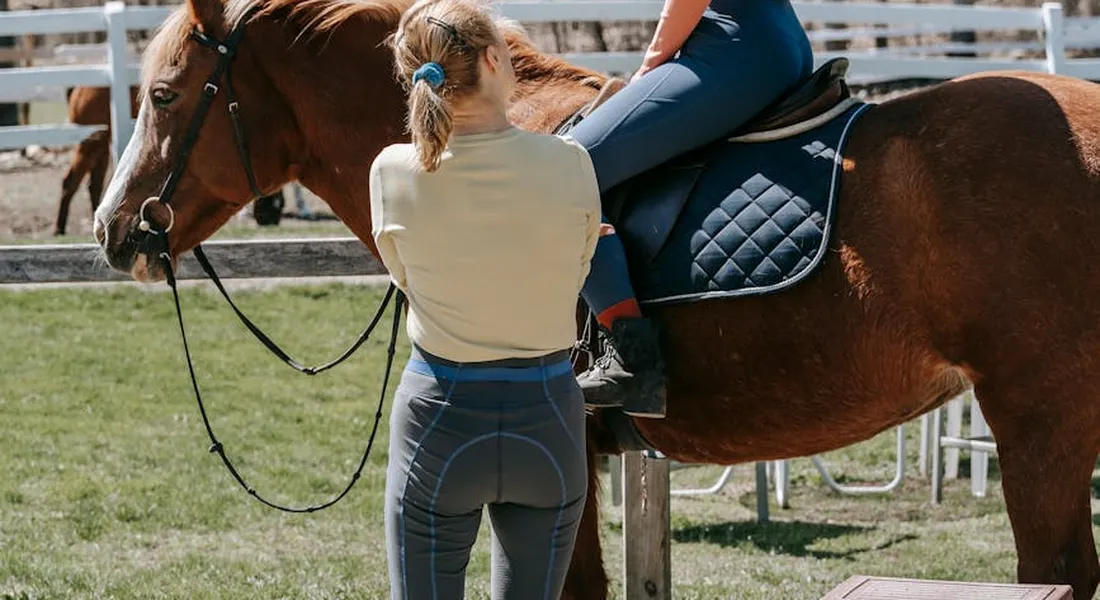
Before you even think about a cue, your preparation sets the stage for success or frustration. This isn’t a trick you rush in the main aisle as the farrier pulls in.
You need a quiet, secure, and soft space. I use the round pen on a day when the footing is perfect-not too deep, not too hard. A dusty arena or a grassy paddock works, but avoid slippery concrete or rocky ground. The absolute priority is your horse’s physical comfort and sense of security; if they feel unstable or anxious, their instinct will be to stay on their feet.
Your toolkit is simple, but each piece is non-negotiable:
- A well-fitting halter and a long, soft lead rope. No chains, no pressure.
- High-value treats your horse adores. For Pipin, this is sliced apples. For Rusty, peppermints. Have them ready in a pouch.
- A clicker, if you use marker training, or a consistent verbal marker like a soft “yes!”
- Patience measured in hours, not minutes. This took me three weeks of short sessions with Luna.
- Your horse should be calm, not fresh from turnout. A little hand-walking or grooming first can settle their mind.
Step-by-Step: Teaching the Lay Down Cue
This process is a conversation of pressure and release, broken into tiny, understandable pieces. We build it from the ground up, literally.
Step 1: Establish a Deep “Bow” or Head Lowering Cue
We start not with the legs, but with the head. A horse can’t lie down comfortably with its head in the air. I teach a deep head lower by applying gentle, steady downward pressure on the lead rope right under the chin.
The instant their head drops even an inch, I release all pressure and give a treat. This teaches the horse that yielding their head downward is the key that unlocks the reward, building a foundation of relaxation. We repeat this until they will hold their head low comfortably, maybe even touching their nose to the ground. With Rusty, this was easy; with Luna, I had to wait out her initial nervous head tosses until she discovered stillness was the answer.
Step 2: Teach the Horse to Shift Weight and Fold a Leg
Once the head is low, I use a gentle touch to ask for a weight shift. Standing at the shoulder, I apply light, rhythmic pressure to the side of the front leg, just above the knee.
I’m not pulling the leg out. I’m encouraging the horse to pick it up and “fold” it, shifting their weight onto the other front leg. The moment they lift that foot, even just a scrape off the ground, I mark and reward. This step is about breaking the big motion of lying down into its smallest mechanical components: weight shift and leg flexion. Some horses, like clever Pipin, will try to step sideways instead. I just reset, ask for the head lower again, and try for the smallest lift.
Step 3: Encourage the Full Lie Down
This is the big leap. With the horse’s head low and one front leg folded, I continue gentle pressure on the lead rope downward and slightly toward the folded leg. I might add a soft voice cue like “down.” This isn’t a jump, but it requires similar trust and technique.
The goal is for them to slowly buckle onto their knees, then settle onto their side. You must let the horse find their own balance and commit to the movement; forcing it will cause a panicked scramble back up. The first few times, they may only kneel. That’s a massive victory! Reward that heavily. My heart soared when Luna first knelt, her dapple grey frame looking like a statue-it was proof she trusted me.
Step 4: Mark the Moment and Reward Generously
The exact second their body is fully on the ground, use your marker (“click!” or “yes!”). Then, let them be. Do not rush over.
I toss the treat to them so they can eat while resting. This builds a positive association with the down position. Let them stand up on their own timing; capturing the “stand still” part comes from rewarding the calm stay, not from forcing them to jump up. After a few seconds of quiet, you can release them with a soft “okay.” Soon, the act of lying down itself becomes the calming, rewarding behavior, which is the whole beautiful point.
The Art of Standing Still: Patience on Command
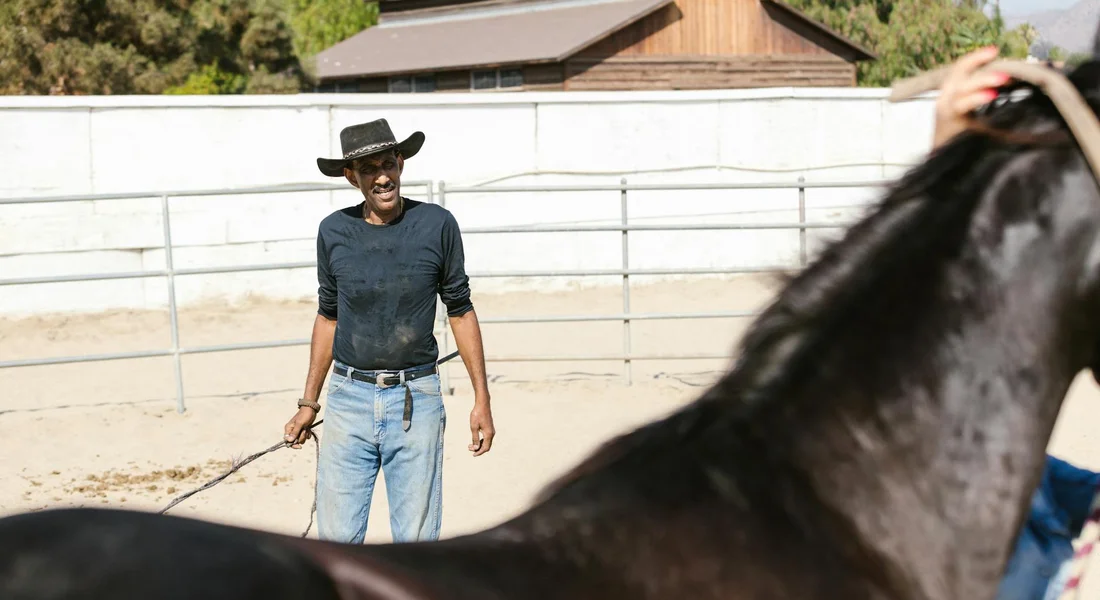
Teaching a horse to stand still is less about force and more about cultivating a deep breath. It’s the foundation for everything from vet visits to mounting, and it starts with your own energy. Your horse is a mirror; if you’re fidgety and impatient, they will be too. I start every session by asking for a simple “whoa” and then doing absolutely nothing for a full minute, which feels like an eternity when you’re used to moving. This calm, deliberate pace is the first step in teaching your horse basic ground manners. It sets you up for safer, more respectful handling.
With a horse like my sensitive Luna, a gust of wind or a shifting shadow is a crisis. Asking her to stand meant first helping her believe the world was safe. I’d stand at her shoulder, my hand on her neck, breathing slowly and ignoring everything else. The release of pressure-a step back, a soft word-only came when she softened, not when she finally exploded. With Rusty, the steady Eddy, the challenge was boredom. He’d try to sneak a nibble of grass or shuffle sideways. Consistency was key; he learned that “stand” meant until I said otherwise, not until he decided he was done.
Building the “Park” Cue
I use a specific verbal cue, “park it,” paired with a slight shift of my weight back. The steps are simple but require repetition:
- Ask for a halt from a walk. The moment all four feet stop, say your cue (“park,” “stand,” “stay”).
- Take a single, deliberate step back. If they follow, gently guide them back to the original spot. No drama, just a simple correction.
- Begin to increase duration. Start with 10 seconds, then 30, then a full minute. The goal is to build the muscle memory of stillness until it becomes the default, not a restraint.
- Add minor distractions. Rustle a treat bag, drop a grooming bucket nearby, have someone walk past. Reward heavily for ignoring the commotion.
This isn’t just obedience; it’s a gift of calmness. A horse that knows how to stand still is a safer horse for the farrier, the vet, and for you. I’ve spent countless afternoons in the cross-ties practicing this, letting the familiar sounds of the barn-the creak of the hayloft door, the distant thud of a kick in a stall-become background noise instead of a call to action.
Safety First: Managing Risks and Reading Your Horse
Asking a 1,000-pound animal to lay down or be profoundly still around you requires a safety protocol written in stone. This is not the time for pride or pushing through. Your horse’s comfort and confidence are the only metrics that matter.
The Day Luna Said “No”
I remember a cool morning when Luna was particularly tense, her coat twitching over muscles wound like springs. I began our usual gentle yielding exercises, but instead of softening, her eye hardened, and she became dangerously still-a statue of panic. That frozen tension is a louder “no” than any rear or kick; it’s a horse screaming internally. I immediately ended the session, took her for a hand-walk instead, and let her just be a horse. Forcing the issue would have shattered her trust and likely gotten one of us hurt.
Non-Negotiable Safety Checklist
- Footing is Everything: Work only on a deep, level, and non-slip surface. Wet grass, concrete, or gravel is an invitation for a catastrophic slip.
- Attire Matters: You need sturdy boots (steel toe is wise) and a helmet. If you’re asking a horse to lay down, being close to those feet is inevitable.
- Read the Basics: Ears pinned flat, a swishing tail in agitation, a hard stare, or a head raised high are all clear red lights. A soft eye, licking and chewing, and a lowered head are green lights.
- Know Your Horse’s Soundness: Asking an arthritic older horse or one with back pain to lay down is unfair and painful. A vet check is a prerequisite.
- Have an Exit Strategy: Never put yourself in a corner. Always position yourself where you can move away safely if the horse leaps up suddenly.
Training a horse to lay down or stand with serene patience is a journey of incremental victories. Some days the biggest win is having the wisdom to stop, pat your horse on the neck, and call it good, preserving that fragile thread of trust for another day. The goal is a willing partner, not a conquered opponent.
Troubleshooting Common Hiccups
Even with perfect timing, you’ll hit snags. I’ve spent hours in the dusty round pen with horses who had their own, very different, ideas about the plan. The key is to read your horse and adjust.
The Horse Rushes the Stand-Up
You get the down, but they scramble to their feet like the ground is on fire. This usually means pressure was released too late.
Go back a step and reward the tuck and the hold, not the frantic get-up. Apply lighter cue pressure for a shorter duration. Your release must be instantaneous the moment they settle, even for a second.
Think of it like teaching a child to sit quietly. You praise the quiet sitting, not the leap out of the chair.
Anxiety or Refusal to Yield
You ask for the tuck, and you get pinned ears, a tight jaw, or a worried eye. Stop. This is your horse saying they feel trapped.
Immediately return to basic yielding exercises you’ve both mastered, like moving the hindquarters or backing up smoothly. Rebuild confidence there. The issue is rarely the lay-down itself, but a foundational trust gap.
Luna taught me this. Asking for a direct head tuck made her claustrophobic. We had to spend weeks just practicing dropping her head to a touch on her poll without any leg pressure before she sighed and understood.
They Lie Down But Won’t Stay
They flop down, then immediately roll or pop up. You didn’t ask for a “stay” yet. Your initial goal is just the down.
For now, reward the down itself enthusiastically, then signal a release and ask them to get up. Only after they reliably understand the “down” cue do you add duration. Stand quietly by their shoulder, not hovering over them, and reward for each extra second of stillness.
Confusion Between Cues
Your leg aid for the tuck makes them step away instead of bow. Your body is giving mixed signals.
Isolate each aid in your practice. Spend a session just on head lowering from a standstill. Another session just on yielding the hindquarters from a gentle leg cue. Keep these exercises completely separate before weaving them together again.
Is This Trick Right for Every Horse?
No. While it’s a beautiful display of trust, it’s not a mandatory party trick. Your horse’s well-being must come first.
You should reconsider if your horse has existing joint issues, like arthritis in the hocks or stifles. Many common horse health issues are tied to anatomy—how joints, bones, and connective tissues withstand daily stress. Knowing this helps explain why certain movements can challenge an older horse. The act of lying down and rising requires significant effort and flexibility from these joints. For an older, stiff horse like Rusty, I’d never ask for a repetitive lay-down, though I might encourage and reward him when he chooses to do it on his own in his deep bedding.
Very young horses are also not ideal candidates. Their growth plates are still developing, and the coordinated, controlled movement needed is often beyond their physical and mental maturity.
Temperament is the other huge factor. A highly anxious, claustrophobic, or reactive horse may find the process terrifying. Forcing it can damage your relationship.
With a clever, sensitive horse like Luna, the process was slow and entirely on her terms. With a stubborn, opinionated pony like Pipin, the challenge was channeling his intelligence without letting him invent shortcuts. For a horse with a history of trauma, I might never ask at all.
The best candidate is a mature, sound, and trusting horse with a calm, curious temperament, where the act becomes a shared meditation, not a performance. A temperament guide helps you map horse personality to your riding style. Always, always listen to what your horse is telling you. Their comfort and willingness are the only metrics that truly matter.
FAQ: How Do You Teach a Horse to Lay Down and Stand Still?
What does it mean when a horse lays down naturally?
In the wild, horses lay down for deep rest or REM sleep, showing they feel secure in their surroundings. This natural behavior can indicate comfort or health, unlike the trained cue which requires deliberate trust-building. Observing it can offer insights into a horse’s overall well-being and social dynamics.
Are there AI apps that can help teach a horse to lay down?
Some AI apps offer training analytics or video tutorials, but they cannot replace the hands-on, pressure-release method detailed in the article. These tools may assist with tracking progress or providing cues, yet they lack the nuanced interaction needed for safety and horse psychology. Always combine such technology with professional guidance to avoid misunderstandings or risks.
How realistic is the horse laying down mechanic in Red Dead Redemption?
The game simplifies the act for gameplay, allowing instant laying down without the foundational trust and steps covered in training. It overlooks critical aspects like gradual desensitization and reading horse body language for safety. While engaging, this portrayal should not be mistaken for a realistic or ethical training approach in horse care, especially when contrasted with misguided training methods that can harm progress.
Steady Progress, Not Pressure
Teach this skill by linking it to a familiar cue, like picking up a hoof, and rewarding every small try towards the ground. The entire process hinges on your horse’s voluntary participation, so if they become worried, back up a step and rebuild their confidence—especially when dealing with anxiety in horses.
True horsemanship here is measured in quiet breaths and relaxed ears, not speed. Your horse’s feedback is your most valuable tool, so let it shape your timing and approach. Understanding a horse’s anatomy can also help you better interpret its movement and capabilities.
Further Reading & Sources
- Teach Your Horse to Lie Down – – The Northwest Horse Source
- r/Horses on Reddit: How to teach a horse to lay down
- Training the Lay Down | Horse Trick Training Blog
- Training Tip: The Reason Behind Laying Horses Down | Downunder Horsemanship
At Horse and Hay, we are passionate about providing expert guidance on all aspects of horse care, from nutrition to wellness. Our team of equine specialists and veterinarians offer trusted advice on the best foods, supplements, and practices to keep your horse healthy and thriving. Whether you're a seasoned rider or new to equine care, we provide valuable insights into feeding, grooming, and overall well-being to ensure your horse lives its happiest, healthiest life.
Behavior