
How Horses Have Adapted to Survive in Different Environments: Your Guide to Better Care
Hello fellow equestrians. That moment of worry when your horse seems off in a new season or on unfamiliar ground is all too real. From sudden lameness on hard summer earth to a winter coat that won’t shed, these environmental puzzles can quickly impact health, safety, and your wallet.
Let’s look at the built-in solutions evolution provided. I’ll show you the key physical and behavioral traits that let horses conquer continents. We will explore how their digestive system is a masterclass in extracting life from poor forage, the brilliant way their coat and sweat manage extreme temperatures, and why their hoof and leg structure is nature’s all-terrain engineering.
My years as a barn manager and trainer, learning from the preferences of every horse from Rusty to Luna, have taught me to see these adaptations not as trivia, but as the blueprint for their comfort and our mindful stewardship.
The Blueprint for Survival: Key Physiological Adaptations
Internal Systems: Metabolism and Cardiovascular Respiration
Think of your horse’s engine room. It’s built for slow, steady fuel and sudden, powerful bursts. Their metabolism is that of a hindgut fermenter, designed to extract nutrients from fibrous, low-quality forage over many hours. This system demands a near-constant trickle of food, making sudden large grain meals a dangerous disruption to their delicate gut flora. I learned this the hard way with Luna; her sensitive thoroughbred gut would tie up with worry if her feeding schedule was erratic. We switched to a slower hay net and her entire demeanor softened.
Now, pair that metabolism with a cardiovascular powerhouse. A horse’s large heart and massive lung capacity deliver oxygen efficiently, enabling those breathtaking flights from perceived danger. After a good gallop, I’ll rest my hand on Rusty’s barrel, feeling his breaths deepen and slow remarkably fast-a sign of a well-adapted system. Regular, varied exercise maintains this respiratory efficiency far better than stall confinement ever could.
The Adaptive Integument: Coat, Skin, and Hooves
Your horse’s outer layer is a masterclass in environmental response. That coat isn’t just for show; each hair is a tiny thermostat. In autumn, I watch Rusty’s sorrel coat puff up with a dense undercoat, a perfect insulator grown in response to shortening daylight, not just temperature. Over-blanketing too early, even when you’re unsure about what temperature you should blanket a horse, can actually interfere with this natural, superior thermoregulation.
The skin itself is a living barrier. It sweats for cooling and produces oils that waterproof the coat. Hooves are the ultimate wear-and-replace adaptation. Pipin’s tough little black hooves are a testament to this; they grow continuously to match the wear from our rocky paddocks. A barefoot hoof on varied terrain naturally self-trims and strengthens, promoting healthier circulation and conformation. Forced standing in a wet stall, however, softens hoof walls and invites trouble.
Adaptation to Open Grasslands and Plains
Diet and Digestion: Built for Forage
The prairie is a buffet of grass, and the horse is its perfect customer. Their entire digestive tract, from teeth to cecum, is a fermentation vat for cellulose. Those long, flat teeth grind grass incessantly, and the lengthy digestive passage allows slow fermentation to extract every possible calorie. How exactly does a horse’s digestive system work? Understanding the gut from mouth to cecum helps explain why grazing is essential. This design means the horse’s stomach is small and empties quickly, making them prone to ulcers if left without forage for more than a few hours. My barn rule is simple: if I can hear a horse chewing, I’m doing my job.
Here’s a practical barn hack. For horses who must be stalled, mimic grazing with these steps:
- Use a double-netted hay bag to slow consumption.
- Place piles of hay in opposite corners of the stall to encourage movement.
- Add a few handfuls of chopped forage to a slow-feeder ball for mental stimulation.
Providing ad-lib hay isn’t spoiling them; it’s meeting a fundamental physiological need for trickle-feeding. The sound of contented munching is the soundtrack of equine well-being.
Locomotion and Herd Behavior: Endurance and Awareness
Look at your horse’s leg: a masterpiece of leveraged tendons and a single, hardened toe. This is the anatomy of flight, built for covering vast distances at a steady trot to find new grazing, or exploding into a gallop to escape. Confinement in a small space is an anatomical insult, leading to stiffness and behavioral vices like weaving. I ensure every horse in my care gets daily turnout to simply be a horse-to run, roll, and just move.
Their minds are wired for the herd. Safety came from numbers on the open plain. You see this in your paddock: one head lifts, ears pivot, and the whole group tenses, ready to move. Solitary confinement creates anxiety, while turnout with a compatible buddy provides security and reduces stress-related health issues. Even Pipin, our resident escape artist, is far less interested in Houdini acts when he’s turned out with his steady friend, Rusty. Their shared dozes under the oak tree are a picture of adaptive contentment.
Thriving in Arid and Desert Climates
Mastering Thermoregulation and Hydration
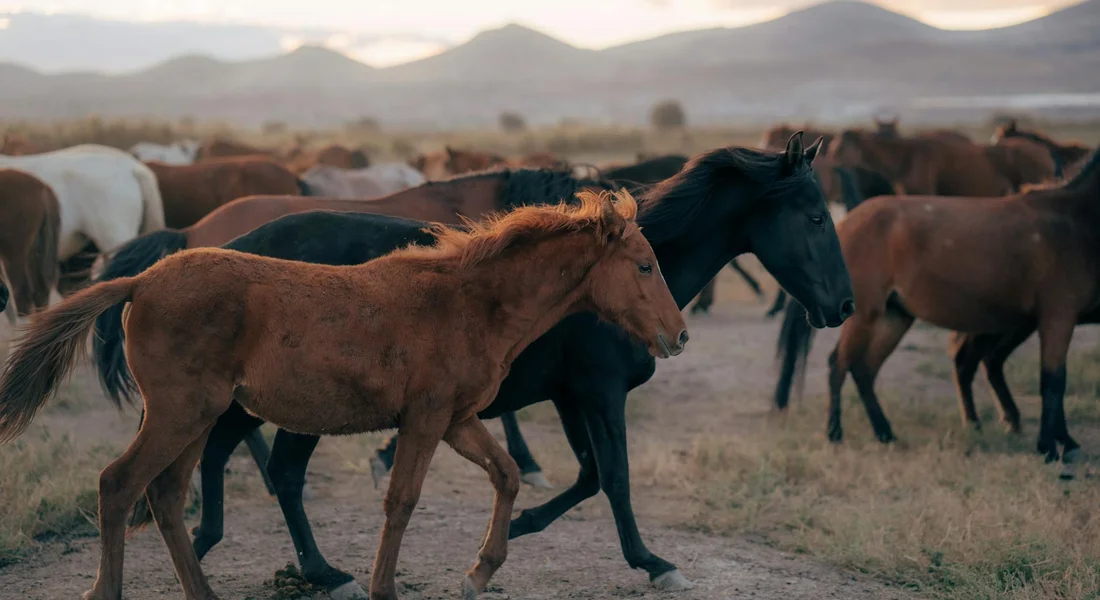
Desert horses don’t just endure heat; they master it through brilliant physiology. Their sweat is richer in electrolytes, which sounds counterintuitive, but it actually helps them retain more bodily fluids while still cooling the skin. This efficient sweating means they lose less overall water volume, a critical trick for survival where every drop counts. I’ve seen this savvy in action with old-timers like Rusty on scorching days; he’ll park himself in the slim shadow of the arena fence, minimizing movement until the evening cool.
Their kidneys work overtime to concentrate urine, pulling every possible molecule of water back into the bloodstream. Regularly monitoring water intake helps ensure they stay hydrated and healthy. Coupled with an ability to tolerate greater water loss before showing distress, these horses are built for drought. To support their hydration, prioritize constant access to clean water and encourage drinking throughout the day. Always provide ample, clean water and salt blocks, as domestic horses retain these instincts but rely on our management to activate them safely.
- Behavioral adaptations: Seeking shade, reducing activity during peak heat, and grazing at night.
- Physical adaptations: Longer limbs and ears increase surface area for heat dissipation.
- Hydration strategy: Can drink large volumes very quickly when water is found, sometimes over 10 gallons in a few minutes.
Diet and Forage in Sparse Environments
Out there, lunch isn’t a lush pasture; it’s a tough, fibrous scrub that would make most animals turn up their noses. Desert-adapted horses have exceptionally strong, hypsodont teeth that grow continuously to handle the gritty silica in dry plants. Their entire digestive strategy revolves around extracting every possible calorie from poor-quality forage, a lesson in efficiency we should remember when considering our own horses’ diets. Straw provides a practical example of roughage in equine diets. This helps explain how horses process fibrous feed.
The cecum and colon, parts of the hindgut, are fermentation powerhouses that break down cellulose over many hours. This lets them thrive on woody shrubs, dry grasses, and even certain bark. For our stalled horses, this highlights the non-negotiable need for long-stem hay to keep that gut contentiously moving and mimicking natural foraging behavior. I think of Pipin, our Shetland, who would strip a pine branch bare given half a chance; that’s the ancient forager in him.
- They browse as well as graze, eating a wider variety of drought-resistant plants like sagebrush and mesquite.
- Metabolic rates can adjust downward to conserve energy when food is scarce.
- They can travel significant distances, often over 15 miles a day, to locate scattered feeding grounds.
Surviving Mountainous and High-Altitude Regions
Cardiovascular and Musculature for Climbing
Thin air demands a big engine. Mountain breeds develop larger hearts and lungs relative to body size, pumping more blood and oxygen with each beat. Their blood carries a higher concentration of red blood cells, turning them into efficient oxygen transporters. This cardiovascular prowess isn’t just for show; it’s what allows a horse to climb a steep incline without heaving for breath like the rest of us.
Look at the hindquarters on a sure-footed mountain pony-they’re all power and angle. The gluteal and thigh muscles are disproportionately strong, acting as a living winch system for uphill pulls and shock absorbers for downhill control. Building this kind of strength in any riding horse requires slow, hill-based conditioning, never forced or rushed, to prevent tendon strain. Luna, my Thoroughbred, might be built for flat speed, but with patience, she’s learned to engage those hindquarters on our hilly trails, becoming a more balanced athlete.
Hoof and Gait Adaptations for Rough Terrain
The hoof is the foundation, and in the mountains, it’s a masterpiece of natural engineering. These hooves are often smaller, with a high, concave sole that sheds stones and provides a suction-cup grip on wet rock. The frog is large and prominent, offering extra traction and shock absorption. A naturally tough, dense hoof wall minimizes the need for shoes, letting the hoof mechanism flex and feel the ground with each step.
Their gait transforms for safety. They become deliberate, placing each foot with care, often using a lateral walking sequence for stability on slippery slopes. Observing this innate caution is a humbling reminder to always let the horse pick its way on tricky ground, without jabbing its mouth for more speed.
- Hoof composition: Denser horn tubules and a thicker sole wall for protection against sharp rocks.
- Gait adaptation: A natural, collected, and balanced way of moving that prioritizes stability over stride length.
- Leg structure: Often shorter cannon bones and more sloping pasterns for better leverage and reduced concussion on declines.
Flourishing in Arctic and Cold Desert Environments

Coat, Camouflage, and Seasonal Changes
Watch a horse in a snowy pasture, and you’re seeing millennia of fine-tuning. Their coat isn’t just hair; it’s a dynamic insulation system. In autumn, decreasing light triggers a hormonal signal for a winter coat to grow. This undercoat is dense and woolly, trapping warm air against the skin. I’ve spent many mornings currying Luna, feeling the soft, thick layer bloom beneath her dapple grey hairs, a sure sign that winter is coming. This natural puff jacket is so effective that snow can sit on a dry horse’s back without melting, proving how well it holds body heat in.
Camouflage plays a role, too. While domestic breeds come in many colors, wild populations like the Przewalski’s horse show dun coloring with primitive markings-a pale belly and dark legs that break up their outline against scrub and snow. For our barn buddies, a thick winter coat often appears a shade lighter, helping them blend into frosted fields. This also raises the question: are there different horse coat color patterns? How do these patterns vary by breed?
The seasonal change is a full-body process. Their skin produces more oils, making the coat water-resistant. The long guard hairs shed rain and snow, while the undercoat stays dry. Resist the urge to over-blanket a healthy horse too early; you can short-circuit this brilliant natural process and leave them less prepared for true cold. For guidance on proper horse care, including when to use blankets, consult this temperature and care guide.
Metabolism and Fat Storage for Winter
When temperatures drop, a horse’s internal furnace kicks into a higher gear. Their basal metabolic rate increases to produce more heat, which means they burn more calories just standing still. This is where fat storage comes in. In the fall, horses instinctively seek out richer forage, building up reserves of adipose tissue, particularly along the crest, ribs, and loins.
This isn’t lazy weight gain; it’s strategic fuel. Think of it like stocking the pantry before a blizzard. Good body condition in late fall is a horse’s best defense against winter weight loss, not just a pile of extra grain in January. Their digestive system, a continuous fermentation vat, generates significant heat as it breaks down fibrous roughage.
From the barn, here’s what this science looks like: I adjust Pipin’s ration in autumn, ensuring he has ample hay to mimic that natural foraging urge, even though his Shetland pony metabolism requires careful monitoring. For a horse like Rusty, a good hay belly in winter is a sign his engine is running warm and well. Providing constant access to forage is the single most important thing you can do to support their winter metabolism.
Applying Adaptation Science to Daily Horse Care
Environment-Enriched Stable Management
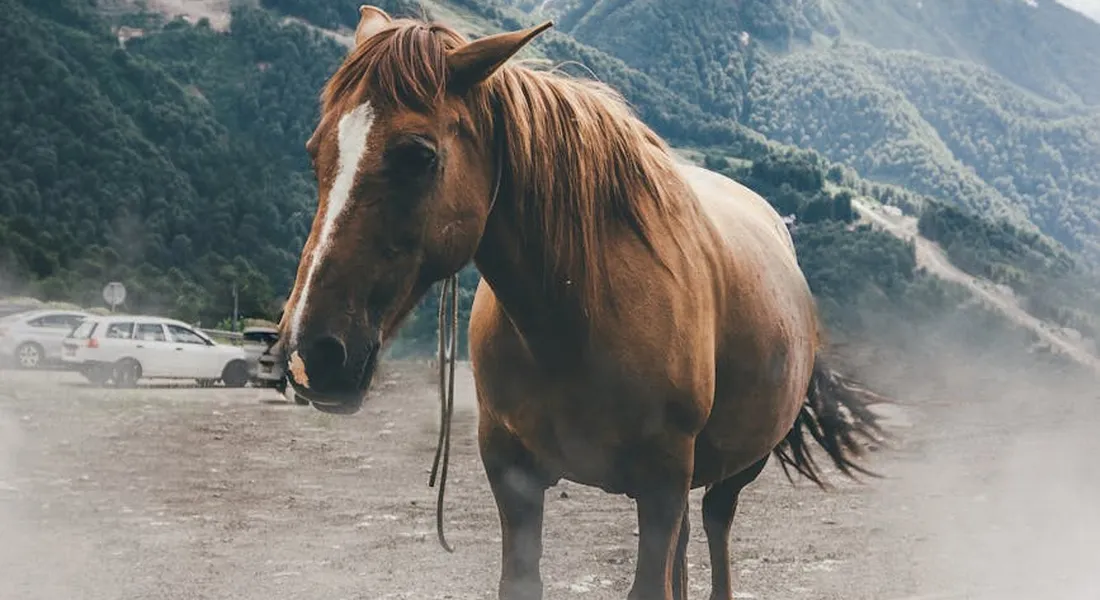
Our stables are a far cry from the open steppe, but we can design them with a horse’s hardwired needs in mind. The core principle is simple: maximize choice and movement. Turnout isn’t a luxury; it’s a non-negotiable component of physiological and mental health, allowing for grazing, social interaction, and temperature self-regulation.
Enrichment turns a sterile stall into a habitat. It’s about engaging their senses and encouraging natural behaviors.
- Forage Puzzles: Slow-feed hay nets aren’t just about saving money on hay. They force a horse to nibble and pull, mimicking hours of grazing and reducing ulcer risk.
- Companion Animals: A goat, a chicken, or another horse provides social grooming and watchful company. Luna is always calmer when she can see Rusty over the fence.
- Texture Variety: Offer different surfaces-a sand patch for rolling, a matted area for resting, grass to nibble. This variety stimulates their minds and cares for their hooves and coat.
I’ve seen the difference it makes. A bored horse is often a destructive or anxious horse. A little environmental creativity, like hanging a sturdy salt lick in a new spot or scattering carrots in a pile of safe leaves, can transform their day.
Diet and Exercise Tailored to Ancestral Roots
Modern feeding and training often work against the horse’s blueprint. Their gut is designed for a near-constant trickle of fibrous food, and their body is built for slow, steady travel over varied terrain.
Start with diet. The foundation should always be forage-good-quality hay or pasture. Grain should be a supplement, not a staple, used primarily for working horses who cannot maintain condition on forage alone. I think of it like this: hay is their main course, and grain is a potent vitamin shake. Feeding large grain meals twice a day creates spikes in sugar and leaves the gut idle for long periods, which is completely alien to their design.
Exercise must follow the same logic. Instead of only intense arena work, incorporate more movement that mirrors their ancestry.
- Walk More: Long, relaxed walks on trails or around the property build tendon strength and cardiovascular health without concussion.
- Incorporate Hills: Walking or trotting up and down gentle slopes is the best natural conditioner, engaging the hindquarters and promoting balance.
- Vary the Footing: Let them feel soft dirt, firm gravel, and grassy patches. This strengthens the hoof and leg structures in a balanced way.
I apply this with every horse. For the high-energy Thoroughbred, a long trail walk before arena work helps settle her mind. For the reliable Quarter Horse, hill work maintains his topline without joint stress. It’s about working with their history, not against it.
FAQ: How Have Horses Adapted to Survive in Different Environments?
How have horses adapted to survive in the desert?
Desert horses conserve water through highly efficient kidneys that produce concentrated urine and sweat that is richer in electrolytes to minimize fluid loss. They can tolerate significant dehydration and rehydrate rapidly by drinking large volumes of water in minutes when it is available. Their diet adapts to include tough, fibrous browse, and they behaviorally reduce activity during peak heat, often grazing at dawn or dusk.
How have horses adapted to survive in the Arctic?
Arctic horses grow an exceptional winter coat with a dense, woolly undercoat triggered by shortening daylight, providing superior insulation that traps body heat. They increase their metabolic rate to generate internal warmth and strategically build fat reserves in autumn as an energy source for winter. Their skin produces more oils for waterproofing, and they often exhibit lighter coat colors for better camouflage against snow—properties that support their ability to endure harsh climates, much like other horses that adapt to cold weather.
How have horses adapted to survive in mountainous regions?
Mountain horses develop stronger, more angled hindquarter muscles for powerful climbing and controlled descent on steep slopes. Their hooves adapt to be smaller and tougher with a concave sole and large frog for superior grip and shock absorption on rocky, uneven terrain. They also possess enhanced cardiovascular efficiency, often with a higher red blood cell count, to utilize oxygen more effectively in thin, high-altitude air.
What Their Adaptations Mean for Your Care
Our horses’ incredible physical adaptations are a blueprint for their care, telling us they need movement, forage, and social connection to thrive. The single most important thing you can do is to mimic the conditions they evolved for: maximize turnout, provide constant forage, and ensure herd companionship. To truly support their well-being, focus on creating a safe, enriching environment for your horse. Small, practical changes—like varied turnout, safe fencing, and mindful social grouping—can make a big difference.
Your daily observation is your greatest tool for applying this knowledge. Watch how your horse interacts with his world, listen to what his behavior tells you about his comfort, and trust your instincts-they’re usually following the lead of thousands of years of equine wisdom.
Further Reading & Sources
- Flexi answers – How do horses adapt to their environment? | CK-12 Foundation
- How do horses adapt to their Environment | Facts we should know
- Adaptation in Horses – Equine Research Database | Mad Barn
- Horse Evolution: Physiological Adaptations & Traits
At Horse and Hay, we are passionate about providing expert guidance on all aspects of horse care, from nutrition to wellness. Our team of equine specialists and veterinarians offer trusted advice on the best foods, supplements, and practices to keep your horse healthy and thriving. Whether you're a seasoned rider or new to equine care, we provide valuable insights into feeding, grooming, and overall well-being to ensure your horse lives its happiest, healthiest life.
Behavior