
How to Help Your Barn Sour Horse Become More Independent
Hello fellow equestrians. Is your ride more of a tug-of-war, with your horse spinning or bolting back to the barn the moment you turn for home? That frustration-and the real safety risk it creates-is something I know all too well from the shed row.
In this guide, I’ll share the practical, gentle methods I use to build a horse’s independent confidence. We’ll cover figuring out the ‘why’ behind the behavior, designing a step-by-step desensitization plan, using reward-based training to change their mindset, and integrating daily hacks for lasting success.
You can trust this advice comes from the saddle; I’ve spent years as a barn manager and trainer, patiently helping clever horses like Luna and stubborn ponies like Pipin find their courage beyond the gate.
What Turns a Horse Barn Sour? Understanding the Roots
Barn sourness isn’t a personality flaw. It’s a communication. Your horse is telling you, in the only way they know, that something about leaving feels wrong. Unpacking those reasons requires you to think like a horse, not a frustrated rider.
The causes usually boil down to four key issues. Look for these in your own routine.
- Separation Anxiety from Herd Mates: The barn is their herd’s base camp. Leaving it can trigger a primal fear of being left behind or vulnerable. That piercing whinny is a genuine distress call, not a tantrum.
- Boredom from Stagnant Routines: If every ride follows the same path directly back to the barn, you’ve trained a perfect homing pigeon. The work becomes a predictable countdown to breakfast, not an engaging journey.
- Pain or Discomfort from Ill-Fitting Tack: A saddle that pinches or a bit that presses can make travel agony. What looks like defiance is often just a smart animal trying to avoid a source of pain.
- A Simple Lack of Trust in Leadership: Does your horse believe you’ll navigate the scary trash bin or the rustling bushes? If not, the barn door represents the only safety they trust.
I saw this with Rusty. His famous hatred of puddles was more than just a quirk. It was a bright red flag for his deeper lack of confidence in what I was asking him to do beyond familiar ground.
My number one preventative advice is generous turnout. A horse who spends hours grazing and roaming with friends is far less likely to see the stall as their entire universe. Independence starts in the pasture.
Reading the Signs: Is It Stubbornness or Real Anxiety?
Calling a horse “stubborn” shuts down the conversation. Your job is to read the physical script their body is performing. The difference between spoiled and scared is in the details, especially when understanding horse behavior and psychology.
- Refusal to Move Forward or Balking: The planted feet. A bored horse might stand with a slack neck, half-dozing. An anxious horse is rigid, with a tight jaw, white-rimmed eyes, and quick, shallow breaths.
- Excessive Whinnying and Head-Tossing: Listen for the pattern. Is it a few calls, or a continuous, escalating siren? Stress-based head-tossing is jerky and high, often with a tense poll and pinned ears.
- Pacing or Sweating When Tied Away from the Barn: Watch for “quiet” panic. A horse sweating on a cool day while tied at the trailer, or weaving in place, is broadcasting high anxiety. Their mind is racing back to the barn.
- Crow-Hopping or Rushing Homeward: This is fear tipping into the flight response. A small buck or a sudden bolt for home isn’t naughtiness. It’s a terrified animal trying to flee a perceived threat.
The treat test is a good clue. A pushy horse will often break focus for a carrot. A truly anxious horse is so mentally locked on their fear that they’ll ignore even the tastiest bribe.
My mare Luna is a textbook case. Her spinning and head-tossing on the trail weren’t acts of rebellion. They were her screaming that the world felt too loud and too big, and she needed my calm leadership, not my correction. Watch, listen, and always choose understanding over assumption.
Building Trust from the Ground Up
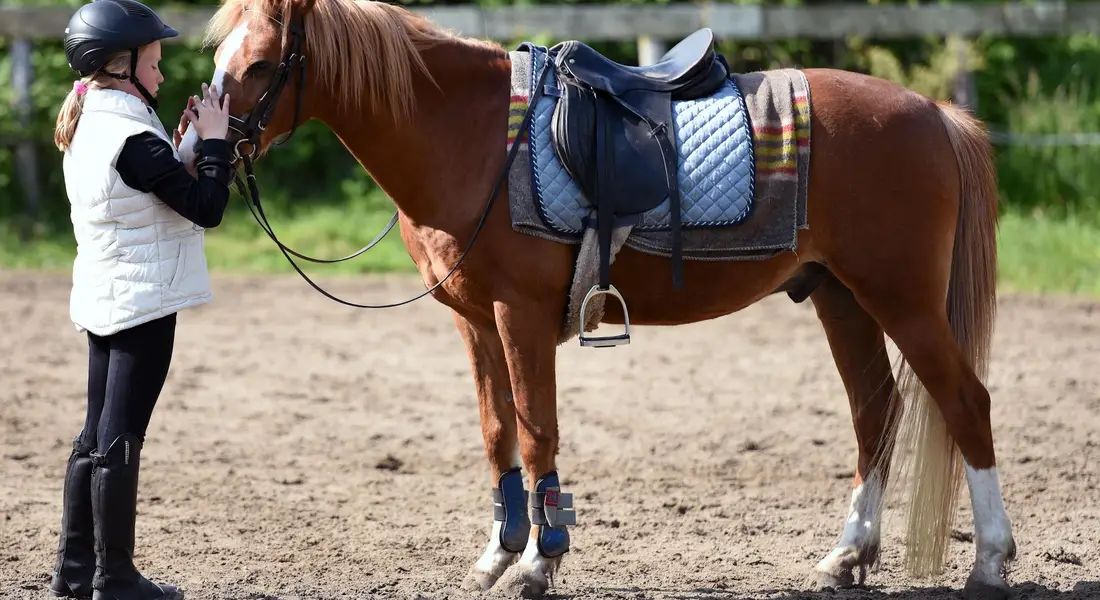
You can’t fix a barn-focused mind from the saddle. The real work starts with your feet on the dirt. Your horse needs to see you as a source of security, not as a barrier to his stall. This begins with the most basic daily interactions. A horse that barges over you to get to his hay or dances at the crossties is telling you he’s in charge of the agenda. I start every session, even just for grooming, by asking for one polite behavior-standing still while I put the halter on, or taking two quiet steps back from the gate. It sets a tone. Teach your horse basic ground manners—standing still, accepting your space, and responding to your cues on the ground. Mastering these basics on the ground makes every step of handling and grooming a calmer, more predictable partnership. Consistency in these tiny moments teaches your horse that your presence means calm leadership, not just a ride to the paddock.
Core Desensitization Drills for Confidence
Desensitization isn’t about flooding your horse with scary stuff. It’s about introducing mild uncertainty in a controlled way, proving to him that the world beyond his door is manageable. We use the longe line to create a bubble of safety that can move with us. Here’s how I build it, step by step.
- Start with the barn door open. Ask your horse to lead politely just three steps past the threshold, then immediately turn around and walk back in. Reward with a rub or a tiny treat. The goal isn’t distance, but the act of leaving calmly and being praised for it.
- In a nearby paddock or quiet corner of the yard, set up a simple “obstacle.” This could be a cone to walk around, a pole on the ground, or a small, flat tarp. On the longe line, ask your horse to simply look at it, then walk near it. The focus shifts from “I want to leave” to “What is my person asking about this thing?”
- Gradually increase the ask. Can he stand with his front feet on the tarp? Can we walk a 20-foot circle away from the barn gate? The key is duration. End every single session while he is still calm and successful, even if that means you only achieved Step 1 that day.
Positive reinforcement here is golden; a mouthful of grass or a carrot bit when he takes a brave sniff of a new object builds a positive association with exploration.
Teaching the “Stand” and “Relax” Responses
Patience is a trained behavior. A barn-sour horse is all about impulsive movement toward home. We counter that by rewarding absolute stillness. I teach “stand” on a loose lead rope. I ask the horse to halt, and if he so much as flicks an ear forward and pauses, I immediately release all pressure and step back. The release is the reward. We build from two seconds to twenty. My favorite hack uses a familiar mounting block. I’ll lead my horse to the block, ask for a relaxed “stand,” and then I’ll just sit there for five minutes, reading a book or ignoring him completely. This teaches him that standing quietly in a spot away from his stall is a safe, neutral, and even boring option. Luna, my sensitive Thoroughbred, learned that the mounting block was a place to decompress, not just a launch point for work. This is just one method to teach a horse to stand still and relax.
The Step-By-Step Trail Away from the Barn
Now we connect the groundwork to ridden work with a progressive plan. Think in phases, not miles. The goal is incremental success. Rushing this process is the fastest way to restart the anxiety cycle. Make the journey out fun-graze a few blades at a new spot, play a simple follow-the-leader game around trees. Below is a sample progression map.
| Phase | Goal | Rider Mindset |
|---|---|---|
| 1: Foundation | Ride a short loop in the arena, dismount at the far end, and hand-graze for a minute. | This is a relaxing field trip, not a training drill. |
| 2: Proximity | Ride or lead to a visible landmark (a specific tree, fence post) just outside the arena. Touch it, turn around, return. | Celebrate the tiny victory of reaching the “target.” |
| 3: Exploration | Take a short trail section, perhaps a five-minute loop that ends back at the barn. Keep the walk relaxed. | Maintain a steady, purposeful rhythm with your seat and breathing. |
| 4: Duration | Extend the trail loop so that the barn disappears from view for a short time. Include a planned grazing or standing break midway. | The break in the middle reframes the ride: we are out here to *be* out here. |
Changing the Narrative of the Return
The walk home often reinforces the problem. A frantic rush back tells the horse his anxiety was correct. We must rewrite that story. Never, ever let the horse rush back. If he tries, turn him in a small circle until he settles, then continue at your pace. I frequently dismount and hand-walk the last 100 yards, making the return calm and pedestrian. Vary the routine dramatically. Sometimes, come all the way back to the barn, untack, and then go right back out to hand-graze in the nearby field. Your ultimate goal is to make the barn just another stop in the day, not the singularly rewarding end of all exertion. Your own calmness is the blueprint; soft hands and steady, audible breathing signal to your horse that the herd leader is not concerned, so he need not be either. Understanding common horse fears and skittish behavior can guide your responses and spot anxiety early. It helps you manage anxiety before it escalates.
Weaving Independence into Everyday Stable Life
Barn sour habits thrive on monotony. The cure is to subtly disrupt that predictable script with simple, welfare-focused changes that make curiosity more rewarding than worry. I weave these into daily life with all our horses, from steady Rusty to spirited Luna.
Think of these as mental snacks for your horse. They prevent boredom and build confidence in low-pressure moments.
- Rotate turnout buddies. Moving your horse into a paddock with a different calm companion every few days encourages social flexibility. Luna used to panic when separated from her favorite mare; introducing her to new, steady friends in turnout taught her she could be safe without her security blanket.
- Practice self-loading into the trailer for fun. Once a week, I’ll park the trailer in the yard, open the ramp, and sprinkle a few hay flakes inside. No pressure to go anywhere. Let them explore and exit at will. Pipin, our food-motivated pony, now walks in willingly, which makes actual travel days less stressful.
- Feed meals in different locations. Instead of always doling out grain in the stall, use a bucket in the cross-ties, a pan in the outdoor wash rack, or a pile in a quiet corner of the arena. This turns dinner into a minor adventure. Rusty’s ears perk up now when I grab his bucket, wondering where we’re headed.
- Incorporate short, independent play sessions. Turn them out in a safe paddock alone for just 15 minutes with a jolly ball or a slow-feed hay net. This encourages self-entertainment. The thud of hooves as they investigate is a sound of healthy independence.
These aren’t just tricks. Providing choice and novelty directly supports equine mental welfare, reducing stress behaviors and fulfilling their need for a stimulating environment.
Safety and Mindset: Your Role as a Leader
Building independence must never compromise safety. Your calm, predictable leadership is the foundation. When a horse feels anxious, your first job is to manage the situation to keep both of you physically safe. I’ve learned this through many tense moments with Luna, whose sensitivity can quickly spiral. Being a calm, assertive leader for an anxious horse sets the tone for every moment you handle together. In the next steps, we’ll tie these principles to practical actions through implicit links.
Start with your own preparation. Always wear a helmet during groundwork near gates or when handling a horse known to spook. Use a well-fitting halter and a long lead rope to give yourself space. If you’re riding and feel your horse locking up, thinking only of home, dismount before a battle begins. Riding out frustration helps no one. For beginners, a handle horse safely guide can offer practical, step-by-step safety tips. Using it as a quick reference can help you build safe habits as you practice.
For safe handling during anxious moments, remember these points:
- Breathe deeply and keep your own body loose. Tension travels right down the lead rope.
- Ask for simple, familiar tasks-like a step back or a head down-to regain their focus on you.
- If they rear or bolt, release pressure if safe to do so, angle your body away, and let the long line do its work. Never wrap the rope around your hand.
Gentle horsemanship is key. Punishment for barn sour behavior only teaches your horse that leaving the barn is indeed scary and painful. Instead, reward the smallest try-a single step forward, a moment of relaxed chewing. My personal rule is to always have an exit plan. Before I ask for a challenging step away from the barn, I identify where I can safely retreat to if my horse needs a mental win. This might be a nearby tree or a fence post we can touch for a treat.
Your mindset sets the tone. View each anxious reaction as communication, not disobedience, and you’ll respond with patience instead of force. This builds the trust that makes true independence possible.
When to Call in a Professional
I’ve spent countless hours in the drizzle and dust, patiently asking a worried horse to take just one more step away from the cozy smell of the barn. There is a very real limit to what even the most dedicated do-it-yourself approach can solve, and knowing that boundary keeps both you and your horse safe. Recognizing when you’re out of your depth isn’t a reflection on your skill; it’s a testament to your care for your equine partner, especially when considering the subtle ways you might be unintentionally undermining your horse’s confidence.
Some behaviors escalate from frustrating to frankly dangerous. If you notice any of these signs, it’s your cue to phone a friend who has more tools in their training kit:
- Persistent rearing or striking out when asked to move away from the barn.
- Bolting or frantic spinning that you cannot safely redirect or halt.
- A consistent, overwhelming panic that doesn’t diminish with calm, repeated practice.
- That gut feeling in the pit of your stomach telling you you no longer feel safe or confident handling the situation.
I learned this with Luna, my sensitive Thoroughbred; what began as balking turned into a sharp rear when my timing was off. That was my signal to stop, take a breath, and seek a second opinion from a trainer I trusted. A professional can spot subtle cues we miss and has the experience to defuse tension without a fight.
Always rule out physical pain first. A sudden onset of barn-sour behavior, especially in a normally willing horse like Rusty, can be a loud cry for help. A veterinarian should be your first call to check for anything from back soreness to dental issues before any training plan continues. Consulting your vet and a qualified trainer is the most responsible step you can take. It’s not a failure-it’s how good horsemanship grows.
FAQ: How to Help Your Barn Sour Horse Become More Independent
What are the biggest mistakes owners make when trying to fix barn sourness?
A common mistake is using force or punishment, which confirms the horse’s fear that leaving is dangerous. Many also try to push for too much distance too quickly, overwhelming the horse and reinforcing the anxiety. Finally, having a predictable routine where every ride ends directly at the barn trains the horse to anticipate the return above all else. These are precisely common mistakes that break your horse’s trust. Avoiding them helps build a calm, cooperative partnership.
How often should I practice desensitization and training sessions?
Short, positive sessions of 10-15 minutes, practiced 3-4 times a week, are more effective than infrequent, long drills. Consistency is far more important than duration, as it builds reliable neural pathways and trust. Always end each session on a calm, successful note, even if the progress seems small that day.
Can changing my horse’s environment outside of training sessions help?
Absolutely, environmental enrichment is a powerful tool for fostering independence. Providing ample turnout with a variety of calm companions prevents the stall from becoming their entire world. Introducing novelty, like feeding in different locations or offering safe toys in the paddock, encourages curiosity and reduces a fixation on the barn as the sole source of comfort.
Your Partner, Not Your Prisoner
Break the cycle by always starting your work away from the barn, using rest and positive reinforcement as your primary tools for every step of bravery. Success is measured in calm moments, not miles from home, so reward the try even if you don’t reach your original turnaround point.
Progress with a barn sour horse is never a straight line, and forcing the issue will only cement their anxiety. The entire process is built on trust, so let your horse’s reactions-good or bad-guide your pace and strategy each day, especially when managing their separation anxiety.
Further Reading & Sources
- Dealing with the Barn Sour Horse | Equimed – Horse Health Matters
- Barn Sour Horses- What Is it and How to Minimize it – Elizabeth Zarkos
- How to fix a barn sour horse? | The Horse Forum
- 5 Ways to Cure a Barn- or Buddy-Sour Horse – Western Horseman
At Horse and Hay, we are passionate about providing expert guidance on all aspects of horse care, from nutrition to wellness. Our team of equine specialists and veterinarians offer trusted advice on the best foods, supplements, and practices to keep your horse healthy and thriving. Whether you're a seasoned rider or new to equine care, we provide valuable insights into feeding, grooming, and overall well-being to ensure your horse lives its happiest, healthiest life.
Behavior