
Equine Social Myths: 7 False Beliefs About Herd Behavior and Dominance
Hello fellow equestrians. Have you ever watched your horse in the field and wondered why they “misbehave” or felt nervous handling a group based on old dominance theories? I’ve seen too many good owners stressed over vet bills from preventable scuffles or confused by training methods that just don’t stick.
Let’s toss those outdated rulebooks. In this article, I’ll dismantle the biggest myths causing that worry, so you can foster a safer, happier herd. We’ll cover:
- The myth of one permanent “alpha” leader dictating all movement.
- That bullying or aggression is a normal sign of social rank.
- Forcing horses into submission to gain “respect.”
- Believing herd hierarchies are rigid and unchanging.
- Thinking more turnout time inevitably leads to injury.
- Using isolation as a standard tool for managing behavior.
- Assuming social bonds don’t impact training and daily handling.
My advice comes from decades of barn management and training, mucking stalls and reading herds, always putting equine welfare and gentle understanding first.
Introduction: Why Herd Myths Lead Us Astray
Watching the herd from my barn office, with the scent of rain-damped earth and the soft thud of hooves in the background, I used to think I had it all figured out. I’d point out the “boss” and the “bottom of the pack.” That simplistic view led me to make training mistakes, like assuming a reluctant horse was being defiant rather than communicating confusion or fear. These myths aren’t just academic; they shape how we handle, turn out, and even feed our horses, often stressing them instead of supporting their natural instincts. Recognizing these common mistakes that break a horse’s trust helps us avoid them. Training then becomes a calmer, more cooperative process.
Real herd dynamics are about fluid communication and shared security, not a constant power struggle. When we swap myths for observation, we stop forcing relationships and start building trust that makes every grooming session and trail ride smoother.
The Top 7 Herd Behavior Myths Debunked
Myth 1: There’s Always a Single “Alpha” or Boss Horse
I learned this wasn’t true by following my old gelding, Rusty, for an entire day. He’d lead the charge to the hay feeder but hang back at the gate, letting Luna go first. Leadership in a herd is situational, not a permanent crown worn by one horse. The best navigator might move the group to water, while the most vigilant mare takes over as lookout when spooks are likely.
Think of it like a volunteer committee at a barn workday. Assigning one rigid “alpha” ignores the sophisticated, shared decision-making that keeps a herd safe and content.
Myth 2: Horses Establish Rank Through Constant Fighting
If hierarchy was settled by fighting, my barn would sound like a war zone. It’s mostly quiet, punctuated by snorts and the steady crunch of hay. Rank is negotiated through subtle body language: a pinned ear, a shifted hip, a hard stare that says “I’m using this spot.” Actual kicks or bites are rare, expensive arguments over scarce resources.
Most “arguments” end before they start. I’ve seen Luna, the thoroughbred, yield her scratching post to Pipin the pony with just a sigh and a turn of her head, a masterclass in efficient communication.
Myth 3: You Must Physically Dominate Your Horse to Lead
This outdated idea is the fastest way to create a nervous or shut-down animal. My job isn’t to play the role of bully “alpha.” True leadership means being a predictable, trustworthy partner your horse chooses to follow. I establish this through clear pressure-and-release cues, not intimidation. This is why many trainers move beyond the alpha myth and toward understanding modern horse leadership partnership. It’s built on trust, consistency, and clear communication your horse can follow.
When Pipin used to balk at hoof picking, I didn’t muscle his foot up. I rewarded the slightest shift of weight with a break, teaching him that cooperation brings comfort, turning a struggle into a quiet moment of partnership.
Myth 4: The Herd Pecking Order is Rigid and Linear
The belief in a simple A->B->C chain is a fantasy. Horse relationships are a web, not a ladder. Rusty might be first to the grain bucket, but he’ll happily follow Pipin to a juicy patch of clover, showing how authority changes with the context. Two horses might be equals at the fence but have a clear hierarchy at the water trough.
This fluidity is why forcing new horses into a herd based on a presumed “rank” can backfire. When introducing a new horse into an established herd, gradual exposure and careful observation matter more than quick placement. A measured, patient approach supports smoother social transitions. Observing these nuanced friendships, not enforcing a rigid order, is the key to peaceful pasture management.
Myth 5: A Submissive Horse is a Weak or Scared Horse
Labeling a horse as “submissive” and therefore “weak” misses the point entirely. In a well-managed herd, yielding is a social skill. A horse that politely moves its hindquarters away is demonstrating intelligence and conflict avoidance, not cowering in terror. It’s the equine version of saying “after you.”
I have a mare who will gently lower her head when approached–this isn’t fear. This soft gesture is an invitation for connection, a cornerstone of gentle horsemanship that builds safer interactions for both of us and helps strengthen our bond and trust.
Myth 6: Horse Social Behavior is Simple and Predictable
If it were simple, my job would be boring. Every horse brings its own history and personality. Luna’s high-strung nature means she reads social cues with lightning speed, while Rusty’s steady calm makes him a herd anchor. Past trauma, breed tendencies, and even daily turnout schedule all twist the social plot.
Assuming you know exactly how a new introduction will go is a gamble. Prepare for complexity by introducing new horses over a fence line first, letting them establish their own unique dialogue without the risk of a full-blown argument.
Myth 7: Horses Have a Pack Mentality Like Dogs
This is the most dangerous mix-up. Dogs are predators; horses are prey animals. Their brains are wired differently. A dog might follow a strong leader on a hunt, but a horse follows another for collective security and grazing efficiency. Using “pack” techniques like forced rollovers or invasive dominance displays can traumatize a horse.
Your horse isn’t waiting for you to be its pack leader. It needs you to be a calm, consistent presence that understands its need for space, herd friends, and the safety of a watchful eye, just like it would find in its pasture family.
The Reality of Equine Social Dynamics
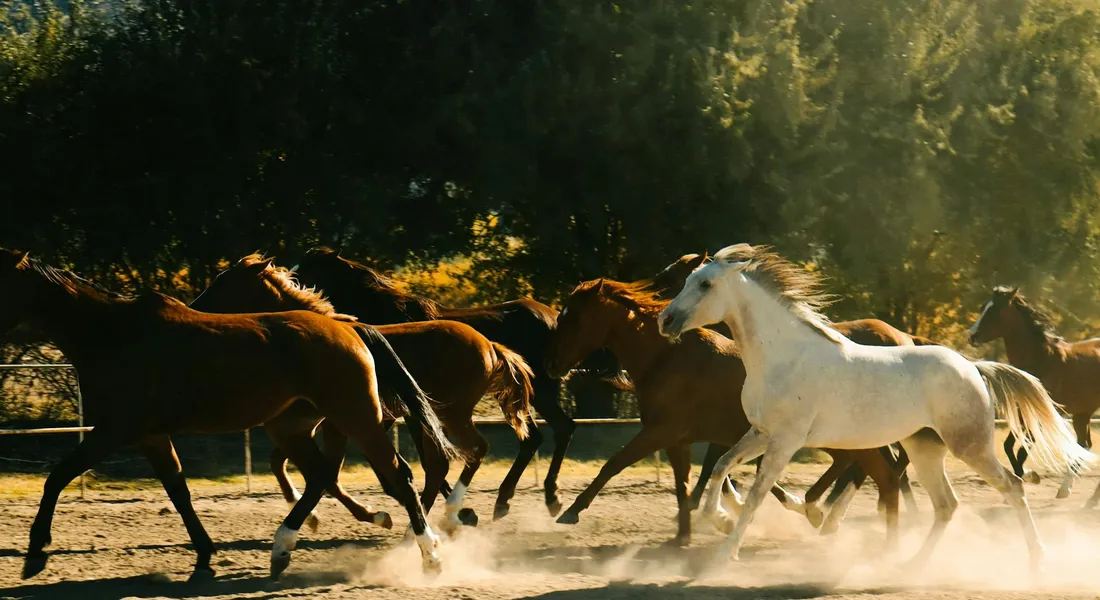
Forget everything you’ve heard about alpha stallions ruling with an iron hoof. After a decade of mornings spent with coffee in hand, watching the mist rise off our pasture, I’ve learned herd life is more soap opera than military drill. Equine societies are built on nuanced relationships, not fear-based command structures.
Take my trio. Luna, the thoroughbred, will often choose to stand guard while Rusty, the quarter horse, takes a nap. Pipin, the pony, is usually the one deciding which corner of the field is the best scratching post that day. Their roles shift with the weather, their energy, and the gossip only they can hear. Leadership is fluid, often situational, and frequently about who feels like walking to the water trough first.
How Horses Actually Communicate and Bond
Their language is one of subtlety. A pinned ear, a soft nicker, the way one horse angles its body to block another from a pile of hay-these are conversations. It’s a constant, quiet negotiation.
- Resource Guarding is Often Temporary: A horse moving another away from a feed pile isn’t always asserting lifelong dominance. It’s often a simple “I’m here now” that’s forgotten five minutes later.
- Friendship is the True Glue: You’ll see consistent bonding pairs, like a groomer and a groomee, who seek each other out for security. This bond reduces stress more than any perceived rank.
- Space is Respect: Herd harmony relies heavily on understanding personal space. A lower-energy horse yielding space to a more animated one is a peace-keeping strategy, not submission.
I once tried to force a “herd leader” model by always feeding Rusty first, thinking it would establish order. All it did was make Luna anxious and Pipin ingenious at pilfering. When I stepped back and let them sort their own dinner politics, the tension evaporated into the calm sound of steady chewing.
The Real-World Cost of Dominance Misconceptions
This outdated thinking isn’t just academically wrong; it has real, tangible consequences in your barn aisle and your horse’s mind. Applying wolf-pack logic to a prey animal built for flight and fellowship is like using a wrench to hammer a nail-you might force it, but you’ll damage everything.
Safety Risks for Handlers and Riders
The belief that you must “show them who’s boss” directly leads to confrontational training. I’ve seen someone get a nasty kick after aggressively trying to “alpha roll” a pony much like Pipin. The horse wasn’t being defiant; he was terrified.
- Increased Reactive Behaviors: Horses met with force often escalate to force. What starts as a hesitant step back can become a bolt or a strike.
- Suppressed Warning Signs: If a horse learns that subtle cues like ear pinning or tail swishing are punished, they may skip those warnings and go straight to a more dangerous reaction.
- Erosion of Trust: Your horse starts viewing you as a predator, not a partner. The foundation of all safe handling crumbles.
True safety is built on a horse that understands you and chooses to cooperate, not one that is intimidated into compliance.
Welfare Costs for the Horse
The psychological and physical toll is severe. A horse constantly pressured to submit is a stressed horse.
- Chronic Stress: This mimics the feeling of being hunted. It leads to a weakened immune system, ulcer risk, and poor condition. Luna, being sensitive, would visibly shut down under heavy-handed pressure.
- Reduced Problem-Solving Ability: Fear shuts down the learning brain. A horse in “fight or flight” isn’t thinking; it’s reacting.
- Loss of Natural Expression: Horses become dull or unpredictably explosive when their natural communication is ignored or punished. They stop offering behaviors altogether.
The most poignant cost I’ve seen is the simple loss of joy. A horse that’s allowed to be a horse-with ample turnout, herd friends, and gentle guidance-moves with a lightness that dominance-based training rarely captures. The thud of hooves in play is a sound you’ll hear far more often in a herd allowed its own social balance.
Practical Herd-Inspired Horse Care for Owners
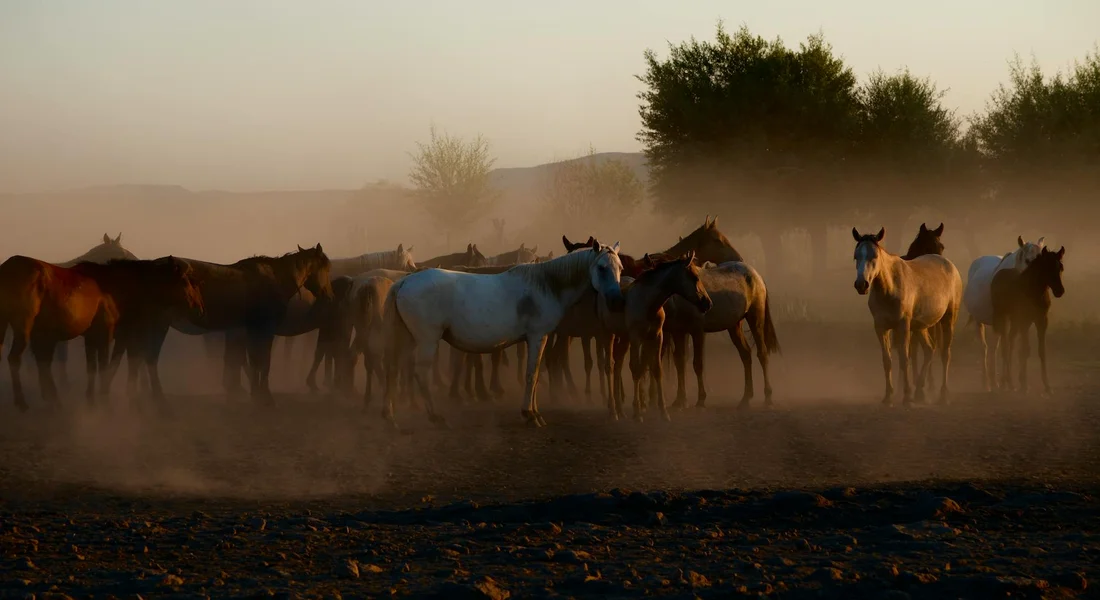
Knowing the truth about herd dynamics is one thing, but applying it in your daily routine is where the magic happens. This is where we move from theory to the smell of morning dew on the grass and the soft nickers of horses greeting each other. Let’s break down how to translate herd wisdom into actionable steps.
Step 1: Prioritize Turnout and Social Time
This is non-negotiable. A horse without a herd and turnout is like a person locked in a room with no company or windows. Their entire psychology is built around movement and social connection.
I’ve seen the transformation firsthand. Luna, my sensitive Thoroughbred, used to be a tight coil of nervous energy in a stall. Since moving to a 24/7 group turnout situation, her anxiety has melted into a calm awareness; she now spends her days dozing in the sun with a buddy or wandering the paddock, her mind finally at peace.
Your goal is maximum safe, social turnout. Here’s how to advocate for it:
- Seek boarding facilities that offer group or paired turnout as a standard.
- If separate paddocks are necessary, ensure horses can see and touch each other over safe fencing.
- Avoid solitary confinement for discipline. Isolation creates frustration, not reflection.
- For the stalled horse, provide a mirror or a calm neighboring goat or pony for visual company.
Step 2: Learn to Read the Herd’s Language
Forget glaring dominance displays. Real herd communication is subtle, a constant flow of information. Watch for ten minutes without projecting human drama onto them.
You’ll see an ear flick directing a friend away from a prized patch of clover. You’ll see a soft blink and lowered head as an invitation to mutual grooming. The most common “punishment” for a pushy horse is not a kick, but simply being walked away from-a powerful social snub that we can learn from.
Key signals to understand:
- Ears: Pinned flat is a true threat. Slightly back or swiveling often just means “listening behind me.”
- Head height: A dramatically raised head signals high alert. A lowered, soft head and neck indicates relaxation.
- Body orientation: A horse turning its hindquarters is often just repositioning, not necessarily “cow-kicking.” Watch the tension in the muscles for the real story.
Step 3: Apply Herd Logic to Training and Handling
Horses communicate through pressure and release. Your job is to be a clearer, fairer herd mate. Be the predictable “horse” in the relationship. Understanding their instincts and signals is crucial, especially when understanding horse behavior and psychology.
When Rusty used to balk at puddles, getting after him with my legs just made him tense. Instead, I applied herd logic: I’d ask him to move his feet sideways, back a step, then look at the puddle again. Releasing all pressure the moment he so much as thought about stepping forward rewarded the try, and soon the puddles were no big deal. It was about conversation, not command.
- Use the lightest pressure possible and release instantly for the desired response.
- If a horse is scared, don’t punish the fear. Become their calm herd leader by modeling stillness and steady breathing.
- End every interaction on a good note, even if it’s a tiny one. A soft exhale, a lick of the lips-that’s your success marker.
Step 4: Manage Resources to Minimize Conflict
In the wild, conflict spikes around scarce resources. In our care, we create artificial scarcity all the time. Smart management prevents unnecessary stress.
I learned this with Pipin, the escape artist pony. He wasn’t being “naughty” by letting himself out; he was being brilliantly resourceful in seeking better food. By providing more consistent forage and using pony-proof locks, his great escape attempts ended because the motivation was gone.
Create abundance and space:
- Feed hay in multiple piles, far apart, so one horse can’t guard it all. Use slow-feed nets for every horse.
- Provide multiple water sources and salt licks in different corners of the pasture.
- In the barn, ensure horses can eat without being cornered. Stall guards are better than solid doors for social animals.
- The best resource you can provide is space. A cornered horse feels trapped; always give them an escape route when handling.
Equine Social Myths: 7 False Beliefs About Herd Behavior and Dominance – FAQ
Why is the idea of humans needing to ‘dominate’ a horse problematic?
Applying dominance theory frames the human-horse relationship as an adversarial power struggle, which undermines trust and safety. It encourages confrontational tactics that can trigger a horse’s natural flight-or-fight response, increasing risk. True partnership is built on clear communication and mutual understanding, not intimidation and force. This approach aligns poorly with ethical principles of horse welfare.
How do misunderstandings about dominance affect horse training methods?
Misguided dominance beliefs often lead to training that suppresses behaviors through fear and pressure rather than teaching and rewarding desired responses. This can create a stressed, reactive, or shut-down horse who complies out of confusion rather than understanding. Modern, science-based methods focus on clear cues and positive reinforcement to build a willing and confident equine partner.
What are the key takeaways for building a better relationship with horses based on herd science?
Focus on becoming a predictable and trustworthy partner, akin to a respected herd member, rather than a dominating “alpha.” Prioritize your horse’s need for social connection, ample movement, and clear, consistent communication. Observe and respect their subtle body language to build a relationship rooted in cooperation and security, not submission. Learning to talk with your horse and truly understand their responses is a key part of building this better communication. In the next steps, you’ll find practical guidance on talking with horses and reading their signals to deepen your partnership.
Putting Herd Knowledge to Work
Forget the idea of being the “alpha” and focus on being a trusted partner. The most practical thing you can do is provide ample turnout with compatible buddies and let their natural herd dynamics guide your management decisions.
Always prioritize safety and allow extra time for patience to work its magic. The best horsemanship starts with quietly observing and genuinely listening to your horse. It’s important to handle your horse safely to build trust and ensure a positive experience.
Further Reading & Sources
- Horse behavior – Wikipedia
- Understanding Herd Dynamics – The Horse
- Horse Herd Dynamics & the Art of Organizational Success, by Kelly Wendorf | DailyGood
- The Basics of Equine Behavior | Equine Science Center
At Horse and Hay, we are passionate about providing expert guidance on all aspects of horse care, from nutrition to wellness. Our team of equine specialists and veterinarians offer trusted advice on the best foods, supplements, and practices to keep your horse healthy and thriving. Whether you're a seasoned rider or new to equine care, we provide valuable insights into feeding, grooming, and overall well-being to ensure your horse lives its happiest, healthiest life.
Behavior